Livestock Building Insulation for York & Simcoe Farms
Livestock Building Insulation for York & Simcoe Farms: 2026 Ontario Overview & Code Essentials
Livestock building insulation in York Region and Simcoe County isn't optional — it's the difference between profitable operations and constant losses. Dairy cows drop milk production by 10–15% when barn temperatures swing outside their comfort zone. Poultry mortality spikes when broiler houses can't hold temperature. And horse barn owners in King City and Bradford watch condensation drip from metal ceilings all winter long, rotting trusses and rusting panels.
We've insulated hundreds of agricultural buildings across Barrie, King City, Bradford, Newmarket, Innisfil, and Alliston since 2008. From 2,000 sq ft horse barns to 20,000 sq ft dairy operations, closed-cell spray foam solves the three problems every livestock farmer deals with: temperature control, condensation, and energy costs.
Why York & Simcoe County Livestock Buildings Need Spray Foam
York Region and Simcoe County sit in one of Ontario's most active agricultural corridors. The combination of frigid winters (-20°C to -30°C) and humid summers (30°C+) creates extreme demands on livestock buildings. Metal-clad barns — the most common construction type in the region — amplify these conditions. Steel conducts heat 400 times faster than wood, so uninsulated metal barns become freezers in January and ovens in July.
The core issue is always moisture. A single dairy cow produces 10–15 litres of water vapor daily through respiration and body heat. In a 50-head barn, that's 500–750 litres of moisture pumping into the air every 24 hours. When that warm, humid air hits the cold metal panels, condensation forms instantly. Ceiling drips. Wall weeps. Bedding stays damp. Respiratory disease spikes.
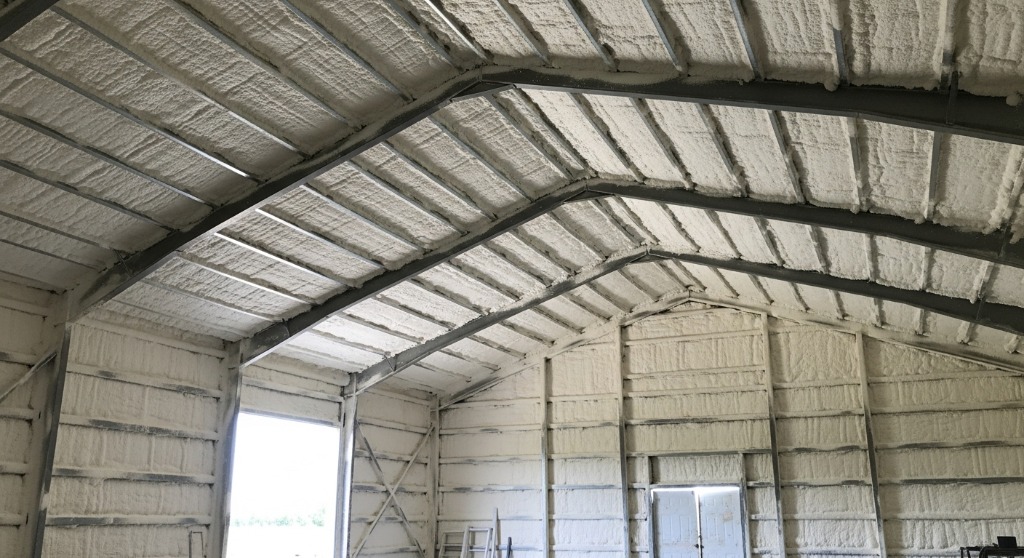
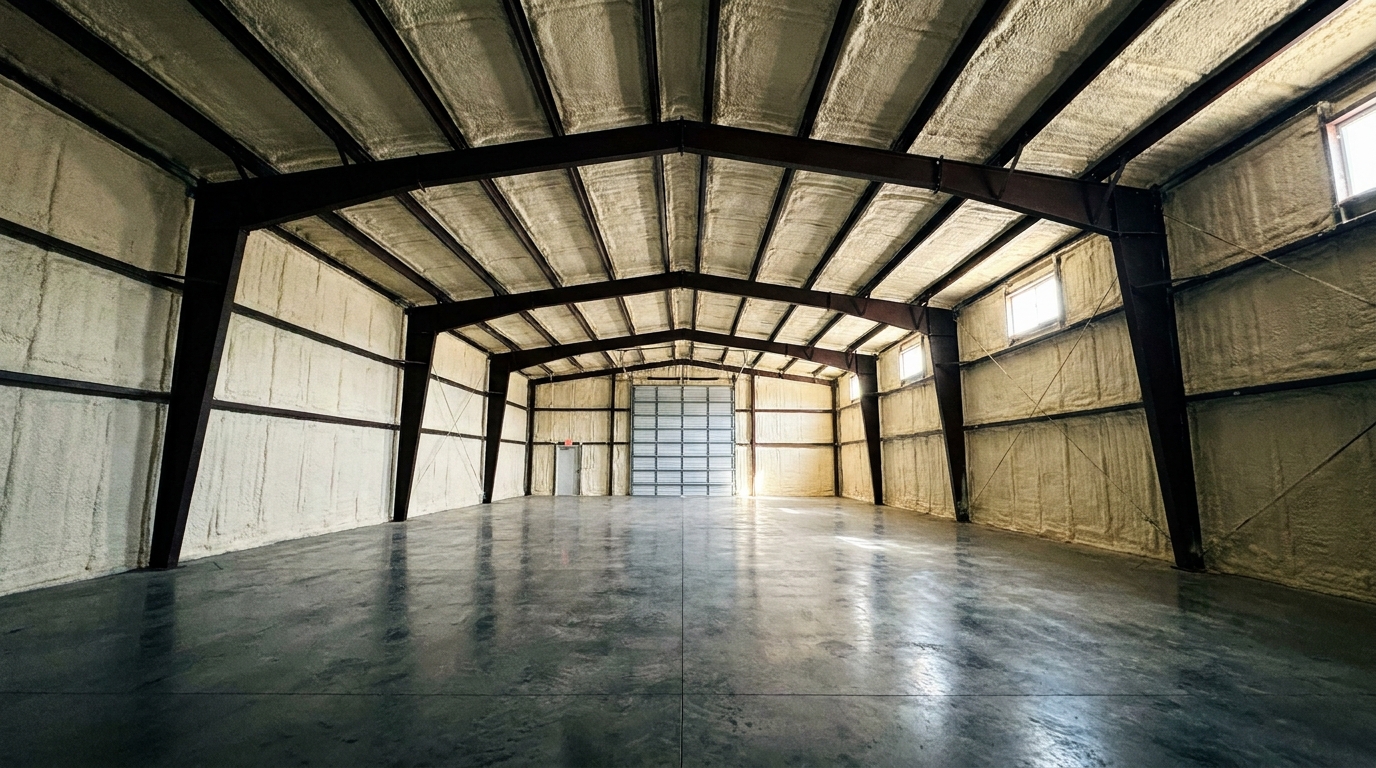
Closed-cell spray foam stops this cycle at the source. When we apply 2–3 inches directly to the metal panels, the interior surface temperature stays above the dew point. No condensation, no dripping, no moisture damage. And because closed-cell foam at 2 inches acts as a Class II vapor retarder (under 1.0 perm), you don't need a separate poly membrane — it's built into the insulation.
For a broader look at how we handle barn insulation across Ontario, read our complete barn insulation guide.
Temperature Requirements by Livestock Type
Different animals have different thermal needs. Here's what the science says about optimal temperature ranges for common livestock in Ontario:
| Livestock Type | Optimal Temp Range | Critical Low | Critical High | Humidity Target |
|---|---|---|---|---|
Dairy cattle | 5°C to 20°C | -10°C | 25°C | 60–70% |
Broiler poultry | 18°C to 24°C | 10°C | 30°C | 50–70% |
Layer hens | 18°C to 22°C | 10°C | 28°C | 40–60% |
Swine(finishing) | 15°C to 22°C | 10°C | 27°C | 50–75% |
Horses | -5°C to 20°C | -15°C | 30°C | 50–70% |
When temperatures fall below the critical low, feed conversion drops, growth slows, and disease risk climbs. For dairy operations near Barrie and Innisfil, winter cold stress alone can reduce milk yields by 150+ litres per day across a 50-head herd. At roughly $0.80/litre, that's $120/day in lost revenue.
Poultry operations face even steeper consequences. Broiler mortality can spike 5–8% during extreme cold events, and layer operations near Alliston and Bradford see egg production drop 5–10% when coop temperatures fluctuate widely.
Proper insulation doesn't just keep animals comfortable — it directly protects your bottom line. Most York Region and Simcoe County farmers we work with see a 40–55% reduction in heating costs after spray foam installation. On a barn spending $800–$1,200/month on propane through winter, that's $320–$660/month back in your pocket.
Spray Foam vs Other Insulation for Livestock Buildings
Farmers sometimes explore cheaper options. Here's how the main insulation methods compare for livestock building applications:
| Feature | Closed-Cell Spray Foam | Fiberglass Batts | Metal Liner Panels |
|---|---|---|---|
R-Value per inch | R-6 to R-7 | R-3.1 | R-3 to R-6(with fill) |
Vapor barrier | Built-in at 2" | None — needs separate membrane | Depends on fill type |
Air sealing | Complete — fills every gap | Poor — air bypasses batts | Moderate — joints leak |
Ammonia resistance | High — rigid closed-cell | Low — absorbs gases | Moderate |
Rodent resistance | High — rigid material | Very low — nesting material | Moderate |
Lifespan | 25+ years | 5–10 years in barns | 15–20 years |
Installed cost/sq ft | $3.00 – $5.00 | $1.00 – $1.50 | $4.00 – $8.00 |
Fiberglass is the worst choice for any building with livestock. Ammonia and moisture pass through the batts, condense on the cold metal behind them, and cause hidden corrosion. Within a few years, fiberglass sags, compresses, and loses R-value. Rodents treat it as nesting material — it's practically an invitation for infestations that spread disease to your herd.
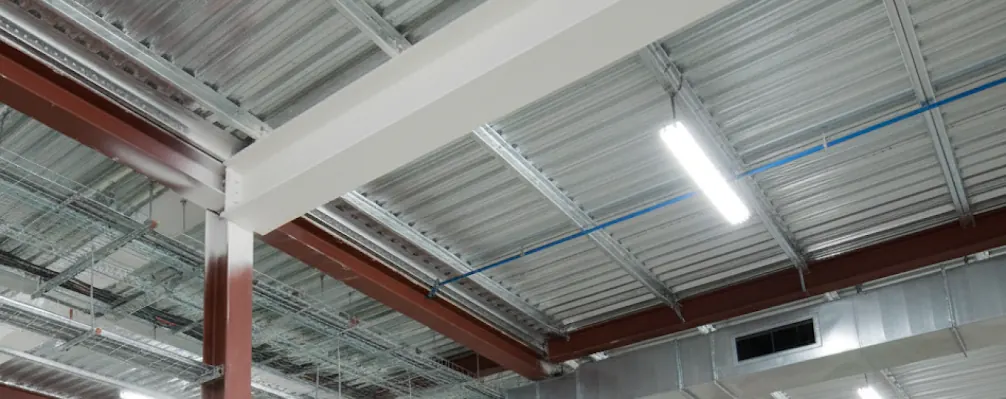
Metal liner panels work reasonably well, but they cost more than spray foam, add significant roof weight, and still have air leakage at panel joints. For pole barn structures common in Simcoe County, the structural load of liner panels can be a real concern. Read more about pole barn condensation control for details on these structures.
Ventilation Integration and Fire Code Compliance
Insulating a livestock building isn't just about adding foam — you need to integrate it with your ventilation system. Over-sealing without proper ventilation traps ammonia, carbon dioxide, and excess humidity inside the barn. Every livestock insulation project we do in York Region and Simcoe County includes a ventilation review.
The goal is controlled air exchange: bring in fresh air, exhaust stale air, and keep the building envelope tight enough that your heating system isn't fighting outdoor temperatures. Ridge vents, gable fans, and tunnel ventilation all work with spray foam — as long as the system is designed properly. We'll review your setup during the free site assessment.
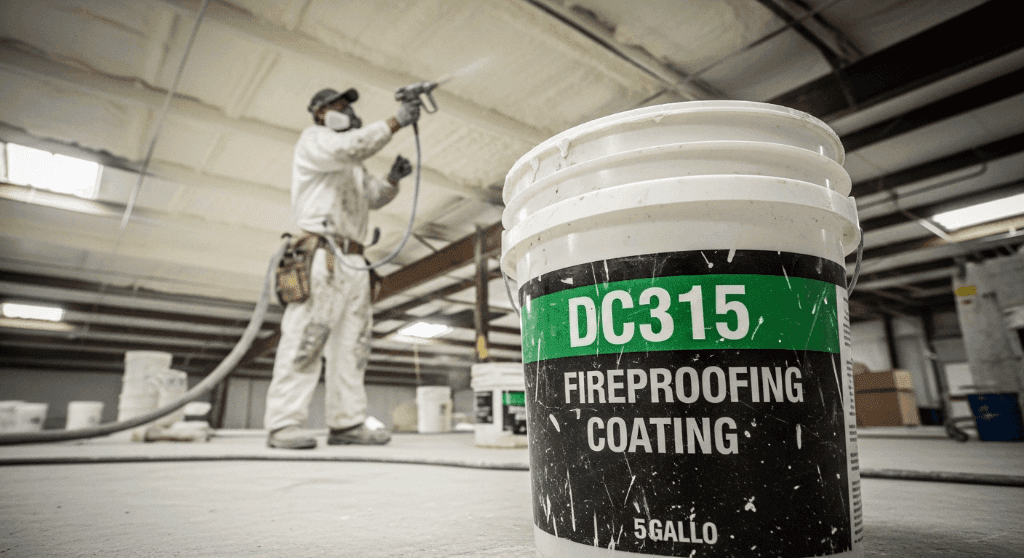
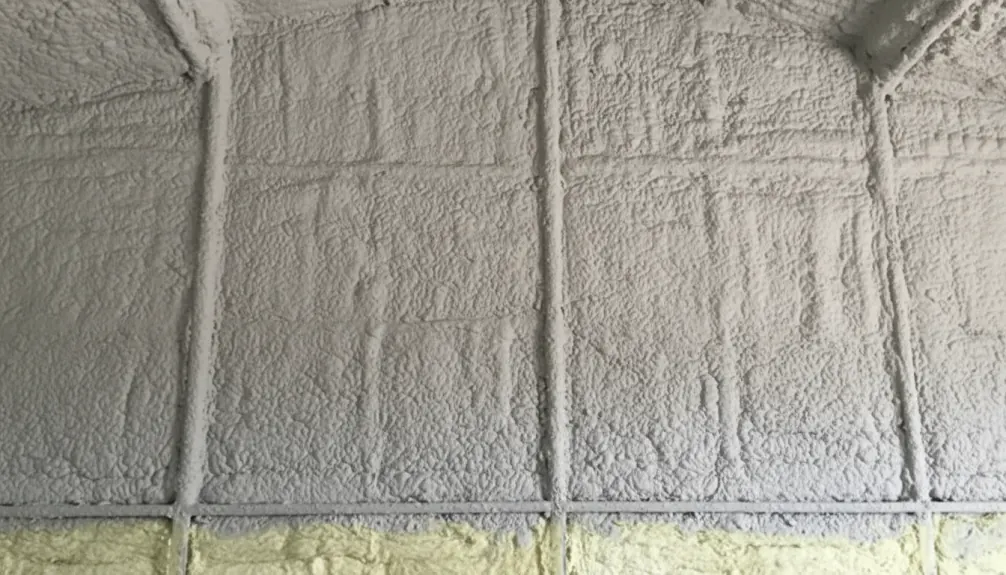
Fire code is the other non-negotiable. The Ontario Building Code requires a thermal barrier or ignition barrier over exposed spray foam in occupied agricultural buildings. For most livestock barns, we apply DC315 fire coating directly over the cured foam. DC315 provides the required 15-minute thermal barrier and costs $1.50–$3.00/sq ft. Some crop-storage-only buildings may be exempt, but if animals occupy the space, the coating requirement almost always applies.
For more on fire coating requirements, see our DC315 fire coating guide.
Our Process for Livestock Building Projects
Every livestock building is different, and we treat them that way. Here's what a typical project looks like across York Region and Simcoe County:
- Free site assessment — We measure the building, check structural conditions, evaluate ventilation, and review local code requirements. Takes about an hour.
- Detailed quote — You get a line-item proposal with square footage, foam type, thickness, DC315 requirements, and total cost. No surprises.
- Animal relocation planning — Livestock must be removed during spray application and for 24 hours after. We'll work with your schedule to minimize disruption.
- Surface prep — We clean the metal panels, remove loose debris, and mask off ventilation openings, windows, and electrical panels.
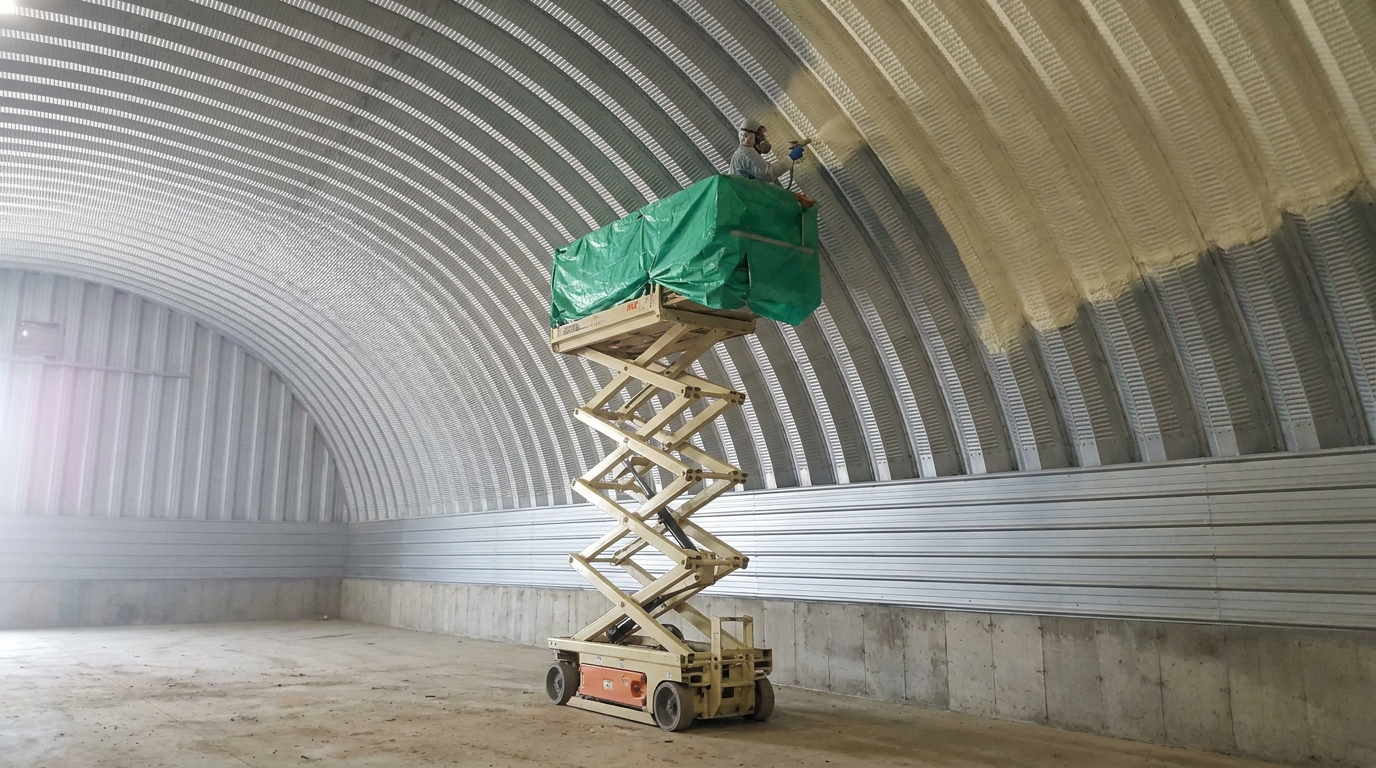
- Spray application — Our mobile rig pulls up to your barn. A typical 5,000 sq ft barn takes 1–2 days. We apply 2–3 inches of closed-cell foam for R-12 to R-21.
- DC315 coating — Applied the same day or next day once the foam has cured.
- Final walkthrough — We inspect every surface, check thickness with a pin gauge, and clean up the site.
We're WSIB compliant with $5M liability insurance on every project. Our crew has been spraying agricultural buildings since 2008, and we bring our own equipment — you don't need to provide power or water. Visit our barn insulation service page for more project details.
Frequently Asked Questions About Livestock Building Insulation
Closed-cell spray foam for livestock buildings runs $3.00–$5.00 per square foot installed. A typical 5,000 sq ft barn costs $15,000–$25,000 for foam, plus $7,500–$15,000 for DC315 fire coating if required. The exact price depends on building size, access conditions, and foam thickness.
No. All livestock must be removed during the spray application and for 24 hours afterward. The foam off-gasses during curing, and spray mist can irritate eyes and respiratory systems. Most projects take 1–2 days to spray, so plan for 2–3 days total with the re-entry wait.
Yes. Closed-cell spray foam is a rigid, non-porous material that resists ammonia, hydrogen sulfide, and other barn gases. Unlike fiberglass, which absorbs these gases and loses R-value, closed-cell foam maintains its performance in high-ammonia environments for 25+ years.
For heated livestock barns, we recommend R-20 minimum on walls (about 3–3.5 inches of closed-cell) and R-31 on roof decks (about 5 inches). Cold-storage barns or machinery buildings can get by with R-12 to R-14 on walls. We'll confirm the right spec during your site assessment.
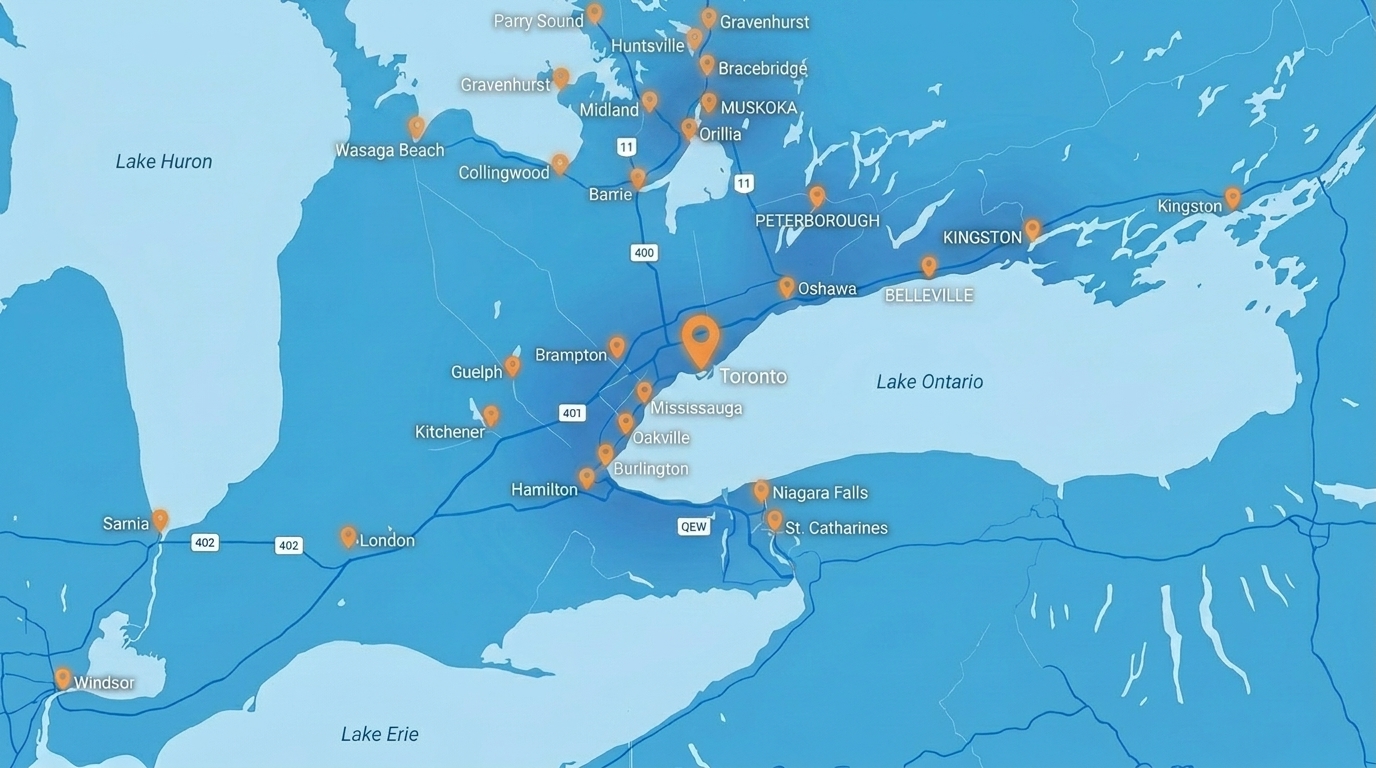
Yes. We insulate livestock buildings across all of Ontario — from Barrie and Bradford to Hamilton, Kitchener, London, and beyond. York Region and Simcoe County are core service areas, but our mobile spray rigs travel wherever the project is.
Protect Your Livestock and Your Bottom Line
A properly insulated livestock building pays for itself through lower heating costs, healthier animals, and better production numbers. If you're farming in York Region, Simcoe County, or anywhere in Ontario, we can help. Call us at 647-333-3626 or fill out the form below for a free on-site assessment.