Agricultural Cold Storage: How Spray Foam Protects Your Harvest
Agricultural Cold Storage: 2026 Ontario Overview & Code Essentials
Agricultural cold storage buildings in Ontario have one job: hold a consistent temperature while the outside swings from -25°C in January to +35°C in July. Every degree of temperature fluctuation inside your cooler degrades product quality, shortens shelf life, and cuts into your margins. The insulation on your cold storage walls and ceiling is the single biggest factor in whether your refrigeration system can keep up — or whether it runs non-stop, burning energy and money.
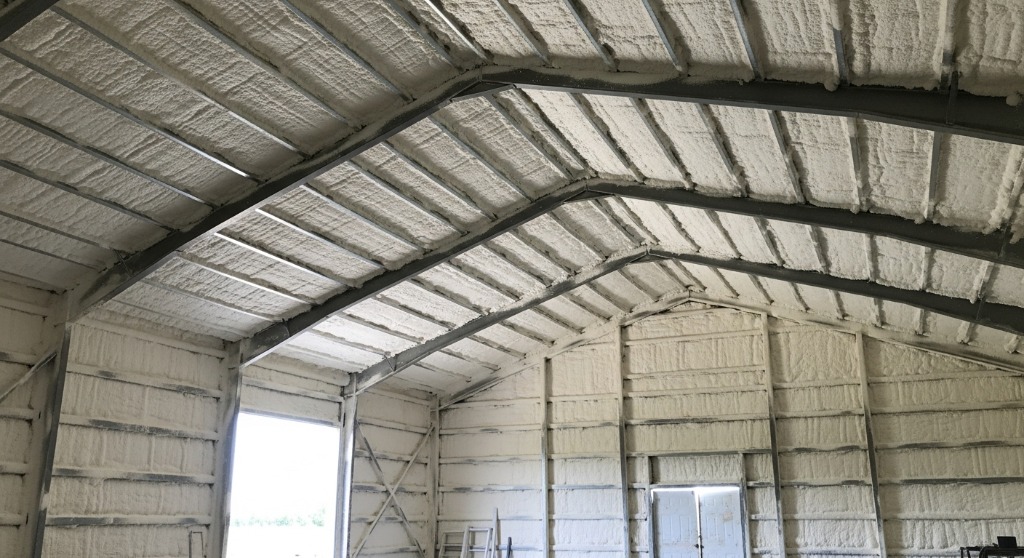
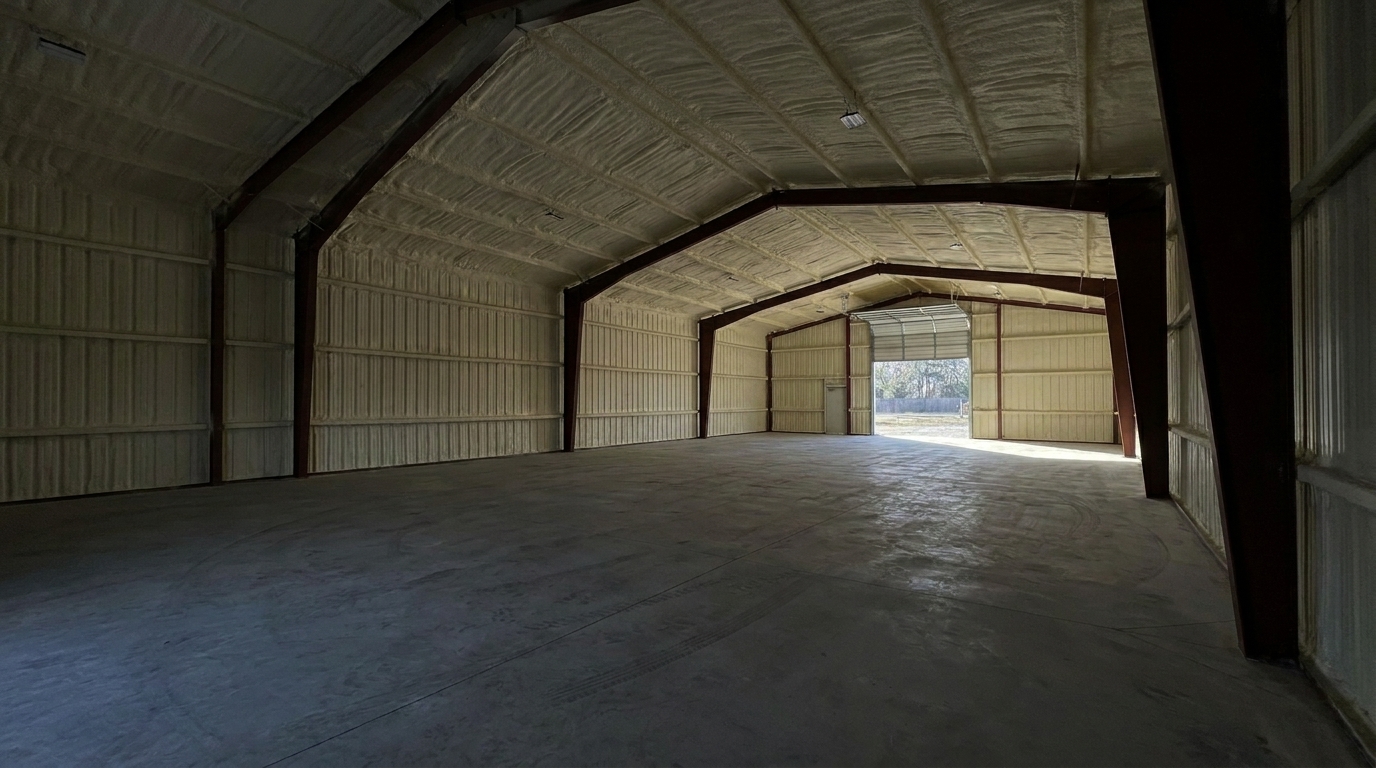
We've insulated cold storage buildings for farms, produce distributors, and agricultural operations across Kitchener, London, Hamilton, Barrie, Mississauga, and Brampton since 2008. Closed-cell spray foam is the preferred insulation for cold storage because it delivers high R-value, a complete vapor barrier, and zero air infiltration — all in one application.
Temperature Requirements for Agricultural Cold Storage
Different crops and products require different storage temperatures. Getting this wrong doesn't just cost money — it can destroy an entire harvest. Here are the standard cold storage temperature ranges used across Ontario:
| Product Type | Optimal Storage Temp | Humidity Range | Typical Storage Duration |
|---|---|---|---|
Apples | 0°C to 4°C | 90–95% | 3–8 months |
Potatoes | 4°C to 7°C | 90–95% | 5–10 months |
Onions | 0°C to 2°C | 65–70% | 6–8 months |
Carrots | 0°C to 1°C | 95–98% | 4–8 months |
Grain(dry) | 10°C to 15°C | Below 14% moisture | 12+ months |
Wine/cider | 10°C to 13°C | 60–70% | Months to years |
Cut flowers | 1°C to 4°C | 90–95% | Days to weeks |
Temperature stability matters as much as the target temperature itself. A cooler that swings 5°C every time the compressor cycles shortens produce shelf life significantly. Proper insulation reduces these swings by maintaining a stable thermal envelope around the stored product, letting the refrigeration system cycle less frequently and hold tighter temperature bands.
According to Natural Resources Canada, improving the building envelope is the most effective step for reducing energy consumption in agricultural and commercial cold storage facilities.
Why Spray Foam Outperforms Rigid Board in Cold Storage
Rigid foam board (EPS, XPS, or polyiso) has been the traditional cold storage insulation in Ontario for decades. It works — but it has fundamental limitations that spray foam eliminates.
| Feature | Closed-Cell Spray Foam | Rigid Board (XPS/EPS) |
|---|---|---|
R-Value per inch | R-6 to R-7 | R-4 to R-5 (XPS), R-3.6 to R-4.4(EPS) |
Air sealing | Complete — monolithic, no joints | Joints and seams leak — needs taping |
Vapor barrier | Built-in at 2"(Class II retarder) | XPS is semi-permeable, EPS is permeable |
Condensation risk | Very low — no air gaps behind foam | Moderate — air can bypass at joints |
Installation on irregular surfaces | Conforms to any shape | Requires flat, uniform surfaces |
Structural adhesion | Bonds directly to substrate | Needs mechanical fasteners or adhesive |
Moisture absorption over time | None — closed-cell structure | EPS absorbs moisture, loses R-value |
The critical difference is air sealing. Cold storage buildings operate at a significant temperature differential — sometimes 30–40°C between inside and outside. Every air leak in the building envelope brings warm, humid air into the cooler. This air deposits moisture on cold surfaces, forms frost on evaporator coils, and forces the refrigeration system to work harder. Rigid board, no matter how carefully installed, always has joints, gaps at penetrations, and perimeter edges where air bypasses the insulation.
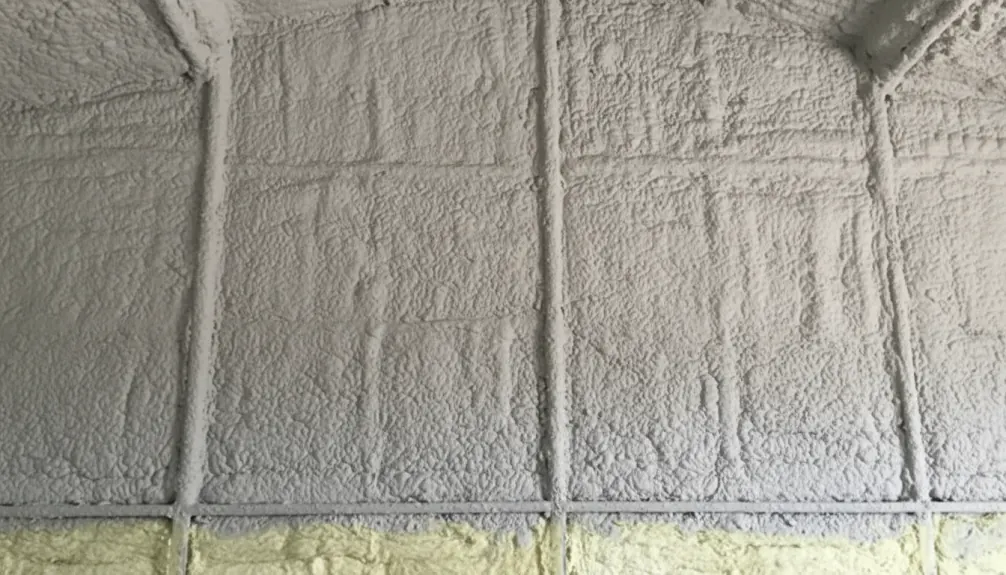
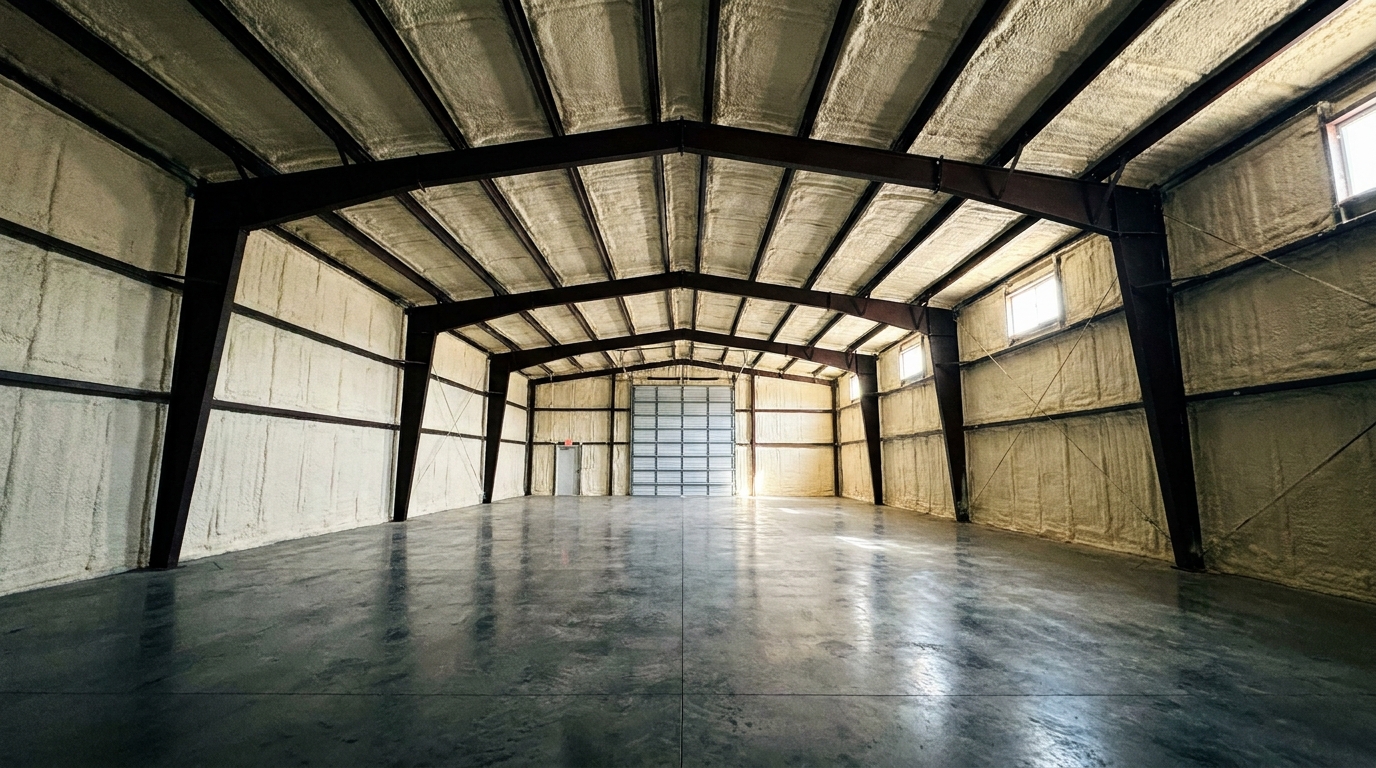
Spray foam eliminates these pathways entirely. When we spray closed-cell foam directly onto walls and ceilings, it expands into every crack, seam, and irregular surface. The result is a continuous, jointless thermal and vapor barrier with zero air infiltration.
For farmers near Barrie and Hamilton who've dealt with frost buildup on their cooler walls, this is usually the root cause — air leaks at panel joints letting humid air into the cold space. Spray foam solves it permanently.
For more on how we handle insulation for metal commercial buildings, check our warehouse insulation cost guide.
2026 Cold Storage Insulation Costs in Ontario
Here's what cold storage insulation costs in 2026, based on our recent projects across Ontario. All prices include material, labour, and standard surface prep.
| Building Size | Coverage Area | Closed-Cell Cost (walls + ceiling) | R-Value Achieved |
|---|---|---|---|
Small cooler(20×30) | 1,500–2,500 sq ft | $4,500 – $12,500 | R-20 to R-28 |
Mid-size storage(40×60) | 4,000–7,000 sq ft | $12,000 – $35,000 | R-20 to R-28 |
Large cold storage(60×100) | 10,000–18,000 sq ft | $30,000 – $90,000 | R-25 to R-35 |
Converted barn/building | Varies widely | $15,000 – $50,000+ | R-20 to R-30 |
R-value requirements depend on the target storage temperature and your refrigeration capacity. For produce coolers operating at 0–4°C, we recommend a minimum of R-25 on walls and R-30 on ceilings. For dry grain storage at 10–15°C, R-20 is usually sufficient.
Equipment access and building condition also affect pricing. Older buildings with uneven surfaces, exposed framing, and limited access points typically cost 10–15% more than new construction. Visit our warehouse insulation service page for more project details.
Energy Savings and ROI for Cold Storage
Refrigeration is the single largest operating cost for any cold storage facility. The insulation on your building envelope directly determines how hard your compressors work — and how much you spend on electricity every month.
Here's what we typically see after spray foam installation on Ontario cold storage buildings:
- Refrigeration energy reduction: 30–50% compared to uninsulated or poorly insulated buildings. The foam eliminates air infiltration and reduces thermal load through walls and ceilings.
- Compressor cycling: Reduced by 40–60%. With less heat gain, the compressors run less frequently and hold temperature more consistently.
- Frost buildup: Eliminated on walls and ceilings. Evaporator defrost cycles are reduced because less moisture enters the cold space.
- Product loss reduction: Temperature stability means less spoilage, less shrinkage, and longer shelf life. For a produce operation handling $500,000+ in inventory per season, even a 2–3% reduction in spoilage more than covers the insulation cost.
- Payback period: Most cold storage spray foam projects pay for themselves in 3–5 years through energy savings alone.
For farms in the London, Kitchener, and Mississauga area, electricity costs for commercial refrigeration can run $2,000–$8,000/month during warm weather. A 40% reduction in refrigeration energy represents $800–$3,200/month in savings. Over a 25-year foam lifespan, the math isn't even close.
If you're also dealing with condensation on your building exterior, our guide on metal building condensation covers how spray foam stops the "sweating" problem.
Frequently Asked Questions About Cold Storage Insulation
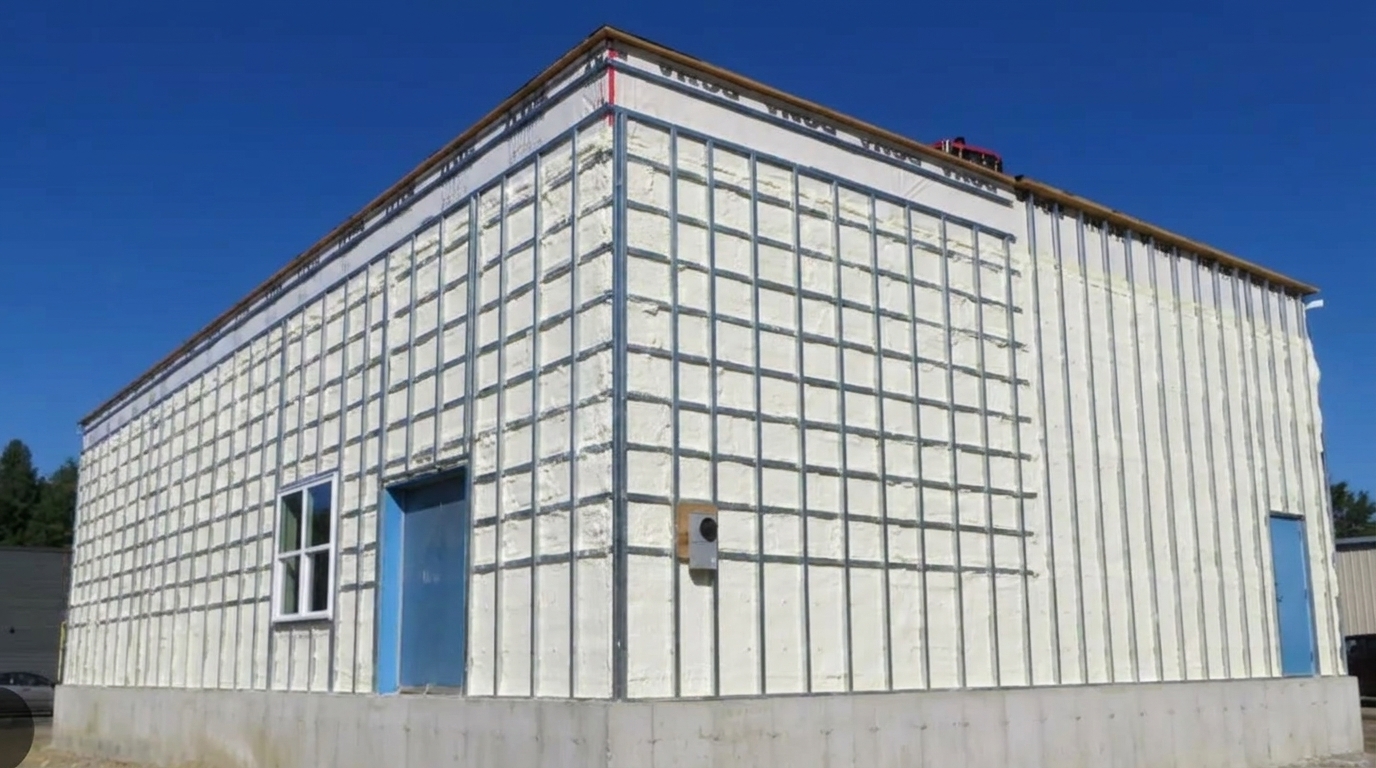
Yes — and it's one of the most cost-effective approaches. We spray closed-cell foam directly onto the existing metal panels and framing, creating a continuous insulated envelope. The foam conforms to irregular surfaces, seals all gaps, and provides the vapor barrier you need. Many Ontario farms have converted existing pole barns and metal buildings into produce coolers this way.
For produce cold storage operating at 0–4°C, we recommend R-25 minimum on walls and R-30 on ceilings. This typically requires 4–5 inches of closed-cell spray foam. Higher R-values reduce refrigeration costs further but have diminishing returns beyond R-35.
It depends on the occupancy classification. Buildings used exclusively for crop storage may be exempt from thermal barrier requirements, but if workers regularly enter the cold storage area, the Ontario Building Code likely requires a thermal barrier over exposed spray foam. We review the code requirements during your site assessment.
Closed-cell spray foam performs exceptionally well in cold environments. The material doesn't shrink, crack, or lose R-value at low temperatures. We've inspected cold storage installations 15+ years old that show zero degradation. The expected lifespan is 25+ years with no maintenance required.
Absolutely. Closed-cell foam at 2 inches is a Class II vapor retarder, which means it blocks moisture transmission from outside. Unlike fiberglass or open-cell foam, it won't absorb moisture, lose R-value, or support mold growth — even in the 90–95% humidity environments required for apple and carrot storage.
Insulate Your Cold Storage Right
Whether you're building new cold storage or retrofitting an existing barn, spray foam gives you the thermal performance, air sealing, and moisture control that cold storage demands. Call us at 647-333-3626 or fill out the form below for a free on-site assessment anywhere in Ontario.