SPF vs. TPO vs. EPDM vs. Modified Bitumen Flat Roofs in Ontario: 2026 Commercial Cost, R-Value & Lifespan Comparison
SPF vs. TPO vs. EPDM vs. Modified Bitumen Flat Roofs in Ontario: 2026 Ontario Overview & Code Essentials
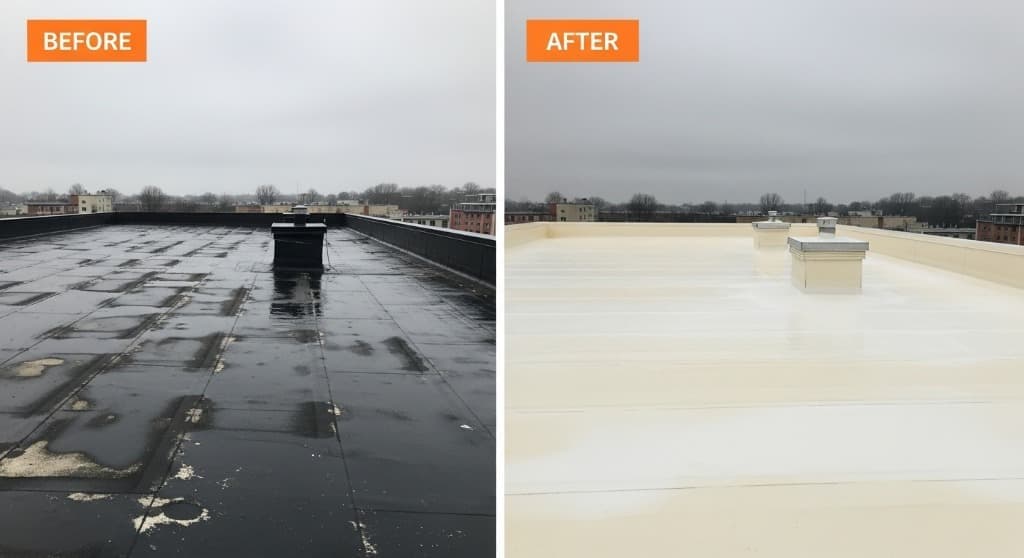
When a commercial warehouse, retail plaza, industrial plant, or condo flat roof in Toronto, Mississauga, Hamilton, or Barrie reaches the end of its service life, facility managers face a high-stakes capital decision: tear off the old roof and install a conventional membrane—TPO (thermoplastic polyolefin), EPDM rubber, or 2-ply torch-applied modified bitumen (BUR)—or upgrade to a seamless Commercial SPF Flat Roof System topped with a High-Solids UV Silicone Roof Restoration Membrane.
While roofing bids often look similar on paper, single-ply and torch-on quotes frequently hide three massive cost traps in Ontario’s -25°C to +35°C thermal cycling climate: mandatory tear-off and landfill bin fees ($2.50–$5.00/sq ft), separate rigid polyiso insulation boards that lose R-value in sub-zero winters, and thousands of linear feet of heat-welded, glued, or torched seams that split under freeze-thaw movement. Installed by Sprayfoam Solutions Toronto Inc. with Caliber Certified (CAN/ULC-S705.2 Licensed) Commercial Spray Foam & Roof Coating Installers, a 2.8–3.0 lb/ft³ closed-cell SPF + Silicone roof insulates (R-6.5/inch), waterproofs, and self-flashes every HVAC curb in one monolithic pass. Get a $250 Credit on Your Estimate — Check Your Price in 60 Seconds (/price-chat) • No Site Visit Required.
Compare real-world 2026 all-in Ontario reroofing costs (including tear-off, R-13 insulation & curb flashings) across the 3 leading systems:
- Zero Tear-Off Overlay
- Built-In R-10 to R-19.5 (40–60 PSI)
- Seamless 25 Mil Silicone + Granules
- 30–50 Yr Renewable Life
- Includes $2.50–$4.50/sq ft Tear-Off + 2" Polyiso Board + 60 Mil TPO
- Fastener Thermal Bridging
- 18–22 Yr Lifespan
- Includes Tear-Off + Polyiso + Coverboard
- Taped EPDM Seams ($8.00–$12.50) or Torch 2-Ply ($9.50–$15.50)
- 15–25 Yr Life
SPF vs. TPO vs. EPDM vs. Modified Bitumen: 2026 Head-to-Head Ontario Comparison Table
Before approving a six-figure commercial roofing contract, compare how 3.0 lb Spray Polyurethane Foam + Silicone (detailed in our 2026 Commercial SPF Flat Roof Cost Guide) performs against TPO, EPDM, and 2-Ply Modified Bitumen across nine engineering metrics that dictate roof survival in Southern and Northern Ontario:
| Engineering & Cost Metric | 3.0 lb SPF + UV Silicone | Mechanically Fastened TPO | Adhered EPDM Rubber | 2-Ply Modified Bitumen (BUR) |
|---|---|---|---|---|
2026 All-In Reroof Cost(/sq ft) | $5.50 – $9.50 / sq ft(No Tear-Off) | $8.50 – $13.50 / sq ft(w/ Tear-Off) | $8.00 – $12.50 / sq ft(w/ Tear-Off) | $9.50 – $15.50 / sq ft(w/ Tear-Off) |
Built-In Thermal R-Value | R-6.5 / inch Included(Continuous) | R-0.0(Requires Separate Polyiso) | R-0.0(Requires Separate Polyiso) | R-0.0(Requires Polyiso + Coverboard) |
Seam Architecture | 100% Seamless & Monolithic | Heat-Welded Laps Every 6–10 Ft | Glued or Taped Seams(Weakest Link) | Torch-Welded Laps Every 39 Inches |
Fastener Thermal Bridging | 0% — 100% Chemical Deck Bond | High — 1,000s of Steel Deck Screws | Moderate — Fastened Insulation Plates | Moderate — Base Sheet Fasteners |
Sub-Zero R-Value Stability(-20°C) | 100% Stable R-6.5/in in Deep Cold | Polyiso Loses 20%–25% R-Value <-10°C | Polyiso Loses 20%–25% R-Value <-10°C | Polyiso Loses 20%–25% R-Value <-10°C |
Ponding Water Resistance | Excellent(Tapered SPF + Silicone) | Fair(Stresses Heat-Welded Seams) | Fair(Softens Seam Tape Adhesives) | Moderate(Lap Joint Blistering) |
Lateral Leak Migration Risk | Zero(Closed-Cell Bonds to Deck) | Severe(Water Travels Under Sheet) | Severe(Water Travels Under Sheet) | Moderate(Traps Water in Plies) |
Service Lifespan in Ontario | 30–50+ Yrs(Recoat Every 15–20 Yrs) | 18–22 Years(Full Tear-Off Needed) | 15–20 Years(Seam Shrinkage) | 18–25 Years(Full Tear-Off Needed) |
1. Why Seam Failure & Lateral Water Migration Destroy TPO and EPDM Roofs in Ontario
On a 10,000 sq ft commercial flat roof, a TPO, EPDM, or modified bitumen system relies on 1,200 to 3,500 linear feet of field seams plus dozens of hand-cut pipe boots, pitch pockets, and parapet termination bars. When Ontario temperatures swing from +35°C rooftop summer heat down to -25°C January cold snaps, membrane sheets expand and contract against their steel fasteners. Once a single weld or glued tape joint opens by even 1 millimetre, snowmelt enters beneath the membrane and travels 30 to 60 feet laterally across the deck, saturating thousands of dollars of polyiso board before dripping onto your warehouse floor. Because 3.0 lb closed-cell SPF is 100% chemically bonded to every square inch of the substrate, water can never travel laterally underneath.
2. The Hidden Polyiso Cold-Weather Penalty & Fastener Thermal Bridging (-20°C Derating)
TPO, EPDM, and 2-ply modified bitumen membranes have zero thermal resistance (R-0.0)—meaning you must pay extra for rigid polyisocyanurate (polyiso) insulation boards fastened below the membrane. Building science testing across Canadian climate zones proves two major winter flaws with mechanically fastened polyiso assemblies:
- Cold-Temperature Polyiso R-Value Drop (20%–25% Loss Below -10°C): The pentane blowing agent inside standard polyiso board condenses into a liquid when rooftop temperatures drop below -7°C to -10°C, causing a nominal R-20 polyiso roof to perform at only R-15 during January and February when your heating boilers are running at peak load.
- Steel Fastener Thermal Bridging (15%–30% R-Value Penalty): Mechanically fastened TPO and EPDM roofs drive 4,000 to 8,000 steel screws and 3-inch metal stress plates directly through the polyiso insulation into the cold steel roof deck. Every screw acts as a thermal ice-pick conducting interior heat out of your building and causing interior metal deck condensation.
- Board-Joint Air Convection Loops: Staggered 4x8 rigid insulation boards leave hundreds of unsealed butt joints where warm indoor moisture rises to touch the underside of the cold TPO/EPDM sheet, freezing into hidden frost layers.
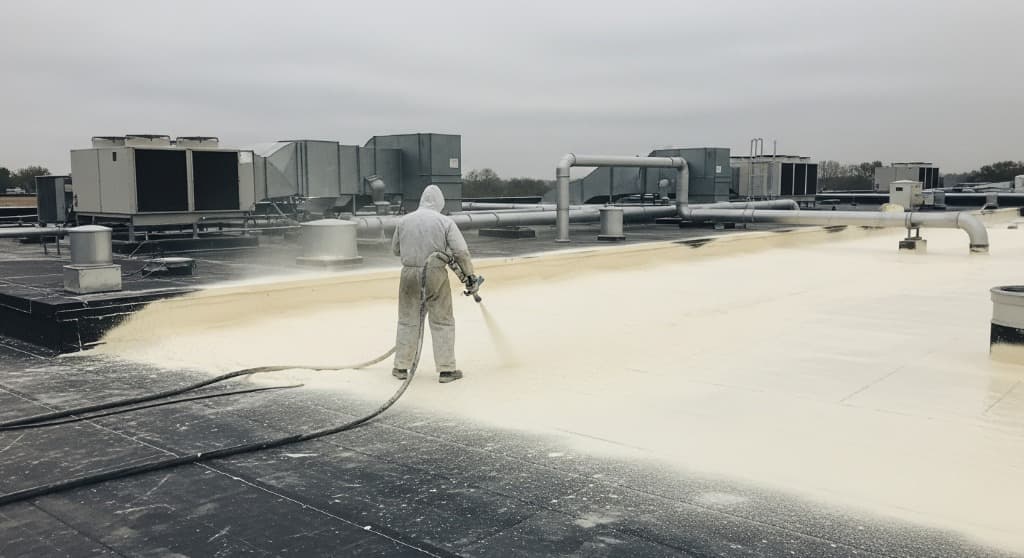
- Continuous R-6.5 Per Inch with 3.0 lb Closed-Cell SPF: High-density closed-cell spray polyurethane foam maintains its full R-6.5 per inch thermal performance in extreme Ontario winters with zero mechanical fasteners, zero board joints, and a certified Class 1 vapour barrier built right in.
30-Year Commercial Roof Lifecycle ROI: Renewable Silicone Recoats vs. Repeated Tear-Offs
Under 2026 Ontario Building Code SB-10 Commercial Energy Standards and NRC Canada CCMC Material Evaluations, the smartest way to evaluate a commercial roof is its 30-year net present lifecycle cost. When a TPO, EPDM, or modified bitumen roof reaches year 18 to 22, you must pay to tear off the entire membrane and wet polyiso all over again. With an SPF + Silicone Flat Roof System, the 40–60 PSI foam base stays permanently in place—you simply wash and apply a 15–20 mil renewable silicone topcoat ($2.75–$4.25/sq ft) at year 15 to 20:
| 30-Year Lifecycle Cost Stage (10,000 Sq Ft) | 3.0 lb SPF + UV Silicone | Mechanically Fastened TPO | Adhered EPDM Rubber | 2-Ply Modified Bitumen (BUR) |
|---|---|---|---|---|
Year 1: Existing Roof Tear-Off & Bins | $0(Direct Overlay on Dry Deck) | $25,000 – $45,000(Full Tear-Off) | $25,000 – $45,000(Full Tear-Off) | $30,000 – $50,000(Gravel/BUR Strip) |
Year 1: Insulation + Waterproofing Install | $55,000 – $95,000(R-10 to R-19.5 Built In) | $60,000 – $90,000(Polyiso + 60 Mil TPO) | $55,000 – $80,000(Polyiso + EPDM) | $65,000 – $105,000(Polyiso + 2-Ply Torch) |
Years 1–20: Seam & Curb Leak Maintenance | $2,500 – $5,000(Zero Seam Failures) | $12,000 – $24,000(Weld & Boot Repairs) | $16,000 – $32,000(Seam Tape Failure) | $10,000 – $22,000(Blister & Lap Patch) |
Year 20: Renewal vs. Full Second Reroof | $27,500 – $42,500(Simple Silicone Recoat) | $110,000 – $165,000(2nd Tear-Off + TPO) | $105,000 – $155,000(2nd Tear-Off + EPDM) | $125,000 – $190,000(2nd Tear-Off + BUR) |
Total 30-Year Cumulative Roof Spend | $85,000 – $142,500(Saves $100k+) | $207,000 – $324,000(2 Full Roofs) | $201,000 – $312,000(2 Full Roofs) | $230,000 – $367,000(2 Full Roofs) |
Replaces polyiso boards & mechanical screws.
100% chemical bond across the entire deck.
Outperforms cold-derated polyiso by 25%+.
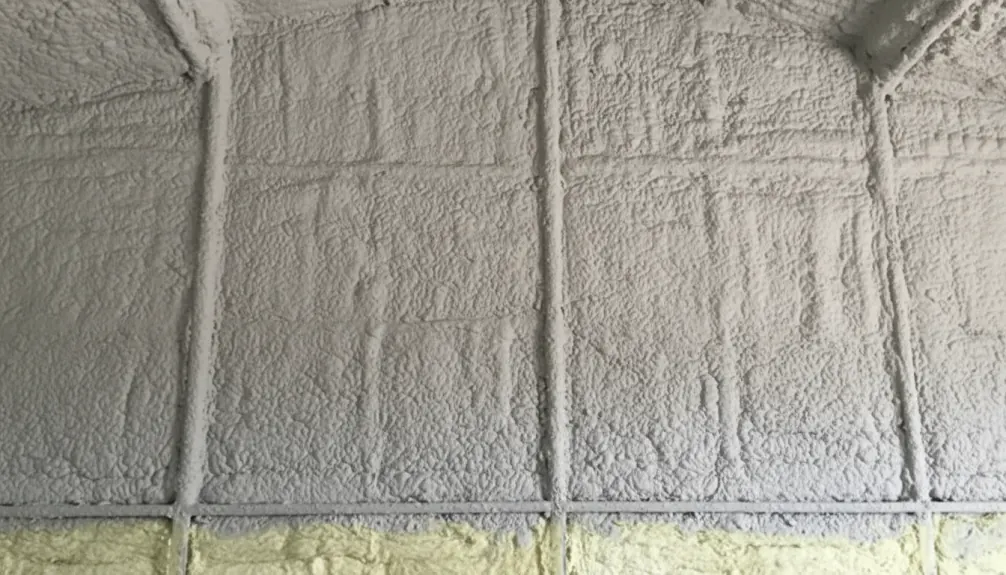
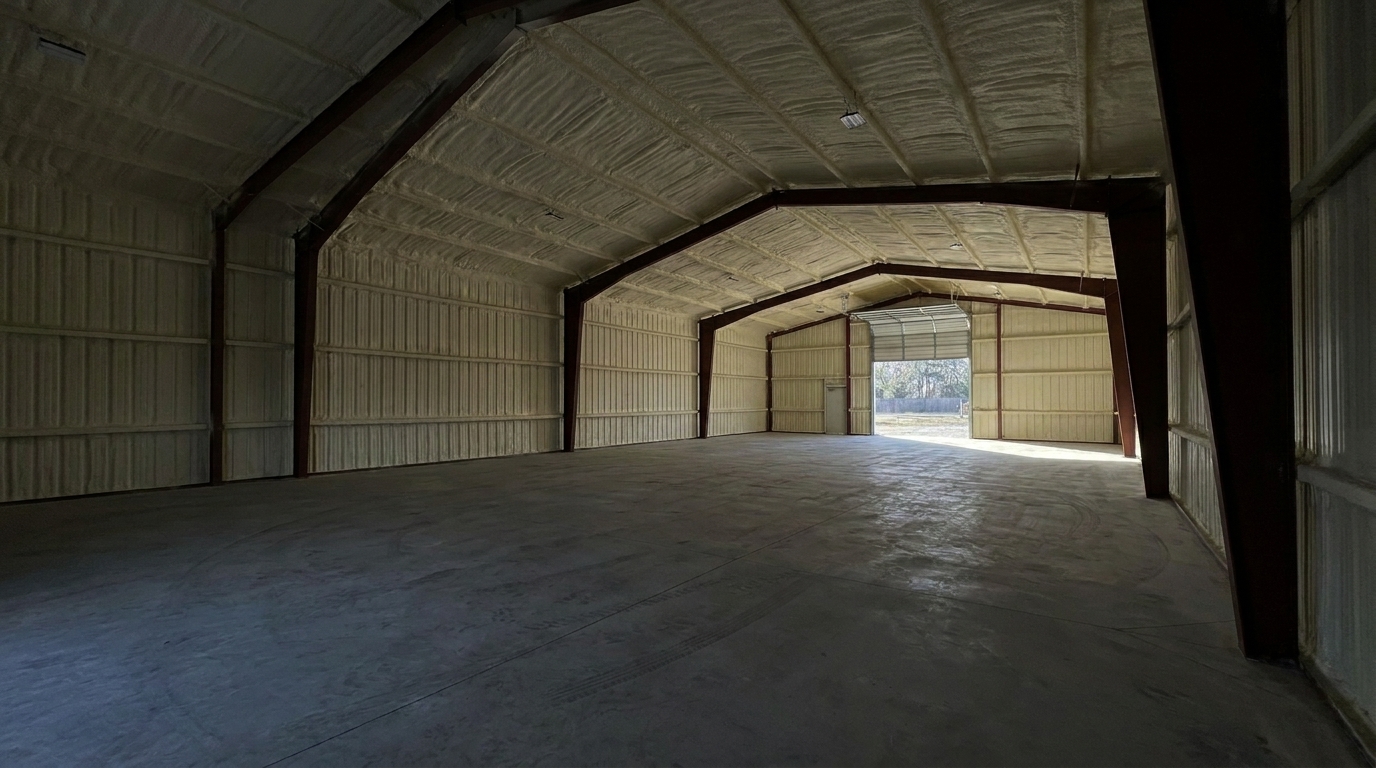
Mechanically fastened TPO roofs drive thousands of steel screws through polyiso boards that lose 20%–25% of their R-value in sub-zero Ontario winters. Spraying 1.5"–3.0" of 3.0 lb closed-cell SPF creates a fastener-free R-10 to R-19.5 thermal blanket that never derates in deep cold.
When to Choose SPF + Silicone vs. TPO vs. EPDM for Your Ontario Commercial Building
As a commercial building envelope contractor serving industrial warehouses, metal buildings, and commercial properties across Ontario, here is our candid engineering breakdown of when each flat-roof system makes sense:
- Choose 3.0 lb SPF + UV Silicone When: You are re-roofing an existing flat or low-slope roof (BUR, mod-bit, TPO, EPDM, or corrugated metal deck) and want to save $2.50–$5.00/sq ft in tear-off costs, eliminate ponding water with tapered foam, seal 15+ rooftop HVAC penetrations seamlessly, and gain R-10 to R-19.5 of continuous insulation in one pass.
- Choose Mechanically Fastened TPO When: You are erecting a brand-new structural steel commercial shell with a wide-open, penetration-free roof deck during mid-winter (-15°C when exterior liquid coatings cannot be sprayed) and your specification already budgets for double-layer staggered polyiso insulation.
- Avoid Adhered EPDM & Torch Mod-Bit When: Your building has heavy rooftop mechanical equipment, recurring ponding water, or high heating/cooling bills—where black EPDM heat absorption, glued seam tape degradation, or open-flame torch insurance restrictions create unnecessary risk.
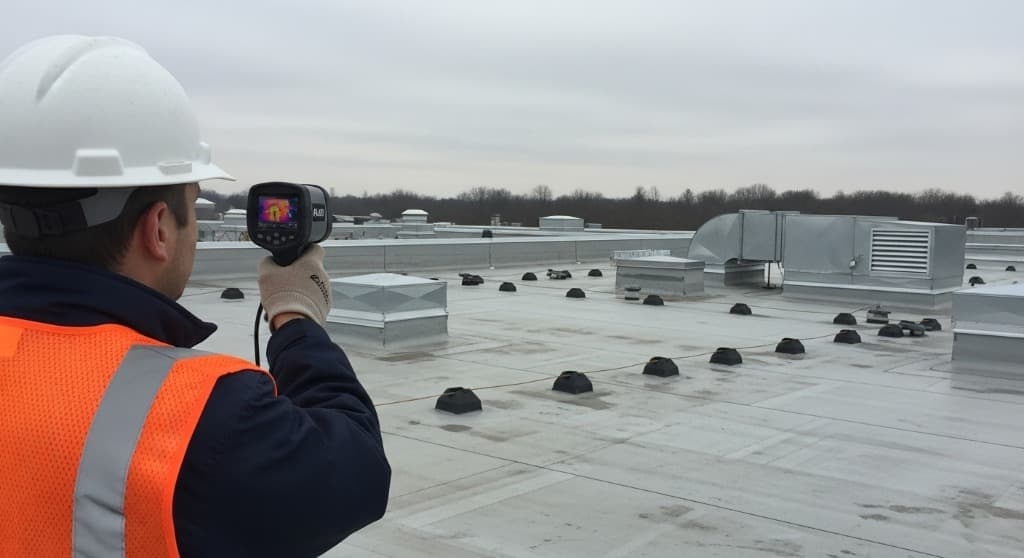

We scan your existing TPO, EPDM, or BUR roof for trapped moisture and remove only saturated insulation zones.
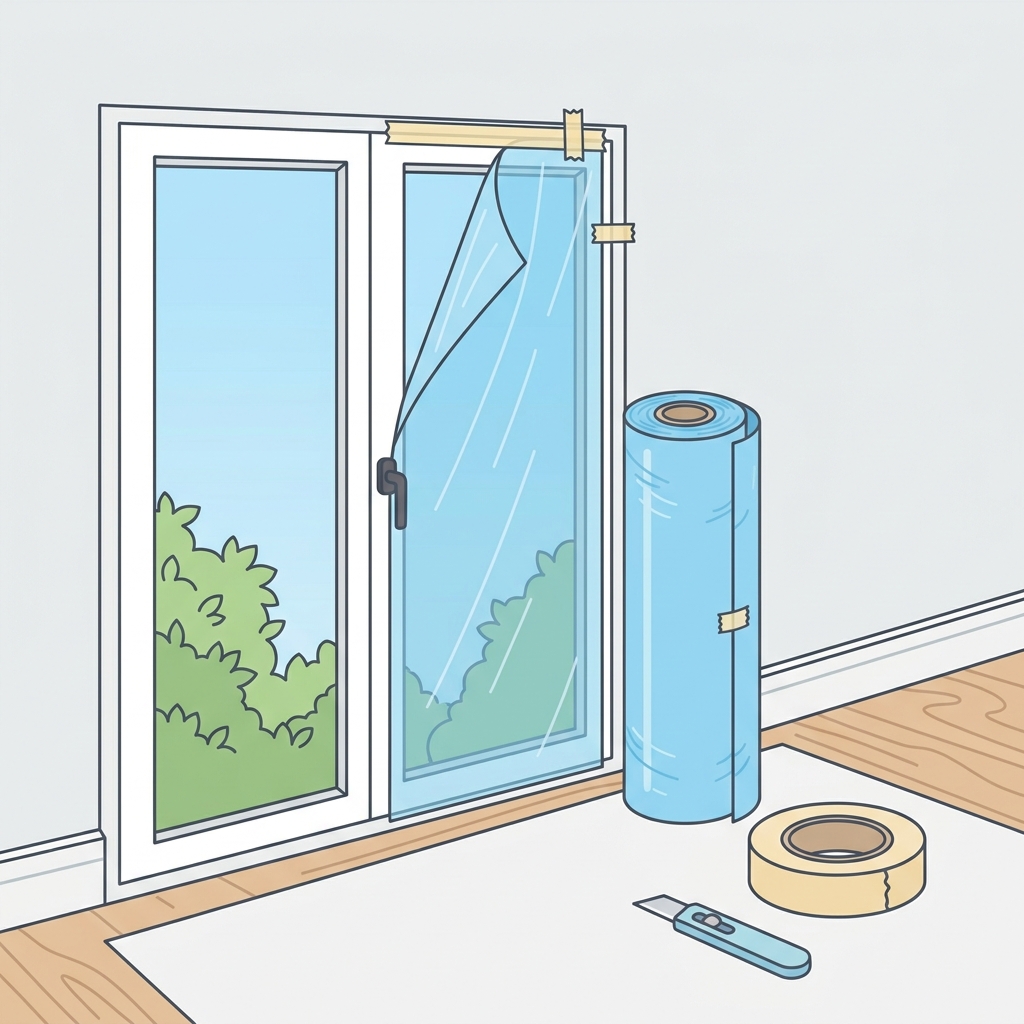
3,500 PSI pressure washing, securing loose membrane edges, priming the surface, and masking rooftop RTUs.
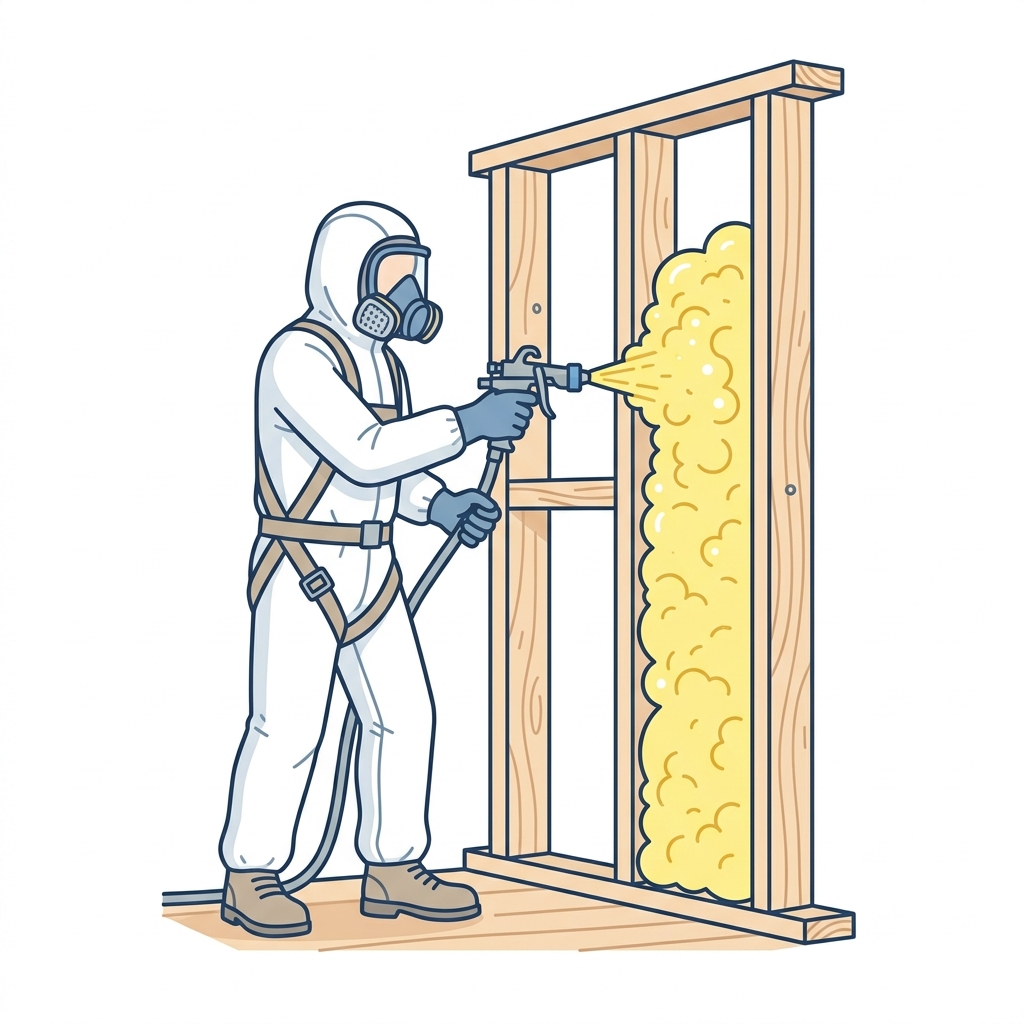
Spraying 1.5"–3.0" of 40–60 PSI closed-cell roofing foam to build positive drainage and self-flash all curbs.
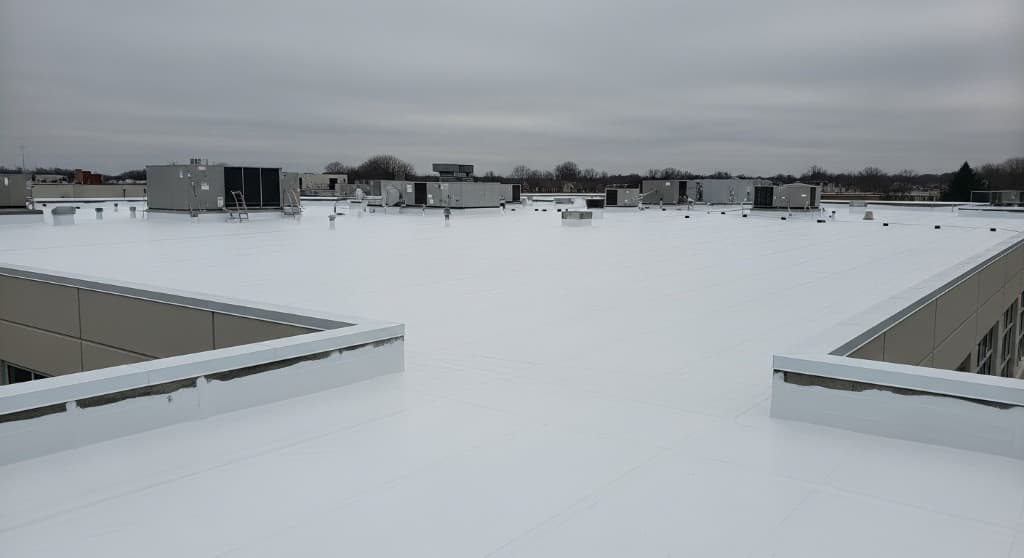
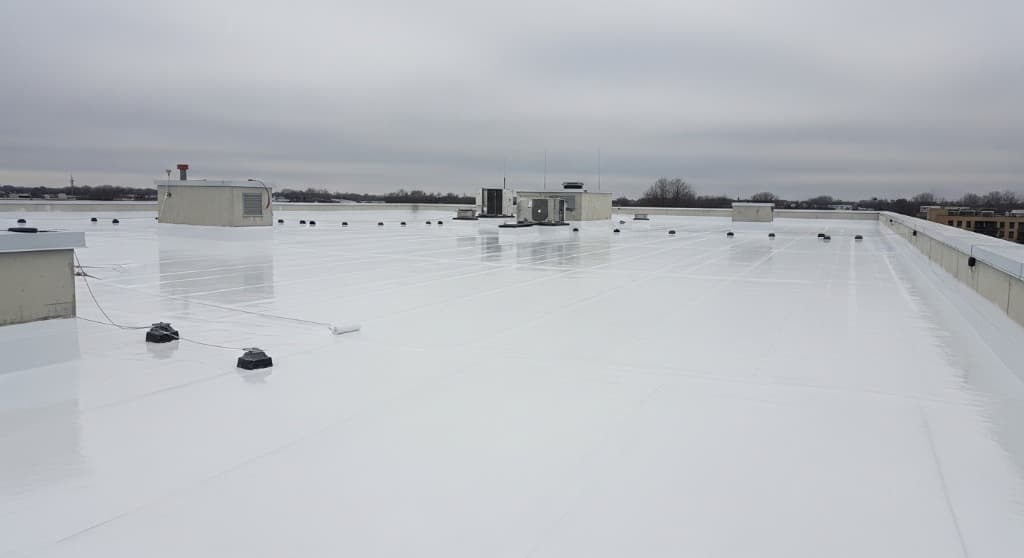
Applying 20–30 dry mils of high-solids UV silicone elastomeric coating with #11 ceramic granules for walkability.
Frequently Asked Questions: SPF vs. TPO vs. EPDM Flat Roofs in Ontario
Yes—on commercial reroofing projects in Ontario, a 3.0 lb SPF + UV Silicone flat roof costs $5.50 to $9.50 per sq ft installed because it is applied directly over your prepared existing roof with zero tear-off disposal and includes R-10 to R-19.5 of built-in insulation. By contrast, tearing off an existing roof and installing new polyiso boards plus mechanically fastened TPO ($8.50–$13.50/sq ft), EPDM ($8.00–$12.50/sq ft), or 2-ply modified bitumen ($9.50–$15.50/sq ft) costs 30% to 45% more upfront. Get a $250 Credit on Your Estimate — Check Your Price in 60 Seconds (/price-chat) • No Site Visit Required.
Yes. As long as an infrared moisture scan confirms that at least 80%–85% of the underlying polyiso or fiberboard insulation is dry, our Caliber Certified (CAN/ULC-S705.2 Licensed) Commercial Spray Foam & Roof Coating Installers cut out any localized wet pockets, mechanically secure loose single-ply edges, apply a specialized TPO/EPDM adhesion primer, and spray 1.5" to 3.0" of 3.0 lb closed-cell foam + 25 mils of UV silicone directly over top.
TPO, EPDM, and modified bitumen membranes provide R-0.0 of insulation on their own—requiring separate polyisocyanurate boards that lose 20% to 25% of their rated R-value below -10°C and suffer 15%–30% thermal bridging loss through thousands of steel deck screws. High-density 2.8–3.0 lb/ft³ closed-cell SPF delivers a true, fastener-free R-6.5 per inch (R-13 at 2.0 inches or R-19.5 at 3.0 inches) that remains 100% stable in sub-zero Ontario winters.
A 3.0 lb SPF + High-Solids Silicone flat roof lasts 30 to 50+ years because the underlying 40–60 PSI closed-cell foam never deteriorates when protected from UV light; you simply power-wash and apply a renewable 15–20 mil silicone recoat ($2.75–$4.25/sq ft) every 15 to 20 years. Single-ply TPO (18–22 years) and EPDM (15–20 years) cannot be indefinitely renewed once their seams and underlying polyiso fail, requiring a complete tear-off replacement.
In Ontario hailstorms and severe freeze-thaw cycles, aged TPO membranes can crack over rigid screw plates and EPDM glued seam tapes peel apart under ice expansion. A 3.0 lb closed-cell SPF roof (40–60 PSI compressive strength) topped with 25–30 dry mils of elastomeric silicone and #11 ceramic granules absorbs hail impact without fracturing—and even if sharp flying debris gouges the surface, closed-cell foam blocks water from travelling laterally.
2-ply modified bitumen requires open-flame propane roofing torches operating at 1,000°C+ around wooden parapets, rooftop gas lines, and dust-filled warehouse decks—creating severe fire liability and high insurance premiums. Our 3.0 lb SPF and high-solids moisture-cure silicone assembly is 100% cold-applied with zero open flame, zero asphalt fumes, and zero disruption to retail tenants or warehouse staff below.
Yes—black EPDM and dark gravel BUR roofs absorb solar radiation and reach rooftop surface temperatures of 70°C to 80°C (160°F–175°F) in July and August, radiating massive heat into your building. Our bright white high-solids UV silicone topcoat reflects 85% to 88% of solar heat, keeping the roof deck near ambient air temperature and cutting summer commercial HVAC cooling loads by 20% to 35%.
Contact Sprayfoam Solutions Toronto Inc. at (647) 333-3626 or use our instant online estimator to compare a seamless Commercial SPF Flat Roof System or Silicone Roof Restoration against your current membrane quote. Get a $250 Credit on Your Estimate — Check Your Price in 60 Seconds (/price-chat) • No Site Visit Required or schedule an on-site infrared roof survey.
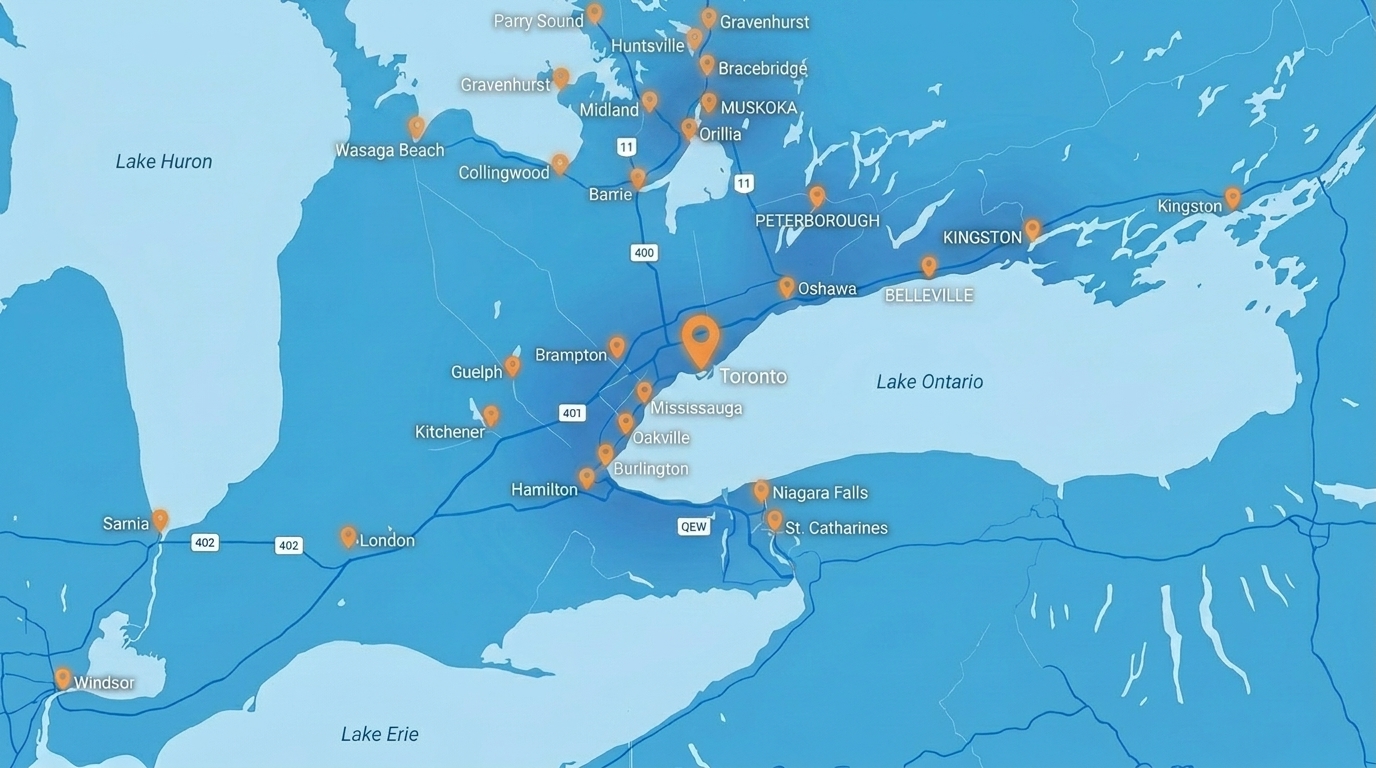
Select a commercial roofing or insulation hub below, or click your municipality for local Ontario service specs: