Water Storage Tank, Fire Cistern & Industrial Silo Spray Foam Insulation Cost in Ontario (2026 Contractor Guide)
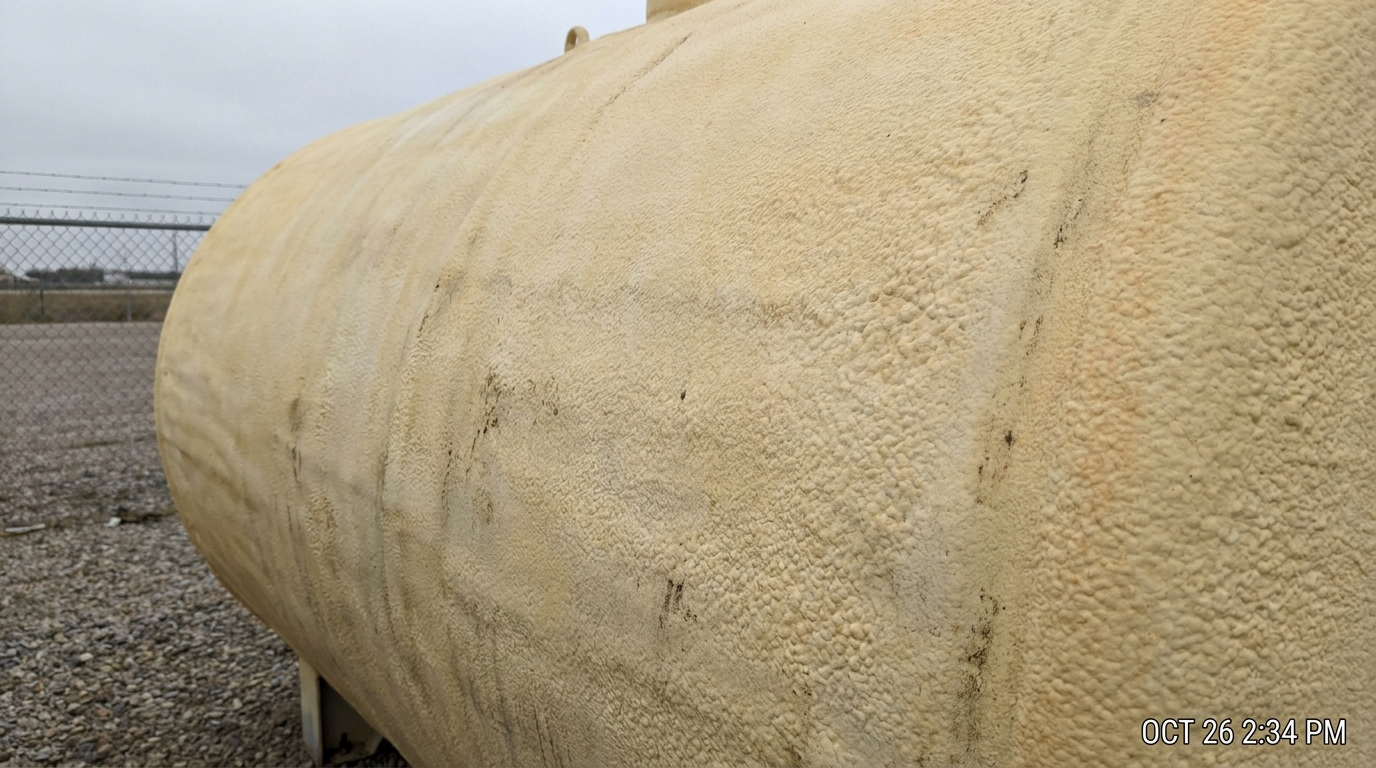
Insulating cylindrical water storage tanks, fire protection cisterns, municipal digesters, and agricultural silos across Toronto, the GTA, Niagara, and rural Ontario requires completely different engineering than flat-wall building insulation. Whether you manage a 100,000-gallon NFPA 22 fire protection water tank outside a Brampton logistics warehouse, a fleet of stainless-steel glycol wine fermentation tanks in Niagara-on-the-Lake or Prince Edward County, a municipal wastewater anaerobic digester, or a 30-foot diameter agricultural grain and liquid-feed silo in Southwestern Ontario, curved steel and concrete vessels expand and contract under extreme thermal stress while facing -25°C to -35°C winter wind chills and intense summer solar UV radiation.
Traditional mineral wool or fiberglass blanket insulation strapped under riveted aluminum sheet-metal jacketing (lagging) leaves hollow air annuli against the tank shell—allowing wind-driven rain and humid summer air to condense against the cold metal skin and trigger hidden Corrosion Under Insulation (CUI). That is why Ontario plant engineers, civil contractors, wineries, and agribusinesses specify 2 lb medium-density closed-cell spray polyurethane foam (CAN/ULC-S705.1) paired with a seamless 30 to 45 mil UV-stable silicone, acrylic, or polyurea elastomeric protective coating, installed by Sprayfoam Solutions Toronto Inc. (Caliber Certified & CAN/ULC-S705.2 Licensed Installers). Check your project pricing in 60 seconds at spfsolutions.ca/price-chat and claim a $250 Credit on Your Estimate with No Site Visit Required.
Compare our 3 turnkey commercial, municipal, and agricultural vessel insulation specifications before running your 60-second square-foot calculation:
- 2.0"–3.5" Closed-Cell 2 lb SPF (R-12 to R-21)
- Stops Glycol/Cold-Water Tank Sweating
- Includes $250 Estimate Credit
- 3.0"–4.0" Closed-Cell 2 lb (R-18 to R-24) + 30–35 Mil UV Elastomeric Membrane
- CUI & Freeze Protection
- 3.5"–5.0" High-Compressive (>25–30 PSI) SPF + 40–45 Mil Heavy-Duty UV/Hail Topcoat
- Volume Fleet Discounts
2026 Water Tank, Silo & Process Vessel Spray Foam + UV Coating Cost Per Sq Ft in Ontario
Industrial tank and silo spray foam is engineered and priced by surface square footage (π × Diameter × Height for the vertical cylinder shell, plus π × Radius² × Roof Pitch Factor for conical or domed tank roofs) and board-foot foam thickness (1 sq ft at 1 inch thick). In 2026, our Ontario installed rate for CAN/ULC-S705.1 2 lb closed-cell vessel spray foam averages $1.15 to $1.55 per board foot, while a seamless 30 to 45 mil UV-stable elastomeric silicone, high-solids acrylic, or aliphatic polyurea protective coating adds $2.50 to $5.25 per sq ft depending on hail/abrasion exposure and high-reach boom-lift rigging requirements.
| Vessel Type / Industrial Application | Recommended SPF Depth & R-Value | Protective Topcoat Spec | 2026 Installed Cost (/sq ft) | Core Engineering Function |
|---|---|---|---|---|
| Interior Chilled-Water, Buffer & Brewery Glycol Tanks | 2.0" – 3.0" Closed-Cell 2 lb (R-12 to R-18) | Uncoated or Washdown Acrylic Vapour Coat | $3.40 – $5.60 / sq ft | Stops Indoor Tank Sweating, Drip Pans & Chiller Load |
| Niagara & PEC Winery Fermentation / Wine Storage Vessels | 2.5" – 3.5" Closed-Cell 2 lb (R-15 to R-21) | 25–30 Mil Cleanable Food/Beverage Elastomeric | $5.25 – $7.85 / sq ft | Holds Strict 10°C–15°C Fermentation Temps Year-Round |
| Exterior Potable Water & Fire Protection Cisterns (NFPA 22) | 3.0" – 4.0" Closed-Cell 2 lb (R-18 to R-24) | 30–35 Mil UV-Stable Silicone or Acrylic Coating | $6.80 – $9.50 / sq ft | Prevents Winter Ice Plugging & Valve/Standpipe Freeze |
| Agricultural Grain Silos, Liquid Feed & Fertilizer Tanks | 2.0" – 3.5" Closed-Cell 2 lb (R-12 to R-21) | 30 Mil High-Reflectivity White UV Elastomeric | $5.75 – $8.60 / sq ft | Stops Sidewall Moisture Migration, Spoilage & Bridging |
| Municipal Anaerobic Digesters & Wastewater Clarifier Tanks | 3.5" – 5.0" Closed-Cell 2 lb (R-21 to R-30) | 35–45 Mil Chemical/UV Silicone or Polyurea | $7.90 – $11.50 / sq ft | Maintains +37°C Mesophilic / +55°C Thermophilic Digestion |
| Cryogenic CO₂, Liquid Nitrogen & Chemical Process Vessels | 4.0" – 6.0" Multi-Pass Closed-Cell (R-24 to R-36) | 40–45 Mil Vapor-Tight Elastomeric + Joint Seal | $8.50 – $11.50+ / sq ft | Multi-Lift Cryogenic Thermal Break & Zero Ice Jacket |
| Base-Ring Chime, Manway Skirt & Valve Box Encapsulation | 3.0" – 4.0" High-Density Tapered Bevel | Reinforced Elastomeric Flashing Embedment | $6.50 – $9.80 / lin. ft. | Eliminates Base-Plate Water Infiltration & Chime Rust |
Worked Tank & Silo Cost Examples (10,000-Gallon Fire Cistern, 30-Ft Silo & 100,000+ Gallon Municipal Tank)
General contractors, facility managers, and farm operators comparing budgets through our general contractor & industrial estimating desk often need rapid turnkey numbers based on vessel capacity or diameter. Because high-reach boom lifts, heated chemical proportioners, and surface-prep equipment mobilize once per site, multi-tank farms and large-surface vessels over 3,500 sq ft unlock 12% to 22% volume unit-rate savings:
| Worked Vessel Project Scope (Ontario 2026) | Net Sprayable Surface Area (Shell + Roof) | Specified Foam + UV Coating Assembly | 2026 Turnkey Installed Price | Net Cost After $250 Credit |
|---|---|---|---|---|
| 10,000-Gallon Fire Protection Cistern (12 ft Dia × 12 ft High Steel Tank) | ~565 – 650 sq ft (Cylinder + Dome) | 3.0" Closed-Cell 2 lb (R-18) + 30 Mil UV Silicone | $4,600 – $6,200 | $4,350 – $5,950 |
| 25,000-Gallon Industrial Process / Buffer Tank (15 ft Dia × 20 ft High) | ~1,120 – 1,250 sq ft | 3.5" Closed-Cell 2 lb (R-21) + 35 Mil UV Elastomeric | $8,400 – $11,500 | $8,150 – $11,250 |
| Winery / Brewery 6-Tank Fermentation Pod (Six 10,000L Jacketed Vessels) | ~1,600 – 2,100 sq ft (Combined Fleet) | 2.5" Closed-Cell 2 lb (R-15) + Washable Sanitary Topcoat | $9,200 – $14,800 | $8,950 – $14,550 |
| 30-Foot Diameter Agricultural / Industrial Silo (30 ft Dia × 40 ft High) | ~4,500 – 4,900 sq ft (Walls + Cone Roof) | 2.5"–3.0" Closed-Cell 2 lb + 30 Mil White UV Acrylic | $26,500 – $38,200 | $26,250 – $37,950 |
| 100,000+ Gallon Municipal / Fire Reserve Tank (28 ft Dia × 24 ft High) | ~2,750 – 3,200 sq ft | 4.0" Closed-Cell 2 lb (R-24) + 40 Mil UV Silicone/Polyurea | $22,800 – $31,500 | $22,550 – $31,250 |
| 500,000-Gallon Municipal Digester / Storage Dome (55 ft Dia × 32 ft High) | ~8,000 – 9,200 sq ft | 4.0"–5.0" High-Compressive SPF + 45 Mil Heavy Elastomeric | $64,000 – $94,000 | $63,750 – $93,750 |
Fire Protection Water Tanks, Municipal Anaerobic Digesters & Industrial Process Vessels
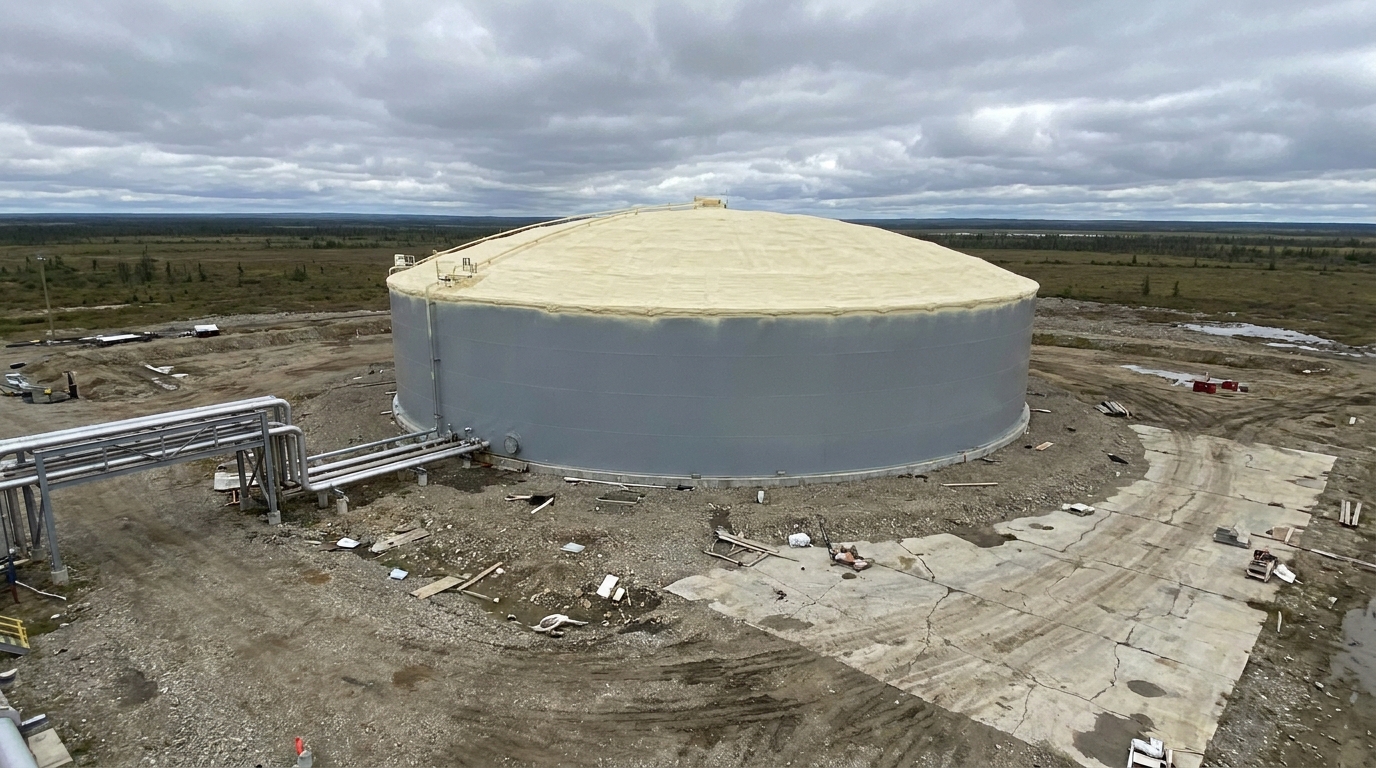
Across unserviced commercial industrial parks in Vaughan, Caledon, Milton, Hamilton, and Rural Ontario, above-ground bolted-steel and welded-steel fire protection cisterns supply emergency sprinkler demand under Ontario Building Code and NFPA 22 (Standard for Water Tanks for Private Fire Protection). If a fire cistern loses thermal stability during a -25°C January cold snap, ice lenses form across the upper water surface and freeze the suction standpipe or immersion heater—crippling the building’s fire suppression system. Spraying 3.0 to 4.0 inches of CAN/ULC-S705.1 2 lb closed-cell foam (R-18 to R-24) directly onto the primed exterior steel shell cuts electric immersion-heater kilowatt draw by 65% to 80% while encapsulating bolts, chimes, and manways in a waterproof blanket.
Similarly, municipal water and wastewater authorities operating anaerobic digesters, sludge holding tanks, and biological equalization vessels must hold interior biomass at strict mesophilic (+35°C to +38°C) or thermophilic (+50°C to +57°C) temperatures regardless of winter blizzards. A monolithic 3.5" to 5.0" closed-cell polyurethane shell eliminates convective heat loss through concrete or steel tank walls, stabilizing methane biogas production and preventing thermal shock to biological treatment bacteria.
Niagara & PEC Winery Fermentation Tanks, Brewery Glycol Vessels & Agricultural Silos
In Ontario’s premier food, beverage, and agricultural corridors—including Niagara-on-the-Lake, Lincoln, Grimsby, Vineland, Prince Edward County, Norfolk County, and Bruce/Grey/Huron/Perth counties—vessel insulation directly protects product chemistry and harvest margins (just like our agricultural cold storage spray foam systems and Ontario barn spray foam insulation):
- Winery Stainless-Steel Fermentation & Cold-Stabilization Tanks: Outdoor and semi-sheltered crush-pad tanks rely on glycol dimple jackets to hold white must at 10°C–13°C, red ferments at 22°C–28°C, and tartrate cold stabilization at -2°C to -4°C. Encapsulating tank shells and cones in 2.5" to 3.5" of 2 lb closed-cell foam with a washable food-facility elastomeric finish slashes glycol chiller compressor runtime by 45% to 60% and stops summer condensation streams on winery floors.
- Craft Brewery Bright Tanks, CLT (Cold Liquor Tanks) & Glycol Loops: Uninsulated or poorly jacketed cold liquor tanks sweat continuously in humid brewhouses, breeding mould around tank legs and overloading glycol chillers. Closed-cell spray foam bonds tightly around sight glasses, sample ports, CIP piping, and manway collars with zero air gaps.
- Agricultural Grain Silos, Harvestore® Units & Liquid Fertilizer Tanks: When daytime sun heats one side of an uninsulated steel grain bin and night temperatures plunge below freezing, internal moisture migrates toward the cold steel wall—causing crusting, mould spoilage, and grain bridging. Applying 2.0" to 3.0" of high-compressive closed-cell foam on the exterior or interior silo wall stops diurnal temperature swings and structurally stiffens wind-loaded corrugated steel rings.

High-Compressive 2 lb Closed-Cell Spray Foam (>25 PSI) & UV-Stable Elastomeric Topcoat Engineering
Insulating a vertical steel cylinder, bolted-panel cistern, or conical hopper requires materials engineered for thermal cycling, hydrostatic hoop expansion, and wind-uplift shear. All vessel insulation installations performed by Sprayfoam Solutions Toronto Inc. comply with the 2026 Ontario Building Code and utilize CCMC-evaluated CAN/ULC-S705.1 medium-density closed-cell polyurethane chemistry (see our technical breakdown of Open-Cell vs. Closed-Cell Spray Foam Physics and Commercial Building Envelope Engineering).
Why Cylindrical Steel & Concrete Tanks Require Monolithic CAN/ULC-S705.1 Closed-Cell Foam to Stop Corrosion Under Insulation (CUI)
Corrosion Under Insulation (CUI) is the #1 cause of catastrophic tank-wall pitting, weld-seam weeping, and premature vessel replacement in North American industrial facilities. When a tank is wrapped with fibrous mineral wool or fiberglass blankets beneath sheet-metal cladding, thermal expansion breaks the caulked metal seams within 2 to 3 Ontario winters. Rainwater, snowmelt, and humid summer air enter the annular space, soak the fibrous insulation, and sit trapped against the warm or cycling carbon-steel shell—accelerating hidden galvanic and chloride corrosion out of sight of plant inspectors.
By contrast, CAN/ULC-S705.1 2 lb closed-cell spray foam is sprayed as a liquid directly onto the clean, primed steel or concrete substrate, expanding 30-fold within seconds to form a 100% monolithic, chemical-adhesion bond across every weld seam, bolt head, chime angle, and stiffener ring. Because closed-cell foam consists of >95% non-interconnected gas cells with a water-absorption rate below 1% by volume (ASTM D2842) and a Class 1 vapour permanence rating (<60 ng/Pa·s·m²), zero air gap exists between the steel skin and the insulation—making CUI physically impossible.
Protecting Exterior Tank Foam From UV Degradation With Silicone, Acrylic & Polyurea Elastomeric Membranes
While closed-cell polyurethane spray foam is waterproof and structurally rigid, uncoated polyurethane foam must never be left exposed to direct outdoor sunlight. Ultraviolet (UV-A and UV-B) solar radiation oxidizes exposed polyurethane polymers within weeks, turning the outer surface powdery, orange, and friable at a rate of ~1/16 inch per year. Once moisture penetrates UV-chalked foam, freeze-thaw ice crystal expansion degrades the outer foam skin.
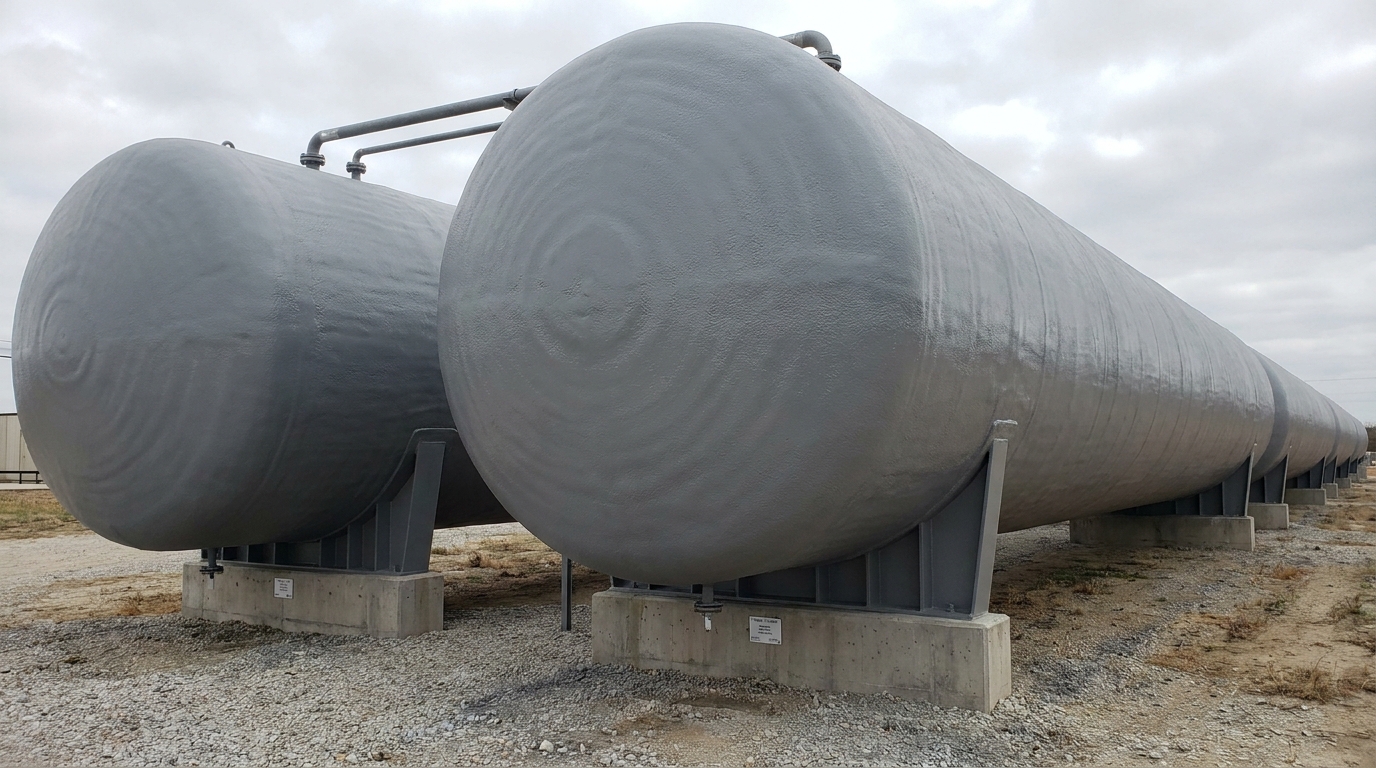
To guarantee a 20 to 30+ year service life on exterior Ontario tanks and silos, our crews spray an immediate protective elastomeric membrane over the cured closed-cell foam (30 to 45 mils Dry Film Thickness):
- High-Solids Alkoxy Silicone Elastomeric Coating (30–40 Mil DFT): Our #1 specification for outdoor municipal water tanks, fire cisterns, and digesters. High-solids silicone offers 85%+ solar reflectivity, permanent flexibility down to -45°C, superior resistance to ponding water on flat or low-slope tank roofs, and breathable weatherproofing.
- Elastomeric High-Build Acrylic Membrane (30–35 Mil DFT): Ideal for vertical agricultural grain silos, feed bins, and sheltered winery/industrial vessels where high tensile elongation (>250%), bright white solar reflectance, and economical recoating cycles are prioritized.
- Plural-Component Aliphatic Polyurea / Polyurethane Armor (40–60 Mil DFT): Specified for heavy industrial process tanks, chemical plants, base-ring impact zones, and severe hail or bird-pecking environments requiring extreme Shore D hardness, chemical splash resistance, and high puncture strength.
Solvent wash, profile prep & corrosion-inhibiting primer.
Locks onto carbon steel, stainless & bolted seams.
Prevents Corrosion Under Insulation (CUI) at the root.
Every permanent tank insulation system begins at the substrate interface. Our crew pressure-washes and degreases the vessel shell, removes loose oxidation or chalk, verifies substrate temperature is at least 3°C (5°F) above the ambient dew point, and applies a corrosion-inhibiting primer on carbon or stainless steel so the closed-cell foam forms an unbreakable bond.
6 Critical On-Site Trade Rules for Insulating Industrial Water Tanks & Silos in Ontario
Spraying a 40-foot-tall cylindrical tank or outdoor fire cistern requires rigorous industrial field protocols. Our Caliber Certified (CAN/ULC-S705.2 Licensed) industrial crews enforce six non-negotiable engineering rules on every Ontario vessel project:
- 1. Steel, Stainless, FRP & Concrete Surface Prep + Adhesion Primer: Spray foam cannot bond over mill scale, compressor oil, diesel soot, or flaking tank paint. We pressure-wash, solvent-wipe, and mechanically scuff smooth stainless steel or fiberglass (FRP), then apply a manufacturer-approved epoxy or urethane tie-coat primer so the expanding 2 lb foam locks permanently onto the vessel skin.
- 2. Dew-Point Spread (≥3°C / 5°F) & Operating Fluid Temperature Control: Never spray closed-cell polyurethane foam onto a tank shell that is actively sweating or filled with 4°C cold well water on a humid summer morning. Moisture on the steel reacts with isocyanate chemistry, causing blistering and delamination. We verify steel skin temperature is at least 3°C (5°F) above the ambient dew point and coordinate with plant operators to lower water levels or warm the vessel wall prior to application.
- 3. Controlled Multi-Pass Lift Thickness (1.0" to 1.5" Maximum Per Pass): Applying 4 inches of closed-cell foam in a single heavy pass traps exothermic reaction heat (
>150°Cinternal core temp), causing foam scorching, cell elongation, and shrinkage cracks on curved tank shells. Our licensed applicators build 3" to 5" tank assemblies in controlled 1.0" to 1.5" passes, yielding maximum compressive strength (>25–30 PSI) and a smooth, orange-peel profile ready for elastomeric coating. - 4. Aerial Boom-Lift Wind Shrouds & Full Valve/Flange Masking (O. Reg. 213/91 Compliance): Outdoor silos and water towers act as wind tunnels. Our crews operate under strict Ontario Ministry of Labour O. Reg. 213/91 (Construction Projects) and Working at Heights protocols using 60-ft to 135-ft articulating boom lifts equipped with portable wind-containment curtains, while masking all pressure-relief valves, sight glasses, manways, ladder rungs, and adjacent vehicles against overspray.
- 5. Tapered 45° Water-Shedding Bevels at Base Chimes, Manways & Pipe Penetrations: Flat horizontal ledges around tank base-ring chimes, sample ports, and structural brackets trap standing water and ice. We sculpt and bevel foam terminations at a 45-degree downward shed angle and embed reinforced elastomeric fabric flashing at every metal-to-foam transition so rainwater drains cleanly away from the steel base plate.
- 6. Same-Day / Next-Day Pinhole-Free UV Elastomeric Topcoat Application: Freshly sprayed polyurethane foam should never sit uncoated in direct sunlight for more than 24 to 72 hours, or UV surface oxidation will impair topcoat adhesion. Our crew sprays the 30–45 mil UV silicone, acrylic, or polyurea basecoat and topcoat immediately after foam cure and verifies film thickness using wet-film and ultrasonic DFT gauges.
Closed-Cell Spray Foam + Elastomeric Coating vs. Fiberglass/Mineral Wool Metal Jacketing (Lagging)
Facility engineers and agricultural managers reviewing our 2026 Ontario Spray Foam Cost Guide and Commercial Warehouse Insulation Cost Guide frequently compare monolithic spray foam + elastomeric coating against traditional mineral wool or fiberglass pipe-and-tank lagging clad in corrugated aluminum. Here is why seamless spray foam outperforms mechanical metal jacketing on cylindrical vessels:
| Engineering & Lifecycle Metric | 2 lb Closed-Cell SPF + UV Elastomeric Coating | Mineral Wool / Fiberglass + Aluminum Lagging | Rigid Polyiso / XPS Board + Banded Cladding |
|---|---|---|---|
| Thermal Resistance (R-Value / Inch) | R-6.0 / inch (Monolithic, zero joint loss) | R-3.3 to R-4.0 / inch (Degrades if wet) | R-5.0 to R-5.6 / inch (Gaps on curved walls) |
| Corrosion Under Insulation (CUI) Risk | Virtually Zero (100% bonded to primed steel) | High (Annular air space traps condensation) | Moderate–High (Curved shell leaves hollow voids) |
| Fit on Domes, Cones, Bolts & Valves | 100% Seamless (Conforms to any complex curve) | Requires expensive custom-rolled gore metal sheets | Cannot bend smoothly around small-radius domes |
| Water & Vapour Permeability | Class 1 Vapour Barrier (<60 ng/Pa·s·m²) | Fibrous batts absorb water when caulked seams split | Water bypasses through hundreds of board joints |
| Installation Speed & Plant Downtime | 1 to 3 Days per Tank (Rapid mobile spray rig) | 1 to 3 Weeks (Manual banding, screwing & sheet rolling) | 1 to 2 Weeks (Labour-intensive kerf cutting) |
| Future Leak Inspection & Maintenance | Easy Local Cut-Out & Quick Foam/Coat Patch | Must strip entire aluminum rings to locate hidden leaks | Must dismantle banded panels across full section |
| 2026 Installed Cost (/sq ft in Ontario) | $6.80 – $11.50 / sq ft (Exterior UV Coated) | $14.00 – $26.00+ / sq ft (Custom metal fabrication) | $11.50 – $19.50 / sq ft (High fabrication labour) |
Province-Wide Self-Contained Mobile Spray Foam Fleet Dispatch Across Toronto, the GTA & Ontario
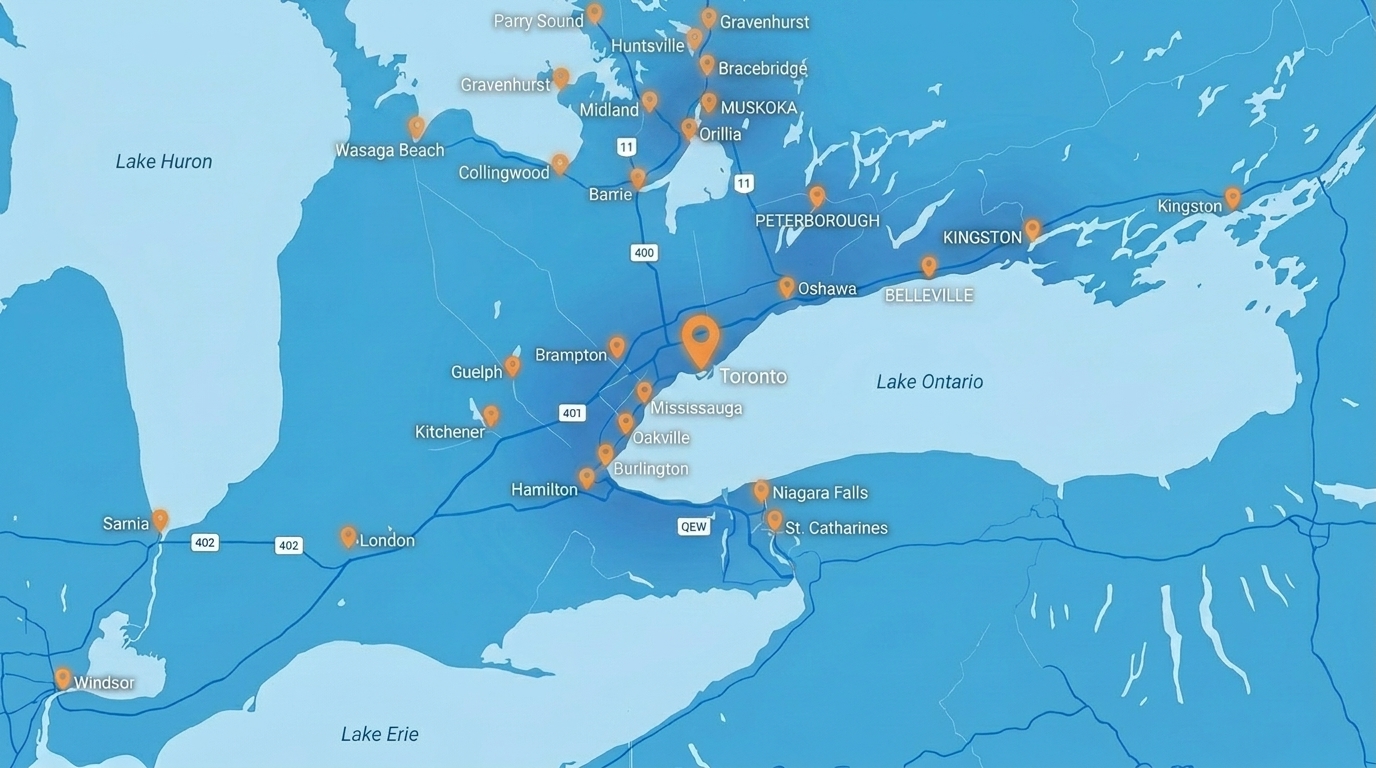
Unlike stationary shop applicators, Sprayfoam Solutions Toronto Inc. operates 100% self-contained commercial mobile spray foam rigs equipped with onboard diesel generators, industrial air compressors, air dryers, computerized plural-component proportioners, high-pressure airless elastomeric pumps, and 300+ feet of heated chemical hose. We charge $0 Travel Fee across Toronto and surrounding GTA municipalities, and deploy rapidly to wineries, farms, quarries, water treatment plants, and industrial sites across Niagara, Hamilton, Kitchener-Waterloo, London, Windsor, Barrie, Simcoe County, Prince Edward County, Kingston, Ottawa, and Northern Ontario.

We verify tank dimensions, operating temperatures, dew-point spreads, and boom-lift access.

Pressure washing, steel priming, masking valves/manways, and setting wind-containment shrouds.

Applying CAN/ULC-S705.1 2 lb closed-cell foam in 1.0"–1.5" lifts with tapered 45° drain bevels.

Spraying pinhole-free UV silicone/acrylic/polyurea topcoat and issuing Caliber Certified QA logs.
Select your industrial or agricultural service hub or local Ontario municipality below for engineering specs and mobile rig dispatch:
Frequently Asked Questions: Water Storage Tank & Silo Spray Foam Insulation in Ontario
In 2026, insulating an interior or sheltered tank with 2.0" to 3.5" of 2 lb closed-cell spray foam (CAN/ULC-S705.1) costs $3.40 to $6.25 per sq ft installed. For exterior water tanks, fire protection cisterns, and silos requiring 3.0" to 4.0"+ of closed-cell spray foam plus a 30–45 mil UV-stable silicone, acrylic, or polyurea elastomeric protective coating, turnkey installed pricing ranges from $6.80 to $11.50 per sq ft ($4,600–$6,200 for a 10,000-gallon cistern and $22,800–$38,200 for a 30-ft silo or 100,000-gallon municipal tank). Check your price in 60 seconds and claim a $250 Credit on Your Estimate at spfsolutions.ca/price-chat (No Site Visit Required).
Yes—100% of outdoor spray polyurethane foam installations must be encapsulated with a UV-stable elastomeric protective membrane (30 to 45 mils Dry Film Thickness). Direct sunlight (UV radiation) degrades and chalks unprotected polyurethane foam within weeks. Applying a high-solids alkoxy silicone, elastomeric acrylic, or aliphatic polyurea topcoat blocks solar UV degradation, sheds driving rain and hail, reflects up to 85%+ of summer radiant heat, and extends tank insulation service life to 20–30+ years with simple periodic topcoat maintenance.
Traditional fiberglass or mineral wool lagging leaves a hollow air space between the metal cladding and the carbon-steel or stainless-steel tank shell where rain and condensation accumulate—causing severe Corrosion Under Insulation (CUI). When Sprayfoam Solutions Toronto Inc. sprays CAN/ULC-S705.1 2 lb closed-cell foam directly onto a clean, primed tank wall, the foam forms a continuous, air-free chemical bond (>40 PSI tensile adhesion) and acts as a Class 1 vapour barrier (<60 ng/Pa·s·m²) with >95% closed-cell content, preventing water or oxygen from ever reaching the steel surface.
For optimal adhesion and cell structure under CAN/ULC-S705.2 installation standards, the steel or concrete tank substrate must be dry and at least 3°C (5°F) above the ambient dew point, typically between 10°C and 35°C (50°F–95°F). If a tank is full of 4°C–7°C well water during warm weather, the cold metal acts as a heat sink—causing surface condensation (sweating) and robbing the liquid foam of the exothermic heat needed to cure properly. We either spray before the tank is commissioned, drain the vessel below the spray line, or let stored water equilibrate to ambient temperature prior to spraying.
For above-ground NFPA 22 fire protection cisterns and industrial reserve tanks in Southern and Central Ontario (-20°C to -28°C winter design temperatures), 3.0 to 4.0 inches of 2 lb closed-cell spray foam (R-18 to R-24) paired with a thermostatically controlled immersion heater is the standard engineering specification. In Northern Ontario (-30°C to -40°C design lows) or on stagnant, low-turnover vessels, we apply 4.0 to 5.0 inches (R-24 to R-30) in multi-pass lifts to prevent ice bridging and suction-pipe freeze-up.
Yes—our Caliber Certified crews insulate stainless-steel wine fermentation tanks, cold-stabilization vessels, and craft brewery bright/glycol tanks across Niagara-on-the-Lake, Lincoln, Vineland, Prince Edward County, and the GTA. We degrease and profile the stainless shell, mask all glycol header manifolds, sample valves, thermowells, and manways, spray 2.5" to 3.5" of CAN/ULC-S705.1 closed-cell foam, and finish the vessel with a cleanable, food-facility-grade elastomeric coating that cuts glycol chiller energy consumption by 45% to 60%.
Unlike banded aluminum lagging—where dismantling a single sheet requires removing entire circumferential bands and scaffolding—spray foam allows localized surgical inspection. If an ultrasonic thickness test or weld inspection is required years later, a technician simply cuts a small bevelled plug out of the foam at the exact weld coordinate, performs the NDT inspection, and reseals the plug with closed-cell foam and elastomeric mastic in minutes without disturbing the rest of the vessel envelope.
We exclusively spray CCMC-evaluated CAN/ULC-S705.1 medium-density 2 lb closed-cell polyurethane foam systems—including BASF Walltite® Eco v.3, Huntsman Building Solutions (Icynene/Demilec), Johns Manville & other approved CCMC spray foam chemicals—formulated with zero-ozone-depleting HFO blowing agents. Every drum lot number, substrate temperature reading, dew-point check, and elastomeric dry-film thickness (DFT) measurement is recorded on your official CAN/ULC-S705.2 Caliber Certified QA log.
Sprayfoam Solutions Toronto Inc. (Serving Toronto, the GTA & Ontario • (647) 333-3626) dispatches self-contained mobile spray foam and elastomeric coating rigs with $0 Travel Fee across surrounding GTA municipalities and rapid province-wide mobilization to Niagara, Southwestern Ontario, Simcoe County, Eastern Ontario, and Northern Ontario. Check your instant ballpark estimate and lock in a $250 Credit on Your Estimate in 60 seconds at spfsolutions.ca/price-chat (No Site Visit Required).