Garage Spray Foam Insulation Cost in Ontario & Canada: 2026 Price Guide for 1-Car, 2-Car & Cold Bonus Rooms Above Garages
Garage Spray Foam Insulation Cost in Ontario & Canada: 2026 Ontario Overview & Code Essentials
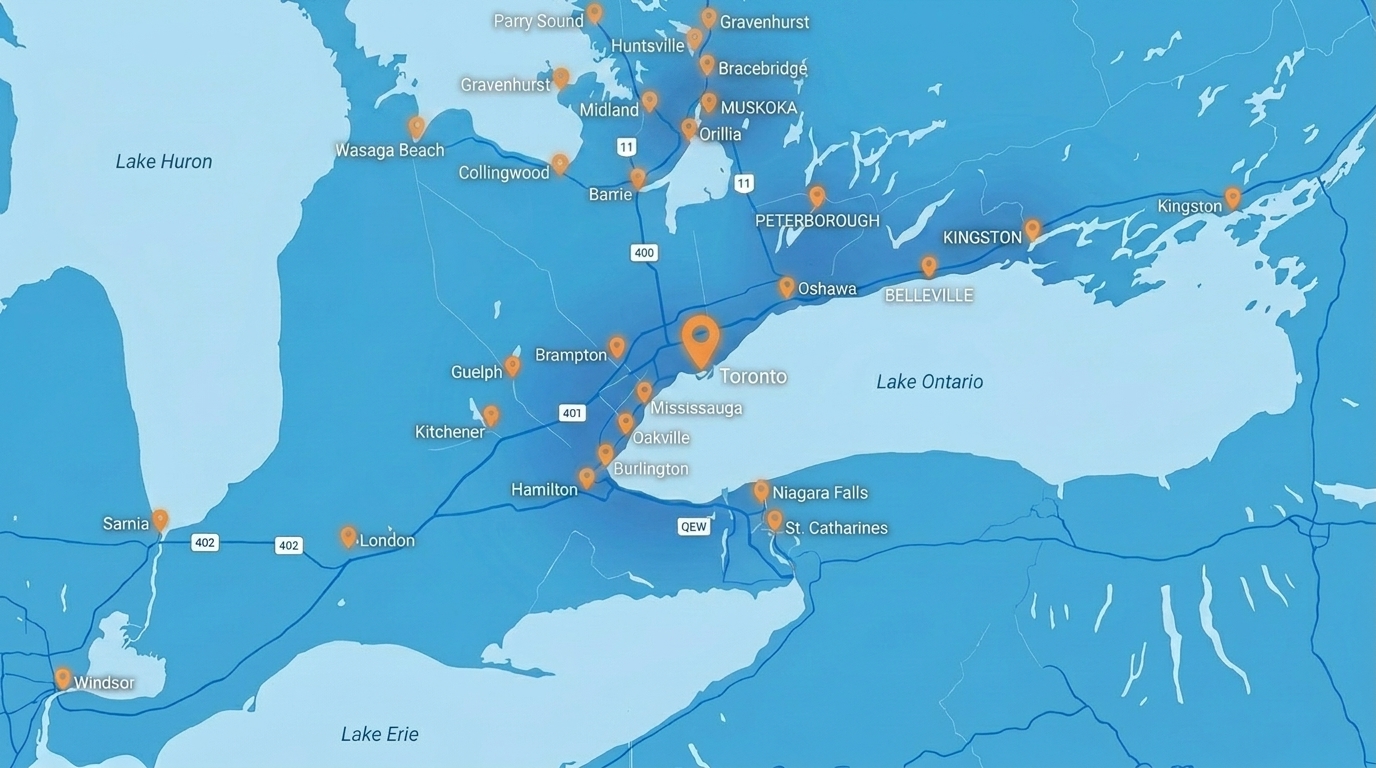
Whether you are fixing a freezing bonus room or bedroom over the garage in Mississauga, Vaughan, Oakville, or Barrie, or converting a drafty detached shop into a year-round heated workspace, upgrading to garage & floor-over-garage spray foam insulation solves the two biggest failures of builder-grade fiberglass batts: massive winter heat loss and dangerous vehicle exhaust infiltration.
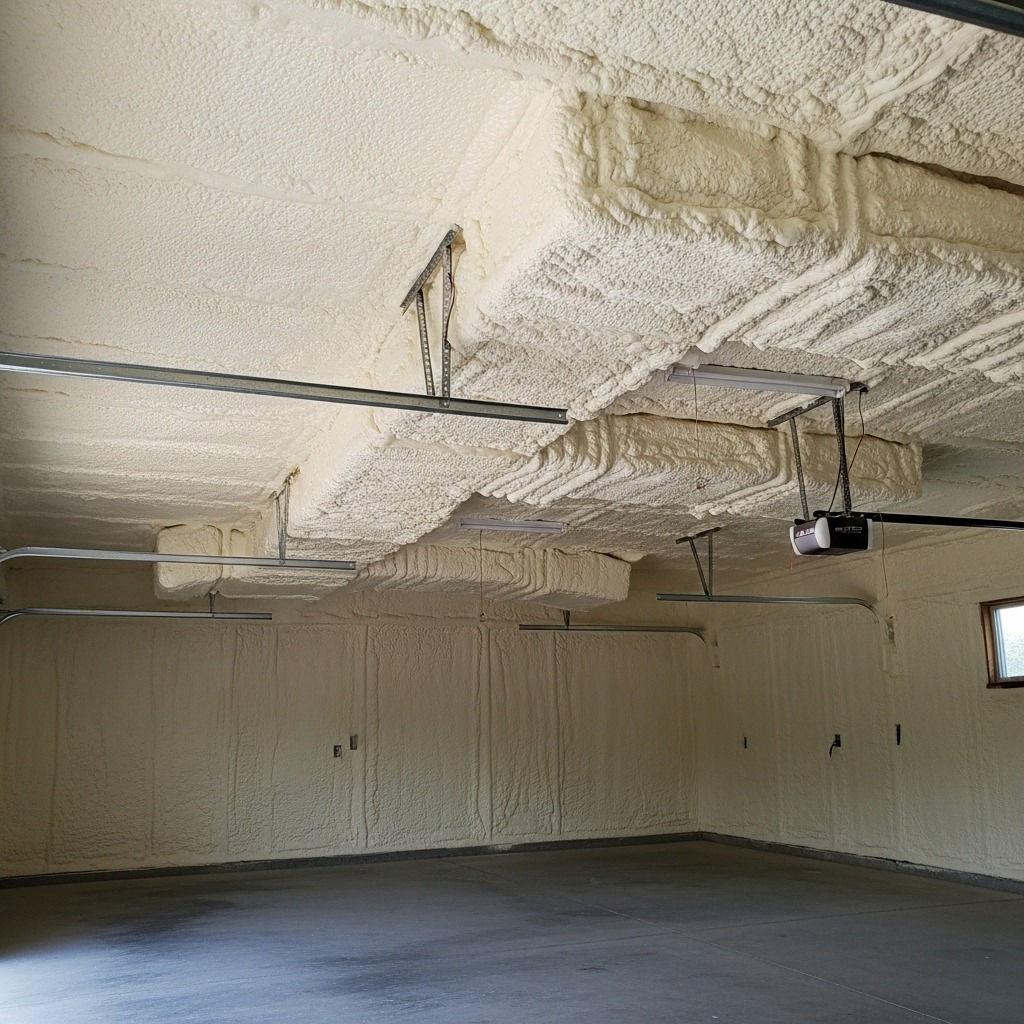
Across Toronto, the GTA, and Southern Ontario, Sprayfoam Solutions Toronto Inc. dispatches Caliber Certified (CAN/ULC-S705.2 Licensed) spray foam installers to seal attached garage ceilings, house-to-garage shared partition walls, rim joist headers, and full detached garage shops with 2 lb medium-density closed-cell spray polyurethane foam (CAN/ULC-S705.1). Get a $250 Credit on Your Estimate — Check Your Price in 60 Seconds (/price-chat) • No Site Visit Required.
Compare our 3 most popular GTA & Ontario residential garage spray foam packages before checking your exact square-foot price:
- 5.0" Closed-Cell 2 lb (R-31 Code Pass)
- Seals Cold Bonus Room Floors & Exhaust Fumes
- Includes $250 Estimate Credit
- 3.5" Walls (R-21) + 5.0" Ceiling (R-31)
- OBC 9.10.21.2 Gas Seal + Class 1 Vapour Barrier
- Includes $250 Credit
- 3.5"–5.0" Closed-Cell 2 lb Envelope
- Structural Wind-Racking Stiffness
- Includes $250 Estimate Credit
2026 Garage Spray Foam Cost in Ontario by Size (1-Car, 2-Car, 3-Car & Bonus Room Ceilings)
In Ontario and across Canada, residential spray foam insulation cost is calculated by board foot (1 sq ft at 1 inch thick), averaging $1.10 to $1.45 per board foot installed for certified 2 lb closed-cell spray foam (CAN/ULC-S705.1). The table below breaks down 2026 turnkey pricing across standard 1-car (12x20), 2-car (20x20), and 3-car (24x30) garages—including poly masking of garage door tracks, negative-pressure exhaust ventilation, application, and cleanup:
| Garage Scope / Dimensions | Recommended Foam Depth & R-Value | 2026 Installed Cost (/sq ft) | Typical Total Project Cost | Ontario Building Code Status |
|---|---|---|---|---|
1-Car Garage Ceiling Only(12x20 • 240 sq ft) | 5.0" Closed-Cell 2 lb (R-31 Exposed Floor) | $4.20 – $5.25 / sq ft | $1,350 – $1,850 | Passes OBC SB-12 R-31 + Gas Barrier |
2-Car Garage Ceiling / Bonus Room(20x20 • 400 sq ft) | 5.0" Closed-Cell 2 lb (R-31 Exposed Floor) | $4.10 – $5.25 / sq ft | $1,650 – $2,650 | Fixes Freezing Bedrooms + CO Seal |
1-Car Full Garage Walls + Ceiling(12x20) | 3.5" Walls (R-21) + 5.0" Ceiling(R-31) | $3.30 – $4.85 / sq ft | $2,100 – $3,400 | Full Heated Single Garage Envelope |
2-Car Full Garage Walls + Ceiling(20x20) | 3.5" Walls (R-21) + 5.0" Ceiling(R-31) | $3.25 – $4.85 / sq ft | $2,900 – $5,400 | Most Popular GTA Heated 2-Car Shop |
3-Car or Detached Workshop(24x30 • 720 sq ft) | 3.5" – 4.0" Walls + 5.0" Roof Deck | $3.10 – $4.65 / sq ft | $4,600 – $7,900 | Year-Round Heated Shop + Vapour Seal |
Old Drywall + Sagging Batt Removal(Add-On) | Ceiling Strip, Bagging & Disposal | $1.25 – $2.25 / sq ft | $550 – $1,100 | Exposes Subfloor & Ducts for Direct Bond |
Fixing the Freezing Bedroom or Bonus Room Above Your Garage ($1,650 – $2,650)
If the master bedroom or family bonus room over your attached 2-car garage is 5°C to 8°C colder than the rest of your home, builder-grade fiberglass batts are the culprit. When builders stuff R-31 fiberglass batts between 2x10 garage ceiling joists, cold air blows through the garage door header, travels along the steel I-beam pocket and HVAC supply ducts, and convects right through the porous batts against the OSB subfloor above.
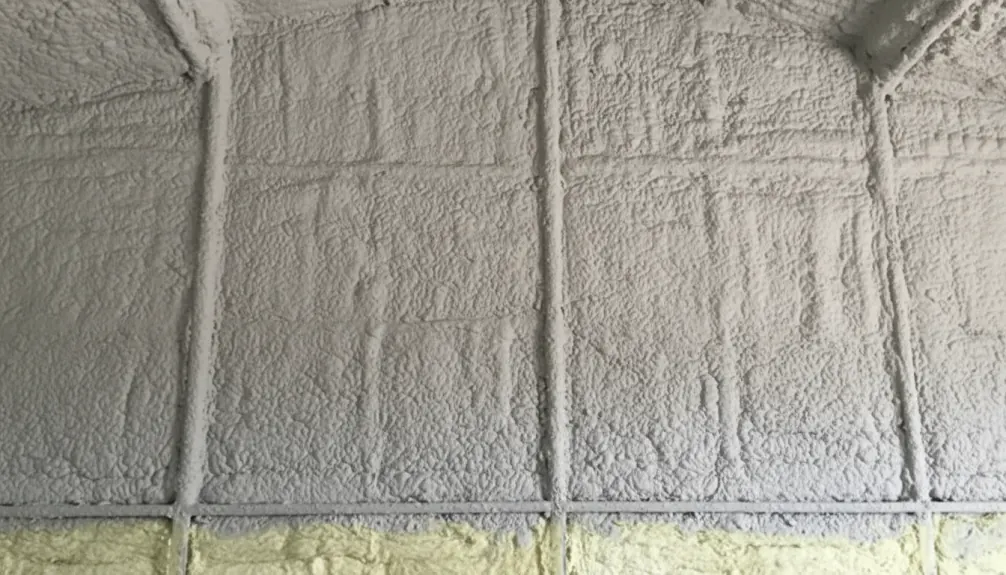
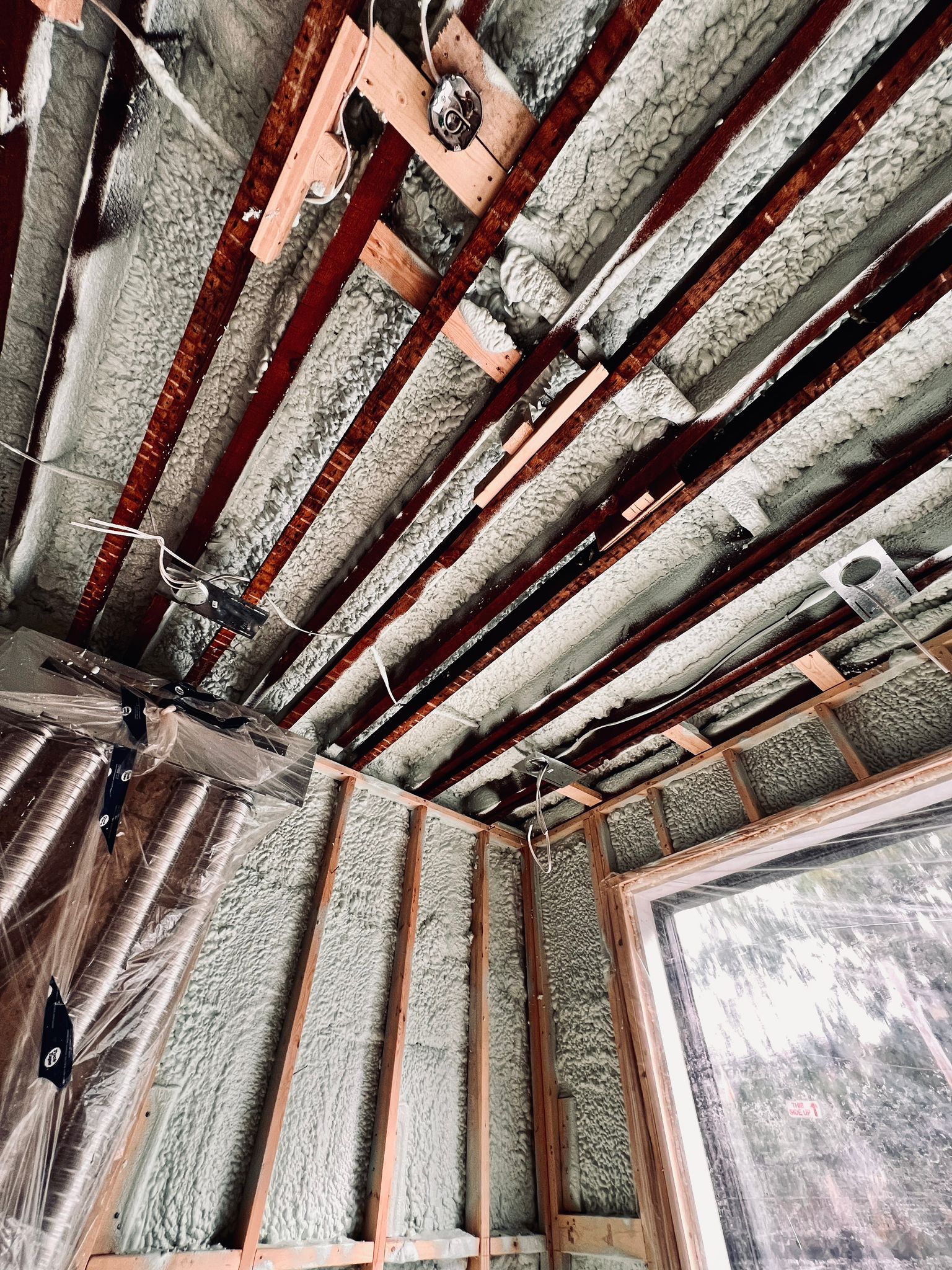
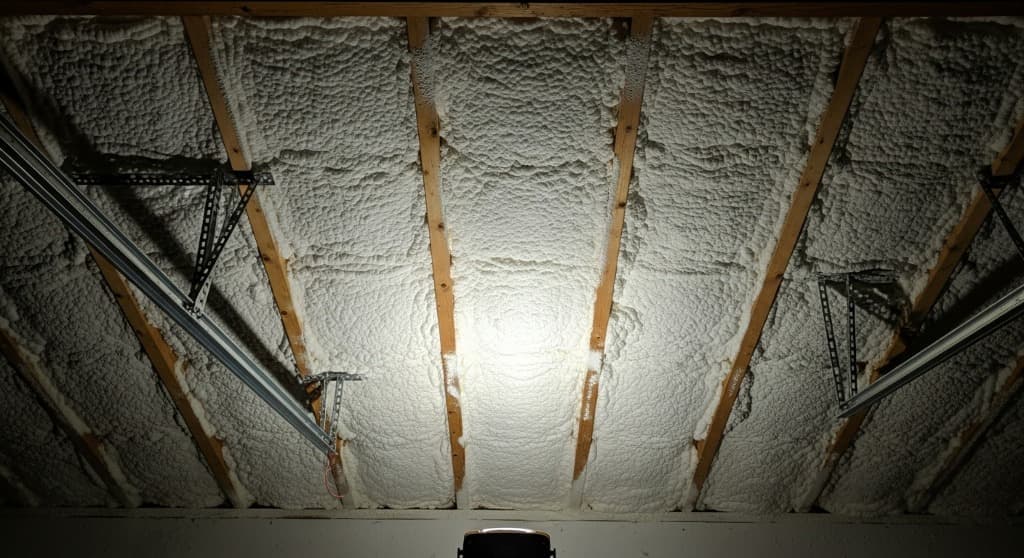
Our turnkey garage ceiling spray foam service strips out the sagging fiberglass, encapsulates the steel beam and heating ducts, and bonds 5.0 inches of 2 lb closed-cell spray foam (R-31) directly to the underside of your bedroom subfloor and rim joist headers—raising upstairs floor temperatures by 6°C to 10°C immediately.
Attached vs. Detached Garage Cost Breakdown (Walls, Roof Decks & Rim Joists)
Beyond fixing cold upstairs floors, homeowners and custom builders book Sprayfoam Solutions Toronto Inc. for three distinct garage configurations across Ontario (compare whole-home rates in our 2026 Ontario Spray Foam Cost Guide):
- Attached Garage Ceiling + House Partition Wall ($1,650 to $3,200): Focuses on isolating the unheated garage from the conditioned house envelope—spraying 5.0" of closed-cell foam (R-31) on the ceiling under bedrooms and 3.5"–4.0" (R-21 to R-24) on the shared wall adjoining your kitchen, mudroom, or basement foundation.
- Full Heated 2-Car Attached Garage (20x20 — $2,900 to $5,400): Insulates all exterior 2x4 or 2x6 stud walls, masonry block curbs, rim joists, and the ceiling so a single 5,000W electric ceiling heater or mini-split keeps the garage at a comfortable 16°C–20°C all winter for pennies a day.
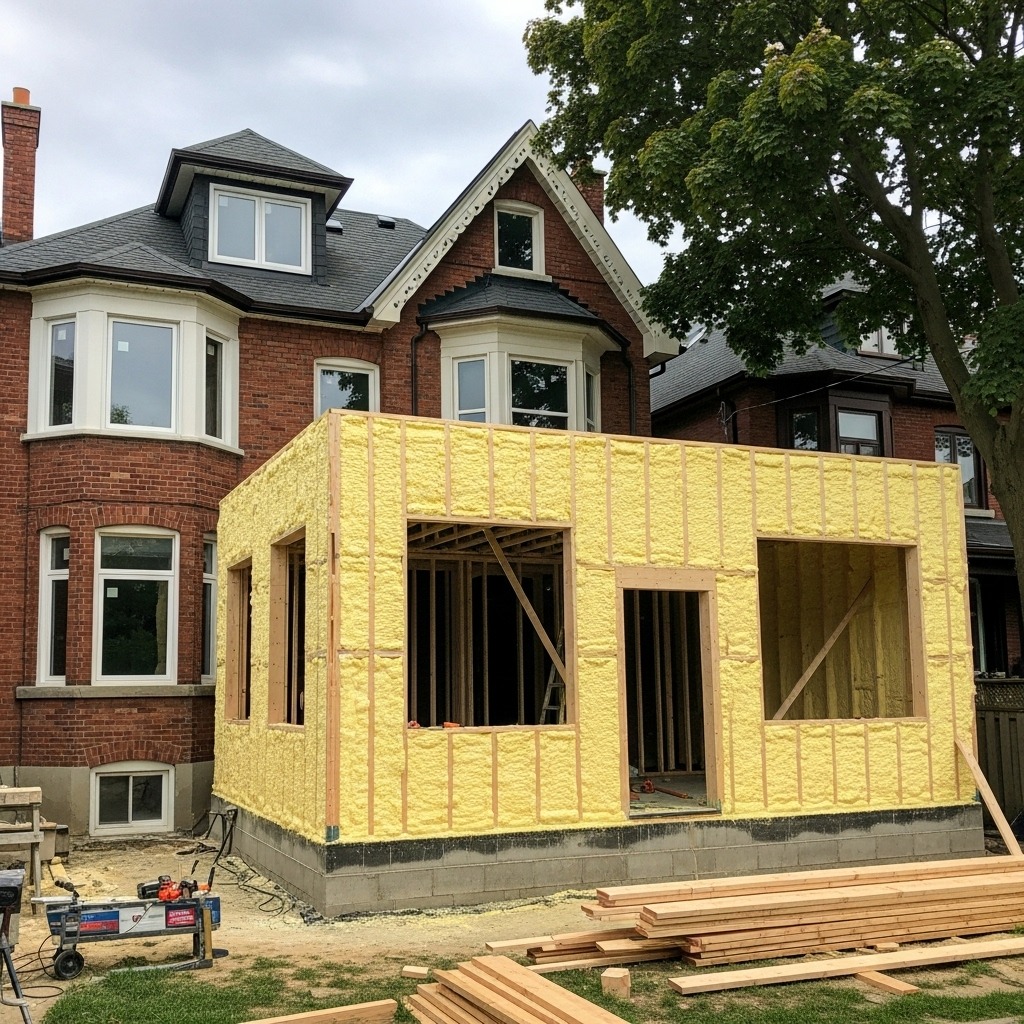
- Detached Garage, Coach House & Backyard Workshop (24x24 to 24x30 — $4,600 to $7,900): Spraying 3.5"–5.0" of 2 lb closed-cell foam directly to the wood or steel stud walls and vaulted roof deck increases structural wind-racking strength by up to 250% while eliminating condensation drips from metal or shingle roofs.
- Crawl Spaces & Cantinas Adjacent to Garages ($1,500 to $2,900): Many split-level GTA homes have an uninsulated crawl space or basement wall directly behind the garage slab that leaks freezing air into the lower family room; our crew seals both zones in the same mobilization.
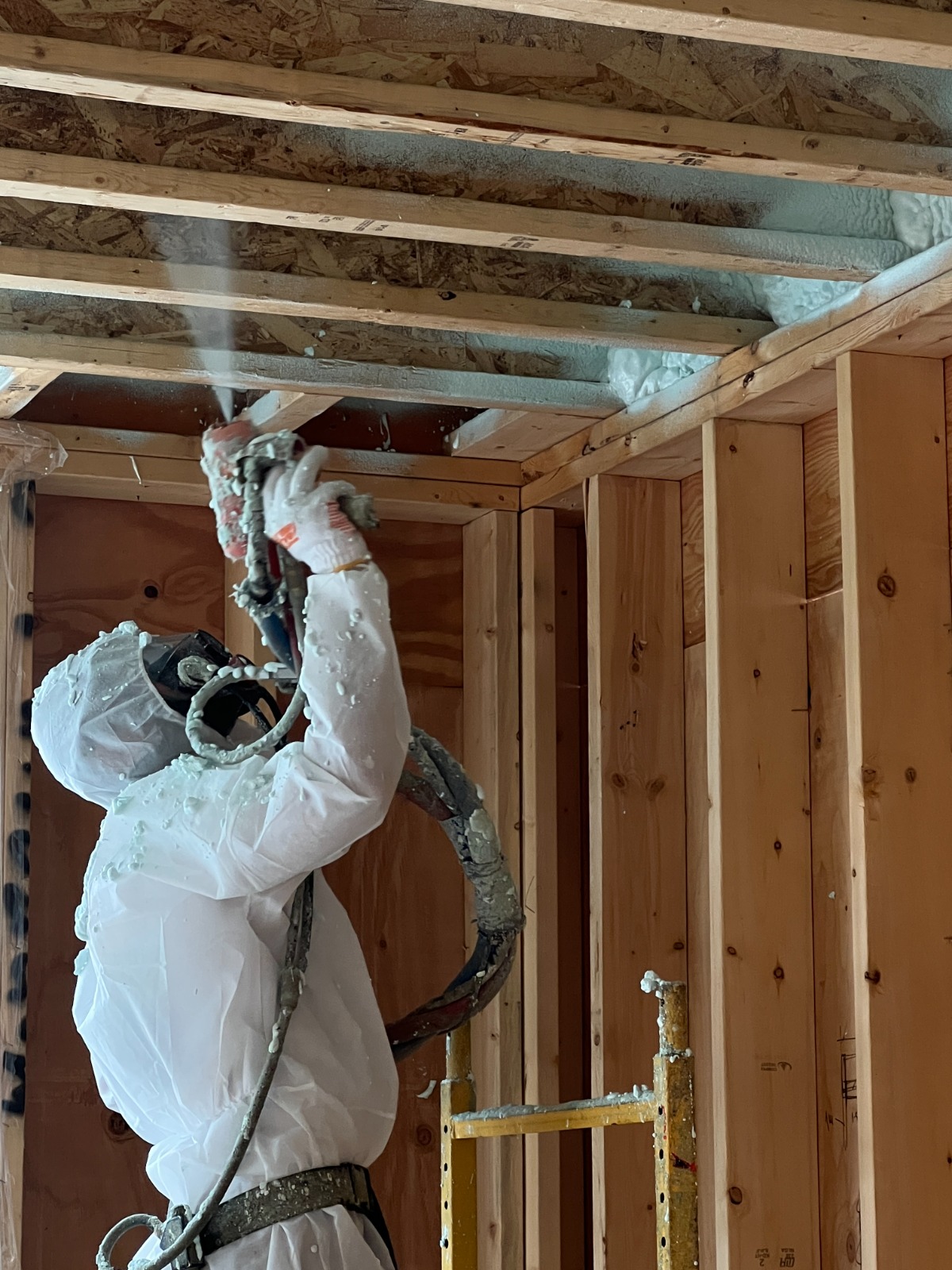
2026 Ontario Building Code Rules for Garage Insulation (OBC SB-12 R-31, Gas Barrier & Drywall Fire Code)
Insulating an attached garage in Ontario involves stricter life-safety and thermal rules than almost any other room in a house. Under 2026 Ontario Building Code Part 9 and Supplementary Standard SB-12, municipal building inspectors verify three mandatory requirements before signing off on an attached garage renovation:
OBC Section 9.10.21.2: Blocking Carbon Monoxide (CO) & Vehicle Exhaust Fumes
Warming up a car for even 60 seconds inside an attached garage releases concentrated carbon monoxide (CO), benzene, and gasoline fumes from stored lawnmowers, snowblowers, and jerrycans. Because warm air rises (the stack effect), negative pressure upstairs sucks garage air right through unsealed subfloor seams, pot lights, and heating ducts. At 2 inches or thicker, CAN/ULC-S705.1 CCMC-evaluated 2 lb closed-cell spray foam forms a monolithic, impermeable air and gas barrier that locks out noxious garage fumes and eliminates the need for separate 6-mil polyethylene sheeting (see our Vapour Barrier Technical Guide).
Thermal Barrier Fire Code (OBC 9.10.17.10): 1/2" Drywall vs. 5/8" Type X Firecode Board
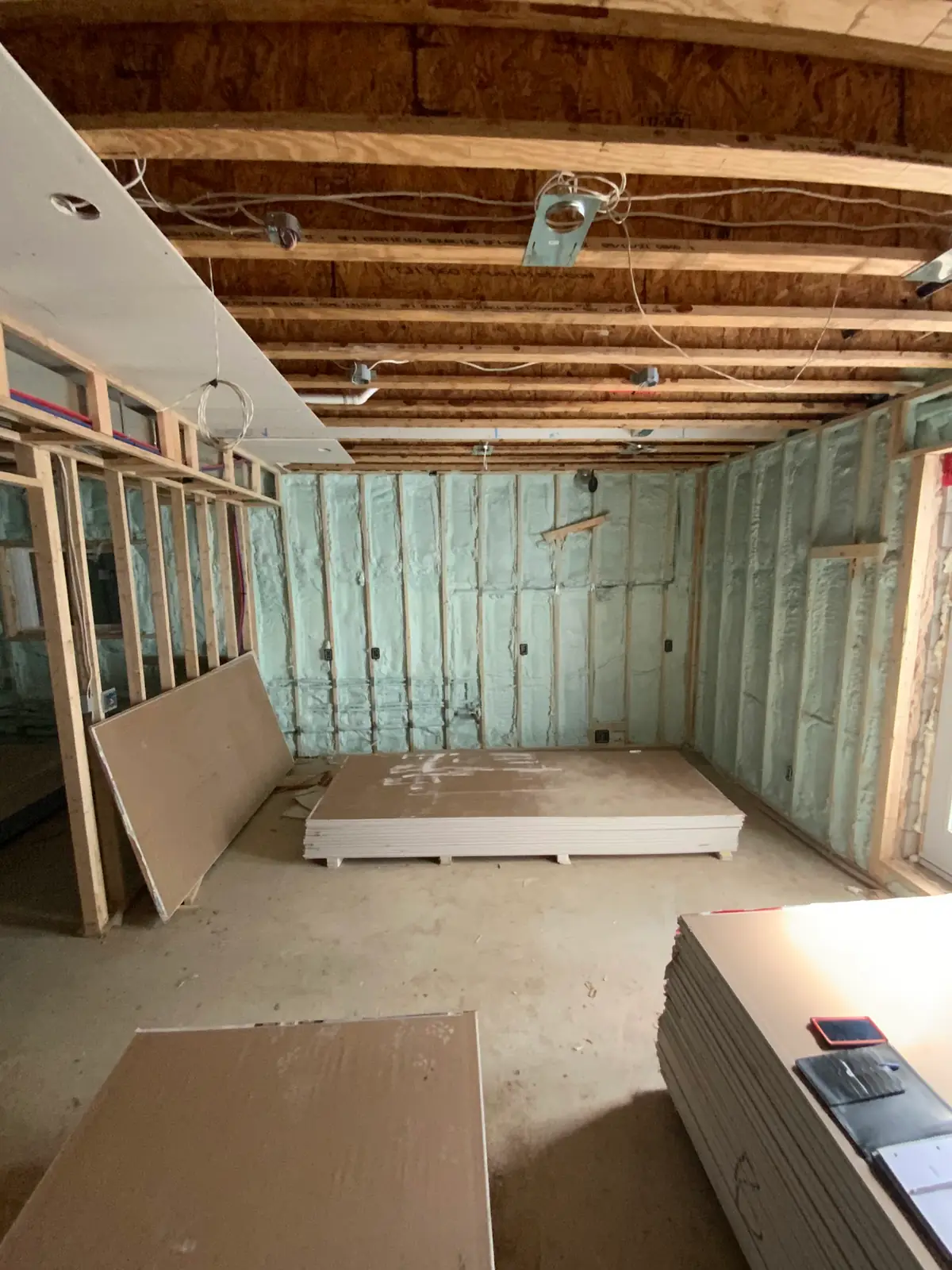
Under Ontario Building Code Section 9.10.17.10, spray polyurethane foam inside a residential garage must be covered by an approved 15-minute thermal barrier. On garage walls and ceilings, standard 1/2-inch gypsum drywall (or 5/8-inch Type X fire-rated drywall on ceilings directly beneath habitable bedrooms and shared house walls) satisfies municipal fire inspection.
Direct subfloor bond + CO gas barrier in one pass.
Encapsulates OSB subfloor, ducts & steel I-beams.
Eliminates freezing bedrooms & exhaust fumes.
Floors above unheated garages require R-31 under Ontario Building Code SB-12 plus a gas-tight air barrier under OBC 9.10.21.2. Spraying 5.0" of CAN/ULC-S705.1 2 lb closed-cell foam directly against the underside of the OSB subfloor and around steel beams stops thermal bridging, warms upstairs floors by 6°C–10°C, and blocks carbon monoxide.
6 Critical On-Site Trade Rules Before Spraying an Ontario Garage
Before our Caliber Certified (CAN/ULC-S705.2 Licensed) spray foam installers arrive at your home, we verify six garage-specific technical details that separate a permanent, code-compliant installation from cheap shortcuts:
- 1. Encapsulate the Structural Steel I-Beam & HVAC Ducts in the Garage Ceiling: Almost every 2-car GTA garage has a dropped steel I-beam and metal heating ducts supplying the bedroom above. Leaving the steel beam uninsulated creates a freezing thermal bridge and summer condensation line; we wrap the entire beam flange and duct boots in 2 lb closed-cell foam so warm air reaches your bedroom vents at full temperature.
- 2. Strip Old Ceiling Drywall & Sagging Batts for a Direct Subfloor Bond: Injecting foam blindly above old drywall overstuffed with dirty fiberglass leaves air pockets along the subfloor. Removing the ceiling drywall and old batts ($1.25–$2.25/sq ft optional tear-out) allows our sprayer to bond closed-cell foam directly to the OSB subfloor and rim joists.
- 3. Full Polyethylene Masking of Overhead Garage Door Tracks, Openers & Torsion Springs: Expanding polyurethane mist bonds permanently to bare metal rollers and chains if left unprotected. Our crew wraps all overhead door tracks, torsion springs, laser sensors, central vacuums, and EV chargers in heavy poly before spraying.
- 4. Seal the House-to-Garage Shared Partition Wall & Mudroom Entry Header: The framing junction where your garage roof or wall meets the main house brick and rim joist is notorious for massive air leakage. Sealing this shared partition wall stops freezing drafts from entering your main-floor hallway, kitchen, and powder room.
- 5. Protect Exposed Water Lines & Hose Bib Shut-Offs from Freezing: Many Ontario homes route domestic PEX or copper plumbing lines to exterior hose bibs through the garage ceiling. We keep plumbing pipes on the warm conditioned side of the subfloor and spray the closed-cell insulation envelope underneath the pipes so they never freeze during a -20°C cold snap.
- 6. Rough-In 240V EV Chargers, Sub-Panels & Shop Heaters Before Spray Day: Just like our basement insulation projects, complete all Electrical Safety Authority (ESA) rough-ins for Tesla/EV chargers, 240V ceiling heaters, and pot lights before we spray so cables are permanently sealed air-tight inside the foam.
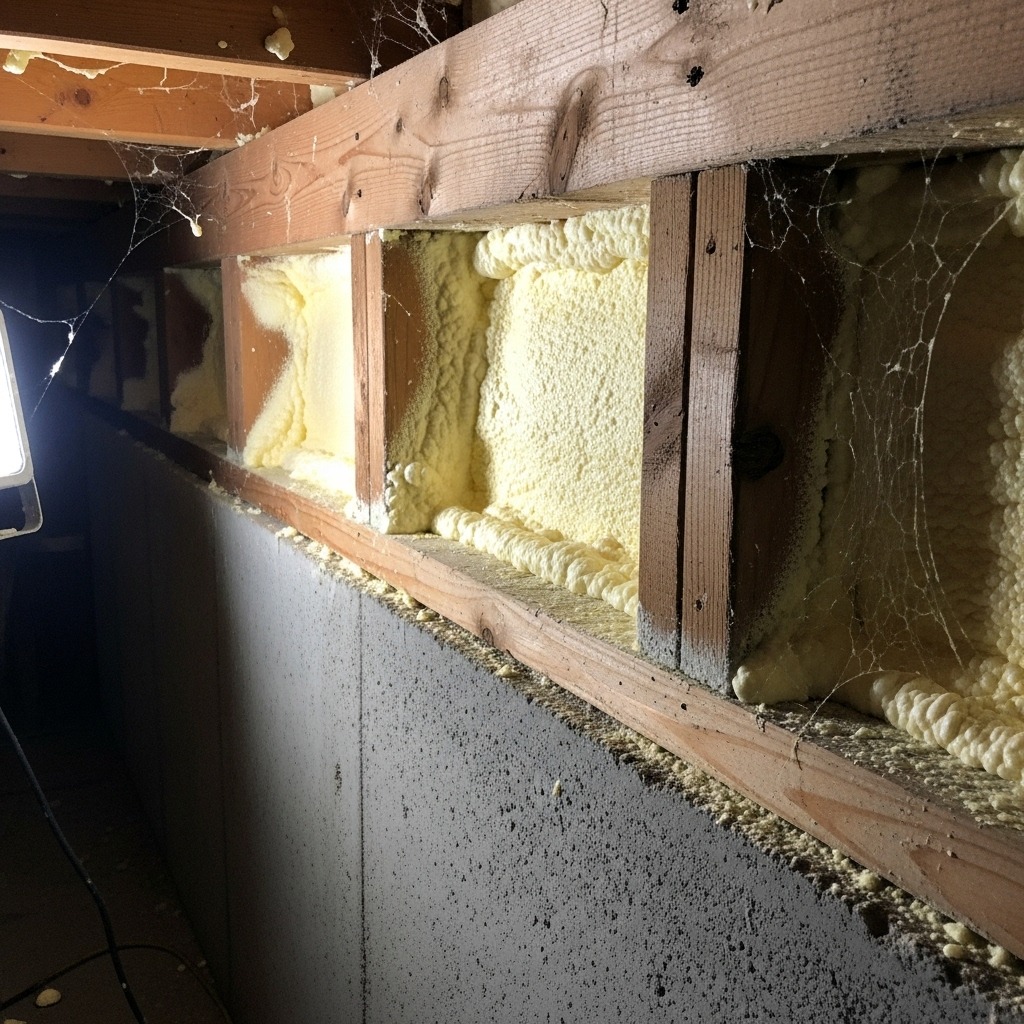
2 lb Closed-Cell Spray Foam vs. Open-Cell, Fiberglass Batts & Rigid Board in Garages
Why do building science engineers and Ontario municipal inspectors strongly prefer 2 lb closed-cell spray foam over 0.5 lb open-cell foam or fiberglass batts in garages? Garages are high-moisture environments where cars track in hundreds of pounds of melting snow and road salt every winter:
| Performance Metric | 2 lb Closed-Cell Spray Foam (CAN/ULC-S705.1) | 0.5 lb Open-Cell Spray Foam | Fiberglass / Mineral Wool Batts + Poly | Rigid Foam Board (XPS/EPS) |
|---|---|---|---|---|
R-Value Per Inch | R-6.0 / inch (R-31 in 5.0" ceiling) | R-3.6 / inch(Requires 8.5"+ for R-31) | R-3.2–R-3.7 / inch(Loses R-value in wind) | R-4.0–R-5.0 / inch(Hard to fit joists) |
OBC 9.10.21.2 Exhaust Gas Seal | Yes — Impermeable CO & Fume Barrier | Requires separate gas/vapour coating | Fails — Exhaust passes through batts | Leaks at every joist & pipe cutout |
Class 1 Vapour Barrier Built In | Yes — Certified at ≥2.0" Depth | No — Vapour permeable(absorbs dampness) | No — Requires 6-mil poly & acoustic tape | Only if every board joint is taped |
Melting Snow & Moisture Resistance | 100% Waterproof • Zero Mould Risk | Spongy structure can hold garage moisture | Traps condensation; sags & grows mould | Boards resist water; gaps trap moisture |
Structural Framing Stiffness | Increases wall racking strength +250% | Zero structural rigidity | Zero structural rigidity | Zero structural rigidity |
Same-Week Garage Spray Foam Installation Across Toronto & the GTA ($0 Travel Fee)
Most 1-car and 2-car garage ceiling or full-shop installations are completed in a single day (4 to 6 hours on site). Our mobile proportioner rigs carry heated hoses and onboard generators, and we charge $0 Travel Fee across Toronto and surrounding GTA municipalities.

We verify your garage dimensions, ceiling joist depth, and electrical/heater rough-ins for same-week dispatch.
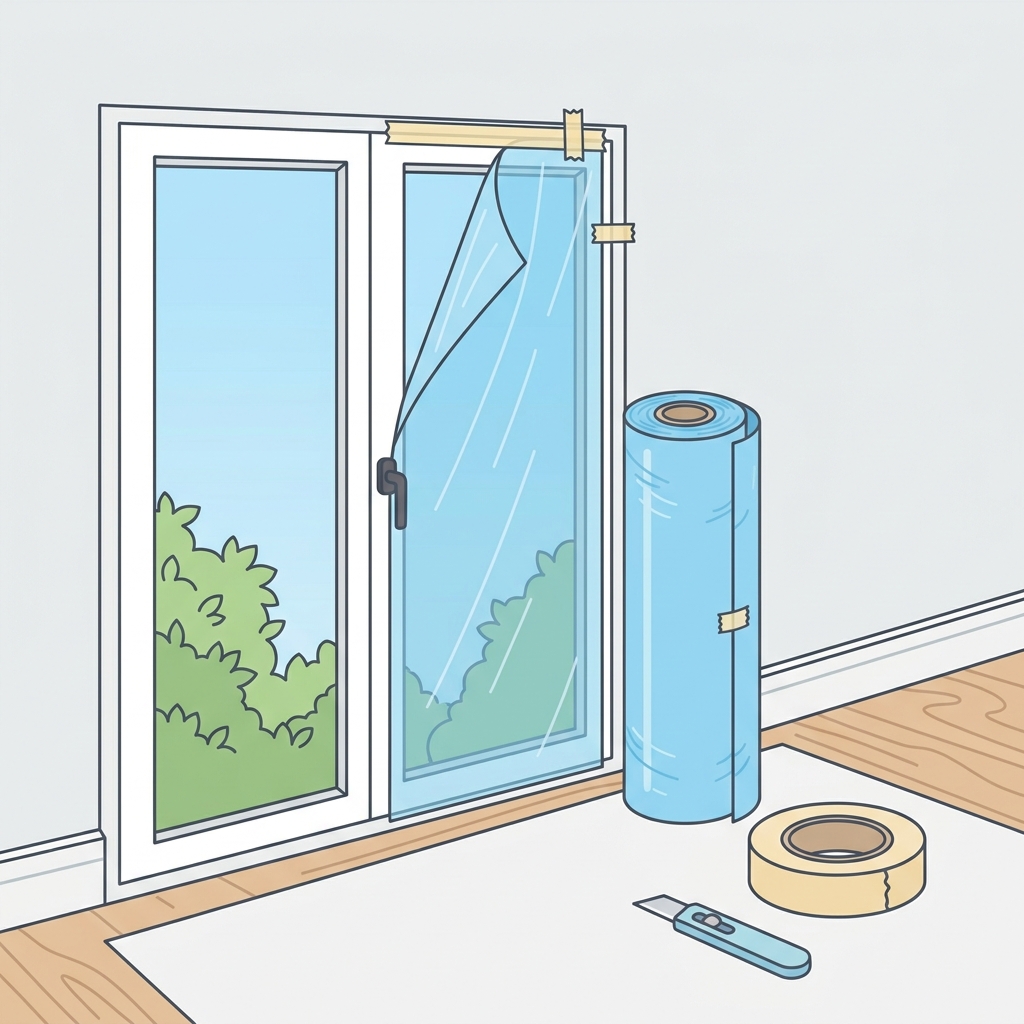
Full poly masking of overhead garage door tracks, springs, openers, floors, and walls with negative-pressure exhaust venting.
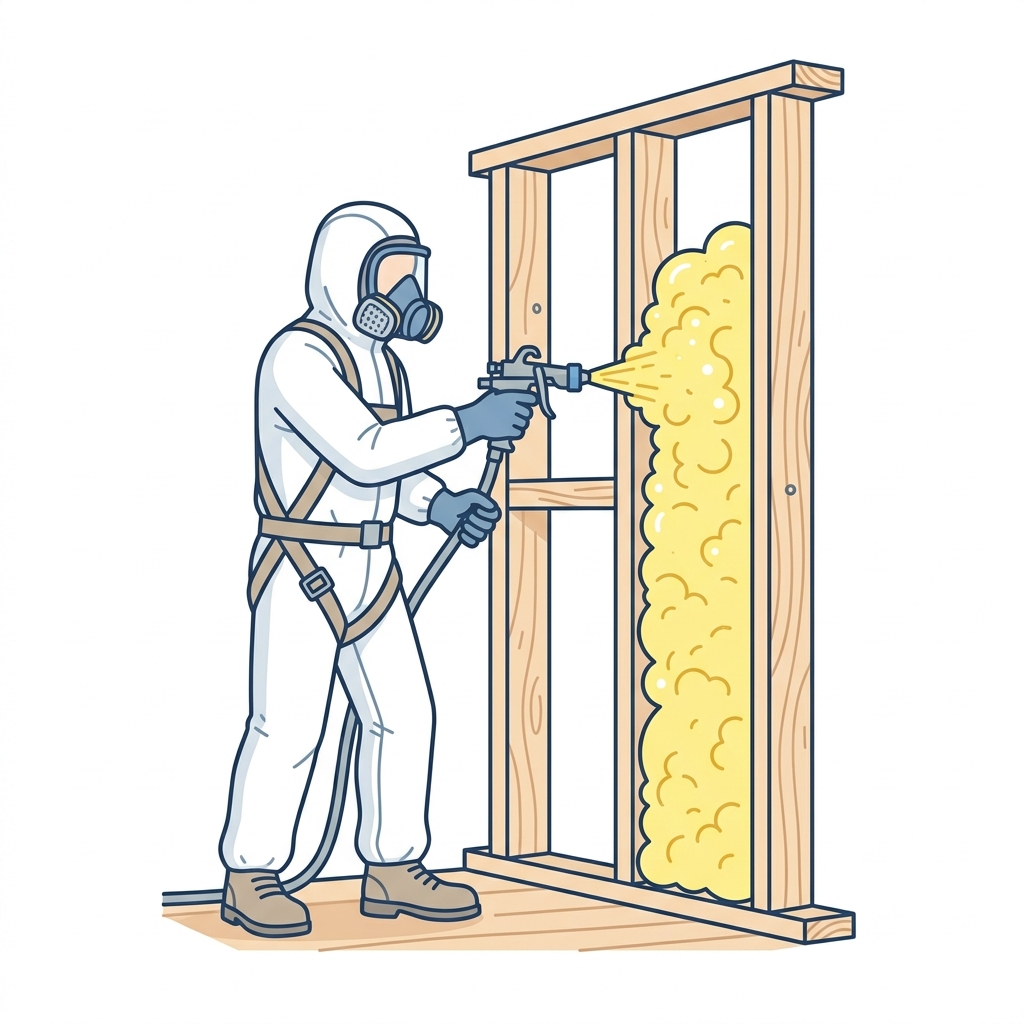
Precision spraying of 2 lb closed-cell foam to the bedroom subfloor above (R-31), steel beams, rim joists, and garage walls (R-21+).
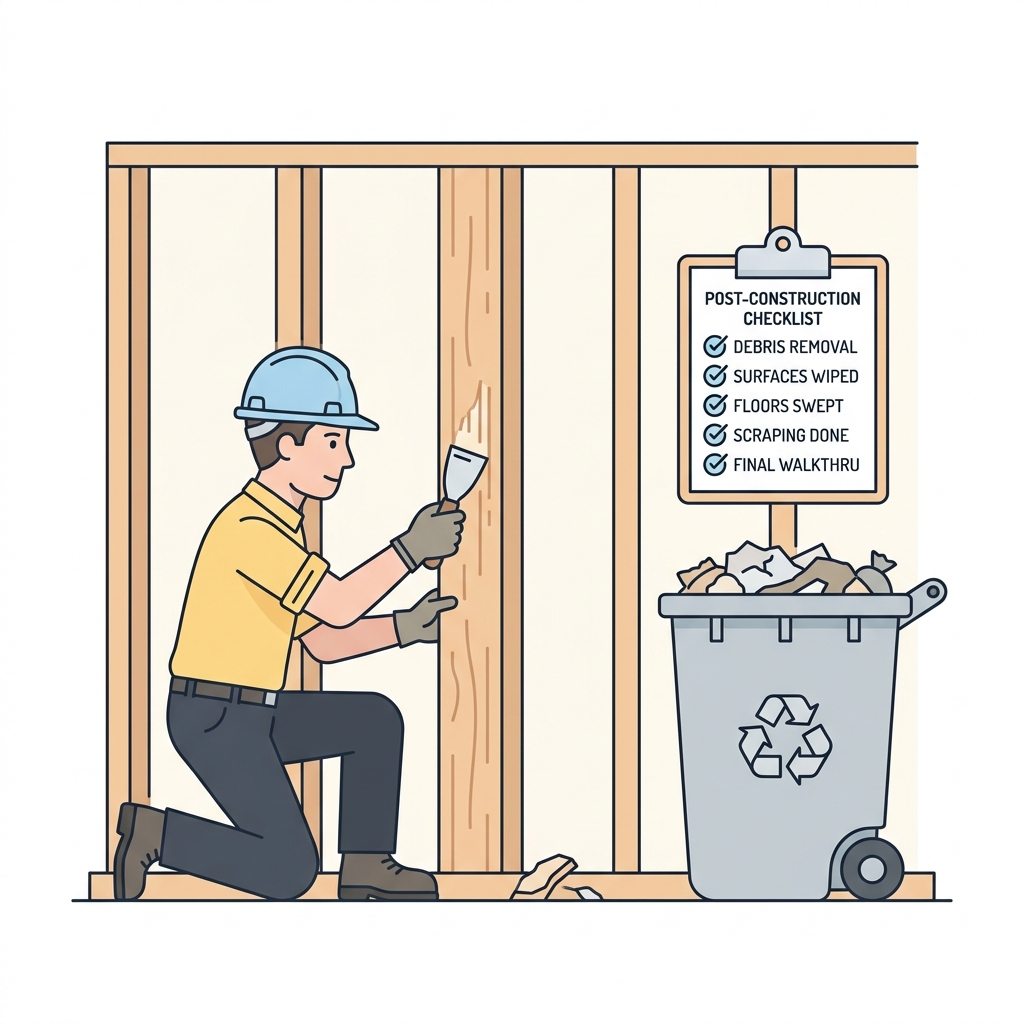
Trimming studs flush for drywall, full site cleanup, and issuing your CAN/ULC-S705.2 daily lot-tracking warranty card.
Frequently Asked Questions
In 2026, spraying the ceiling of a standard 2-car attached garage (20x20 / 400 sq ft) with 5.0 inches of 2 lb closed-cell spray foam (R-31) to fix a freezing bedroom above costs $1,650 to $2,650 CAD. Insulating a full 2-car garage (exterior walls at R-21 plus ceiling at R-31) ranges from $2,900 to $5,400 CAD. Get a $250 Credit on Your Estimate — Check Your Price in 60 Seconds (/price-chat) • No Site Visit Required or call (647) 333-3626.
Builder-grade fiberglass batts stuffed into garage ceiling joists do not stop air movement. Cold winter air enters through the overhead garage door, travels along the steel structural I-beam and rim joists, and circulates right through the porous batts against the bedroom subfloor. Removing the old batts and spraying 5.0 inches of 2 lb closed-cell spray foam (R-31) directly onto the subfloor and around the HVAC ducts permanently stops air leakage and warms the floor above by 6°C to 10°C.
Under 2026 Ontario Building Code Supplementary Standard SB-12, exposed floors above unheated garages require a minimum of R-31 (RSI 5.46) thermal insulation, and OBC Section 9.10.21.2 requires a continuous gas-tight air barrier between the garage and habitable rooms to block carbon monoxide and vehicle exhaust. Installing 5.0 inches of CAN/ULC-S705.1 2 lb closed-cell spray foam meets both the R-31 thermal rule and the noxious gas barrier requirement in one pass.
Always use 2 lb medium-density closed-cell spray foam (CAN/ULC-S705.1) in an Ontario or Canadian garage. Closed-cell foam delivers R-6.0 per inch, acts as a certified Class 1 vapour barrier (<60 ng/Pa·s·m²) at 2 inches or thicker, blocks carbon monoxide fumes, and is completely waterproof against melting snow and road salt tracked in by vehicles. Open-cell 0.5 lb foam is vapour-permeable and not recommended for high-humidity garage envelopes.
Yes. Under Ontario Building Code Section 9.10.17.10, spray polyurethane foam inside a residential garage must be protected by a 15-minute thermal barrier. Standard 1/2-inch gypsum drywall (or 5/8-inch Type X fire-rated drywall on ceilings beneath habitable bedrooms and shared house walls) installed after spray foam inspection satisfies this requirement.
No—drilling holes and blindly injecting foam into a closed garage ceiling already filled with old fiberglass batts leaves large uninsulated voids around steel beams, bridging, and heating ducts. For a permanent CAN/ULC-S705.2 compliant seal on garage ceilings and floors over garages, our crew strips the ceiling drywall and old fiberglass batts so 2 lb closed-cell foam bonds directly to the OSB subfloor, ducts, and rim joists.
Most 1-car and 2-car garage spray foam installations take 4 to 6 hours on site. During application, our Caliber Certified (CAN/ULC-S705.2 Licensed) Spray Foam Installers run high-CFM negative-pressure exhaust fans vented outdoors and spray low-VOC HFO-blown systems (BASF Walltite® Eco v.3, Huntsman Building Solutions (Icynene/Demilec), Johns Manville & other approved CCMC spray foam chemicals). You can park vehicles in the garage the same evening, while occupants observe the standard 24-hour re-occupancy window for living spaces directly above.
Spray foam insulation does not generate heat on its own, so an unheated detached garage with zero heat source will gradually cool down during prolonged -20°C winter weeks—though it typically stays 8°C to 12°C warmer than outdoor air due to ground slab heat retention. Once insulated with 3.5"–5.0" of 2 lb closed-cell spray foam, a small 240V electric shop heater or ductless mini-split can bring a 2-car garage up to 18°C in under 20 minutes and maintain warmth for a fraction of normal hydro costs.
Select your service scope or municipality below for local Ontario Building Code specs and same-week dispatch availability: