Do You Need a Vapour Barrier With Basement Spray Foam Insulation in Ontario? (2026 Building Code & Permeance Guide)

Do You Need a Vapour Barrier With Basement Spray Foam Insulation in Ontario? (2026 Building Code & Permeance Guide): 2026 Ontario Overview & Code Essentials
If you are finishing a basement or renovating an older foundation in Toronto, the GTA, or anywhere in Ontario, one of the most critical building-science questions you will face is: "Do I need to staple a 6-mil polyethylene vapour barrier over my spray foam insulation?" The short answer is no—if you are installing 2 lb closed-cell spray foam at 2 inches or thicker, the foam itself IS your code-approved vapour barrier.
In fact, stapling a plastic poly sheet over basement closed-cell spray foam insulation is one of the costliest mistakes a homeowner or general contractor can make, because it creates a double vapour barrier that traps moisture around your wood 2x4 studs. Below is the complete 2026 Ontario Building Code (OBC Section 9.25.4.2) permeance breakdown, material comparison, and inspection guide—and if you are budgeting your project, see our companion 2026 Ontario Basement Spray Foam Cost Guide ($2.50–$4.85/sq ft).
Every 2 lb closed-cell basement package includes thermal insulation, air sealing, and certified OBC 9.25.4.2 vapour control in one pass:
- 3.0"–3.5" Closed-Cell 2 lb (R-18 to R-21)
- <40 ng/(Pa·s·m²) Vapour Seal
- Includes $250 Estimate Credit
- 3.5"–4.0" Closed-Cell 2 lb (R-21 to R-24)
- Built-In Class 1/II Vapour Barrier
- Saves $600+ on Poly & Tape
- 3.0"–4.0" Closed-Cell 2 lb
- Stops Damp Soil Vapour, Porch Slab Sweating & Radon
- Includes $250 Credit
How Ontario Building Code Section 9.25.4.2 Defines a Basement Vapour Barrier (<60 ng/Pa·s·m²)
In residential building science, a vapour barrier (technically termed a vapour diffusion retarder) slows down warm indoor water vapour before it can diffuse through your wall assembly and condense against cold concrete foundation walls. Under Ontario Building Code Section 9.25.4.2 (detailed in our 2026 Ontario Basement Insulation Code Guide), any basement wall insulation assembly must have a warm-side water vapour permeance not exceeding 60 nanograms per Pascal-second-square metre (<60 ng/(Pa·s·m²)), which equals 1.05 US perms:
| Insulation / Barrier Material | Water Vapour Permeance (ng/Pa·s·m²) | US Perm Rating (perms) | OBC 9.25.4.2 Vapour Classification | Separate 6-Mil Poly Sheet Required? |
|---|---|---|---|---|
2.0" Closed-Cell Spray Foam(2 lb CAN/ULC-S705.1) | 38 – 45 ng/(Pa·s·m²) | 0.66 – 0.78 perms | Class II / OBC Code-Compliant Barrier | NO — Foam IS the Vapour Barrier |
3.5" Closed-Cell Spray Foam(R-21 Basement Spec) | 22 – 28 ng/(Pa·s·m²) | 0.38 – 0.49 perms | Class I/II Monolithic Air & Vapour Seal | NO — Do NOT Add Plastic Poly |
0.5 lb Open-Cell Spray Foam(3.5" – 5.5" CAN/ULC-S705.1) | 500 – 900+ ng/(Pa·s·m²) | 8.8 – 16.0 perms | Class III Vapour Permeable | YES — Requires 6-Mil Poly or Vapour Paint |
Fiberglass or Mineral Wool Batts(R-20 / R-24) | >1,700 ng/(Pa·s·m²) | 30.0+ perms | 100% Vapour Permeable(Zero Air Seal) | YES — Requires Continuous Sealed 6-Mil Poly |
6-Mil Polyethylene Plastic Sheeting(CAN/CGSB-51.34) | 3.4 ng/(Pa·s·m²) | 0.06 perms | Class I Sheet Vapour Barrier | N/A(Sheet Only — Zero R-Value) |
XPS Extruded Polystyrene Rigid Board(2.0") | 45 – 60 ng/(Pa·s·m²) | 0.80 – 1.05 perms | Class II(Only if all seams are taped) | Requires foil/sheathing tape on every joint |
Why 2+ Inches of 2 lb Closed-Cell Spray Foam Beats 6-Mil Polyethylene Plastic
A sheet of 6-mil polyethylene plastic only blocks vapour diffusion through the solid plastic film—it does almost nothing when warm, humid indoor air leaks around electrical outlet boxes, pot lights, baseboard nails, or top and bottom plates. In fact, 98% of winter moisture transport into basement walls happens through air leakage, not vapour diffusion. Because CCMC-evaluated CAN/ULC-S705.1 2 lb closed-cell spray foam expands 30x on contact to bond directly to concrete and wood framing, 3.5 inches (R-21) eliminates the cold condensing surface altogether while delivering <28 ng/(Pa·s·m²) vapour control.

The Danger of Double Vapour Barriers: Why Stapling 6-Mil Poly Over Closed-Cell Foam Causes Mould
One of the most frequent mistakes we correct across Toronto and the GTA happens when a homeowner hires us to spray 3.5 inches of 2 lb closed-cell foam on the basement walls, and then an uninformed general contractor or drywaller staples 6-mil clear poly over the wood studs before hanging drywall. Here is why building science and the Ontario Building Code strictly warn against double vapour barriers:
- 1. Zero Drying Path for Construction Lumber Moisture: Fresh framing lumber (SPF 2x4s), drywall joint compound, and seasonal humidity introduce moisture right at the inner face of the wood studs. Because the 3.5" closed-cell spray foam behind the studs blocks outward vapour movement toward the cold concrete (
<28 ng/Pa·s·m²), the wood studs must be able to dry inward through the permeable gypsum drywall (~2,800 ng/Pa·s·m²). - 2. The "Plastic Sandwich" Rot Trap: If you staple impermeable 6-mil poly (
3.4 ng/Pa·s·m²) over the inside face of the studs while closed-cell foam seals the outside face, your wood 2x4s and electrical boxes are trapped inside a sealed plastic-and-foam sandwich with 0% drying potential in either direction—leading to musty odours, rusted drywall screws, and black mould within 12 to 24 months. - 3. Municipal Building Inspector Red Flag: Experienced Ontario building officials know that 2 lb closed-cell foam at ≥2.0" is already a certified vapour barrier under OBC 9.25.4.2. If an inspector sees 6-mil poly stapled over closed-cell spray foam, they will often order the poly stripped off before signing your framing and insulation permit.
When You DO Need a Separate Vapour Barrier (Open-Cell Foam vs. Closed-Cell Foam)
Not all spray foam is the same. As we compare in our Open-Cell vs. Closed-Cell Spray Foam Guide and Spray Foam vs. Fiberglass Guide, whether you need a separate vapour retarder depends on the foam density and where it is installed in your Ontario home:
| Home Zone / Application | Recommended Spray Foam Type & Depth | Tested Vapour Permeance | Separate 6-Mil Poly or Vapour Paint Needed? | Building Science & OBC Rationale |
|---|---|---|---|---|
Basement Concrete Foundation Walls | 3.5" – 4.0" Closed-Cell 2 lb (R-21 to R-24) | 22 – 28 ng/(Pa·s·m²) | NO — Never Add Poly | Eliminates cold concrete condensation & soil gas |
Basement Rim Joists & Sill Headers | 3.0" – 3.5" Closed-Cell 2 lb (R-18 to R-21) | 28 – 35 ng/(Pa·s·m²) | NO — Never Add Poly | Air-seals wood sill plate without trapping moisture |
Crawl Space Walls & Cold Rooms | 3.0" – 4.0" Closed-Cell 2 lb (R-18 to R-24) | 25 – 38 ng/(Pa·s·m²) | NO — Pair with 10-Mil Floor Poly on Dirt | Encapsulates damp foundation walls & porch slabs |
Basement Ceiling(Between Heated Floors) | 3.5" – 5.5" Open-Cell 0.5 lb (Acoustic) | 500+ ng/(Pa·s·m²) | NO — Interior Partition | Both floors are heated; no vapour differential exists |
Vented Attic Flat Ceiling / Roof Deck | Open-Cell 0.5 lb OR Closed-Cell 2 lb | Varies by System | YES with Open-Cell(No with ≥2" Closed-Cell) | Open-cell requires 6-mil poly or Class II vapour paint |
Flash-and-Batt Hybrid Wall(<1.5" Foam) | 1.0" Closed-Cell + Batt Fill | >65 ng/(Pa·s·m²) | YES — Unless Closed-Cell is ≥2.0" | <2.0" closed-cell does not meet <60 ng/Pa·s·m² alone |

22–28 ng/(Pa·s·m²) permeance at 3.5" depth.
Monolithic bond directly to concrete.
Allows wood studs to dry safely inward.
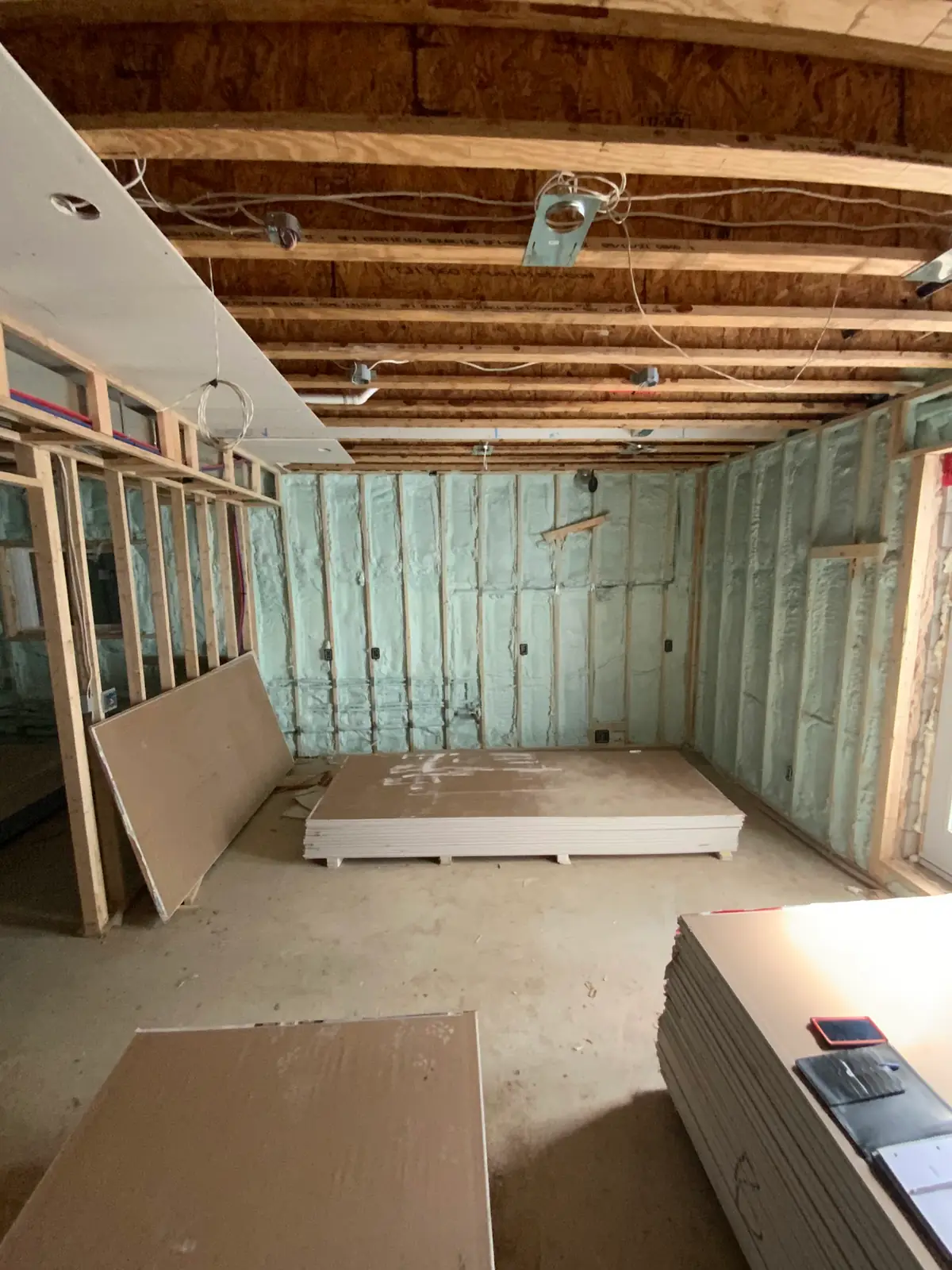
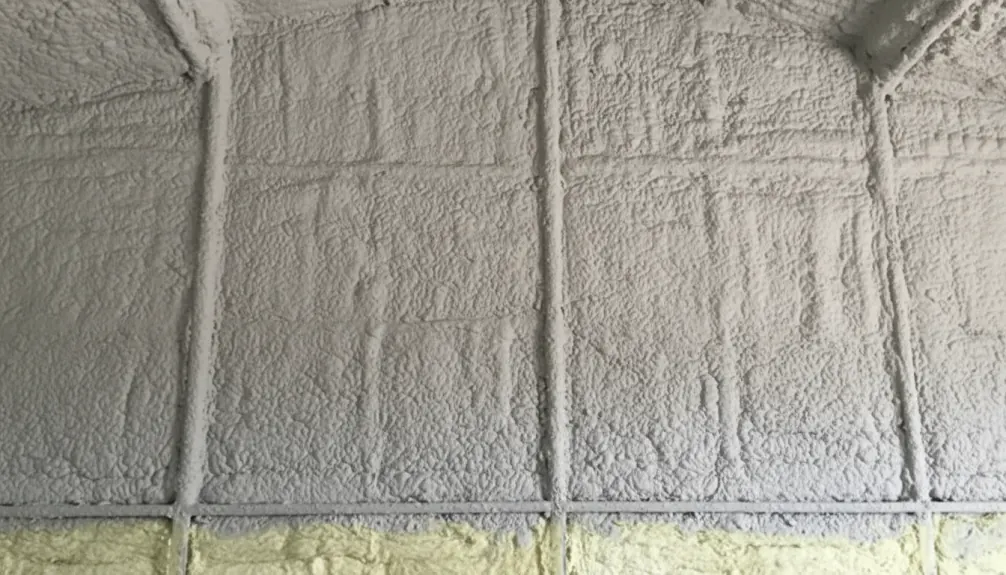
Spraying 3.5" to 4.0" of CAN/ULC-S705.1 2 lb closed-cell foam directly onto concrete foundation walls stops outward indoor vapour diffusion (<28 ng/Pa·s·m²) and blocks inward soil dampness—while leaving the inside face of your 2x4 studs free of plastic poly so framing moisture can dry inward through drywall.
Concrete Moisture Testing (<18%), Waterproofing & Radon Soil-Gas Protection
Before applying closed-cell spray foam to any below-grade foundation, crawl space, or cold room cantina, our Caliber Certified (CAN/ULC-S705.2 Licensed) technicians perform a mandatory substrate audit:
- Substrate Moisture Pin/Meter Check (
<18%Threshold): Under CAN/ULC-S705.2 installation rules, concrete and wood framing must test below 18% moisture content before spraying so the exothermic polyurethane reaction bonds permanently without blistering. - Active Groundwater Leaks vs. Vapour Diffusion: Closed-cell 2 lb spray foam stops water vapour diffusion and air movement, but if your foundation has an active structural crack leaking liquid water after heavy rain, that crack must be polyurethane-injected or waterproofed before we insulate.
- Radon & Soil-Gas Control (
OBC Section 9.13.4): In addition to water vapour, Ontario soils emit naturally occurring Radon gas. Spraying 2.0"–3.5" of closed-cell 2 lb foam under concrete slabs and across foundation wall-to-slab joints forms a continuous, code-recognized soil-gas barrier.


We verify ESA electrical sign-off and test concrete and wood framing moisture (<18%) per CAN/ULC-S705.2 standards.

We mask all windows, stairs, and furnace ducts and establish negative-pressure outdoor exhaust ventilation.

We spray 3.5"–4.0" of 2 lb closed-cell foam behind and between studs—creating R-21 to R-24 insulation and a <28 ng/Pa·s·m² vapour barrier.

We shave stud faces flush for direct 1/2" drywall installation (zero poly needed) and post your inspector warranty card.
Frequently Asked Questions: Basement Vapour Barriers & Spray Foam in Ontario
No. Under Ontario Building Code Section 9.25.4.2, once CAN/ULC-S705.1 medium-density 2 lb closed-cell spray foam is applied at a minimum depth of 2.0 inches (50 mm), its water vapour permeance drops below 45 ng/(Pa·s·m²)—well below the <60 ng/(Pa·s·m²) code threshold. At our standard 3.5-inch (R-21) or 4.0-inch (R-24) basement depth, the closed-cell foam is your certified air and vapour barrier, and no 6-mil polyethylene sheeting should be installed.
Installing 6-mil polyethylene plastic on the warm side of 2 lb closed-cell spray foam creates a double vapour barrier that sandwiches your wood 2x4 studs between two vapour-impermeable layers. Any seasonal humidity or construction moisture in the wood framing cannot dry outward (blocked by the closed-cell foam) or inward (blocked by the poly), leading to trapped condensation, wood rot, and black mould. If poly has been stapled over closed-cell foam before drywalling, strip the poly off immediately.
Under CAN/ULC-S705.1 CCMC evaluation reports and OBC Section 9.25.4.2, medium-density 2 lb closed-cell spray foam must be installed at a minimum continuous thickness of 2.0 inches (50 mm) to achieve a certified water vapour permeance below 60 ng/(Pa·s·m²) (<1.05 perms). In Ontario basements, we spray 3.5 to 4.0 inches to simultaneously satisfy the R-20 continuous / R-24 cavity thermal code (see our Ontario Basement Code Guide).
Yes—if 0.5 lb open-cell spray foam is used on an exterior thermal envelope wall or vented attic ceiling in Ontario’s cold climate, it requires a separate 6-mil polyethylene vapour barrier or a CCMC-approved Class II vapour-retarder paint because open-cell foam is vapour-permeable (500–900+ ng/Pa·s·m²). That is why we strictly install 2 lb closed-cell spray foam on below-grade concrete basement walls and rim joists, reserving 0.5 lb open-cell foam for interior between-floor soundproofing.
Yes. Under CAN/ULC-S705.2 national installation standards, closed-cell spray foam must bond directly to a clean, dry, rigid substrate (<18% moisture). All existing 6-mil poly plastic, fiberglass batts, and tar paper must be stripped down to the bare concrete foundation wall before spraying. Sprayfoam Solutions Toronto Inc. offers turnkey tear-out and disposal ($0.75–$1.50/sq ft) alongside your new spray foam installation.
Closed-cell 2 lb spray foam is hydrophobic (<2% water absorption) and completely stops airborne moisture condensation, ground vapour diffusion, and soil gas, which cause 90% of damp basement smells and wall mould. However, spray foam is not a structural concrete crack repair product—if your foundation wall has an active hydrostatic groundwater leak after heavy rain, the crack should be injected or sealed prior to spray foaming.
Yes. Sprayfoam Solutions Toronto Inc. installs low-VOC HFO-blown closed-cell foam systems (BASF Walltite® Eco v.3, Huntsman Building Solutions (Icynene/Demilec), Johns Manville & other approved CCMC spray foam chemicals) under negative-pressure outdoor exhaust ventilation. After the standard 24-hour cure and re-entry window, the cured foam is 100% inert, odourless, and blocks mould spores and soil gases (read our Spray Foam Safety Guide).
In 2026, 2 lb closed-cell basement spray foam with an integrated Class 1/II vapour barrier costs $2.50 to $4.85 per sq ft installed ($2,800 to $4,600 for a typical 1,000 sq ft basement at R-21 to R-24—see our 2026 Ontario Basement Spray Foam Cost Guide). Check your exact price in 60 seconds and claim a $250 Credit on Your Estimate at spfsolutions.ca/price-chat or call (647) 333-3626.
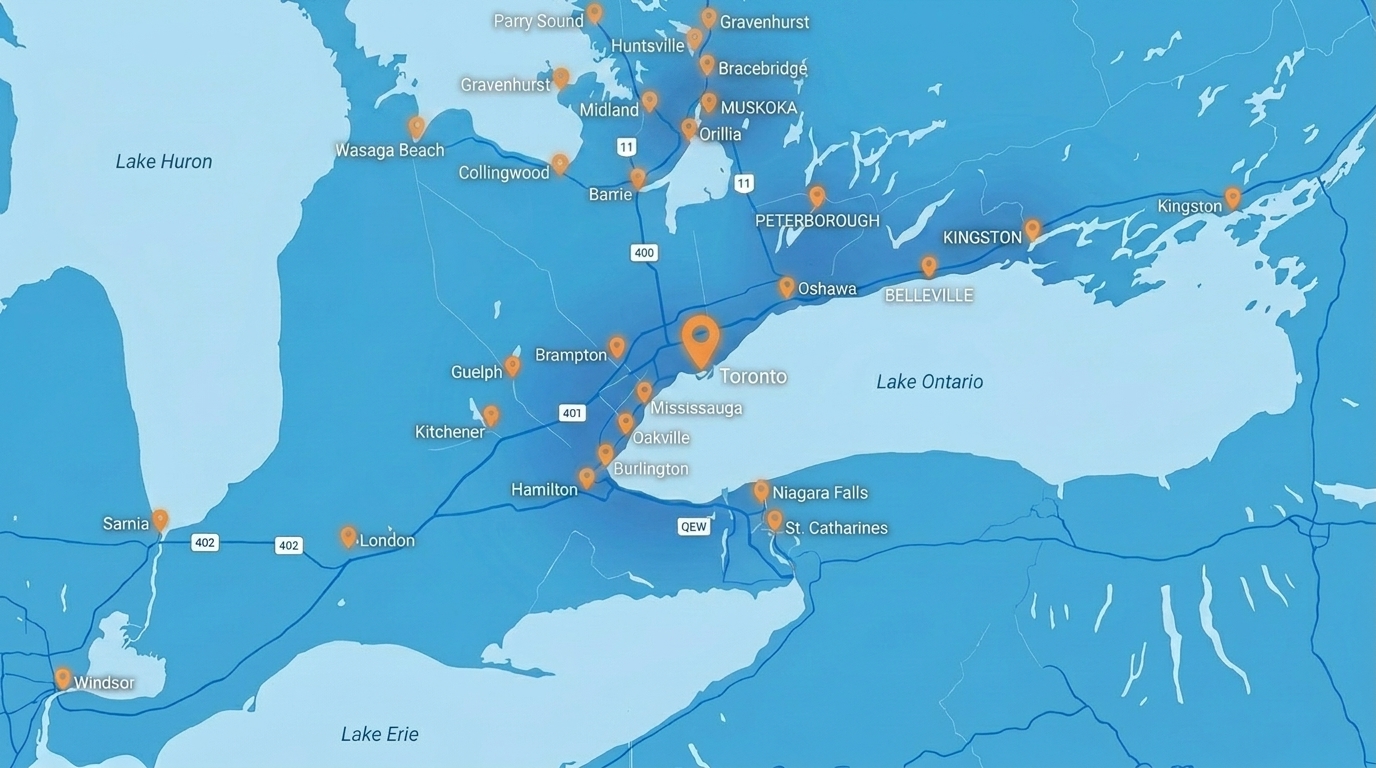
Select your residential insulation hub or local GTA municipality for code-compliant specs and same-week dispatch: