Spray Foam Insulation Off-Gassing & Curing Time in Ontario: 2026 CAN/ULC-S705.2 Safety, VOCs & 24-Hour Re-Occupancy Guide
Spray Foam Insulation Off-Gassing & Curing Time in Ontario: 2026 Ontario Overview & Code Essentials
Homeowners planning basement spray foam insulation, attic spray foam upgrades, or cathedral ceiling insulation in Toronto, the GTA, and Ontario frequently ask one critical health and safety question before booking: "How long does spray foam insulation off-gas, and when is it safe for my kids and pets to return home under Health Canada and CAN/ULC-S705.2 rules?" Because spray polyurethane foam is manufactured on-site through an exothermic chemical reaction between two liquid components—Part A (monomeric/polymeric isocyanate) and Part B (polyol resin blend)—understanding the difference between certified CAN/ULC-S705.2 installation and uncertified cut-rate spraying is essential.
At Sprayfoam Solutions Toronto Inc., every mobile rig is operated by Caliber Certified (CAN/ULC-S705.2 Licensed) Spray Foam Installers spraying low-VOC CCMC-approved chemical formulations—specifically BASF Walltite® Eco v.3, Huntsman Building Solutions (Icynene/Demilec), Johns Manville & other approved CCMC spray foam chemicals. By combining computer-proportioned heated hose rigs, high-CFM negative-pressure exhaust ventilation during spraying, and strict 24-hour re-occupancy protocols, your foam cures into a chemically stable, odourless solid polymer while you save $250 on your estimate via our 60-second online price calculator.
Every residential scope includes full poly containment, negative-pressure exhaust venting, Caliber daily lot testing & 24-hour safe re-entry:
- 3"–3.5" Low-VOC HFO Closed-Cell 2 lb
- Negative-Pressure Exhaust Included
- 24-Hour Safe Re-Occupancy
- 3.5"–4" CAN/ULC-S705.1 Closed-Cell (R-21 to R-24)
- Full Poly Containment + Exhaust Fans
- -$250 Credit
- 5"–6" Closed-Cell or Open-Cell Hybrid (R-31 to R-50)
- Caliber Daily Core-Density Log
- -$250 Credit
Spray Foam Curing Timeline & VOC Off-Gassing Schedule (0 Seconds to 24 Hours)
Unlike factory-made batts, spray polyurethane foam is created at the spray gun nozzle by mixing heated Part A and Part B liquids at 1,100 to 1,400 PSI and 115°F to 135°F (46°C to 57°C). When you review our cost of spray foam guide, the turnkey rate includes full containment engineering so that curing gases are exhausted directly outdoors during the critical first few hours:
| Curing Stage / Elapsed Time | Chemical & Physical State of Foam | Indoor Air & Ventilation Protocol | Who Can Enter the Work Zone? | CAN/ULC-S705.2 Safety Status |
|---|---|---|---|---|
0 – 30 Seconds(Expansion Phase) | Liquid expands 30x–100x; exothermic core reaches 140°F–160°F | High-CFM negative-pressure exhaust fans running at 40+ ACH | Caliber Certified Sprayers Only (Fresh-Air SAR Respirators) | Active Aerosol & Isocyanate Reaction |
1 – 15 Minutes(Tack-Free Set) | Foam skin hardens; 90%+ of cross-linking polymer reaction finishes | Continuous negative-pressure exhaust vented outside via ducting | Certified Crew Only (Full PPE & Containment Active) | Exothermic Heat Dissipation Phase |
1 – 6 Hours(Core Cooling) | Internal cell gas stabilizes; trace blowing agent & amine catalyst vent | Containment poly sealed; exhaust fans purge workspace air | Authorized Trades Only with respiratory protection | Core Temperature Normalizes to Room Temp |
6 – 24 Hours(Air Flush Window) | Solid inert polyurethane matrix; trace VOCs drop below NRC limits | Post-spray air flush before homeowner walk-through | Vacant Buffer Period (Homeowners & pets remain out) | Health Canada / NRC 24-Hour Rule |
24+ Hours(Full Safe Re-Occupancy) | Fully Cured, Chemically Stable & Odourless Solid Polymer | Normal household HVAC operation resumes | Safe for All Homeowners, Infants & Pets | Passes CAN/ULC-S705.2 & OBC Inspection |
What Actually Happens Chemically During the 24-Hour Cure Window?
When Part A (isocyanate) and Part B (polyol resin, amine catalyst, fire retardant, and HFO blowing agent) collide at a 1:1 stoichiometric ratio, polyurethane polymer chains form almost instantaneously. Within 10 to 15 seconds, the foam is dry to the touch ("tack-free"). Over the next 4 to 12 hours, the core of the foam cools back to ambient room temperature while microscopic amounts of water vapour and blowing agent diffuse out of the surface cells. Under National Research Council Canada (NRC) CCMC guidelines, maintaining a mandatory 24-hour re-occupancy buffer ensures that even trace catalyst vapours drop well below residential indoor air quality limits before your family returns.
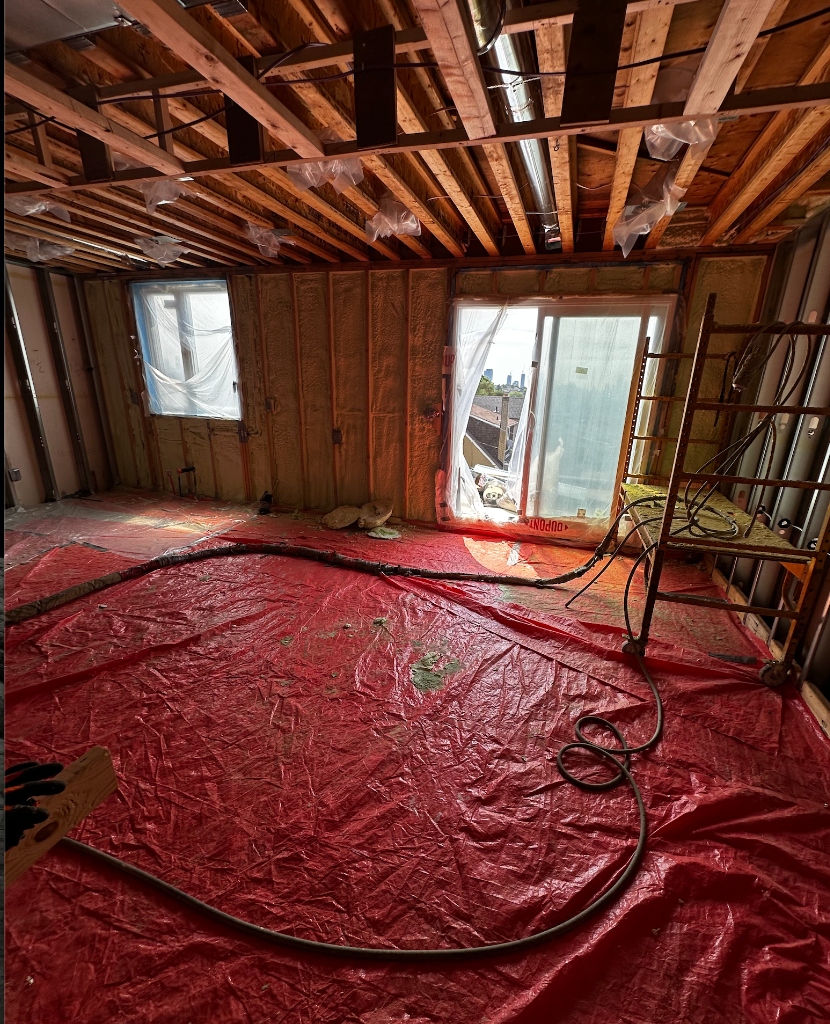
Low-VOC HFO Blowing Agents vs. Legacy HFC Foams (2026 Canadian Chemistry)
Every drum of spray foam installed by Sprayfoam Solutions Toronto Inc. meets strict 2026 Canadian environmental and indoor air quality regulations (explained in our Our Spray Foam Chemicals & SDS Guide):
- 4th-Generation HFO Blowing Agents (Ultra-Low VOC & Global Warming Potential < 1): Modern Canadian closed-cell systems use Hydrofluoroolefin (HFO) blowing agents that eliminate ozone depletion and dramatically reduce curing odour compared to pre-2020 HFC formulations.
- CCMC-Approved Chemical Umbrella: We exclusively spray BASF Walltite® Eco v.3, Huntsman Building Solutions (Icynene/Demilec), Johns Manville & other approved CCMC spray foam chemicals tested under CAN/ULC-S705.1 (closed-cell) and CAN/ULC-S718 (open-cell).
- Zero Formaldehyde & Zero Fibrous Glass Dust: Unlike cheaper batt insulations that shed breathable glass or slag fibres during renovation, cured spray polyurethane foam contains zero formaldehyde binders and never sheds airborne particulates.
- GREENGUARD Gold & Health Canada Validated Emissions: Third-party environmental chamber testing confirms that properly proportioned Canadian spray foam reaches ultra-low VOC equilibrium within 24 hours of application.
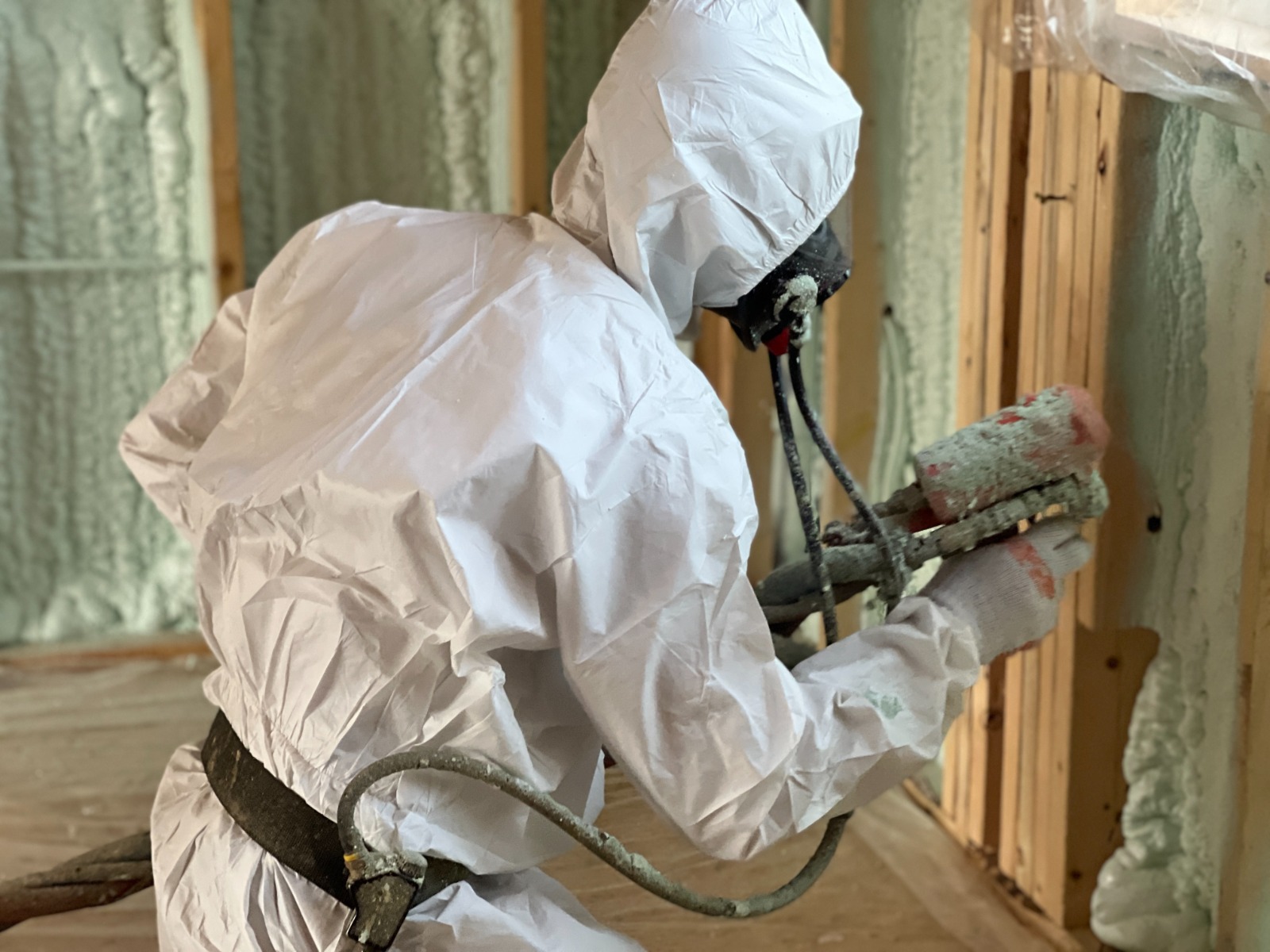
Why Do Some Uncertified Spray Foam Jobs Smell? (5 Causes of Off-Ratio Odour & How Caliber Certification Prevents Them)
When homeowners read online stories about a lingering "fishy" or sweet chemical smell weeks after spray foaming, the cause is never properly installed CCMC-certified foam—it is a violation of CAN/ULC-S705.2 installation physics by an unlicensed contractor using uncalibrated equipment:
- 1. Off-Ratio Chemical Proportioning (Part A / Part B Imbalance): Spray foam must be metered at an exact 1:1 volume ratio. If a clogged gun screen, cold drum, or worn proportioner pump causes a "B-rich" (excess polyol/amine catalyst) or "A-rich" (excess isocyanate) spray, unreacted liquid chemical remains trapped inside uncured cells and emits a persistent odour. Our rigs feature digital ratio-monitoring interlocks that automatically shut down the gun if pressure deviates by more than ±50 PSI.
- 2. Exceeding the 2-Inch (50 mm) Maximum Lift Thickness Rule: Under CAN/ULC-S705.2, 2 lb closed-cell foam must never be sprayed thicker than 2 inches per pass. If an untrained sprayer blasts 4 to 6 inches of closed-cell foam in a single heavy pass to rush a basement insulation job, the trapped exothermic heat exceeds 180°F (82°C)—scorching the inner core, cracking the foam away from studs, and creating burnt-amine off-gassing. Our Caliber Certified (CAN/ULC-S705.2 Licensed) Spray Foam Installers apply strict multi-pass lifts with cooling intervals.
- 3. Spraying onto Wet (>18% Moisture) or Frozen Concrete Substrates: Applying closed-cell foam onto damp concrete (>18% moisture content) or frost-covered masonry causes the isocyanate to react with surface water instead of the polyol resin—resulting in blistering, poor adhesion, and amine odour. We pin-probe every crawl space and foundation wall before spraying and pre-condition cold substrates.
- 4. Skipping Negative-Pressure Exhaust Ventilation: Cheap operators spray inside closed basements without running exhaust fans, allowing aerosolized mist to settle onto bare furnace ducts and subfloors. We seal every HVAC supply/return boot and run industrial negative-pressure fans vented directly out a window or bulkhead.
- 5. Using Uncertified or Expired Drum Stock: Chemical drums have strict shelf-life and storage temperature limits (50°F–80°F). On every project, our lead installer completes a Caliber CAN/ULC-S705.2 Daily Work Record logging drum batch numbers, ambient humidity, substrate temperature, and a physical core-density cutout test.
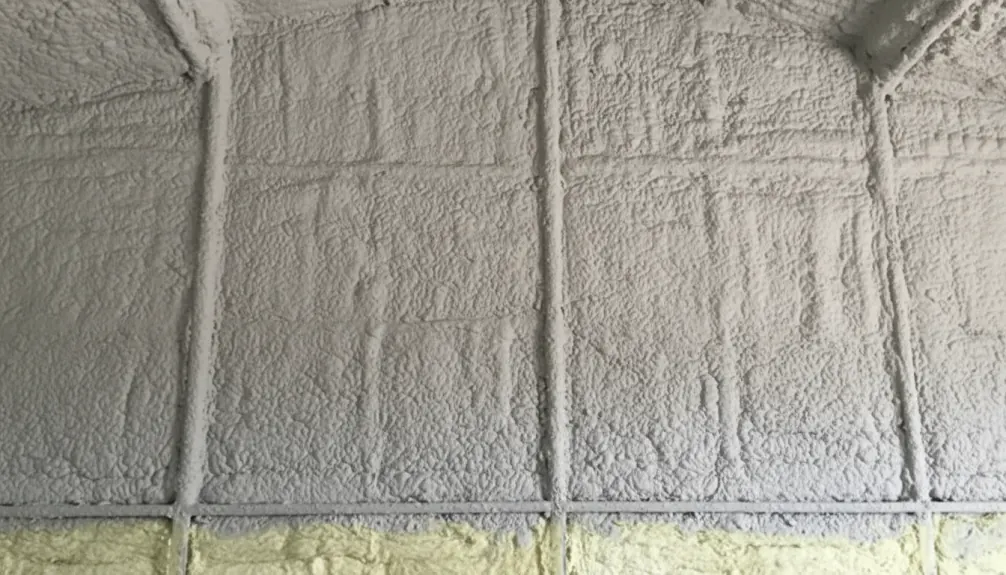
Two controlled lifts prevent core overheating.
Sprayed in 2 passes per CAN/ULC-S705.2 rules.
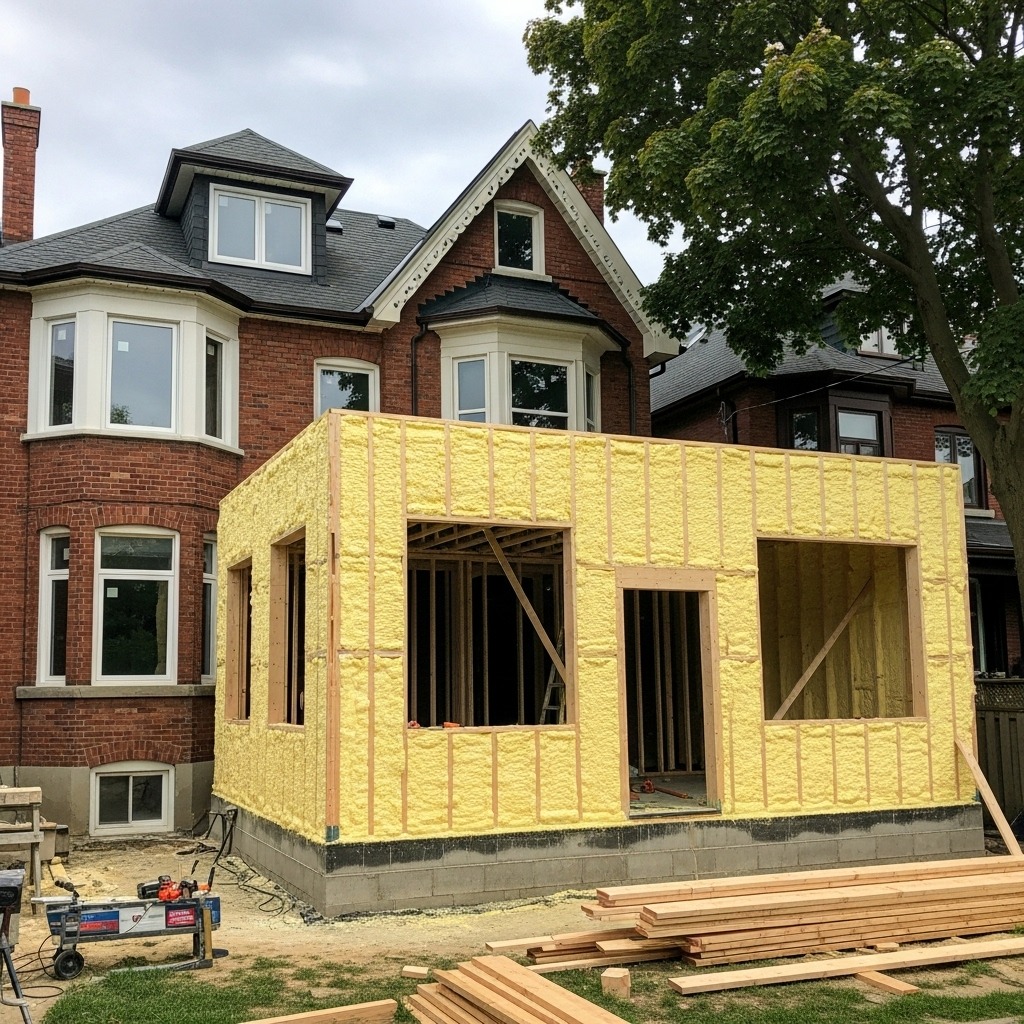
Exhausted outdoors via basement window duct.
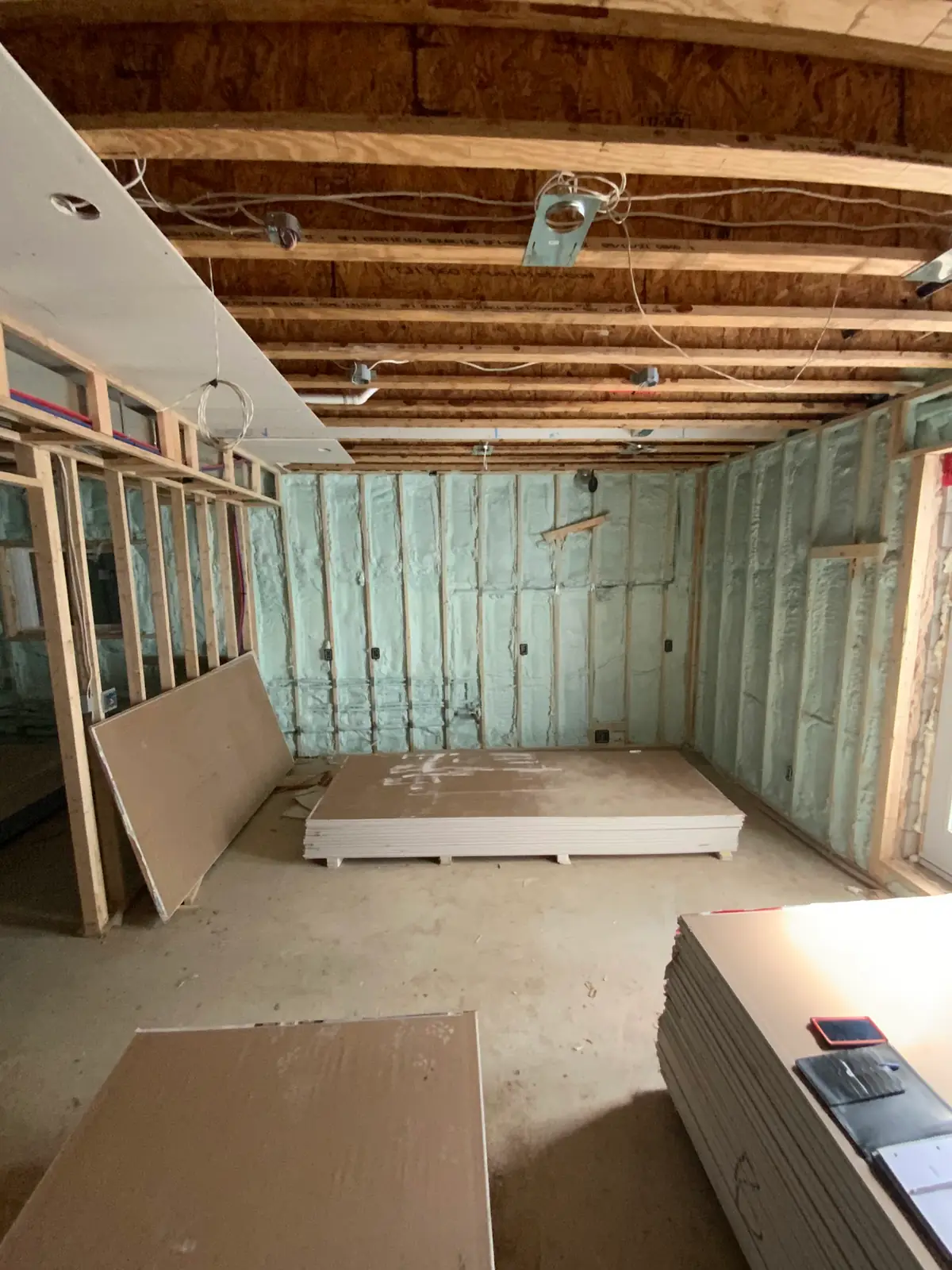
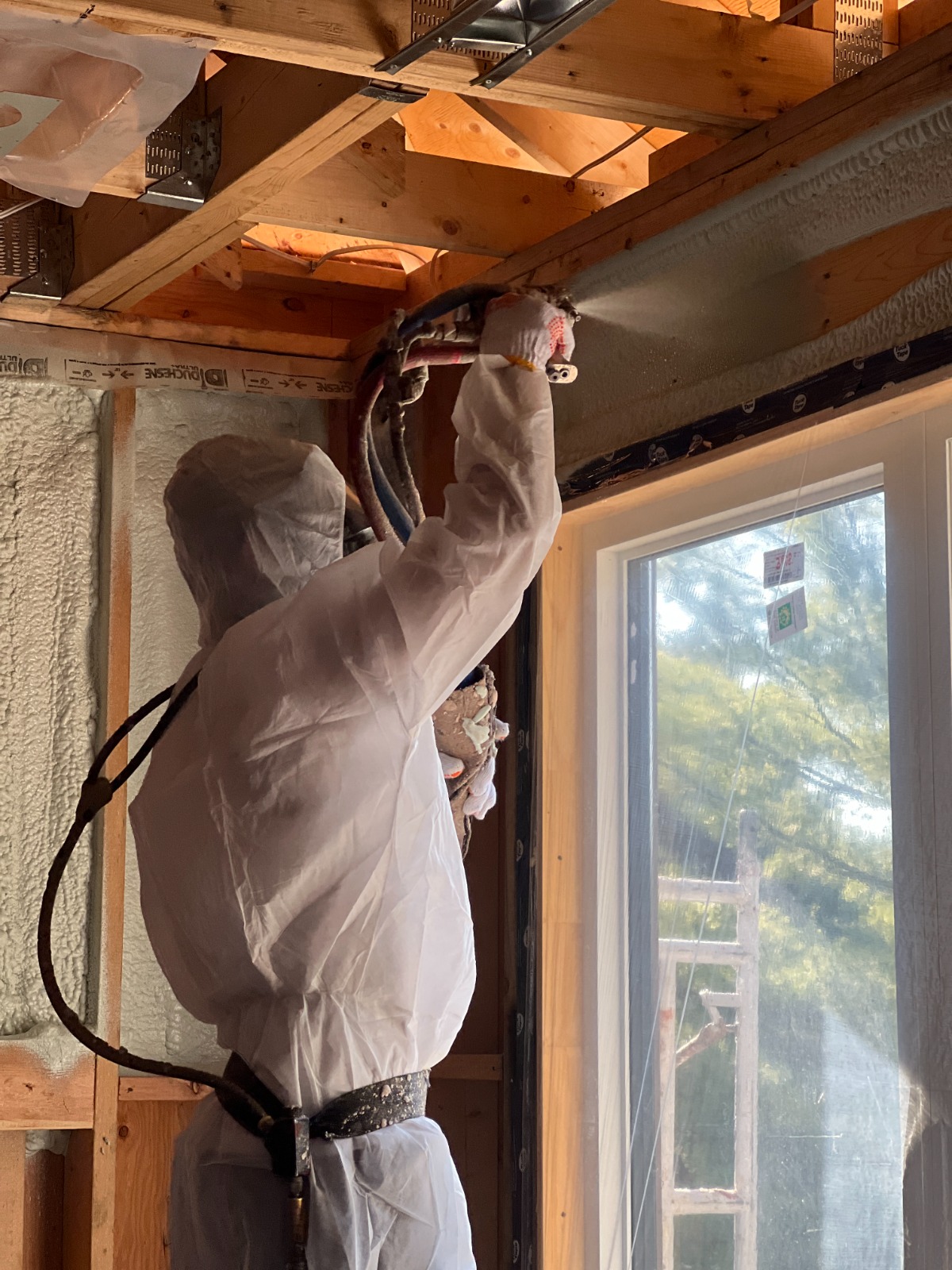
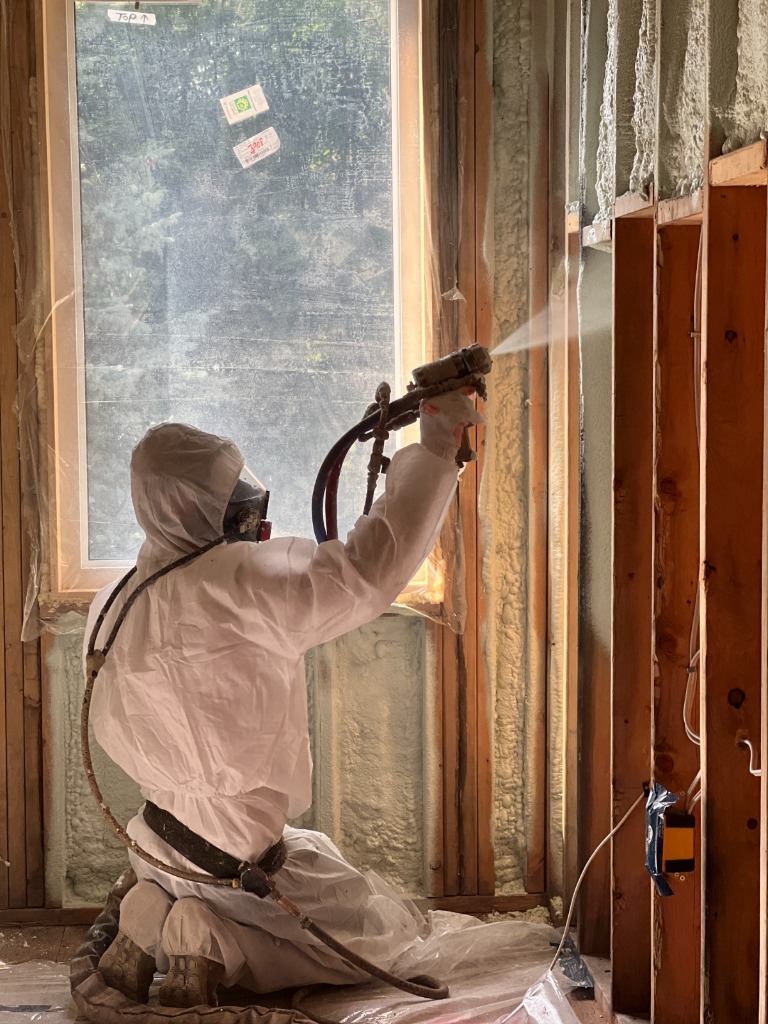
When spraying 3.5"–4.0" of CAN/ULC-S705.1 2 lb closed-cell foam on below-grade concrete foundation walls, our Caliber Certified installers apply two separate 1.75"–2.0" lifts while exhausting air through a basement window fan at 40+ air changes per hour—guaranteeing zero core scorching and a 100% odour-free cure within 24 hours.
Certified CAN/ULC-S705.2 Installation vs. Uncertified Cut-Rate Spraying: Safety & Air Quality Comparison
Before hiring an insulation contractor, compare how a Caliber Certified (CAN/ULC-S705.2 Licensed) crew protects your home’s indoor air quality versus an uncertified operator (and see our 2026 Ontario Spray Foam Cost Guide for full pricing transparency):
| Safety & Quality Metric | Sprayfoam Solutions Toronto Inc. (Caliber Certified) | Uncertified / Cut-Rate Rig Operator | DIY 2-Component Froth Kits | Ontario Building Code / NRC Requirement |
|---|---|---|---|---|
Installer Licensing | Caliber Certified(CAN/ULC-S705.2 Licensed) | Often unlicensed; no third-party CAN/ULC-S705.2 audits | Unlicensed homeowner application | Mandatory CAN/ULC-S705.2 License for 2 lb Foam |
Chemical Proportioning | Computer-Metered 1:1 High-Pressure Rig(1,200+ PSI) | Aging pumps prone to off-ratio A/B drift | Low-pressure disposable canisters(prone to cold drift) | Strict 1:1 Stoichiometric Ratio Required |
Maximum Pass Thickness | Strict ≤ 2.0" (50 mm) Lifts with Cooling Pause | Sprays 4" – 5" in 1 pass to rush off the jobsite | Uneven thickness; high waste & pockets | Max 50 mm Lift Rule(CAN/ULC-S705.2) |
Jobsite Ventilation | 40+ ACH Negative-Pressure Exhaust Vented Outdoors | Often opens a window with no exhaust fan | Zero mechanical negative-pressure extraction | Mechanical Exhaust & Containment Required |
Post-Cure Indoor Air(24h+) | Chemically Stable, Odourless & Hypoallergenic | High risk of lingering amine/fishy odour | Frequent soft spots & uncured chemical smell | 24-Hour Safe Re-Occupancy Standard |
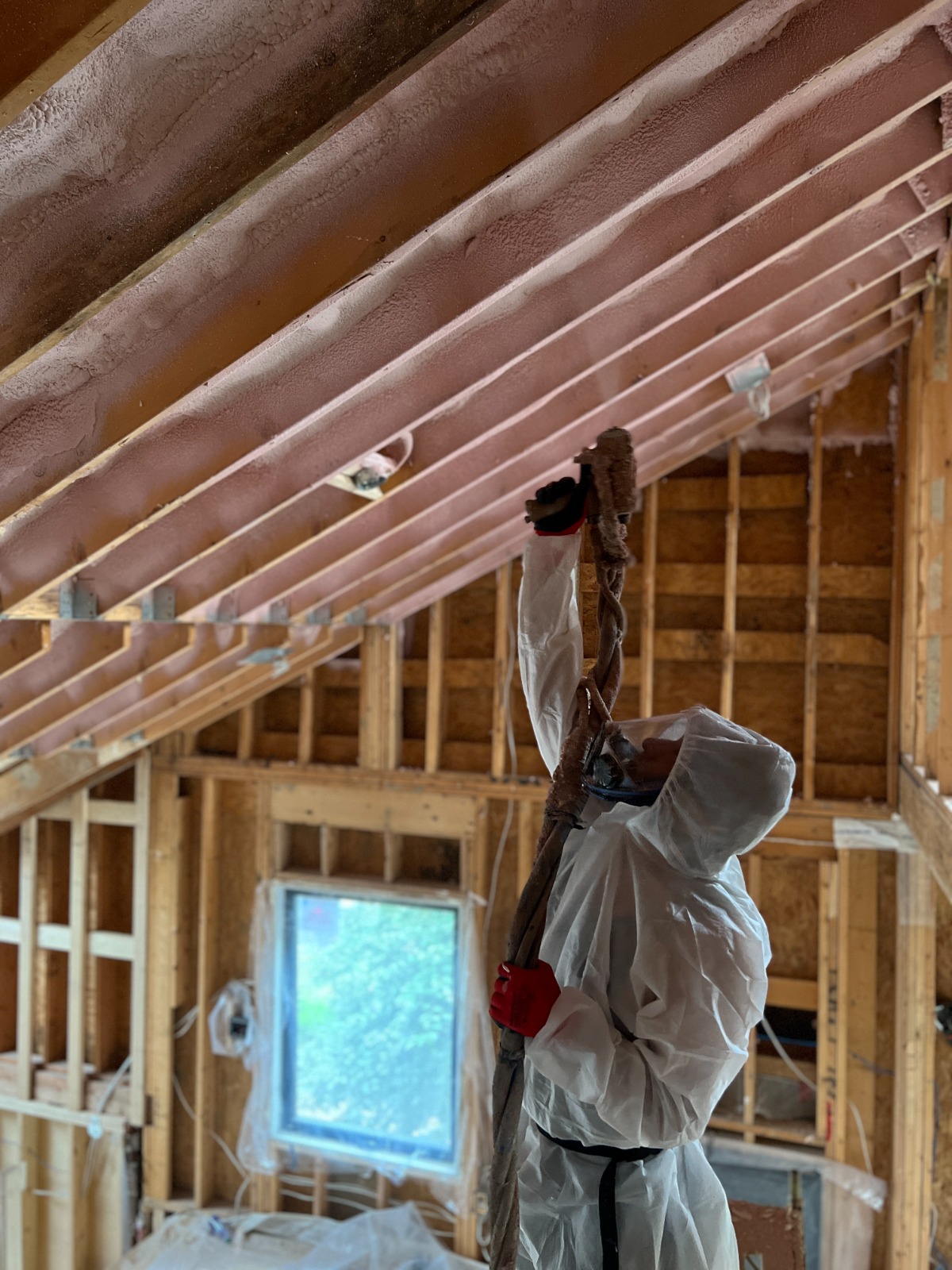
6 Simple Steps Homeowners Should Follow Before & After Spray Foam Day
Whether we are completing old attic insulation removal followed by spray foam, sealing rim joists and headers, or insulating a cold room / cantina, following this simple checklist guarantees a smooth, zero-odour experience:
- 1. Plan a 24-Hour Overnight Stay for Family & Pets: Under CAN/ULC-S705.2 and Health Canada best practices, all household occupants, children, and pets must vacate the home before spraying begins and remain out for 24 hours after the final pass is completed.
- 2. Shut Off Your Central Furnace / AC & Seal Register Boots: Before our crew triggers the spray gun, we turn off your central HVAC fan and mask all supply registers, return grilles, and mechanical equipment in polyethylene film so zero airborne mist enters your ductwork.
- 3. Remove Open Food, Houseplants & Aquariums from Adjacent Areas: Stored pantry food in sealed cans or upstairs refrigerators is completely fine, but open fruit bowls in the work zone should be moved upstairs and fish tanks should have their air pumps covered or relocated for the 24-hour window.
- 4. Keep Other Trades Off-Site Until the 24-Hour Cure Finishes: Electricians, plumbers, and drywallers should schedule their work before spray day or the day after the 24-hour cure window so no unmasked workers walk through the negative-pressure containment zone.
- 5. Book Your Municipal Building Inspector Before Drywall Board-Up: Under Ontario Building Code Section 9.10.17.10, your municipal building inspector will verify the foam thickness and review the on-site Caliber Daily Work Record before your contractor installs standard 1/2-inch gypsum drywall (the required 15-minute thermal barrier).
- 6. Enjoy Improved Indoor Air Quality & Allergy Relief Year-Round: Once cured and drywalled, closed-cell and open-cell spray foam create an airtight building envelope that blocks outdoor wildfire smoke, traffic exhaust, damp basement mould spores, and fiberglass itch.
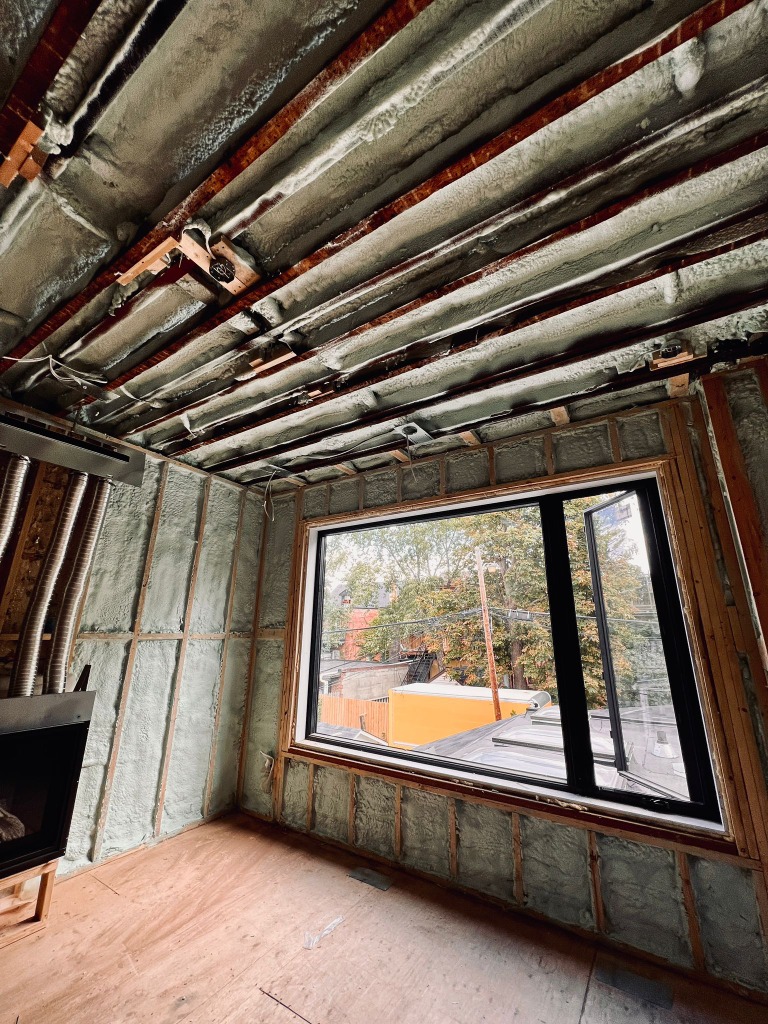
Our 4-Step Negative-Pressure Containment & Safe Curing Process Across the GTA
Every residential and commercial project is dispatched from our Toronto facility with $0 Travel Fee across surrounding GTA cities. You can review our full basement insulation code guide or vapour barrier requirements and see how our 4-step workflow protects your home:

We schedule your 24-hour vacancy window and shut down central HVAC airflow prior to setup.
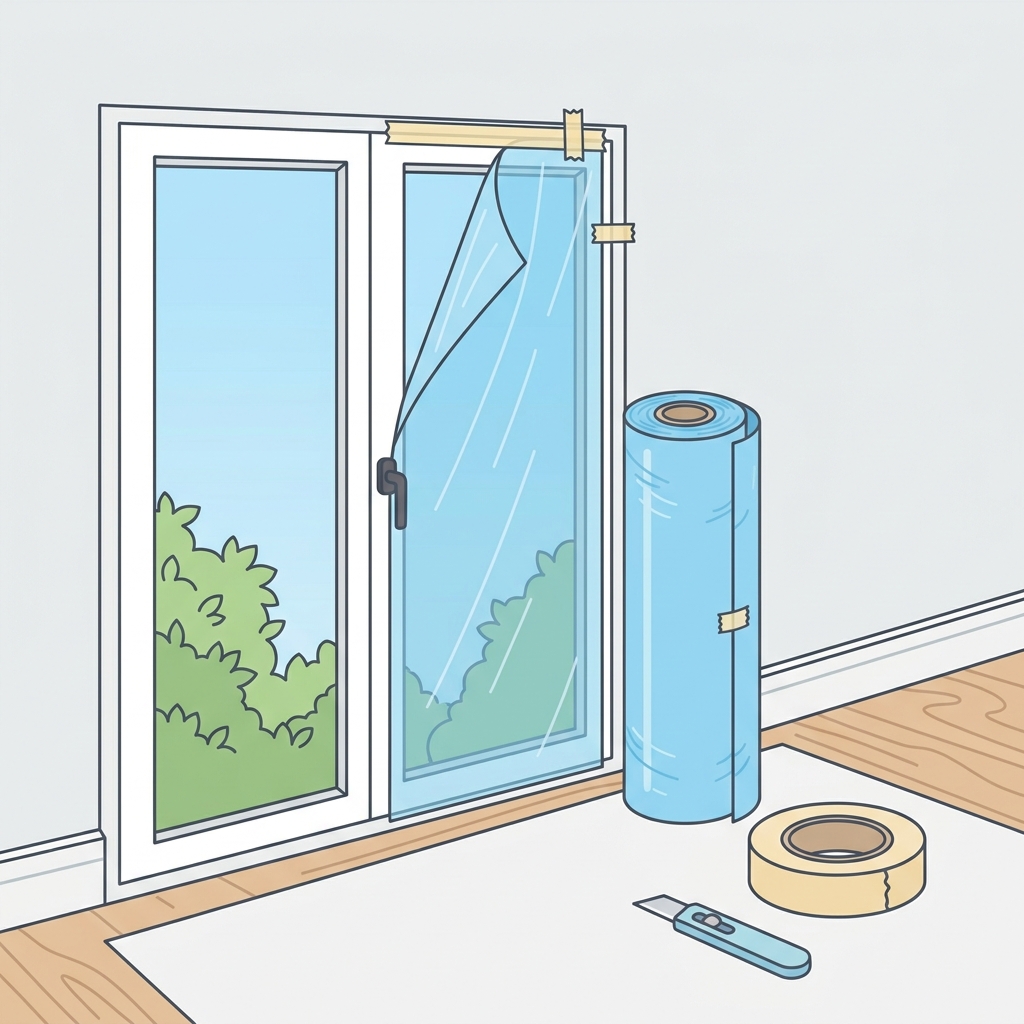
We mask floors, windows, and ducts in poly and activate 40+ ACH negative-pressure exhaust fans.
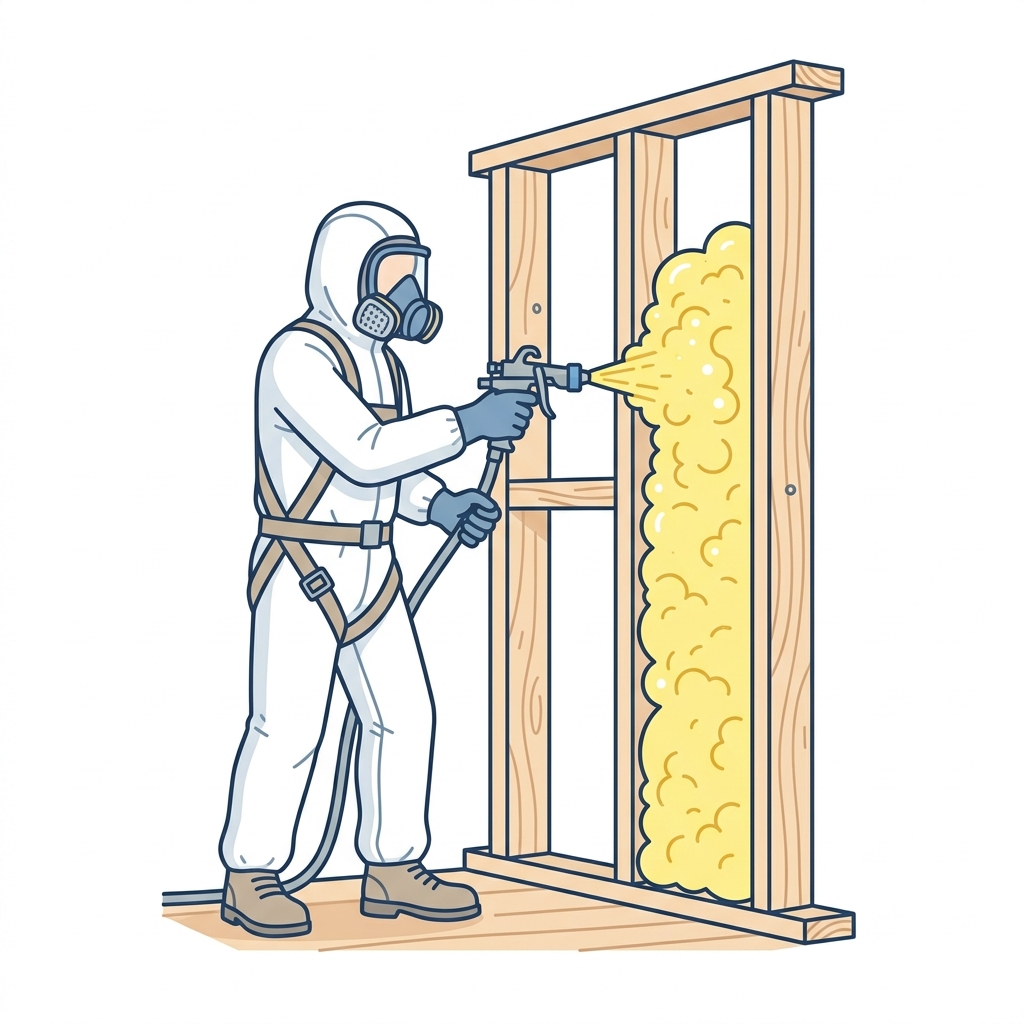
Caliber Certified installers spray precise ≤2" lifts at a 1:1 ratio with core-density testing.
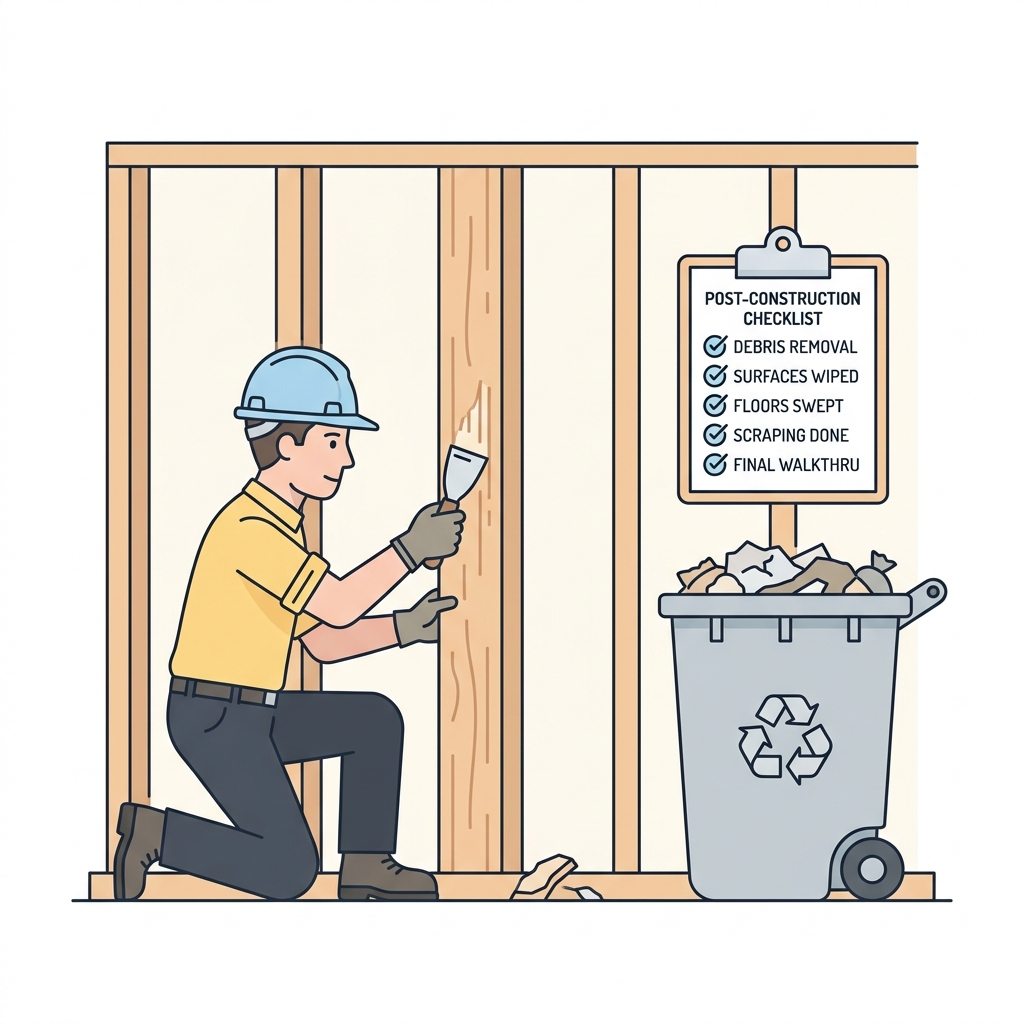
High-volume air flush, stud trimming, and posting of your CAN/ULC-S705.2 warranty certificate.
Frequently Asked Questions: Spray Foam Off-Gassing & Curing Time in Ontario
When installed by Caliber Certified (CAN/ULC-S705.2 Licensed) Spray Foam Installers using high-CFM negative-pressure exhaust ventilation (40+ air changes per hour), 99%+ of curing emissions conclude within 24 hours. Under CAN/ULC-S705.2 and Health Canada / NRC guidelines, homeowners, children, and pets safely re-occupy the home 24 hours after spraying finishes, at which point cured polyurethane foam is chemically stable, fully cured, and odourless.
Yes—once the mandatory 24-hour curing and ventilation window is complete, CCMC-approved spray polyurethane foam (BASF Walltite® Eco v.3, Huntsman Building Solutions (Icynene/Demilec), Johns Manville & other approved CCMC spray foam chemicals) is a solid, chemically stable, fully cured polymer similar to the polyurethane foam inside mattresses and car seats. Pregnant women, infants, pets, and individuals with asthma must remain out of the house during the 24-hour application and air-flush window, after which indoor air quality meets Health Canada residential guidelines.
A lingering "fishy" or sweet amine odour only happens when an uncertified operator sprays off-ratio foam (unbalanced Part A / Part B pressure), sprays more than 2 inches (50 mm) in a single lift (causing internal exothermic scorching above 180°F), or sprays onto wet concrete (>18% moisture). Sprayfoam Solutions Toronto Inc. eliminates this risk by using computer-metered 1:1 heated proportioners, strict ≤2-inch lifts, substrate moisture pin-probing, and daily Caliber CAN/ULC-S705.2 core-density testing.
Yes. Fourth-generation HFO (Hydrofluoroolefin) blowing agents used in our 2026 CAN/ULC-S705.1 closed-cell spray foam systems have near-zero Global Warming Potential (GWP < 1), zero ozone-depleting chemicals, and significantly lower curing odour during the first 24 hours compared to legacy HFC-blown foams.
Yes. Before spraying begins, our Caliber Certified crew turns off your central furnace, heat pump, or air conditioner and masks all supply registers, return air grilles, and furnace cabinets with polyethylene sheeting. This ensures that negative-pressure exhaust fans pull all curing air directly outdoors rather than circulating it through your HVAC ductwork.
No. When CAN/ULC-S705.1 closed-cell or 0.5 lb open-cell spray foam is properly proportioned at a 1:1 stoichiometric ratio by a Caliber Certified technician, the chemical cross-linking reaction is irreversible and thermoset—meaning summer attic roof-deck temperatures (120°F–150°F / 50°C–65°C) will never melt, soften, or re-trigger off-gassing in cured foam.
Yes. Under Ontario Building Code Section 9.10.17.10, all spray polyurethane foam in habitable residential rooms must be covered by a 15-minute thermal barrier—most commonly standard 1/2-inch gypsum drywall—once your municipal building inspector verifies the insulation depth and signs off on our on-site Caliber CAN/ULC-S705.2 Daily Work Record.
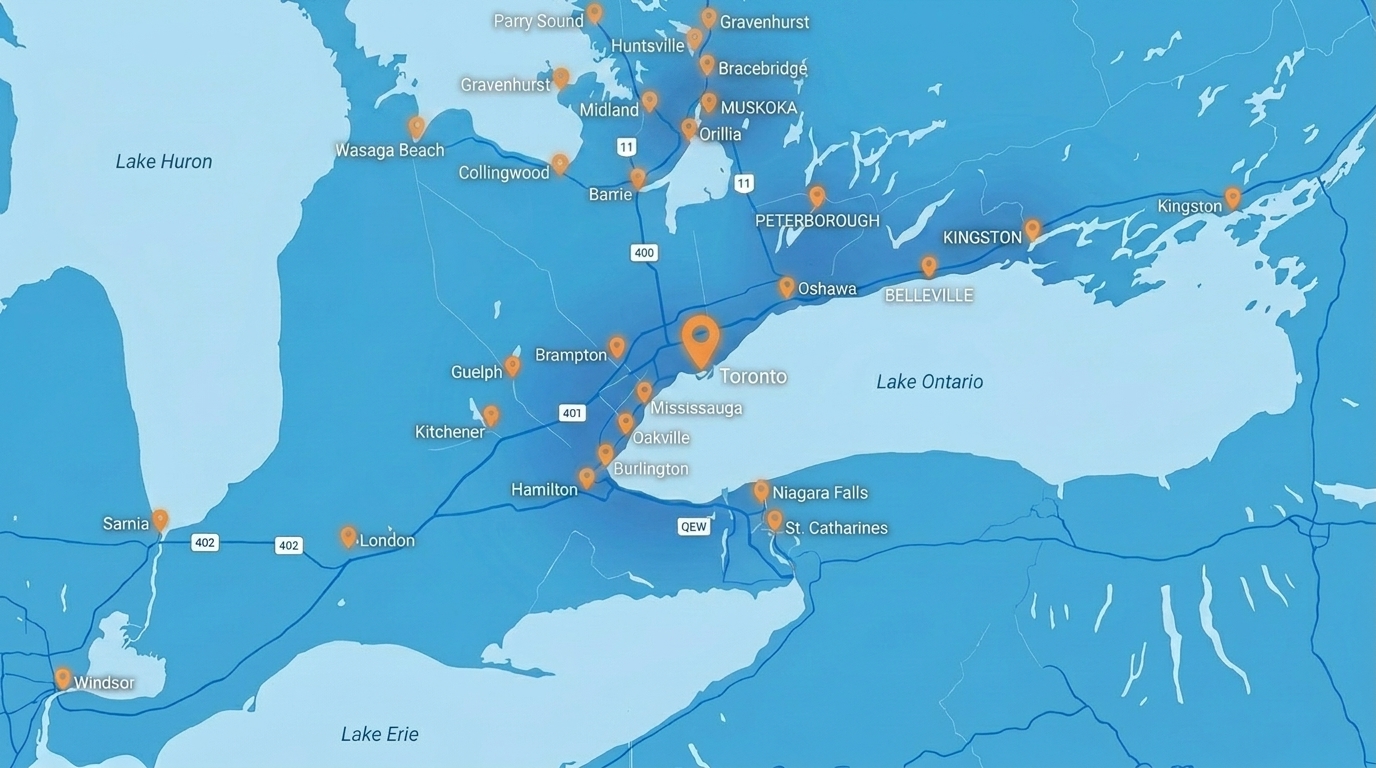
Sprayfoam Solutions Toronto Inc. ((647) 333-3626) dispatches Caliber Certified (CAN/ULC-S705.2 Licensed) Spray Foam Installers across Toronto, the GTA, and Southern Ontario with $0 surrounding GTA travel fees. Get a $250 Credit on Your Estimate — Check Your Price in 60 Seconds (/price-chat) • No Site Visit Required.
Select your residential service hub or GTA city below for local CAN/ULC-S705.2 specifications and same-week crew availability: