Maximum R-Value: Spray Foam Insulation in Toronto Home Renos
Maximum R-Value: 2026 Ontario Overview & Code Essentials
If you are renovating a home in Toronto—whether it’s a semi-detached in Leslieville, a Victorian in the Annex, or a century home in Cabbagetown—you are likely facing a major thermal challenge: narrow wall cavities and strict Ontario Building Code (OBC) requirements.
In a typical Toronto renovation, you don’t have the luxury of deep 2x6 walls. You are often working with old 2x4 studs or even thinner masonry furring strips. Traditional pink fiberglass simply cannot hit the R-22 targets required by the city in those tight spaces. That is why spray foam has become the "Gold Standard" for Toronto renovators seeking both code compliance and genuine comfort.
The Toronto Space Challenge: Why Fiberglass Fails
Traditional batt insulation relies on thickness to provide warmth. To hit R-22 with fiberglass, you need nearly 6 inches of material. If your Toronto home has 2x4 walls (3.5 inches deep), you are stuck at roughly R-12. That is a massive code violation and a recipe for high Enbridge bills and drafty winters.
Closed-cell spray foam provides R-6.5 to R-7.0 per inch. This means you can hit your thermal targets in half the space. But it isn’t just about the R-value; it is about the "Thermal Envelope." Unlike batts, foam expands into every crack and crevice of an old Toronto brick-and-beam structure, sealing off the convective loops that steal your heat.
Technical Showdown: R-Value vs. Space in Toronto Renos
When every square inch of floor space in Toronto costs a premium, you cannot afford to "fur out" your walls just to fit bulky insulation. Here is how the materials actually stack up in a standard 3.5-inch (2x4) cavity:
| Insulation Type | R-Value in 3.5" Cavity | Air Seal? | Vapor Barrier? | OBC R-22 Compliant? |
|---|---|---|---|---|
:--- | :--- | :--- | :--- | :--- |
2lb Closed-Cell Foam | R-22.7 to R-24.5 | YES | YES | ✅ YES |
½lb Open-Cell Foam | R-12.2 to R-14.0 | YES | NO | ❌ NO |
Mineral Wool Batts | R-14.0 | NO | NO | ❌ NO |
Fiberglass Batts | R-11.0 to R-13.0 | NO | NO | ❌ NO |
As the data shows, closed-cell spray foam is the only material that passes the Ontario Building Code inspection for a standard Toronto renovation without requiring you to sacrifice your valuable living space.
Insulating Toronto’s Heritage Homes: The Double-Brick Challenge
If you own a home in neighborhoods like the Annex or Little Italy, you are likely dealing with double-brick (masonry) construction. These homes were designed to "breathe," but in a modern high-efficiency renovation, that breathing becomes a liability. Moisture management is the #1 concern here.
When we insulate a double-brick wall from the inside, we are effectively making that brick colder in the winter. If you use a permeable insulation like fiberglass or open-cell foam, warm moist air from your kitchen or bathroom will migrate through the wall, hit that cold brick, and condense into liquid water. This leads to brick spalling and structural rot.
Closed-cell spray foam acts as a "vapor retarder" (Class 1). It stops that moisture migration entirely. By sealing the interior face of the brick with a high-density polymer, we prevent the condensation cycle, protecting the structural integrity of your Toronto heritage home for another 100 years.
The HVAC Advantage: Downsizing Your Toronto Heating System
Most Toronto homeowners think about insulation as a way to save money on monthly bills. While that is true (often $100+ per month in savings), the biggest "hidden" ROI comes during the HVAC installation phase of your renovation.
Because spray foam creates a near-perfect air seal, your home’s "heat load" drops significantly. This often allows you to downsize your furnace or heat pump. A smaller, more efficient system costs less to purchase and less to maintain. When you combine spray foam with modern heat pump technology—which is increasingly popular in Toronto—you create a home that is almost entirely silent and incredibly cheap to operate.
Soundproofing in the City: Quiet in the Core
Toronto is a loud city. Between the streetcars on Queen Street and the neighbors in the semi-detached next door, acoustics matter. While closed-cell foam is primarily a thermal hero, its density also provides significant "STC" (Sound Transmission Class) benefits.
In a renovation, we often spray the "party wall" shared with a neighbor. This reduces the transfer of airborne noise (voices, TV) significantly. For ultimate soundproofing in a Toronto condo or semi, we often recommend a hybrid approach: a flash-coat of closed-cell for sealing, followed by mineral wool or open-cell foam for maximum sound absorption.
Navigating Toronto Building Permits and OBC SB-12
If you are doing a "gut reno" in Toronto, you need a building permit. The Toronto Building Division will require an "SB-12" form showing how your home meets energy efficiency targets. Inspectors in the GTA are increasingly savvy about insulation quality.
When you use Sprayfoam Solutions, we provide the technical data sheets (CCMC 14036-R) that your inspector needs to see. Our 2lb foam is a certified air barrier and vapor barrier, meaning you pass your "Insulation Inspection" the first time, without the need for separate poly-sheeting or secondary air-sealing measures. This can save your project 3–5 days of scheduling delays.
Case Study: A Leslieville Gut-Renovation
Last year, we worked on a 1,800 sqft semi-detached renovation in Leslieville. The homeowner was struggling to meet R-22 in their 2x4 walls. By switching from their originally planned mineral wool to 3.5 inches of 2lb closed-cell foam, we accomplished three things:
- Met OBC SB-12 code compliance without furring out the walls (saving 2 inches of floor space per wall).
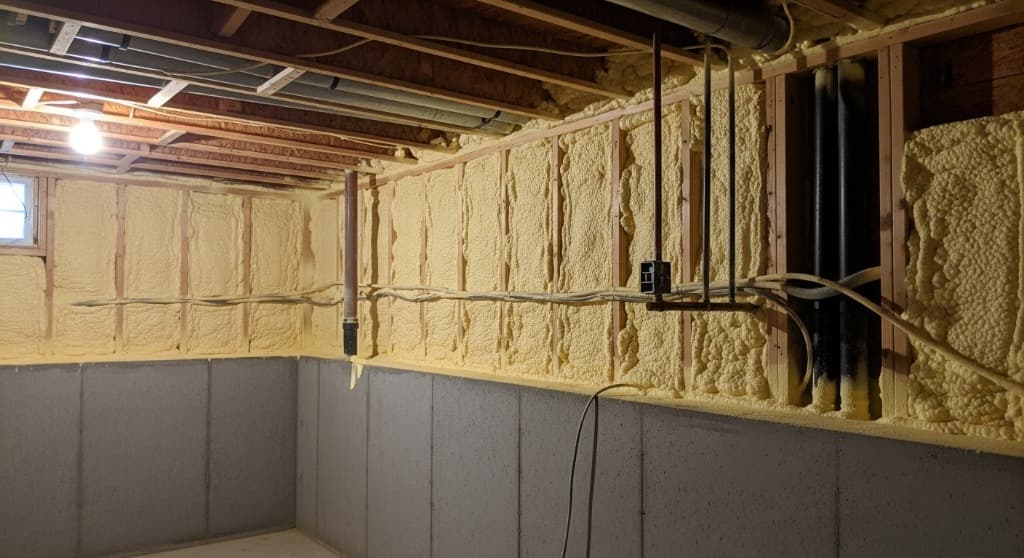
- Stopped a persistent draft coming from the old rim joists in the basement.
- Reduced the HVAC requirement from a 60,000 BTU furnace to a 40,000 BTU high-efficiency unit.
The result was a home that stayed at a constant 21°C during the record-breaking cold snap of January 2024, with energy bills lower than the neighbors’ much smaller apartment.
Technical Benchmarks for Your Toronto Quote
When comparing quotes for your Toronto project, ensure you are looking at these technical benchmarks. If a contractor doesn’t know these numbers, they aren’t "Hardcore":
- Density: Must be 2.0 lb/ft³ for structural and moisture protection. Anything less is "light" foam and won’t meet code in 3.5 inches.
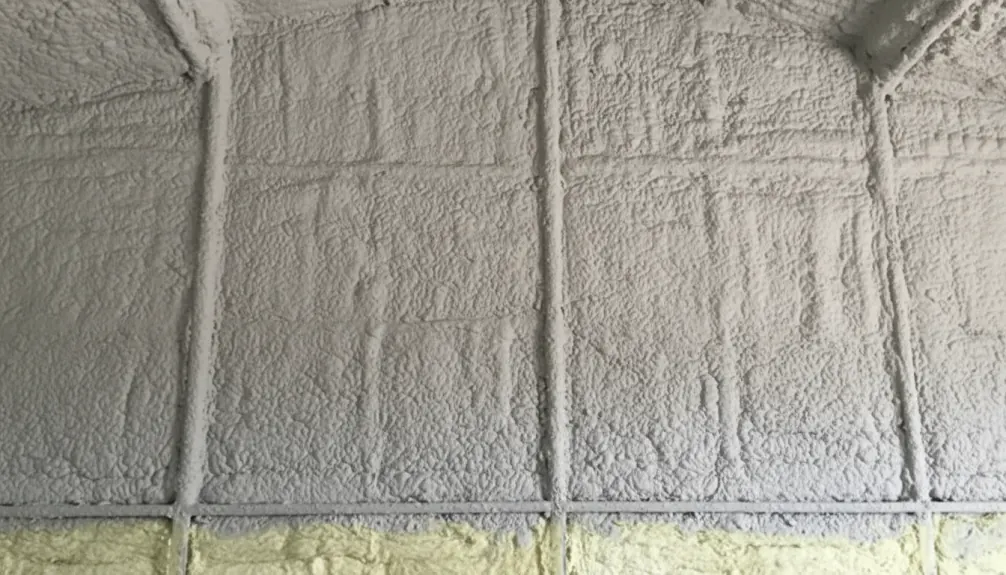
- Adhesion: The foam must bond directly to the substrate (brick, wood, or stone) without gaps. This requires proper surface prep and temperature control.
- Curing: Ensure the contractor uses professional-grade proportioners (like Graco E-30) to maintain a perfect 1:1 chemical mix.
The "Pink Insulation" Danger: Why Fiberglass Fails Toronto Homes
For decades, fiberglass batts were the default choice in Ontario. But in the context of a 2026 Toronto renovation, using fiberglass is often a liability. Here is the technical reality: fiberglass does not stop air. It acts like a filter, not a seal.
In an old house in Etobicoke or Scarborough, the wind blows right through the brickwork. Fiberglass batts allow that cold air to move through the insulation, creating "convective loops." This means that even if your wall has insulation, you still feel a draft. More importantly, that air carries moisture. When that moisture gets trapped inside fiberglass, it stays there. This leads to the "black mold" often found behind drywall in older Toronto basements.
Spray foam eliminates this entirely. By creating a monolithic, gap-free barrier, it stops the air movement that causes both drafts and mold. It is the only material that addresses the "physics of the wall" correctly in our extreme climate.
Toronto’s Extreme Micro-Climates: Summer Humidity vs. Winter Deep-Freeze
Toronto isn’t just cold; it is also incredibly humid. We experience a temperature swing of nearly 60 degrees Celsius throughout the year. From -30°C windchills in January to +35°C humidex days in August, your home’s walls are under constant stress.
Traditional insulation only works well in one direction. Spray foam, however, handles the "vapor drive" from both sides. In the summer, it prevents humid outdoor air from condensing on your air-conditioned interior walls. In the winter, it prevents warm indoor air from reaching the cold exterior brick. This "dual-action" protection is essential for anyone living in the GTA.
Step-by-Step: The Sprayfoam Solutions Process for Toronto Renos
We know that a renovation is a stressful time. Our goal is to be the easiest sub-contractor you deal with. Here is exactly what our process looks like for a typical Toronto home:
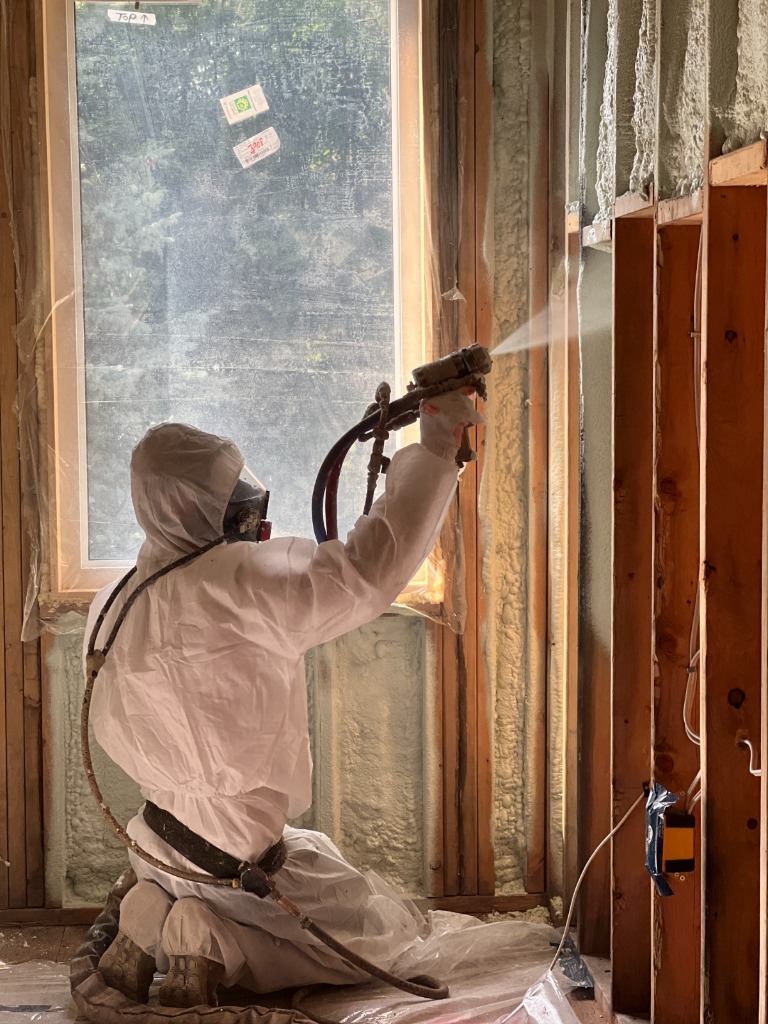
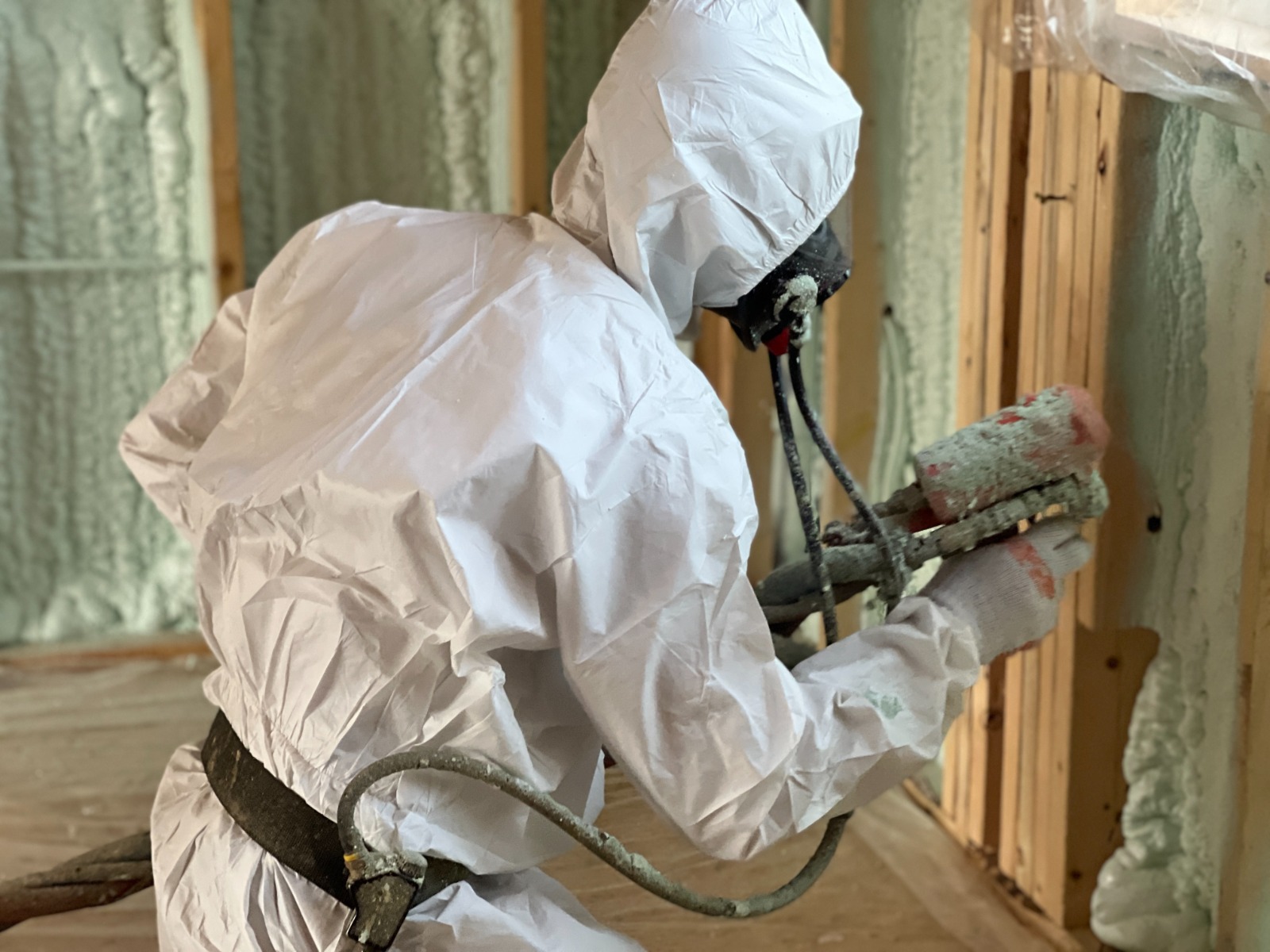
- Site Preparation: We mask off all windows, doors, and finished surfaces. We use high-powered exhaust fans to manage air pressure and fumes.
- Substrate Inspection: We verify that your 100-year-old bricks or new wood studs are dry and within the required temperature range (verified with infrared thermometers).
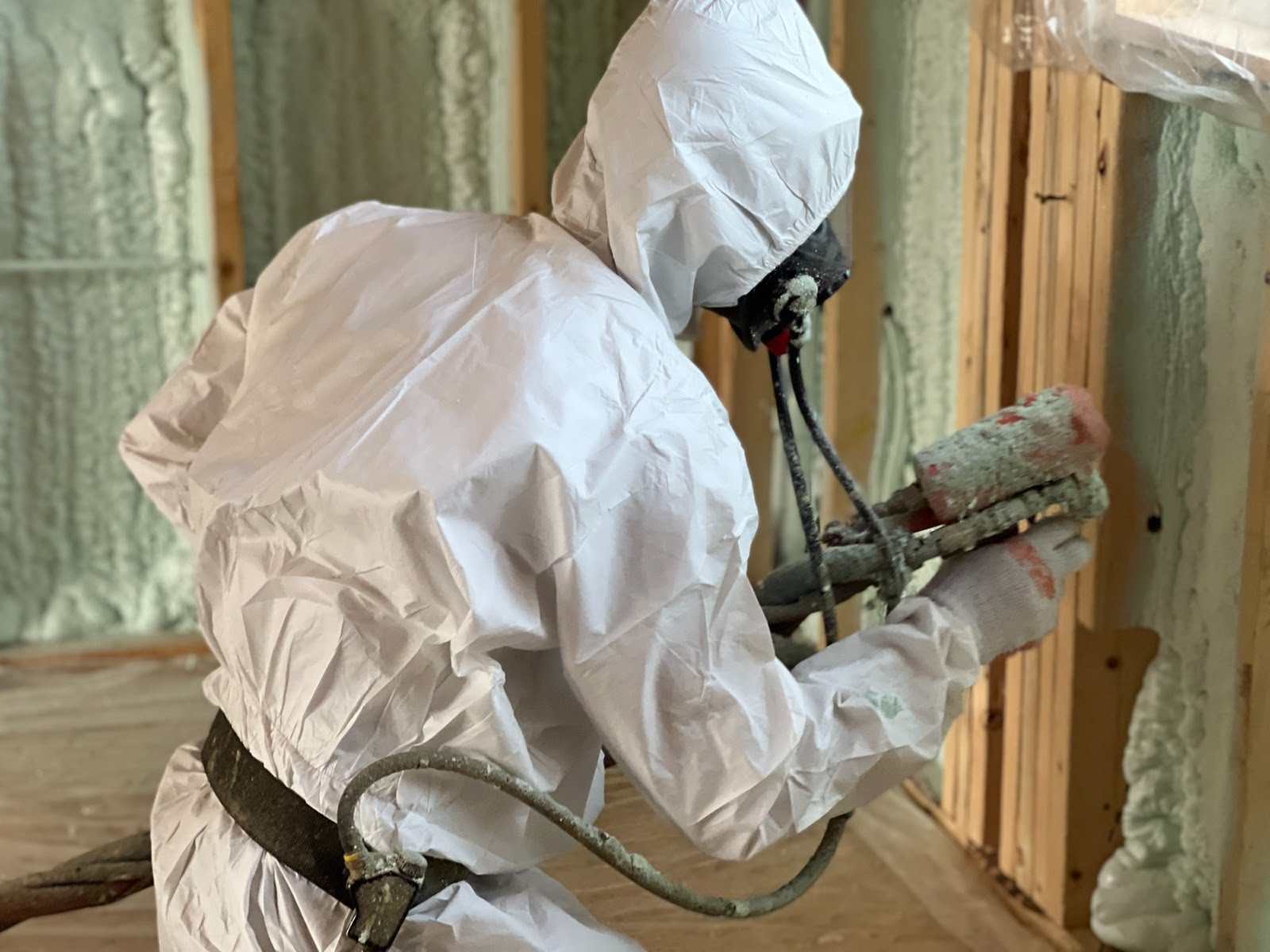
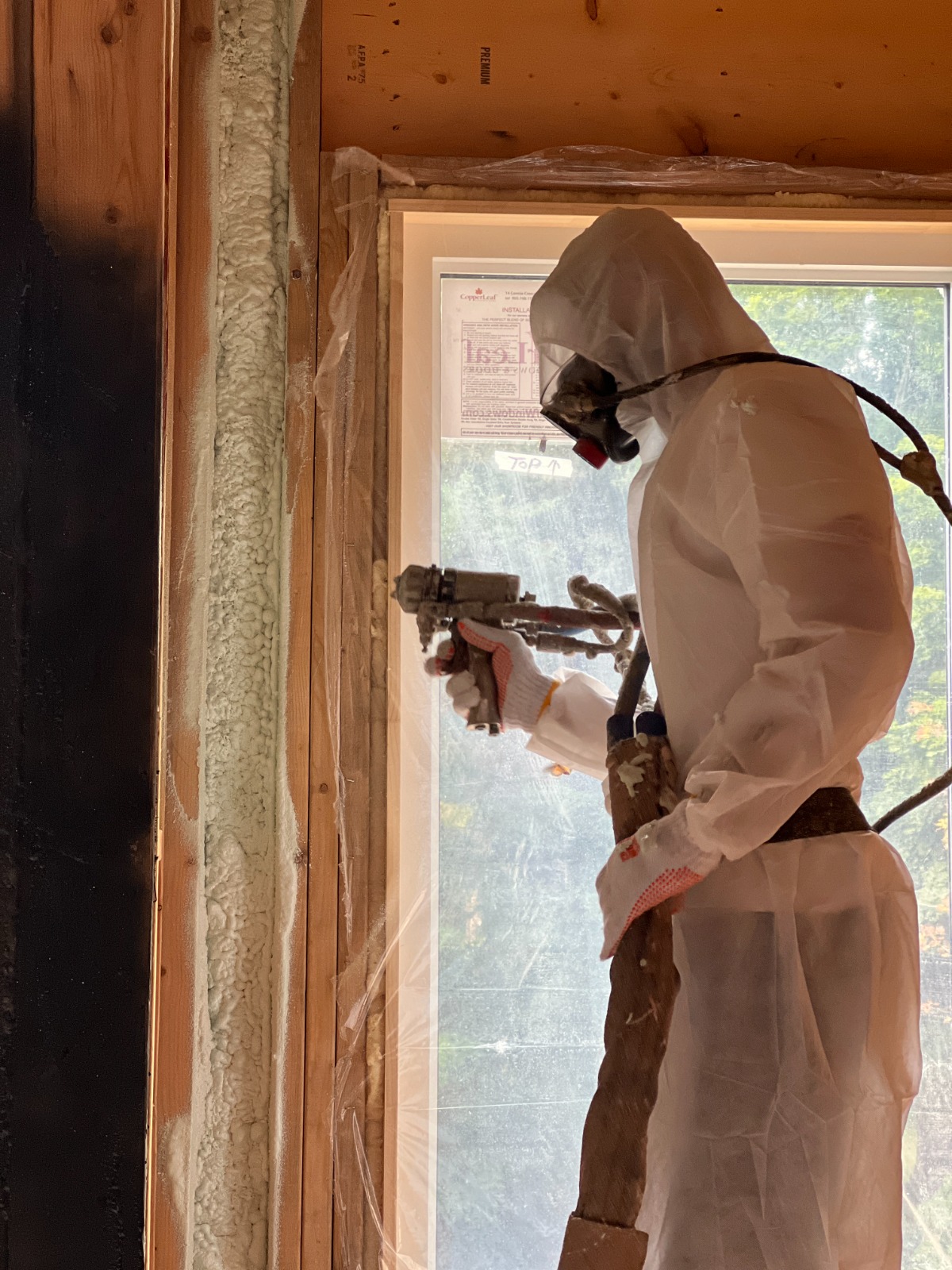
- Precision Spraying: Our certified applicators apply the foam in "lifts" of 2 inches. This ensures perfect curing and prevents overheating of the chemical reaction.
- Trimming and Cleanup: Once cured, we trim any over-expansion to ensure your drywallers have a perfectly flat surface to work on. We leave your site cleaner than we found it.
- Final Inspection: We perform a walkthrough with you or your GC to ensure every "joist pocket" and "rim joist" is perfectly sealed.
The ROI: How Spray Foam Boosts Toronto Property Value
In the hyper-competitive Toronto real estate market, "Efficiency" is a major selling point. Buyers are increasingly wary of old homes with astronomical heating costs. When you list your home in neighborhoods like North York or Vaughan, being able to state "Full Spray Foam Insulation" in the listing is a massive trust signal.
Home inspectors in Toronto now routinely use thermal cameras. If a buyer’s inspector sees a perfectly blue (cold) wall in the winter, they will flag it. If they see a solid, warm wall, it gives the buyer confidence that the renovation was done "right." Many of our clients report that the investment in spray foam was recovered several times over in their final sale price.
Common Mistakes to Avoid in Toronto Spray Foam Projects
Not all spray foam is created equal. If you are shopping for the lowest price in the GTA, you might end up with these common (and expensive) mistakes:
- Using Open-Cell in Exterior Walls: Open-cell foam is great for sound, but it is a "sponge" for moisture. In Toronto, you MUST use closed-cell foam for any wall that touches the outdoors.
- Incomplete Air-Sealing at the Rim Joist: The rim joist (where the house meets the foundation) is the #1 source of energy loss. If your contractor skips this "fiddly" area, you are losing 30% of the benefit.
- Poor Chemical Mixing: If the "A" and "B" components aren’t heated and mixed at exactly the right pressure, the foam can stay "tacky" or have a lingering odor. We use Graco high-precision gear to ensure a perfect mix every time.
Final Verdict: Don’t Settle for Less
Your home is likely your biggest asset. If you are spending $100k+ on a renovation in Toronto, don’t cut corners on the one thing you can’t change later: the insulation inside your walls. Choose the material that meets the code, kills the drafts, and protects your family’s health.
How much does spray foam cost for a typical Toronto renovation?
For a standard Toronto project using 2lb closed-cell foam, pricing typically ranges from $3.50 to $5.50 per square foot depending on the thickness required and the complexity of the space. While higher than fiberglass, the ROI in energy savings and code-compliance often pays for the difference within 3–5 years.