Spray Foam vs. Fiberglass Insulation in Ontario: 2026 Cost, R-Value, Moisture & Energy Savings Comparison
Spray Foam vs. Fiberglass Insulation in Ontario: 2026 Ontario Overview & Code Essentials
When comparing spray foam vs. fiberglass insulation in Ontario, the upfront quote tells only half the story. Pink fiberglass batts (and Rockwool mineral wool batts) look cheaper on paper, but unsealed fibrous batts cannot stop air movement or block indoor winter humidity from condensing against freezing concrete foundation walls and roof sheathing. While Sprayfoam Solutions Toronto Inc. also provides old fiberglass/cellulose removal, R-60 blown-in attic insulation, and fiberglass solutions, our primary specialty is certified spray foam insulation (basement spray foam, attic spray foam, exterior walls) because closed-cell spray foam air-seals and stops vapour condensation in one pass.
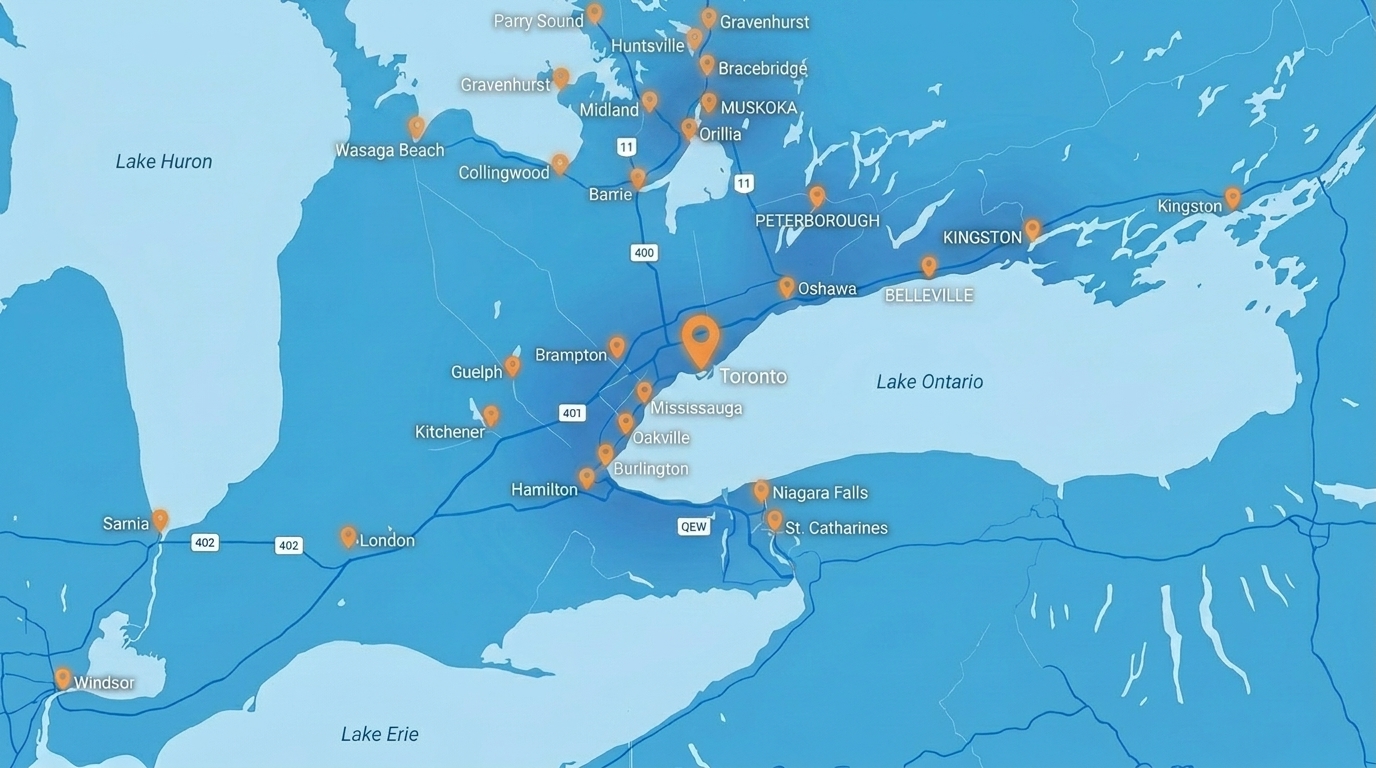
Every week across Toronto, Mississauga, Brampton, Vaughan, Markham, Oakville, and Barrie, our Caliber Certified (CAN/ULC-S705.2 Licensed) installers strip out damp, mould-stained, rodent-tunneled builder fiberglass and replace it with monolithic CAN/ULC-S705.1 2 lb closed-cell or 0.5 lb open-cell spray foam. Below is the complete 2026 engineering, moisture, building-code, and 25-year heating ROI breakdown.
Compare our 3 most common GTA & Ontario fiberglass-to-spray-foam upgrade scopes before checking your exact 60-second price:
- Pull Damp Rim Batts + Spray 3"–3.5" Closed-Cell 2 lb (R-20+)
- Stops 40% of Drafts
- Includes $250 Credit
- 3.5"–4" Closed-Cell 2 lb (R-21 to R-24)
- Insulation + Class 1 Vapour Barrier
- Optional Old Batt Tear-Out
- Clean Bagging & Disposal of Old Fiberglass + Certified 2 lb / 0.5 lb Spray Foam
- Includes $250 Estimate Credit
10-Point Comparison: Spray Foam vs. Pink Fiberglass & Rockwool Batts in Ontario (2026)
Once you include the hidden cost of framing deeper 2x6 walls, stapling and acoustic-sealing a separate 6-mil polyethylene vapour barrier, and hand-caulking rim joists, the price gap between fiberglass batts and turnkey spray foam narrows dramatically. For basement-specific square-foot pricing, see our 2026 Ontario Basement Spray Foam Cost Guide ($2.50–$4.85/sq ft) and our Open-Cell vs. Closed-Cell Comparison.
| Performance / Cost Metric | 2 lb Closed-Cell Spray Foam (CAN/ULC-S705.1) | 0.5 lb Open-Cell Spray Foam (Interior Acoustic) | Pink Fiberglass Batts + 6-Mil Poly Sheet | Rockwool Mineral Wool Batts + 6-Mil Poly |
|---|---|---|---|---|
Aged R-Value Per Inch | R-6.0 to R-6.5 / inch (R-21 in 3.5") | R-3.6 to R-3.8 / inch (R-13 in 3.5") | R-3.1 to R-3.4 / inch(Needs 6" for R-20) | R-3.7 to R-4.0 / inch(Needs 5.5" for R-22) |
2026 Installed Cost(/sq ft) | $2.50 – $4.85 / sq ft(All-in 1 pass) | $1.50 – $2.50 / sq ft(Interior walls/joists) | $1.75 – $2.85 / sq ft(Including poly + seal) | $2.25 – $3.40 / sq ft(Including poly + seal) |
1,000 Sq Ft Basement Cost | $2,800 – $4,600(Minus $250 Credit) | $1,500 – $2,800(Ceilings/partitions only) | $2,100 – $3,100(+ high condensation risk) | $2,500 – $3,600(Still requires 6-mil poly) |
Air Barrier Seal | 100% Monolithic Air Seal (<0.005 L/s·m²) | 100% Air Seal (<0.02 L/s·m² at 3.5"+) | 0% Air Seal (Wind blows right through) | 0% Air Seal (Air convects around batts) |
Built-In Vapour Barrier | Yes — Class 1 Vapour Barrier at ≥2.0" | No(Used on interior conditioned assemblies) | No — Requires separate 6-mil poly & tape | No — Requires separate 6-mil poly & tape |
Concrete Dew-Point Safety | Bonds to concrete — zero air gap behind | Not used on below-grade concrete | Traps humid air against cold concrete | Allows vapour to condense on cold concrete |
Mice, Spiders & Pest Control | Rigid 2 lb polymer blocks pests & bugs | Seals air gaps & scent trails | Mice shred & nest inside warm pink batts | Mice tunnel behind unsealed batt cavities |
Structural Wall Strength | Adds +250% to +300% racking strength | Flexible acoustic fill | 0% structural strength | 0% structural strength |
Service Lifespan in Ontario | 25 to 50+ Years(Zero sag or settling) | 25 to 50+ Years(Dimensionally stable) | 12 to 20 Years(Sags, settles & dampens) | 20 to 30 Years(But poly tape seams fail) |
Why Pink Fiberglass Batts Fail in Ontario Basements, Rim Joists & Exterior Walls
Fiberglass batts were designed to slow conductive heat transfer inside dry, motionless laboratory test frames. In a real Ontario home experiencing -20°C January wind chills and humid +30°C July heatwaves, fiberglass suffers from four fatal building-envelope flaws:
- 1. Wind Washing & Convective Loops Strip Up to 50% of Rated R-Value: According to Natural Resources Canada energy-efficiency research, air leakage accounts for 25% to 40% of total heating energy loss in Canadian homes. Because fiberglass is just spun glass fibres, cold air filters straight through electrical cutouts, sill plates, and header seams—cutting real-world R-20 batts down to an effective R-10 on windy winter nights.
- 2. Hidden Dew-Point Condensation & Black Mould Against Cold Concrete: When warm indoor household air leaks past a staple hole or electrical box in a 6-mil poly sheet, it passes freely through fiberglass batts and hits the freezing below-grade concrete foundation wall. Liquid condensation forms on the concrete, soaking the back of the batts and breeding toxic mould out of sight (see our Basement Vapour Barrier Guide and Is Fiberglass Insulation Dangerous?).
- 3. Rim Joist Wood Rot & Cold Kitchen Floors: Stuffing pink fiberglass chunks into basement rim joists and headers is the #1 mistake in older Ontario subdivisions. Warm indoor moisture condenses on the freezing exterior rim board behind the wet batts, rotting the structural wood sill plate while letting spiders, house centipedes, and cold drafts pour across your floors.
- 4. Rodent Nesting & Batt Sagging Over Time: Mice, squirrels, and raccoons tunnel effortlessly through fiberglass batts in garages, crawl spaces, and attics, contaminating the insulation with urine and droppings that circulate through your HVAC system.
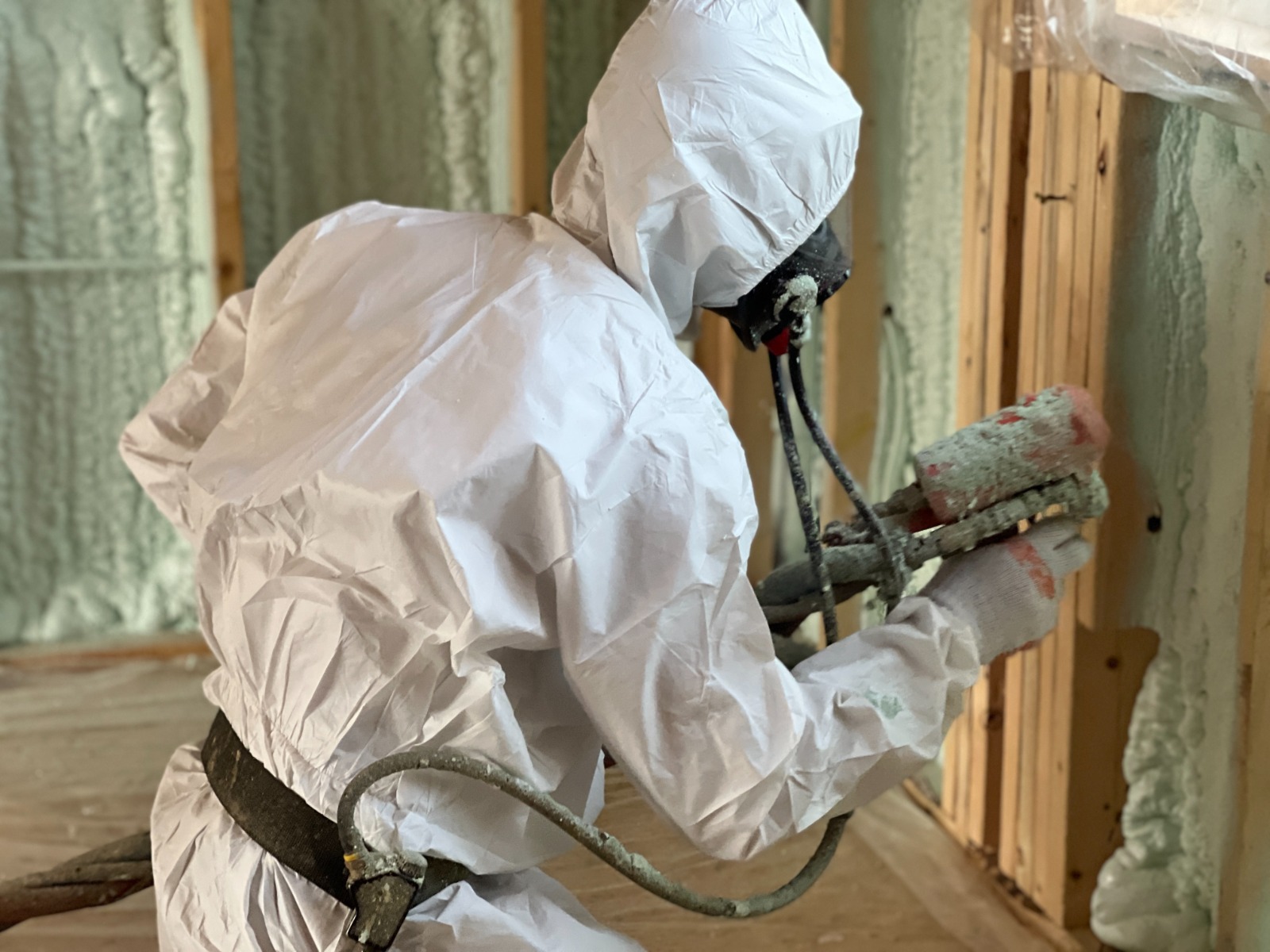
25-Year Heating Bill ROI: Does Spray Foam Pay for Itself Over Fiberglass?
Homeowners checking our 2026 Ontario Spray Foam Cost Guide often ask how quickly spray foam recovers its $900 to $1,500 upfront price difference on a standard 1,000 sq ft basement or wall renovation. When you factor in Enbridge natural gas heating rates and summertime A/C loads across Southern Ontario, 2 lb closed-cell spray foam pays for itself in 3.0 to 4.5 years—and generates $10,000+ in net energy savings over its 25 to 50+ year lifespan:
| Home Zone / Comparison Metric | Pink Fiberglass Batts + 6-Mil Poly | 2 lb Closed-Cell / 0.5 lb Open-Cell Spray Foam | Annual Energy / Maintenance Impact | 25-Year Net Homeowner Outcome |
|---|---|---|---|---|
Annual Heating & Cooling Savings | Baseline(Drafts leak through seams) | Saves $400 – $750 / year(15%–25% bill cut) | Stops 25%–40% air-leakage heat loss | +$10,000 to +$18,750 saved over 25 years |
2x4 Framing Floor-Space Saved | Needs 2x6 studs (6" depth) to hit R-20/R-24 | Fits R-21 to R-24 in 3.5" 2x4 framing | Saves 25–35 sq ft of livable basement area | +$15,000+ in finished GTA resale square footage |
15-Year Moisture Rework Cost | $3,500 – $7,000(Tear-out of damp batts) | $0 Maintenance(Waterproof closed cells) | Eliminates concrete sweating & mould remediation | Zero drywall tear-out or mould risk |
Cold Room / Cantina & Garage Bonus | Fails under damp porch slabs & garages | $850 – $4,500(Permanent thermal seal) | Stops frozen pipes & cold bedroom floors above | Year-round comfort in every room |
Between-Floor Acoustic Ceilings | Fiberglass batts leak flanking sound | 0.5 lb Open-Cell($1.75 – $2.85 / sq ft) | Seals around pot lights & HVAC trunks(STC 50+) | Quiet legal basement apartment suite |
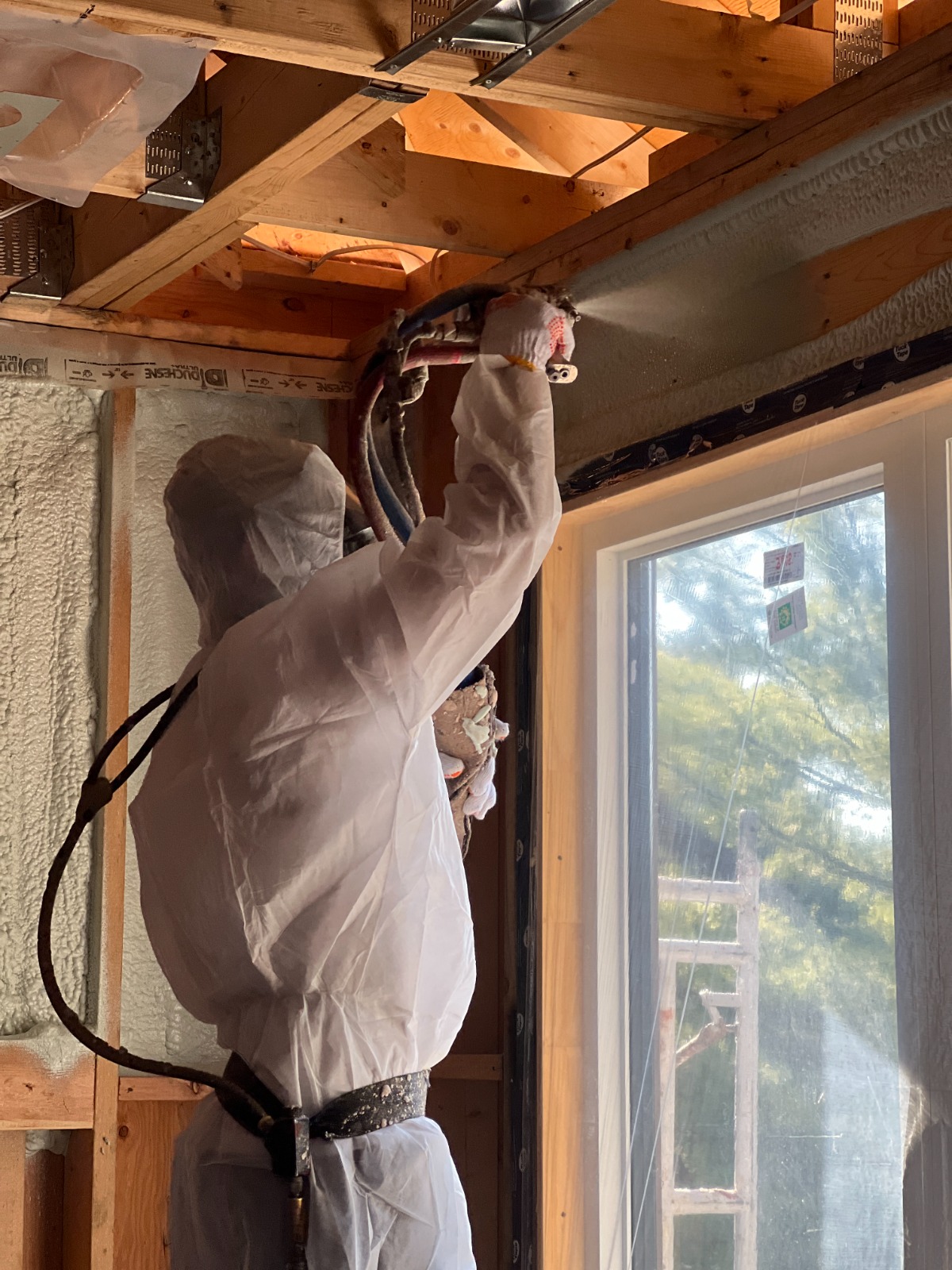
Replaces damp builder fiberglass blankets & 6-mil poly.
Monolithic bond directly to poured concrete or block.
Zero condensation gap, zero mould & passes OBC code.
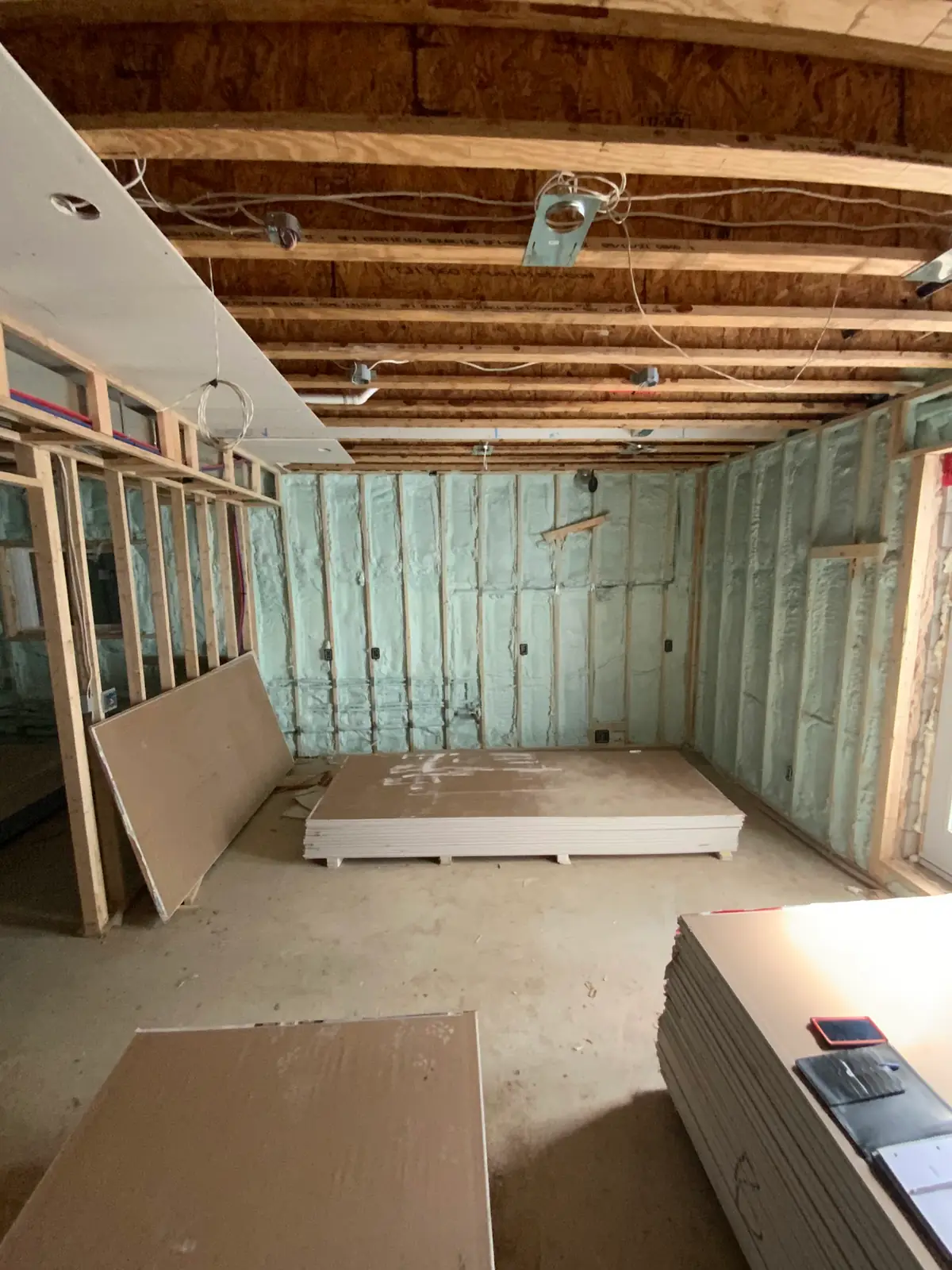
Builder-grade basement fiberglass blankets trap humid indoor air against cold below-grade concrete. We strip away the old batts and plastic, then spray 3.5"–4.0" of 2 lb closed-cell foam directly onto the concrete and rim joists—delivering R-21 to R-24 and a certified Class 1 vapour barrier in one pass.
Ontario Building Code (SB-12) R-Value & Cavity Depth Rules: Why 2x4 Walls Need Spray Foam
Under 2026 Ontario Building Code Part 9 and Supplementary Standard SB-12 (detailed in our Ontario Basement Insulation Code Guide), full-height basement walls require R-20 continuous insulation or R-24 framed cavity insulation, while above-grade exterior walls require R-22 to R-24. Because fiberglass batts only provide R-3.1 to R-3.4 per inch, you cannot fit R-20 or R-24 fiberglass inside a standard 3.5-inch 2x4 stud wall without furring out thicker 2x6 walls and losing valuable floor space. With 2 lb closed-cell spray foam (R-6.0/inch), 3.5 to 4.0 inches passes municipal inspection inside standard 2x4 framing.
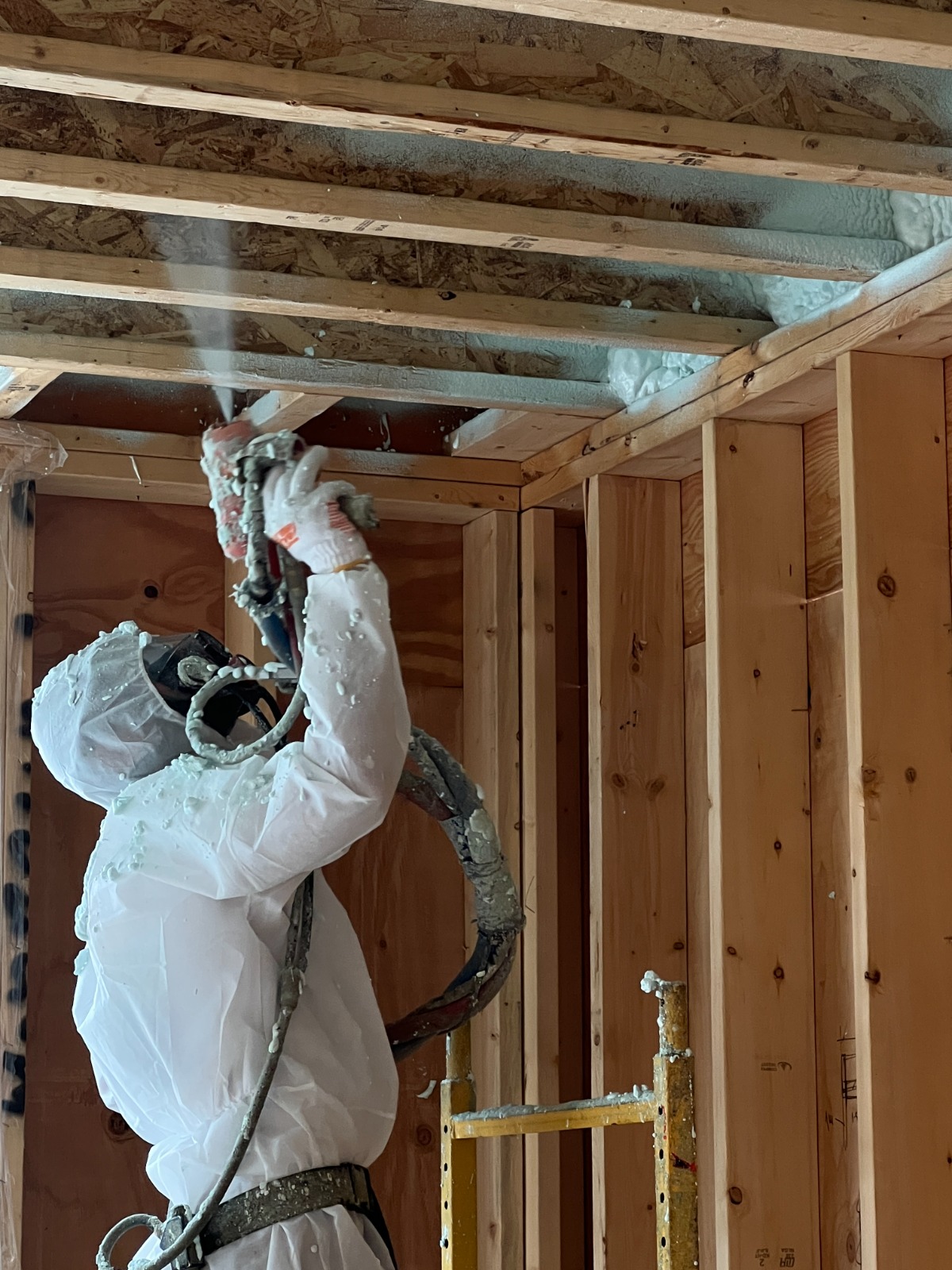
Our 1-Day Old Fiberglass Tear-Out & Certified Spray Foam Installation Process
Whether your project requires stripping out damp basement fiberglass, insulating a cold room / cantina, or upgrading ceiling soundproofing (see our Spray Foam vs. Rockwool Soundproofing Guide and Is Spray Foam Safe Guide), our Caliber Certified mobile rigs handle the entire transformation in one day with $0 Travel Fee across the GTA.
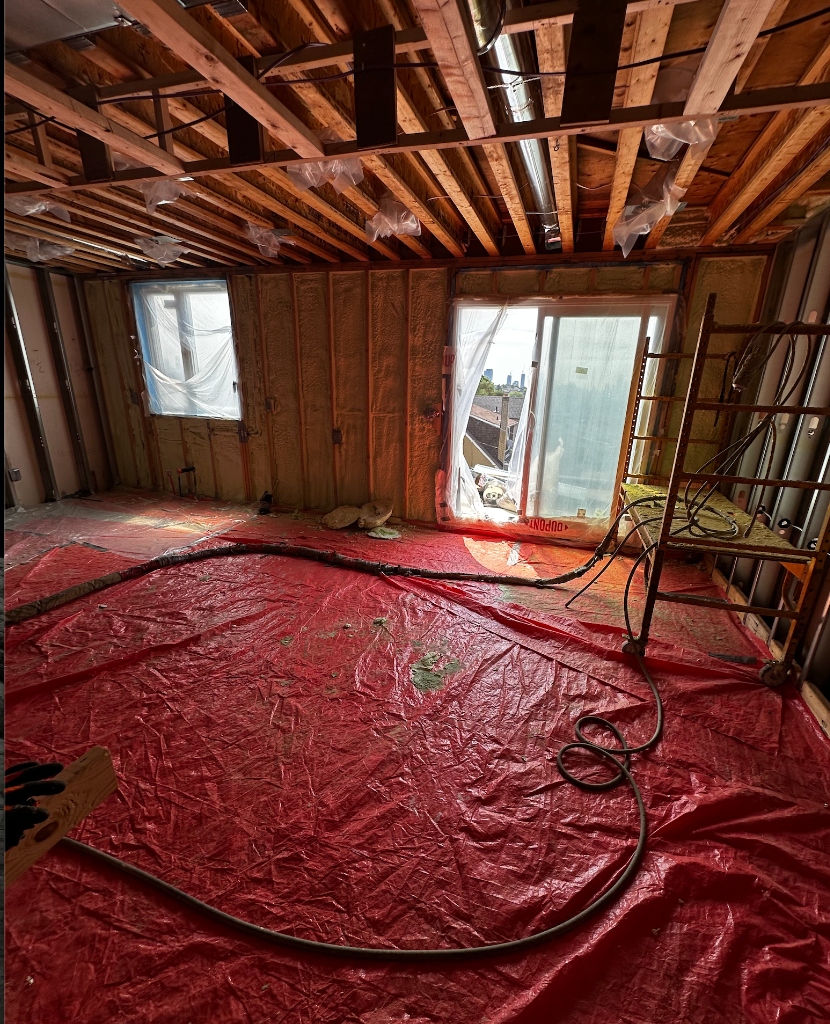

We confirm your square footage, optional old fiberglass removal, and ESA electrical rough-in schedule.
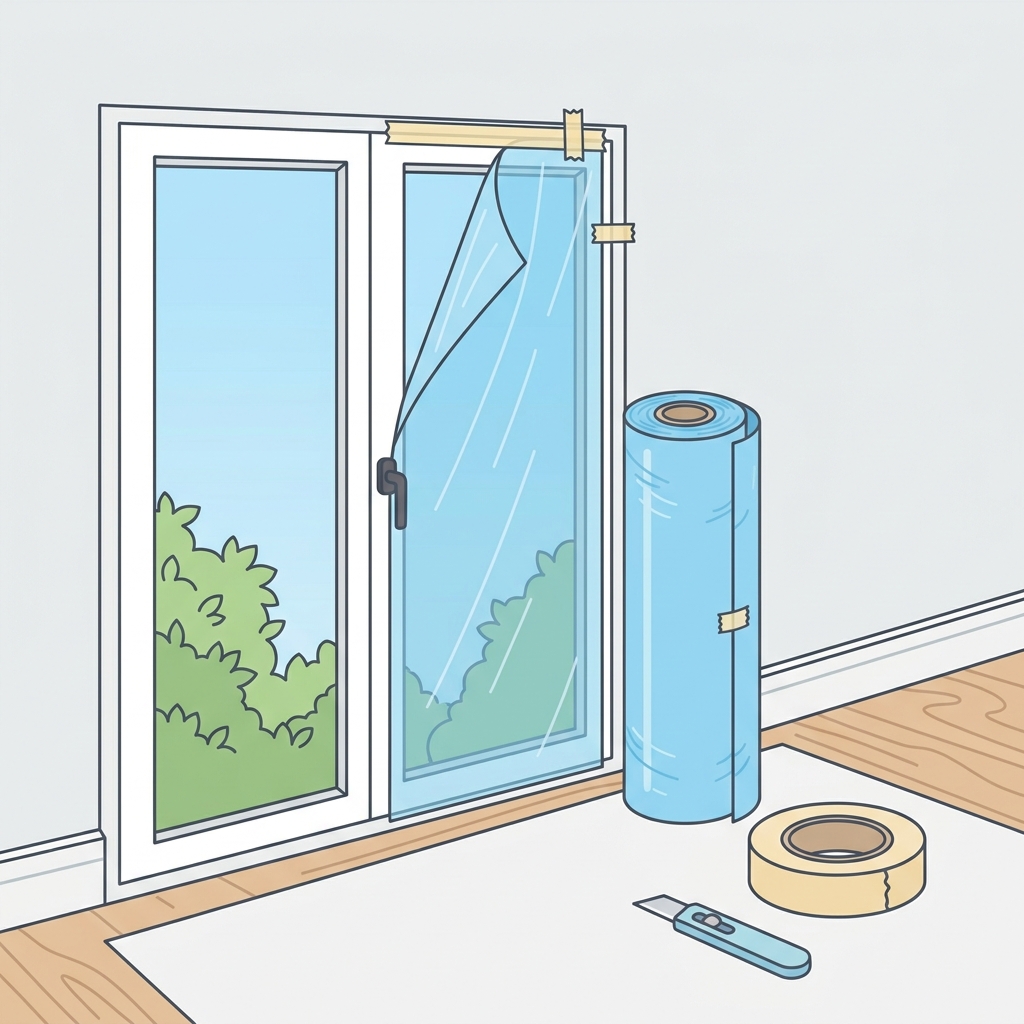
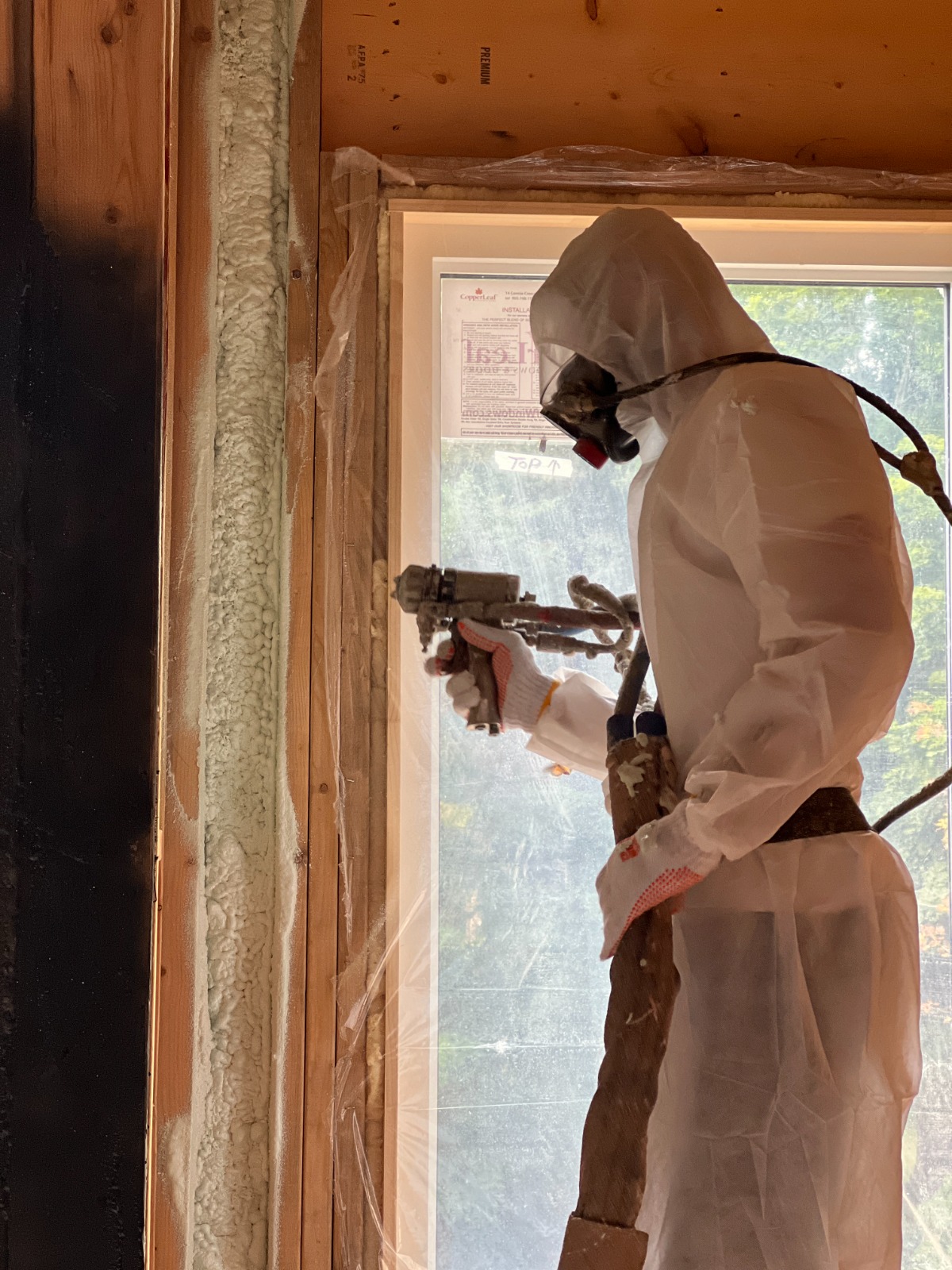
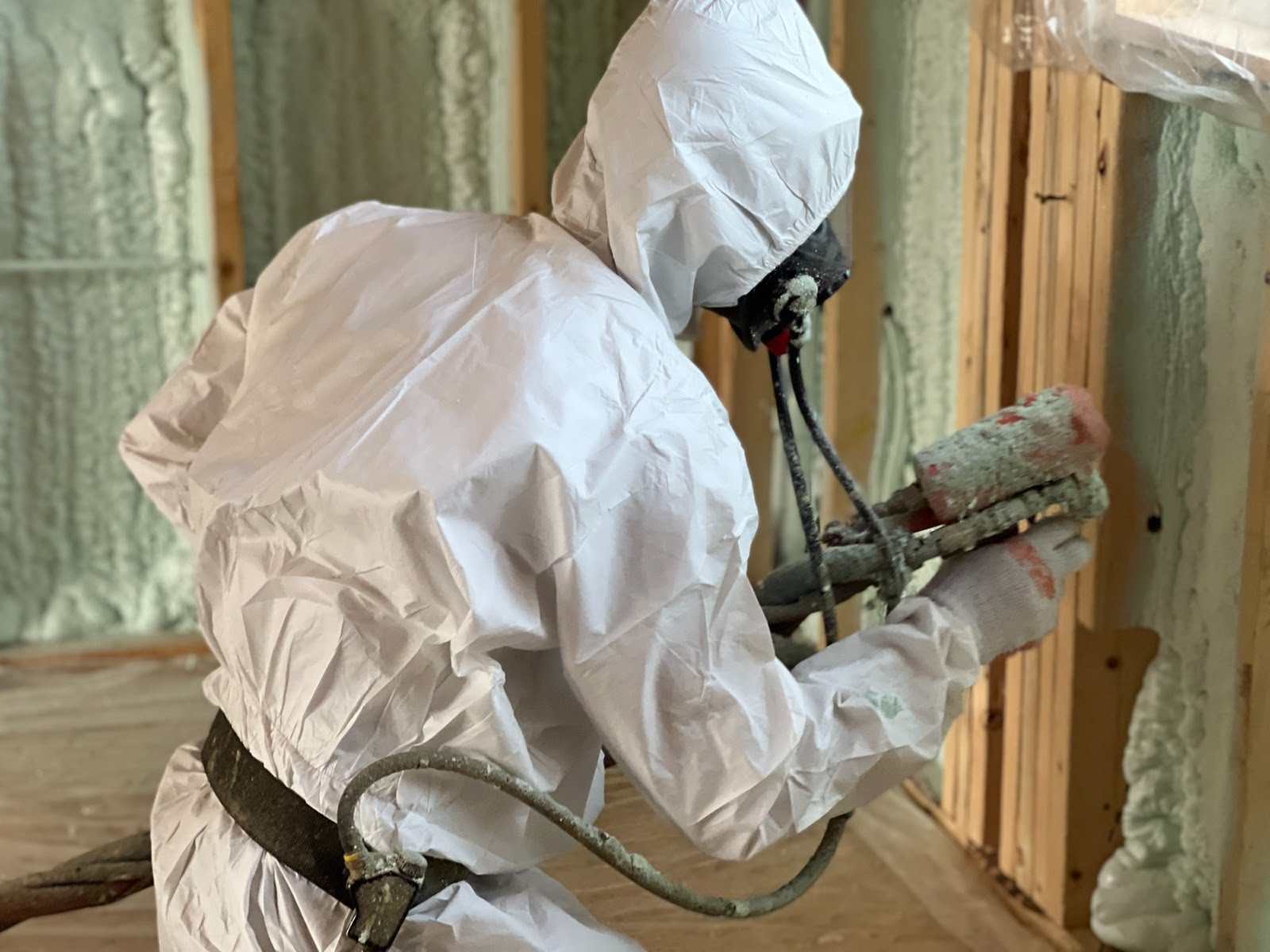
Our crew bags old fiberglass/poly if present, masks all windows, floors, and mechanicals, and sets up exhaust fans.
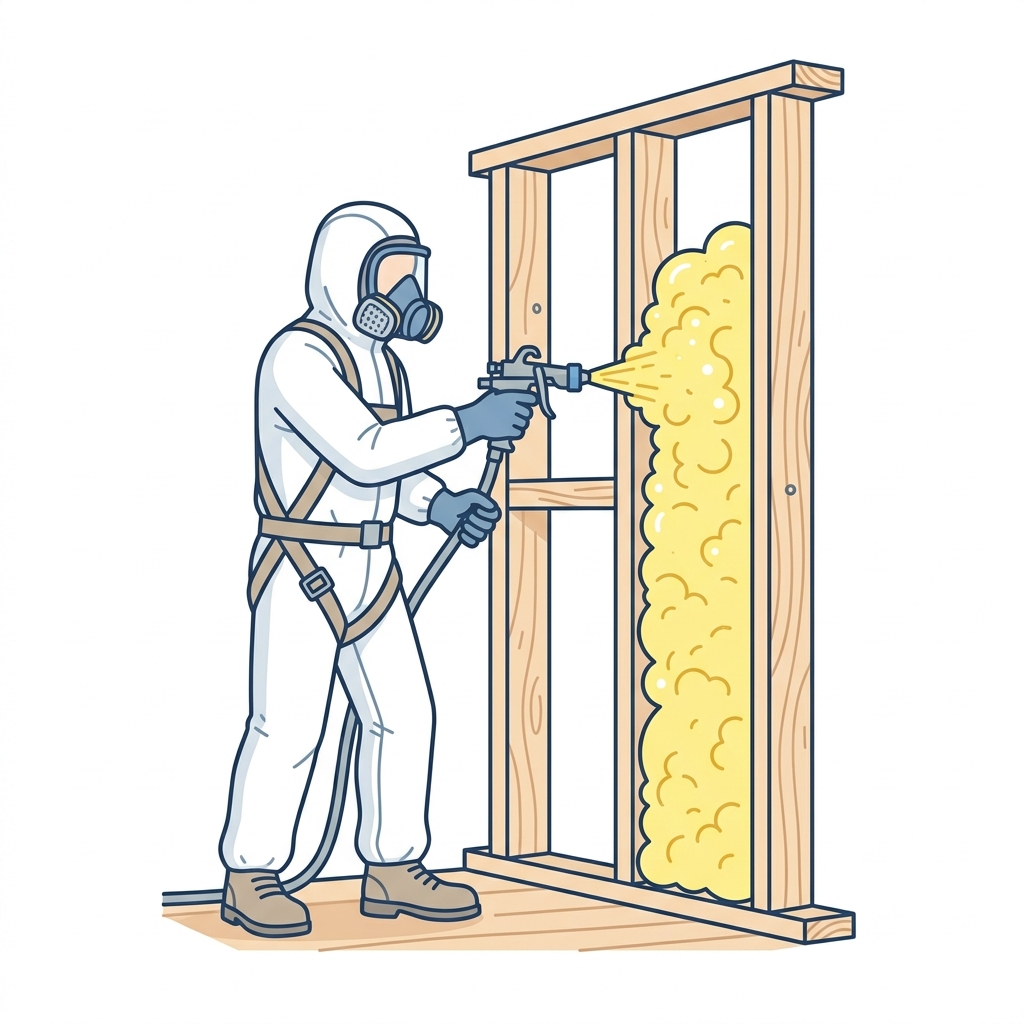
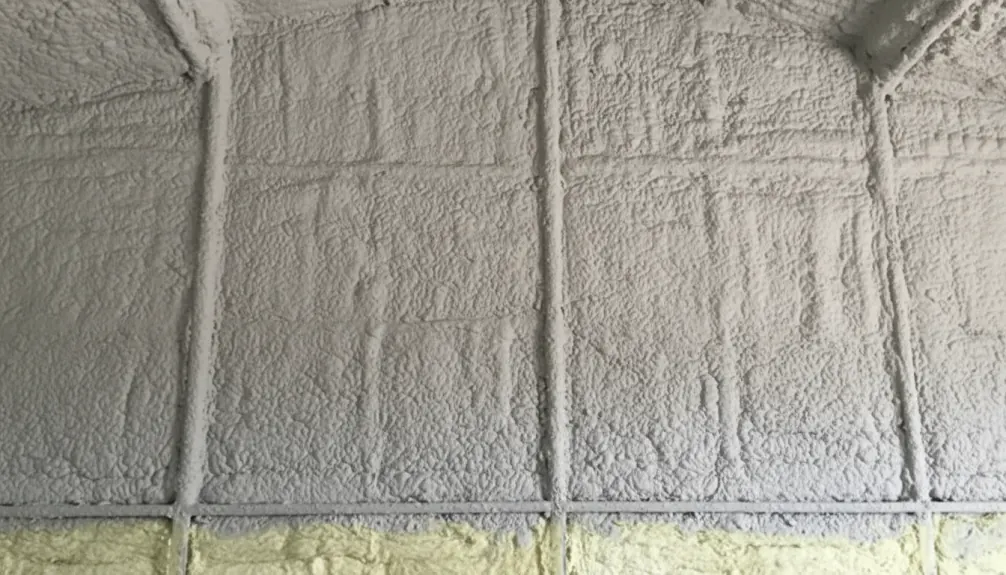
Precision application of 2 lb closed-cell foam to concrete walls, rim joists, or roof decks and 0.5 lb open-cell to ceilings.
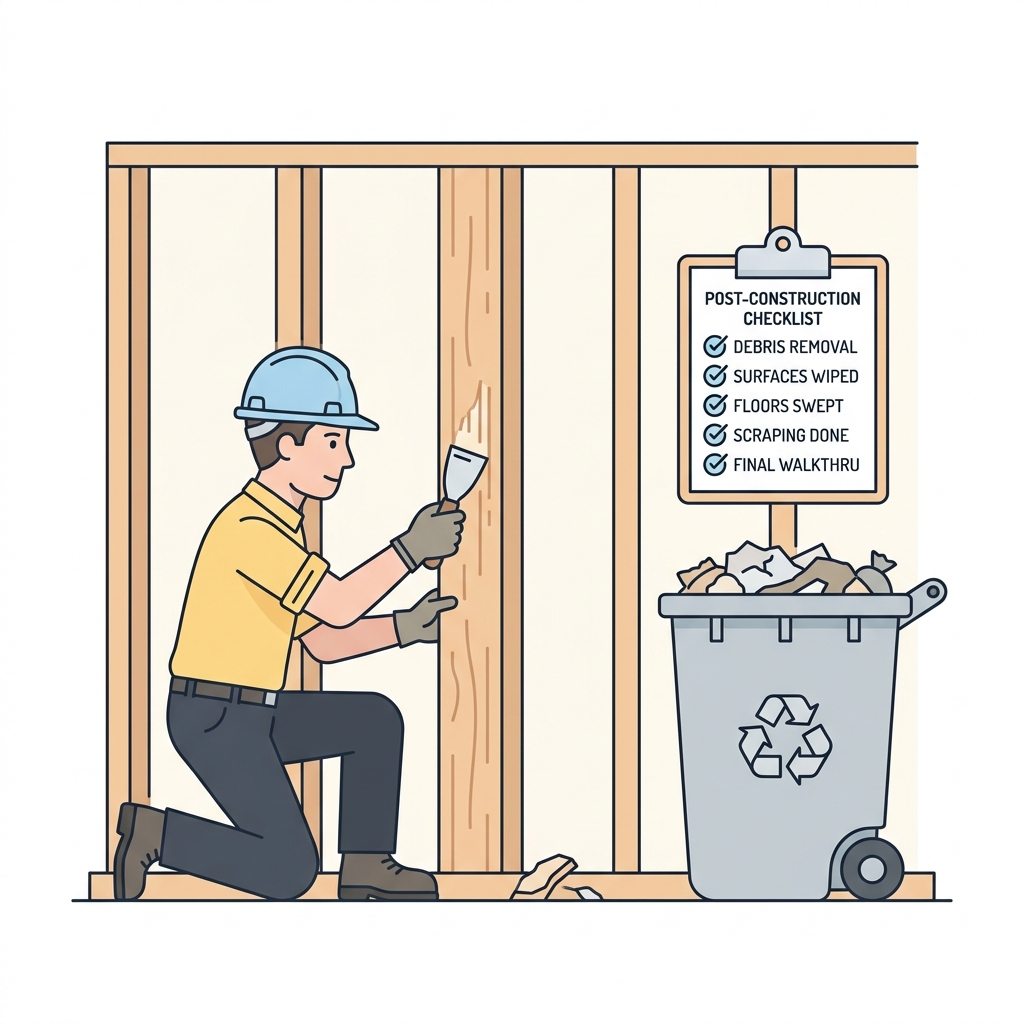
Stud faces are trimmed flush for drywall, old batt bags are hauled away, and your Caliber Certified warranty card is posted.
Frequently Asked Questions: Spray Foam vs. Fiberglass Insulation in Ontario
In 2026, 2 lb closed-cell spray foam (CAN/ULC-S705.1) costs $2.50 to $4.85 per sq ft installed ($2,800 to $4,600 for a standard 1,000 sq ft basement at R-21 to R-24), while 0.5 lb open-cell acoustic spray foam costs $1.50 to $2.50 per sq ft. Fiberglass batts plus a separate 6-mil polyethylene vapour barrier and acoustic sealant run $1.75 to $2.85 per sq ft ($2,100 to $3,100 for 1,000 sq ft). With our $250 Estimate Credit at spfsolutions.ca/price-chat and $400–$750/year in heating savings, closed-cell spray foam pays back the difference in 3 to 4 winters.
Yes! While our primary specialty is certified closed-cell and open-cell spray foam insulation (basements, attics, walls, garages), Sprayfoam Solutions Toronto Inc. also provides old fiberglass/cellulose insulation removal, R-60 blown-in attic insulation, and fiberglass jobs—often upgrading homeowners to a hybrid 2 lb closed-cell air seal plus R-60 attic package.
Below-grade concrete foundation walls in Ontario remain cold year-round. When warm indoor air leaks past electrical boxes or seams in a 6-mil plastic sheet, it passes straight through porous fiberglass batts and condenses into liquid water on the cold concrete. 2 lb closed-cell spray foam bonds directly to the concrete with zero air gap and acts as a Class 1 vapour barrier (<60 ng/Pa·s·m²) at 2.0"+ depth—making condensation impossible.
No. Under CAN/ULC-S705.2 national installation standards, all existing fiberglass batts, mineral wool, and 6-mil polyethylene plastic must be removed down to the bare concrete or wood sheathing before spray foam is applied. Spraying over fiberglass would prevent structural adhesion and trap moisture. Our crew offers turnkey old batt tear-out, bagging, and disposal ($0.75–$1.50/sq ft) on the same morning we spray.
2 lb closed-cell spray foam (CAN/ULC-S705.1) delivers R-6.0 to R-6.5 per inch—nearly double the R-3.1 to R-3.4 per inch of pink fiberglass batts. That allows closed-cell spray foam to achieve Ontario Building Code R-21 to R-24 inside standard 3.5-inch 2x4 framing, whereas fiberglass requires 5.5 to 6.0 inches (2x6 framing) to meet the same code requirement.
Yes. Mice, rats, and squirrels shred pink fiberglass batts to build warm winter nests inside rim joists, garages, and crawl spaces. Cured 2 lb closed-cell spray foam hardens into a dense, rigid polymer (2.0 lbs/ft³) that seals every sill-plate crack and pipe penetration, blocking pest entry and eliminating the damp concrete condensation that attracts house centipedes and silverfish.
0.5 lb open-cell acoustic spray foam outperforms fiberglass batts for basement ceiling soundproofing because it expands 100x on contact to seal every acoustic flanking gap around pot lights, HVAC ducts, and plumbing stacks while delivering an NRC of 0.70 to 0.75 (STC 50+).
While fiberglass batts sag, settle, and lose thermal performance within 12 to 20 years (often under 10 years in damp basements), CCMC-approved spray foam systems (BASF Walltite® Eco v.3, Huntsman Building Solutions (Icynene/Demilec), Johns Manville & other approved CCMC spray foam chemicals) installed by our Caliber Certified crew last 25 to 50+ years with zero sagging or maintenance.
Select your insulation upgrade scope or municipality below for local Ontario Building Code specs and same-week dispatch: