How Spray Foam Prevents Mold in Ontario Basements
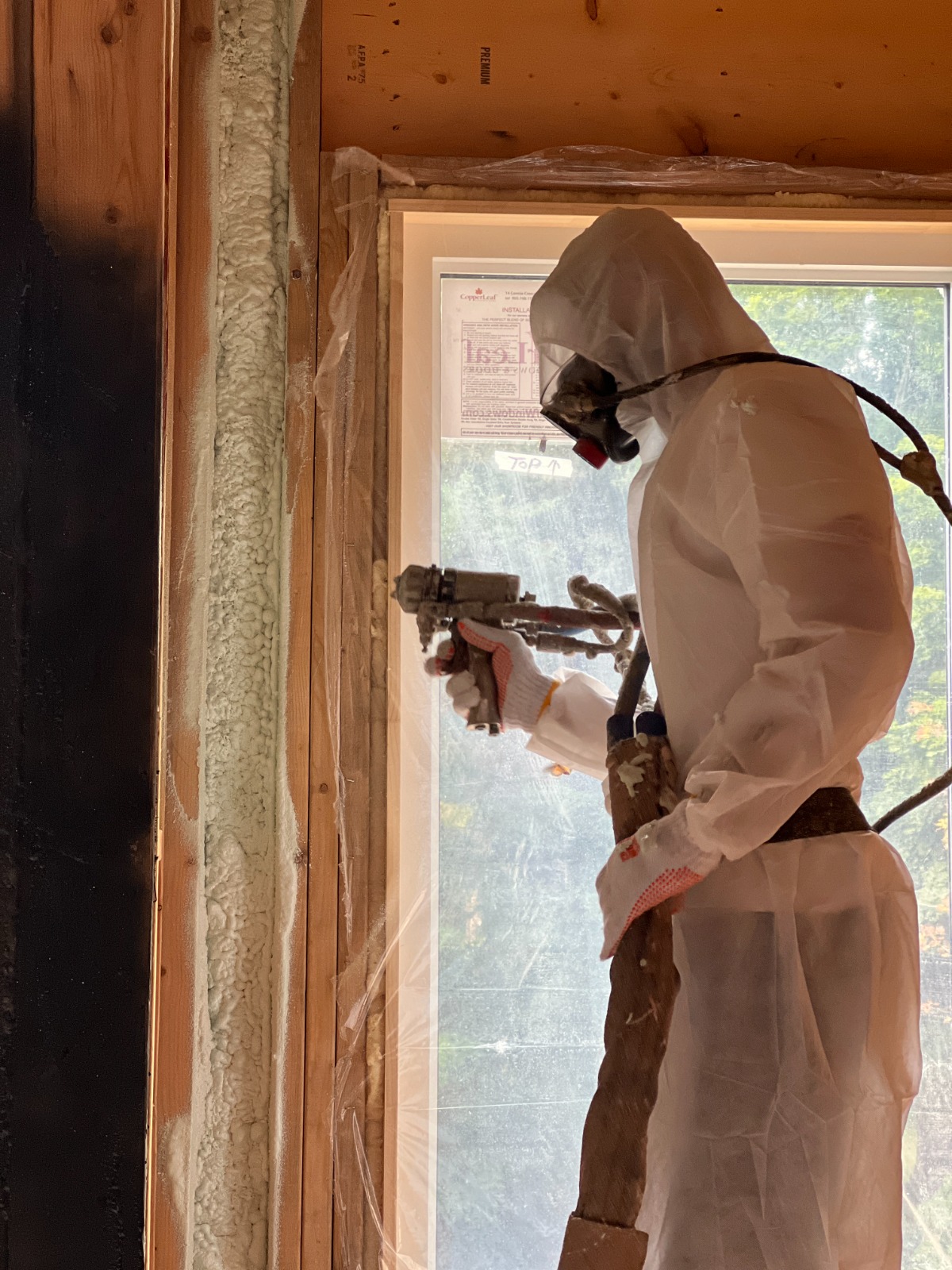
How Spray Foam Prevents Mold in Ontario Basements: 2026 Ontario Overview & Code Essentials
Mold grows in Ontario basements for one reason: moisture meets a food source in a space with poor airflow. Closed-cell spray foam eliminates two of those three conditions — it blocks moisture from reaching the wall cavity, and it contains zero organic material for mold to feed on. That's why it's the single most effective way to prevent basement mold in Ontario's climate.
We've been spraying basements across Scarborough, Etobicoke, North York, Oakville, and Burlington since 2008. We've ripped out more moldy fiberglass than we can count. Here's exactly how spray foam stops the mold cycle — and why traditional insulation methods keep it going.
Why Ontario Basements Are a Mold Factory
Ontario basements deal with three moisture sources year-round. First, hydrostatic pressure pushes ground moisture through concrete foundation walls. Even well-waterproofed foundations allow some vapor transmission — concrete is porous by nature. Second, warm humid air from your living space drifts down into the cooler basement and condenses on cold surfaces. Third, most basements have limited ventilation, so any moisture that enters has nowhere to go.
In older homes across Scarborough and North York, the problem gets worse. Many foundations built in the 1960s–1980s had minimal or no exterior waterproofing membrane. The concrete sits directly against damp soil, and water vapor passes through the wall constantly. Add a layer of fiberglass batts stapled between studs with a poly sheet on top, and you've built a perfect mold incubator.
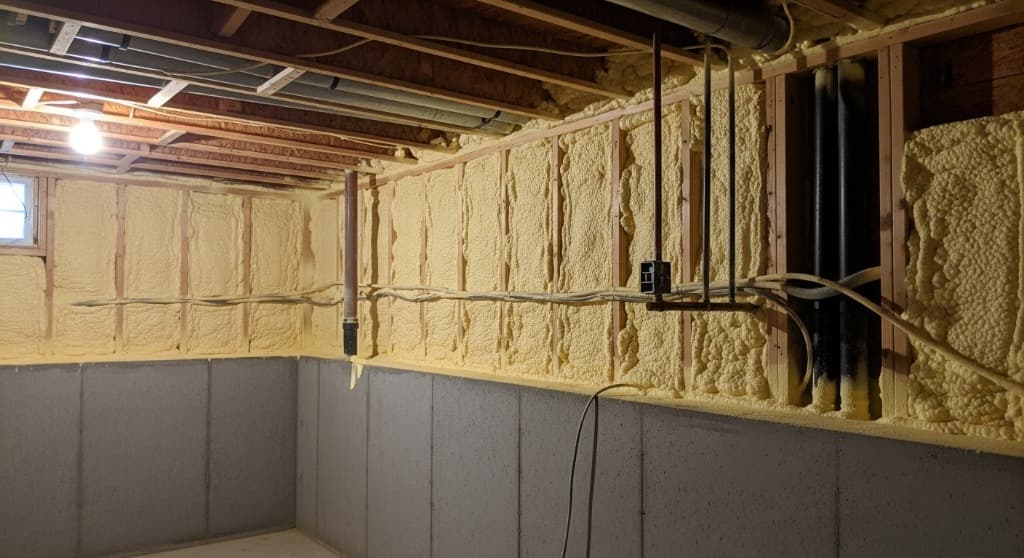
Mold needs four things to grow: moisture, oxygen, a temperature between 5°C and 38°C, and an organic food source. You can't remove the oxygen or control the temperature in a livable basement. But you can control moisture and eliminate the food source. That's exactly what closed-cell spray foam does.
The Ontario Building Code requires R-20 insulation for basement walls, plus a vapor retarder on the warm side of the insulation. Closed-cell spray foam at 2 inches or more meets both requirements simultaneously — it hits R-12 to R-14 at that thickness and qualifies as a Class II vapor retarder. Three and a half inches gets you to R-22, exceeding the OBC minimum while acting as your moisture control layer.
How Closed-Cell Spray Foam Stops Mold Growth
Closed-cell spray foam attacks the mold problem from three angles at once. Understanding each one explains why it outperforms every other basement insulation option.
It's a Vapor Barrier
At 2 inches thick, closed-cell foam has a permeance rating under 1.0 perm — that's a Class II vapor retarder. Moisture vapor from the soil can't pass through it. Moisture vapor from your living space can't reach the cold concrete behind it. No moisture reaching cold surfaces means no condensation. And no condensation means no mold growth.
It's a Complete Air Seal
Unlike fiberglass batts, spray foam expands to fill every crack, gap, and irregularity in the foundation wall. There's no space for warm humid air to sneak behind the insulation and condense on cold concrete. This is critical because air leakage carries 100 times more moisture into wall cavities than vapor diffusion alone. Seal the air, and you've eliminated the single biggest moisture pathway into your basement walls.
It Contains No Organic Material
Mold feeds on organic materials — paper-faced drywall, wood framing, fiberglass binder resins, and dust trapped in insulation. Closed-cell spray foam is an inert polyurethane plastic. It has zero nutritional value for mold. Even in the unlikely event that some moisture gets behind the foam, there's nothing for mold to eat. We see this confirmed in every demolition job we do — spray foam that's been on walls for 10+ years comes off with zero mold behind it.
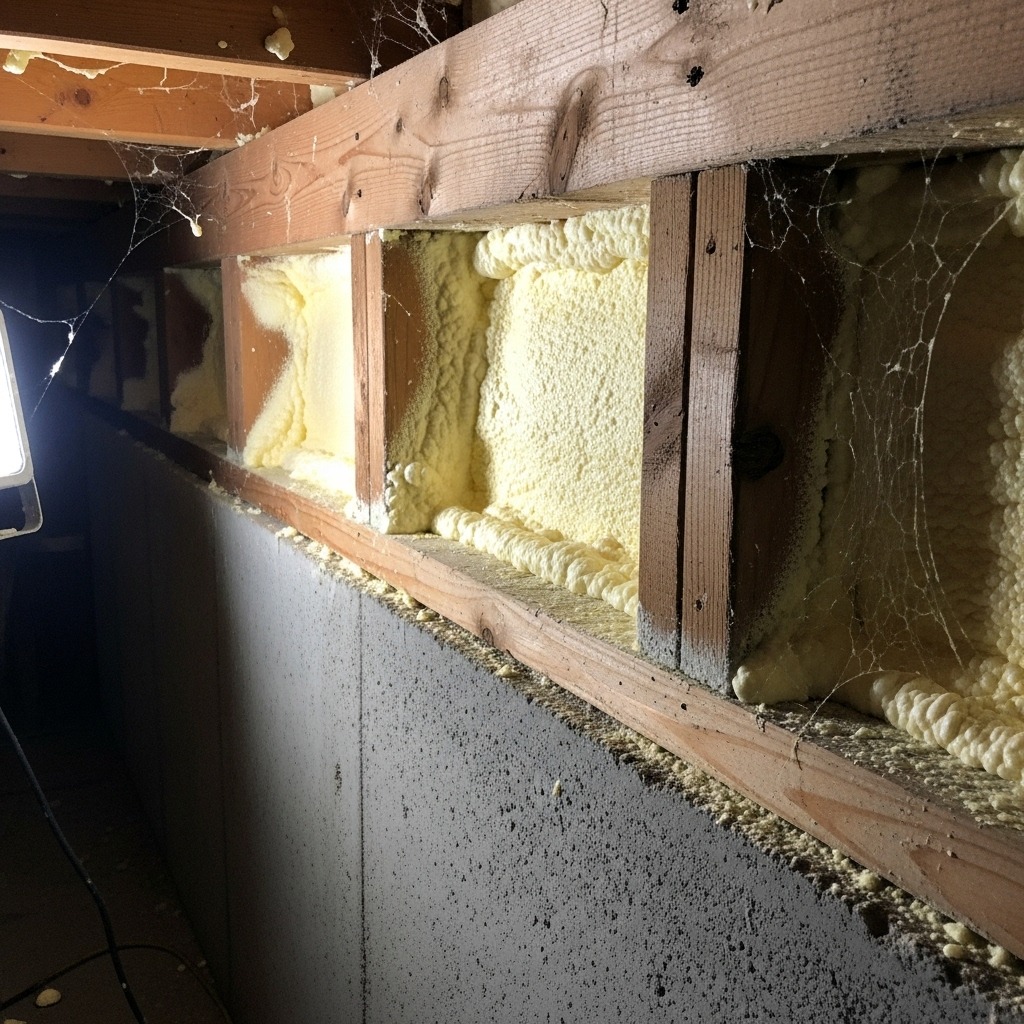
Rim joists deserve special attention. They're where the wood framing meets the top of the foundation, and they're notorious for condensation in Ontario winters. When outdoor temperatures drop to -20°C, the rim joist area is the coldest spot in your basement. A quick 2-inch application of closed-cell foam seals and insulates them permanently. Our crawl space insulation service addresses the same issue in below-grade spaces.
Fiberglass + Poly vs Spray Foam: The Mold Comparison
For decades, the standard basement insulation method in Ontario was fiberglass batts between wood studs with a 6-mil poly sheet stapled over top. This approach seems logical — insulate, then add a vapor barrier. But it creates a trapped moisture zone that grows mold within a few years.
Here's why the old method fails and spray foam doesn't:
| Factor | Fiberglass + Poly | Closed-Cell Spray Foam |
|---|---|---|
Air seal | No — air passes through batts freely | Yes — expands to fill every gap |
Vapor control | Poly sheet only(fails at seams/staples) | Built-in Class II vapor retarder |
Contact with foundation | Air gap behind batts traps moisture | Bonds directly to concrete — no air gap |
Organic food for mold | Yes — paper facing, dust, binder resins | No — inert polyurethane |
Moisture absorption | Yes — fiberglass absorbs and holds water | No — closed-cell foam is waterproof |
R-value when wet | Drops significantly | Unchanged — foam doesn't absorb water |
Typical mold timeline | 2–5 years in damp basements | Never — when properly installed |
The fiberglass + poly method fails because the poly sheet is never truly continuous. Every electrical outlet, pipe penetration, and stud creates a gap. Warm humid air from the living space enters through those gaps, hits the cold foundation, and condenses. The fiberglass soaks up that moisture like a sponge. Meanwhile, the poly traps it — the moisture can't dry back into the room. Hidden behind drywall, mold grows for years before anyone notices the musty smell.
If you're comparing insulation types in detail, our open-cell vs closed-cell guide breaks down exactly where each type belongs. For basements, closed cell is the only option that prevents mold long-term.
What Does Basement Spray Foam Cost in 2026?
Closed-cell spray foam for basements runs $3.00 to $5.00 per square foot in Ontario as of 2026. The price depends on wall height, total area, accessibility, and how much prep work is needed (removing old insulation, framing, etc.).
A typical 1,000 square foot basement in Etobicoke or Oakville costs between $3,000 and $5,000 for a full closed-cell application. That includes insulation, vapor retarder, and air seal — all in one product. Compare that to the old method: fiberglass batts ($1,000–$1,500) plus poly ($200–$400) plus labor to frame, insulate, and tape every seam. The upfront cost is lower, but you're paying again in 5–8 years when you tear it all out to deal with mold.
For a full breakdown of spray foam pricing across different applications, read our spray foam cost guide for Ontario. It covers basements, attics, walls, and garages with real project numbers.
Health Risks of Basement Mold: What the Data Shows
Basement mold isn't just a cosmetic issue. Health Canada identifies indoor mold as a significant trigger for respiratory symptoms, allergic reactions, and asthma attacks. Prolonged exposure to mold spores — especially in a basement where air circulates up through the entire house via the stack effect — affects everyone in the home.
Common species found in Ontario basements include Aspergillus, Penicillium, and Cladosporium. These produce spores and mycotoxins that become airborne and travel through your HVAC system to every room. Children, elderly residents, and anyone with respiratory conditions are most vulnerable. The fix isn't just cleaning the visible mold — it's removing the conditions that let it grow in the first place. That means controlling moisture at the wall assembly level.
If you're concerned about indoor air quality after insulation, our spray foam safety guide covers what to expect during and after installation, including re-entry timelines and off-gassing data.
Frequently Asked Questions About Mold and Spray Foam
No. Closed-cell spray foam is an inert polyurethane plastic with no organic content. Mold can't feed on it. Even in damp conditions, the foam itself won't support mold growth. If mold appears on the surface, it's feeding on dust or debris — a simple cleaning solves it.
Yes, always. Old fiberglass batts in basements are almost certainly holding moisture and potentially harboring mold. We strip everything back to bare concrete before spraying. This ensures the foam bonds directly to the foundation and creates a continuous vapor retarder with no hidden surprises behind it.
Absolutely. Crawl spaces have the same moisture dynamics as basements — ground moisture, poor ventilation, and cold surfaces. Closed-cell spray foam on crawl space walls and rim joists seals out moisture and eliminates the conditions mold needs to grow. It's one of the most effective crawl space upgrades you can make.
Professional mold remediation alone costs $3,000–$10,000+ depending on severity. Then you still need new insulation. Spray foam at $3.00–$5.00 per square foot prevents the problem entirely. It's far cheaper to insulate correctly the first time than to remediate mold and re-insulate later.
Spray foam prevents future mold, but it won't fix active mold. If you have visible mold on your foundation walls, that needs to be professionally remediated first — cleaned, treated, and dried. Then we spray foam over the clean surface to make sure it never comes back.
Stop Basement Mold Before It Starts
Ontario basements are built for mold unless you break the cycle. Closed-cell spray foam eliminates moisture, removes the food source, and meets OBC requirements for insulation and vapor control — all in a single application. If you're finishing a basement, replacing old insulation, or dealing with a musty smell you can't trace, spray foam is the permanent fix. Call us at 647-333-3626 for a free assessment. We're WSIB compliant with $5M liability insurance and have been solving basement moisture problems across Ontario since 2008.