5 Warning Signs Your Ontario Basement Needs New Spray Foam Insulation (Cold Floors, Condensation & Mold Guide)
5 Warning Signs Your Ontario Basement Needs New Spray Foam Insulation (Cold Floors, Condensation & Mold Guide): 2026 Ontario Overview & Code Essentials
If your basement feels damp and clammy in July or your main-floor hardwood feels like ice every January, your foundation walls and rim joists are leaking conditioned air and wicking ground moisture. Over 65% of older homes across Toronto, Scarborough, Mississauga, Brampton, Vaughan, and Southern Ontario either have bare concrete sections or sagging builder-grade pink fiberglass blankets that have trapped condensation against the cold foundation for years.
Below, our Caliber Certified (CAN/ULC-S705.2 Licensed) installers at Sprayfoam Solutions Toronto Inc. break down the 5 diagnostic warning signs that your existing basement insulation has failed, how basement spray foam insulation permanently eliminates below-grade condensation and pests, and how to check your exact upgrade price in 60 seconds online (/price-chat) with a $250 Estimate Credit — no site visit required (or review full per-square-foot rates in our 2026 Ontario Basement Spray Foam Cost Guide ($2.50–$4.85/sq ft)).
Get a $250 Credit on Your Estimate — Check Your Price in 60 Seconds (/price-chat) • No Site Visit Required:
- 3"–3.5" Closed-Cell 2 lb (R-20+)
- Stops cold main-floor hardwood, spiders & mice
- Includes $250 Estimate Credit
- Strip damp fiberglass & poly + 3.5"–4" Closed-Cell 2 lb (R-21 to R-24)
- Passes Ontario Building Code
- 3.5"–4" Closed-Cell 2 lb
- Stops cantina sweating, musty earth odours & frozen pipes
- Includes $250 Credit
Summary Table: 5 Basement Warning Signs, Root Cause & Closed-Cell Spray Foam Fix
Before tearing down drywall or running a dehumidifier 24/7, match what you are seeing, smelling, or feeling downstairs to the building-science failure happening behind your foundation walls:
| Basement Warning Sign | What You Notice Upstairs / Downstairs | Building-Science Root Cause | Why Fiberglass Batts Fail Here | Closed-Cell 2 lb Spray Foam Fix |
|---|---|---|---|---|
1. Freezing Main-Floor Hardwood | Cold kitchen/living room floors along exterior walls in winter | Unsealed rim joist header boxes & sill plates leaking -20°C outdoor air | Fiberglass allows air to bypass straight through and traps winter frost | 3.0" – 3.5" Closed-Cell 2 lb (R-20+) air-seals sill plates & floor joists |
2. Musty Smell & Damp Fiberglass | Earthy basement odour; black/grey staining on pink batts or torn 6-mil poly | Warm indoor air condensing against 8°C–12°C below-grade concrete walls | Batts act like a wet sponge holding condensation against wood studs | Insulation removal + 3.5" – 4" Closed-Cell bonds directly to concrete |
3. Concrete Sweating & Cold Room Frost | Water droplets on concrete walls, white chalky efflorescence, freezing cantina | Dew-point condensation on uninsulated poured concrete, block, or porch slabs | Rigid board & batts leave hollow air pockets behind uneven masonry | 3.5" – 4" Closed-Cell 2 lb creates a Class 1 vapour barrier |
4. Spiders, Centipedes & Mice | House centipedes, silverfish, spiders, or mouse droppings along baseboards | Open mortar joints, hose bibs, and wood-to-concrete sill gaps + damp humidity | Rodents tunnel through pink fiberglass to build warm winter nests | 2.0 lb/ft³ rigid closed-cell foam locks out pests & removes dampness |
5. Spiking Winter Gas Bills | Furnace short-cycling every 15 mins; basement 4°C–6°C colder than main floor | Stack-effect heat loss(25%–35% of whole-home heat escaping below grade) | Sagging batts & ripped poly perform at <R-8 effective thermal value | R-21 to R-24 monolithic envelope cuts heating bills $400 – $750/yr |
Sign #1: Cold Main-Floor Hardwood & Tile Above the Rim Joists
The #1 complaint we hear from Toronto and GTA homeowners is: "My furnace is set to 21°C, why do I still need slippers on my main-floor hardwood?" When outdoor temperatures plunge to -15°C to -25°C, cold air pours through the microscopic gap where your wooden sill plate rests on top of the poured concrete foundation wall—known as the rim joist or header box.
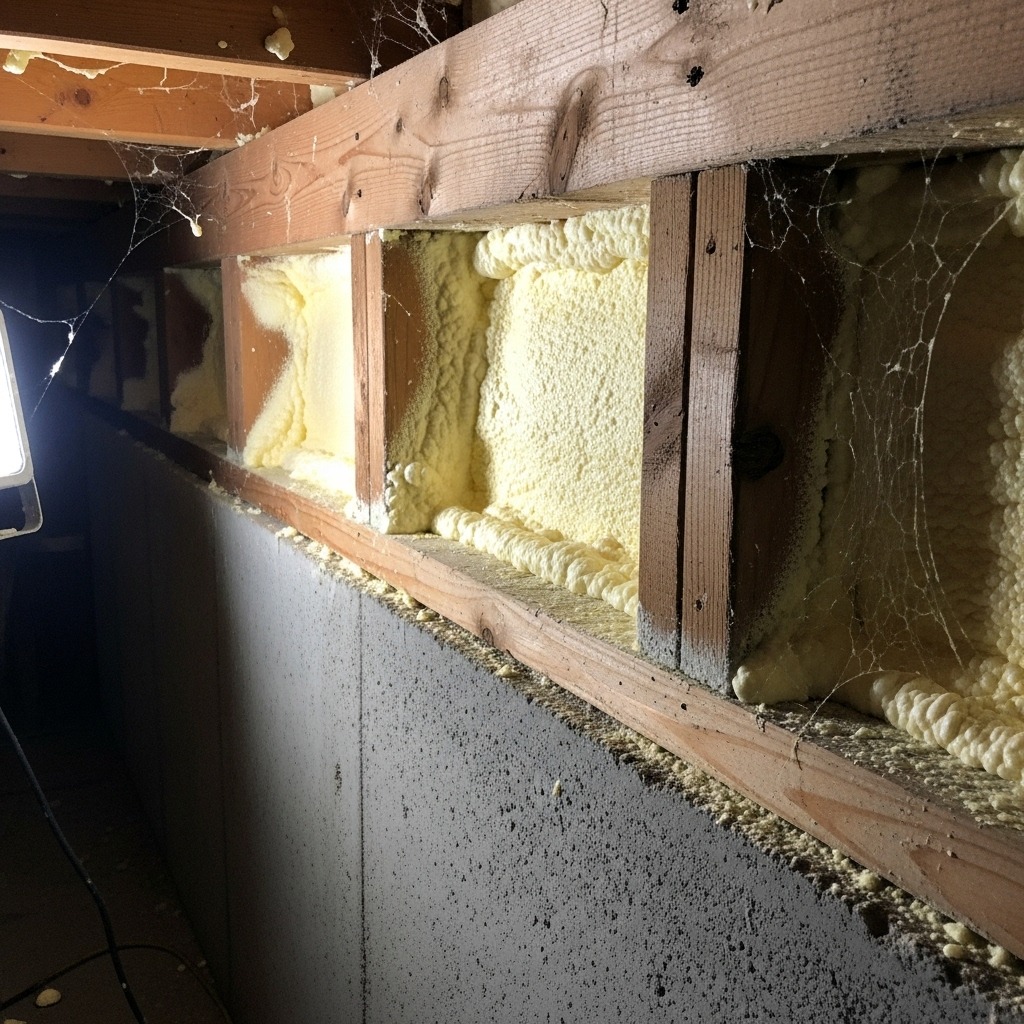
Because floor joists act as thermal channels, freezing air entering the rim joist bay travels horizontally across the basement ceiling cavity, turning your main-floor hardwood or kitchen tile into a cold radiator. Stuffing fiberglass batts into rim joist pockets does not stop air movement; instead, warm indoor humidity passes through the fiberglass, condenses on the freezing exterior rim board, and rots the structural wood header. Spraying 3 to 3.5 inches of 2 lb closed-cell spray foam into every rim joist bay and sill plate joint stops up to 40% of basement air leakage in a single afternoon.
Sign #2: Musty Basement Smell, Torn 6-Mil Poly & Black Mold Behind Old Fiberglass
A persistent musty, earthy smell when you walk down the basement stairs is almost always caused by hidden condensation trapped behind fiberglass batts or builder blanket insulation. Even in July and August, below-grade concrete foundation walls in Ontario sit against cool soil at 10°C to 13°C. Whenever warm, humid indoor air leaks through staple holes, electrical box cutouts, or unsealed overlaps in a 6-mil polyethylene vapour barrier, it hits the cold concrete wall and condenses into liquid water.
- Sagging Pink Fiberglass Blankets (1985–2015 Subdivisions): Gravity pulls damp fiberglass batts away from the top of the foundation wall, creating a 6-inch uninsulated cold bridge along the top perimeter.
- Black & Grey Mold Spores on Studs & Batts: Wet fiberglass traps moisture against wood 2x4 framing and drywall paper—feeding hidden mold colonies while destroying effective R-value.
- Professional Old Insulation Tear-Out (
/services/insulation-removal): Before spraying, our crew performs full basement fiberglass and poly removal—stripping, bagging, and disposing of damp batts so 2 lb closed-cell foam bonds directly to clean, dry concrete.
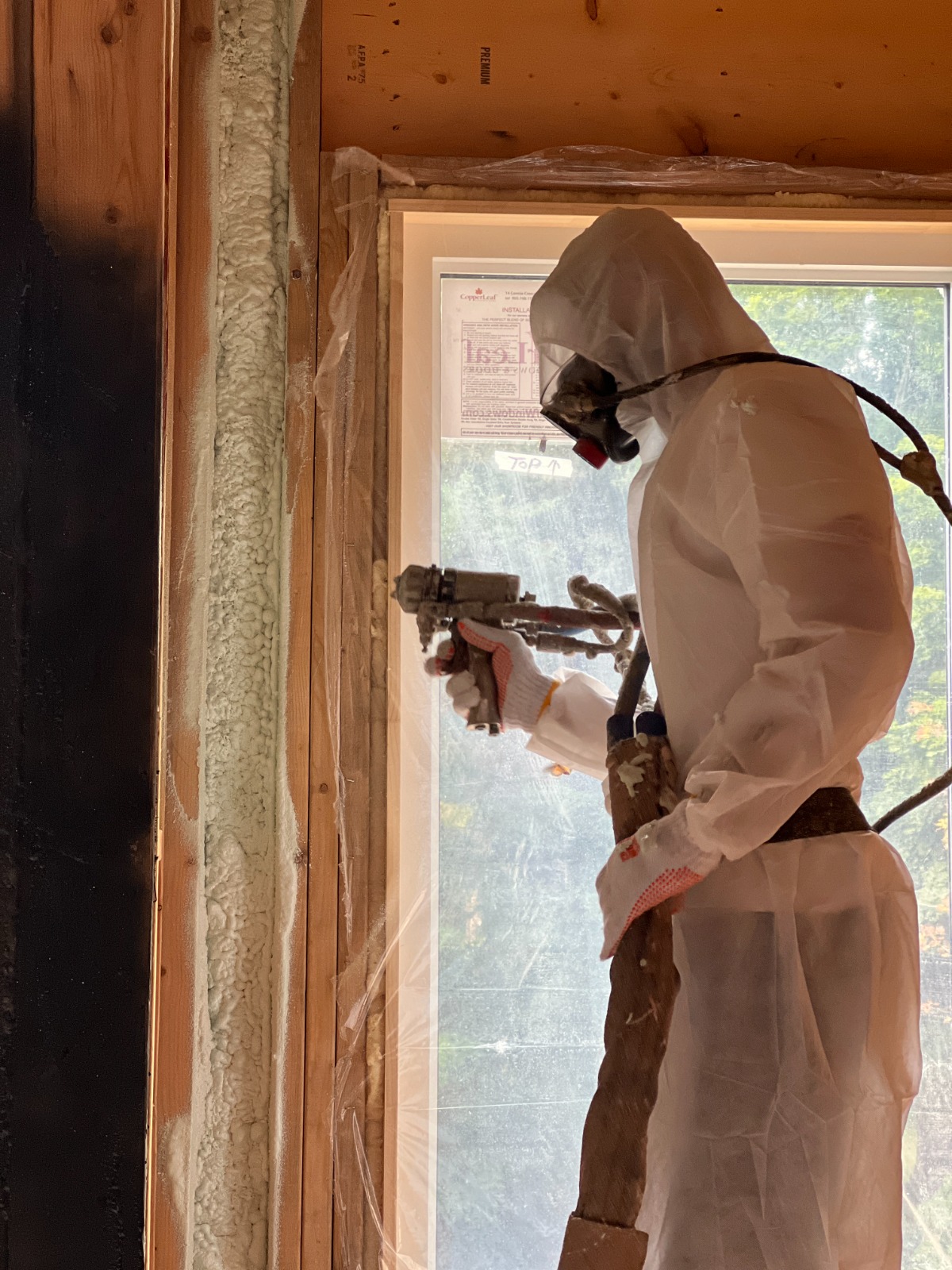
Sign #3: Concrete Wall Condensation, White Efflorescence & Sweating Cold Rooms
If you see chalky white powder (efflorescence), damp dark patches on hollow cinder blocks, or water droplets dripping from the concrete ceiling of your under-porch fruit cellar, your foundation has a dew-point failure. In century homes across the Toronto Annex, Beaches, High Park, and Cabbagetown with uneven rubble or brick foundations—and in suburban homes with uninsulated cantinas—rigid foam boards and batts cannot conform to the masonry contours.
Applying 3.5 to 4 inches of 2 lb closed-cell spray foam to cold rooms and cantinas as well as damp crawl spaces seals every mortar joint and concrete pore. At 2 inches or thicker, CAN/ULC-S705.1 CCMC-evaluated closed-cell foam is an official Class 1 / Type II vapour barrier (<60 ng/Pa·s·m²) that stops indoor humidity from ever touching cold concrete.
Sign #4: Spiders, House Centipedes, Silverfish & Mice Along Basement Baseboards
Seeing house centipedes, wolf spiders, earwigs, or mouse droppings in your basement is not just an exterminator issue—it is an air-barrier and moisture diagnostic sign. Rodents and insects enter Ontario basements through gap tolerances around sill plates, gas pipes, AC line sets, and exterior hose bibs, and they thrive in the damp micro-climate behind fiberglass batts.
While mice easily shred pink fiberglass and mineral wool to build warm winter nests behind your drywall, cured 2 lb medium-density closed-cell spray foam hardens into a dense, rigid structural plastic (2.0 lbs/ft³ density, >25 PSI compressive strength) that seals every entry gap and eliminates the damp concrete condensation that attracts centipedes and silverfish.
Sign #5: Spiking Winter Gas Bills & Furnace Short-Cycling (ROI Table)
According to Natural Resources Canada and the 2026 Ontario Building Code (Part 9 & SB-12), an under-insulated basement accounts for 25% to 35% of total whole-home heat loss. Because bare concrete and compressed fiberglass bleed heat into frozen soil 24 hours a day, your furnace short-cycles continuously while the basement remains 4°C to 6°C colder than the upstairs thermostat. Compare the cost and energy ROI of upgrading your basement insulation below (and see our full 2026 Ontario Basement Spray Foam Cost Guide ($2.50–$4.85/sq ft) for more project sizes):
| Upgrade Scope (Ontario 2026) | Existing Failing Condition | Closed-Cell Spray Foam Spec | 2026 Turnkey Installed Range | Annual Heating Bill Savings & Payback |
|---|---|---|---|---|
Rim Joists & Sill Plates Only | Cold hardwood floors, drafts & mice in header bays | 3.0" – 3.5" Closed-Cell 2 lb (R-18 to R-21) | $1,250 – $2,100 | $180 – $320 / yr (Stops 40% of floor drafts) |
1,000 Sq Ft Bare Concrete Basement | Uninsulated poured concrete or cinder block walls | 3.5" – 4.0" Closed-Cell 2 lb (R-21 to R-24) | $2,800 – $4,600 | $400 – $750 / yr (Passes OBC R-20/R-24 Code) |
1,000 Sq Ft Fiberglass Tear-Out + Re-Foam | Musty smell, sagging pink batts & torn 6-mil poly | Tear-Out + 3.5" – 4.0" Closed-Cell 2 lb | $3,400 – $5,400 | $450 – $800 / yr + Eliminates Hidden Mold Risk |
Cold Room / Under-Porch Cantina | Sweating concrete slab, frost & freezing kitchen floor | 3.5" – 4.0" Closed-Cell 2 lb (Walls + Ceiling) | $850 – $2,100 | Stops pipe freeze & converts to dry storage |
Damp Crawl Space Encapsulation | Freezing floors above crawl space & earth odours | 3.0" – 3.5" Closed-Cell 2 lb Foundation Seal | $1,500 – $2,900 | $220 – $410 / yr + Radon & Moisture Barrier |
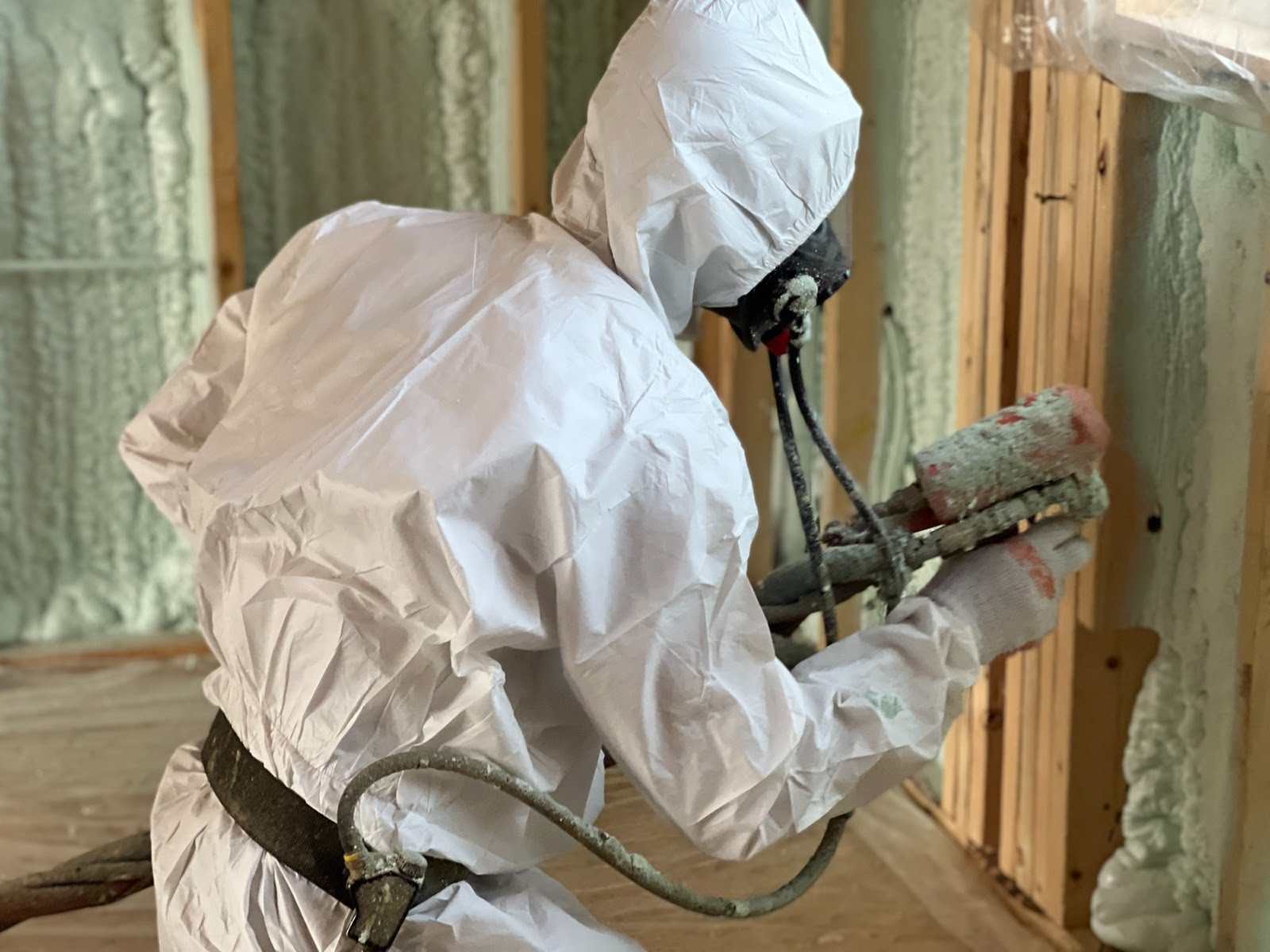
Replaces damp fiberglass & torn poly in one pass.
Monolithic bond directly to bare concrete or block.
Eliminates concrete sweating, mold & heat loss.
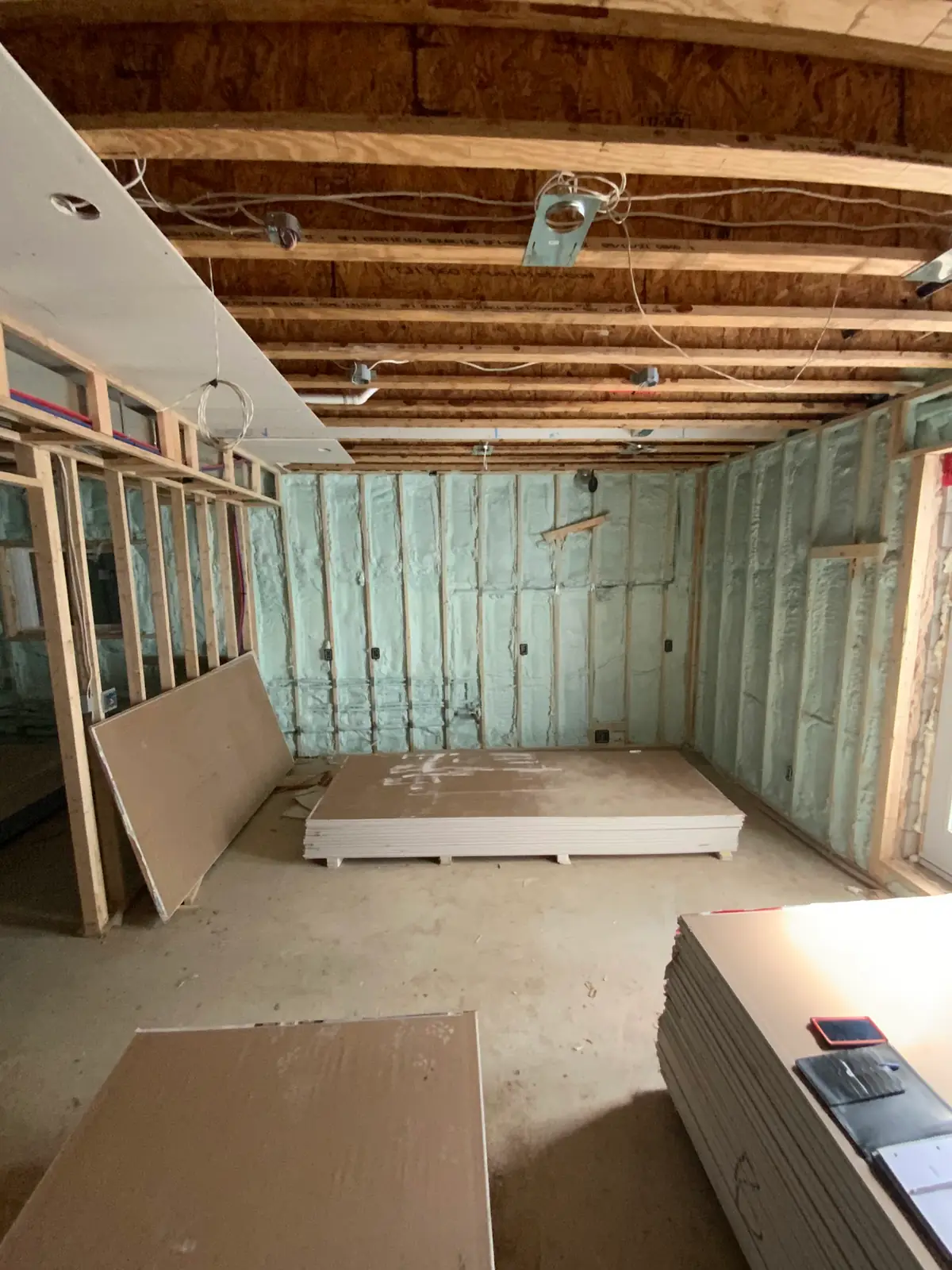
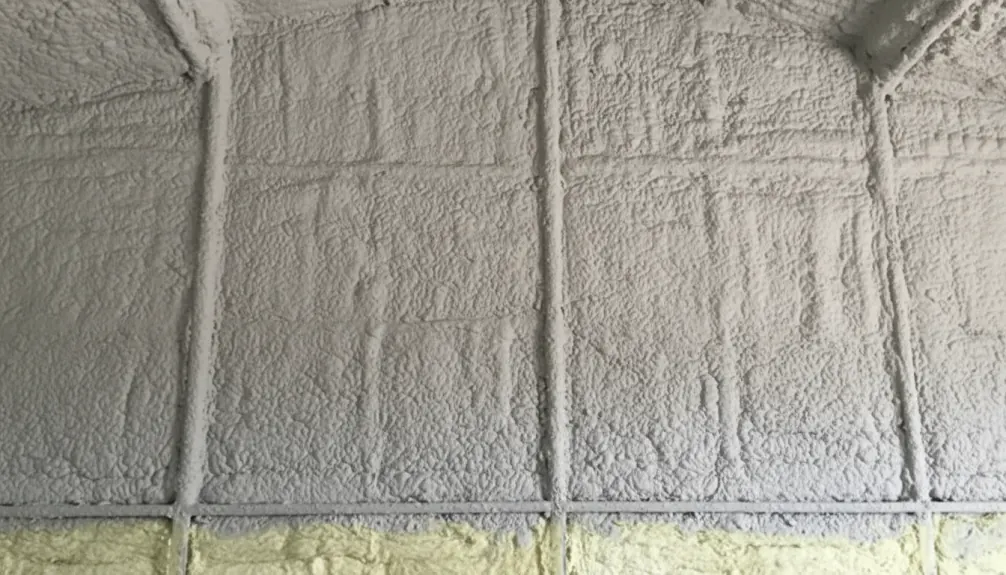
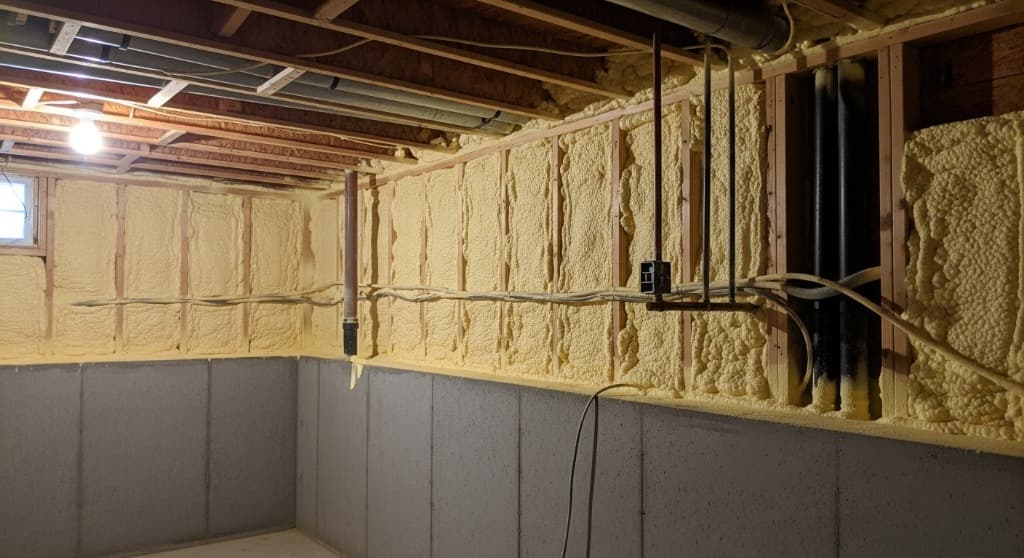
When old fiberglass batts trap indoor humidity against cold concrete, mold and musty odours follow. Stripping the old batts and spraying 3.5" to 4.0" of CAN/ULC-S705.1 2 lb closed-cell foam directly onto the foundation wall creates a waterproof R-21 to R-24 thermal break and Class 1 vapour barrier (<60 ng/Pa·s·m²).
How We Fix Under-Insulated Basements in 1 Day Across Toronto & the GTA
If you are planning to insulate your basement before finishing or replacing failed builder insulation, our Caliber Certified (CAN/ULC-S705.2 Licensed) installers complete most residential basement tear-outs and spray foam upgrades in a single day with $0 Travel Fee across Toronto and the GTA:

Check your wall square footage and tear-out price at /price-chat with a $250 Estimate Credit—no site visit required.
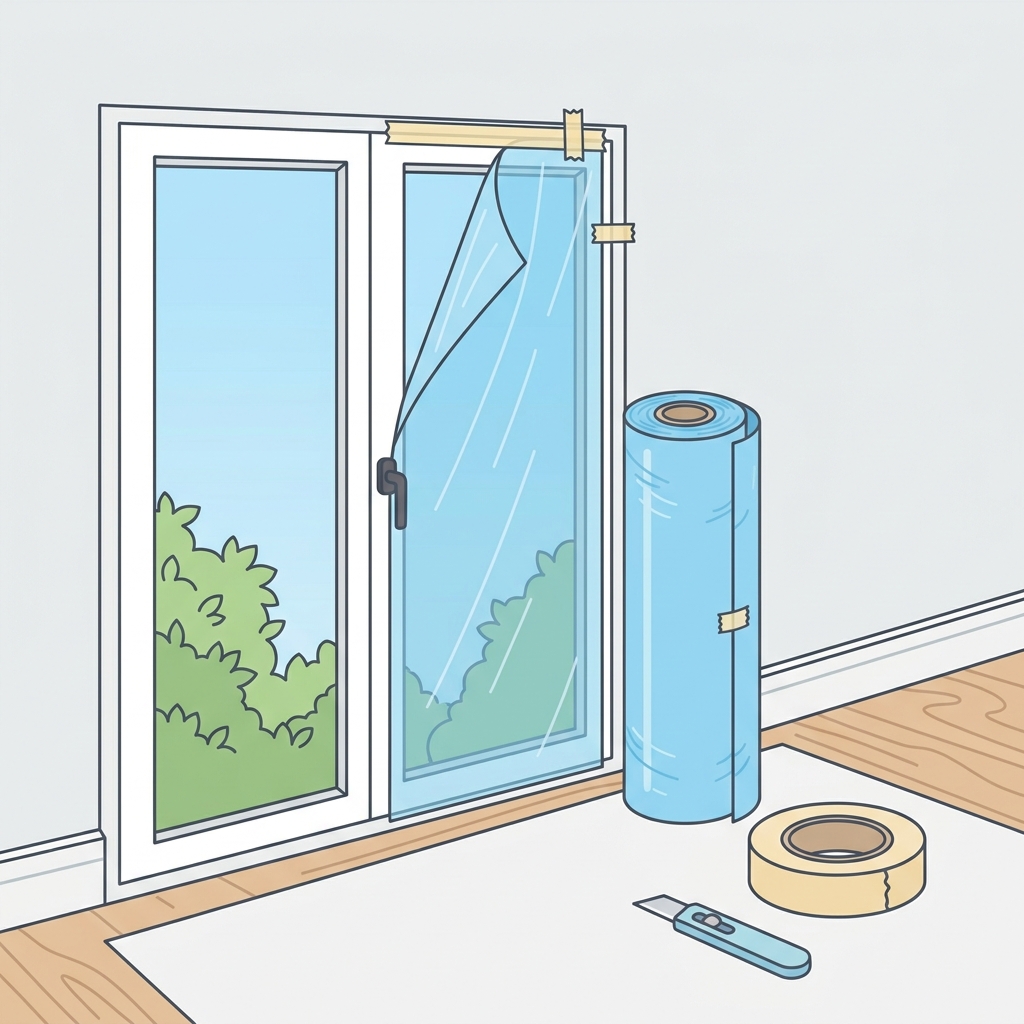
We bag and remove old fiberglass/poly, verify concrete moisture (<18%), mask stairs/windows, and set up negative-pressure exhaust.
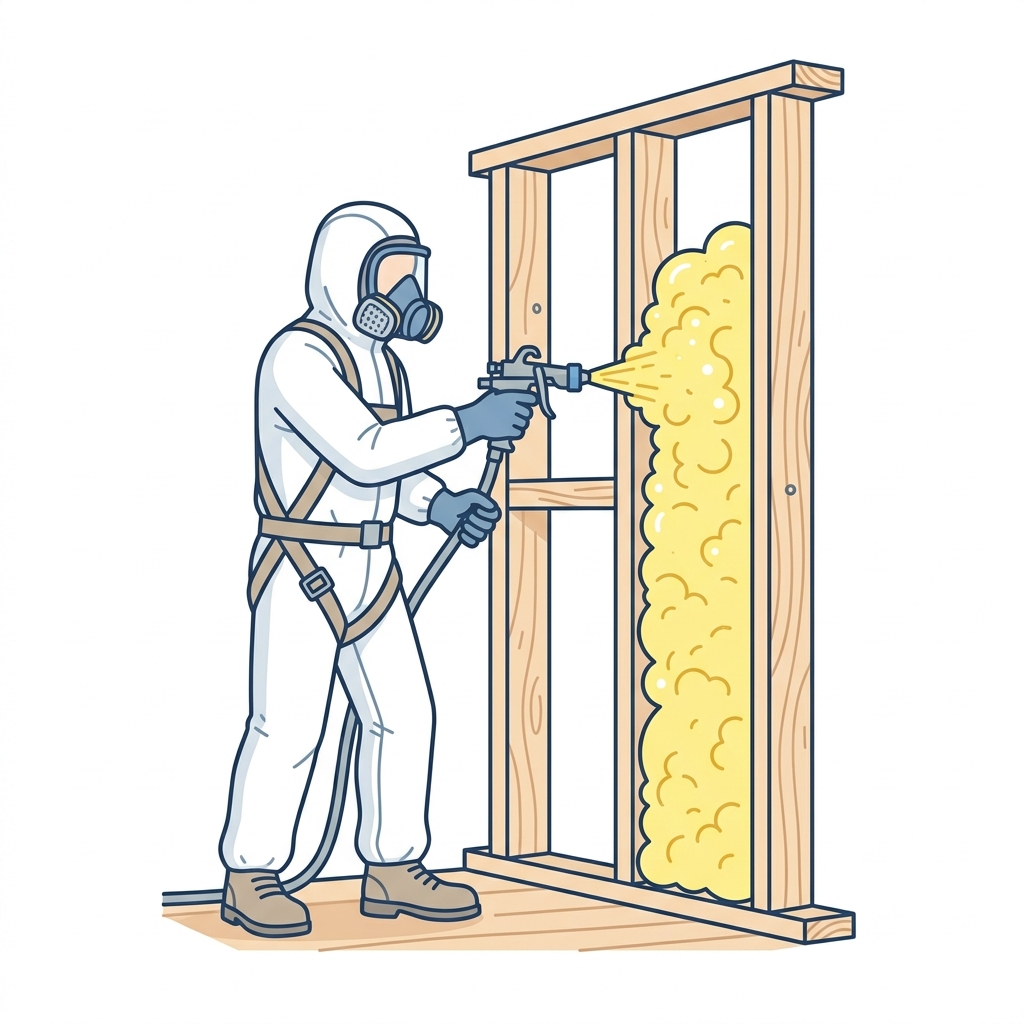
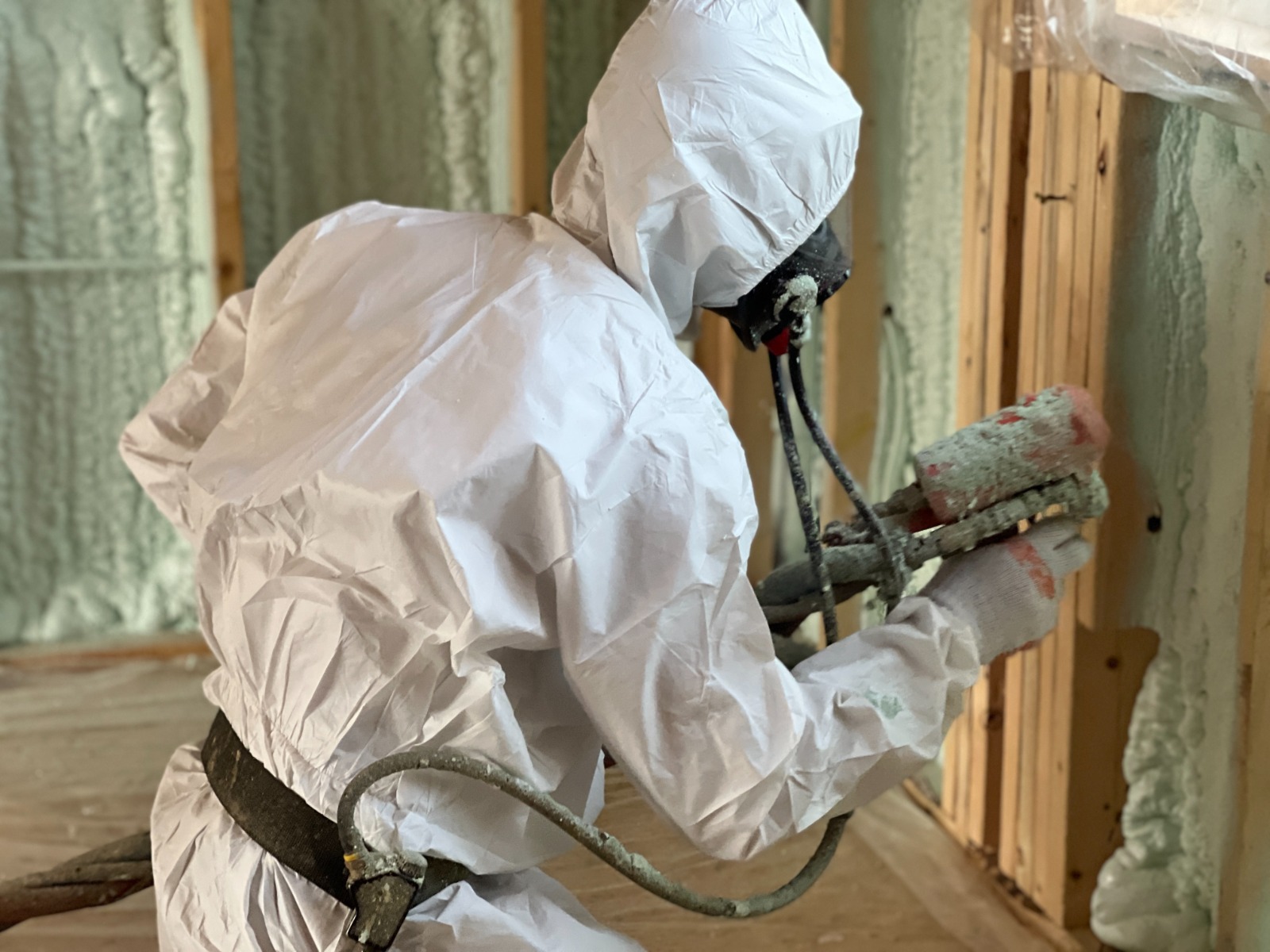
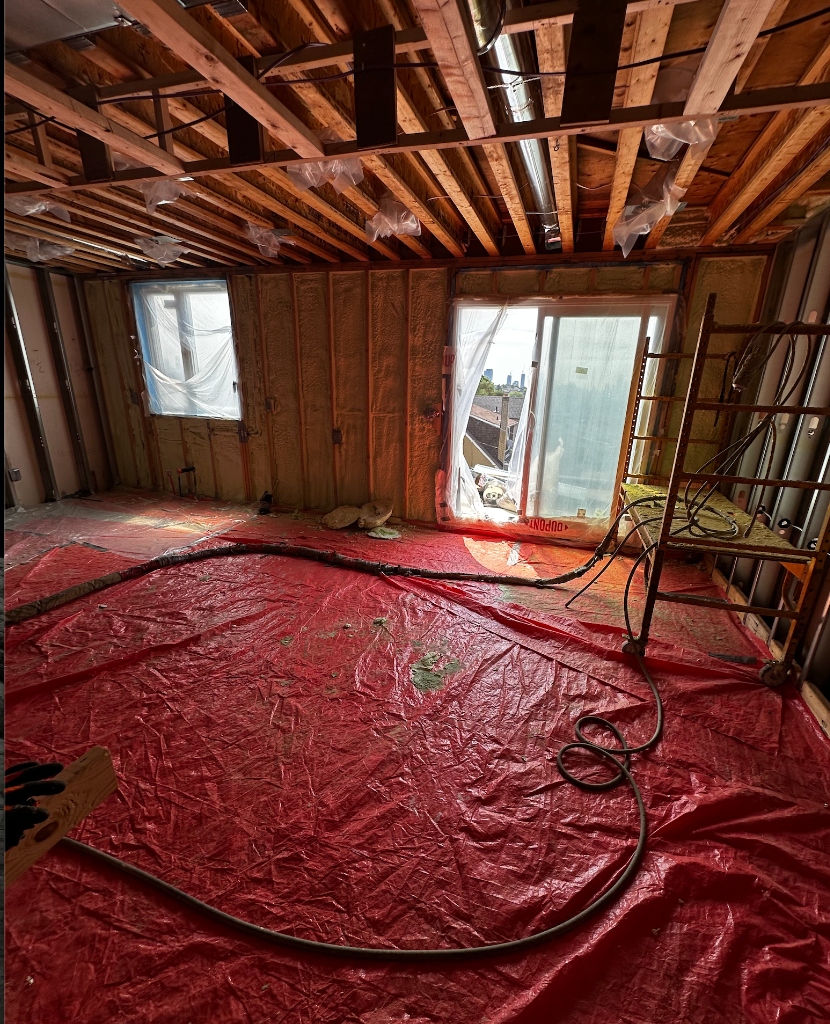
Caliber Certified installers spray 2 lb closed-cell foam onto foundation walls, behind studs, and deep into rim joist bays.
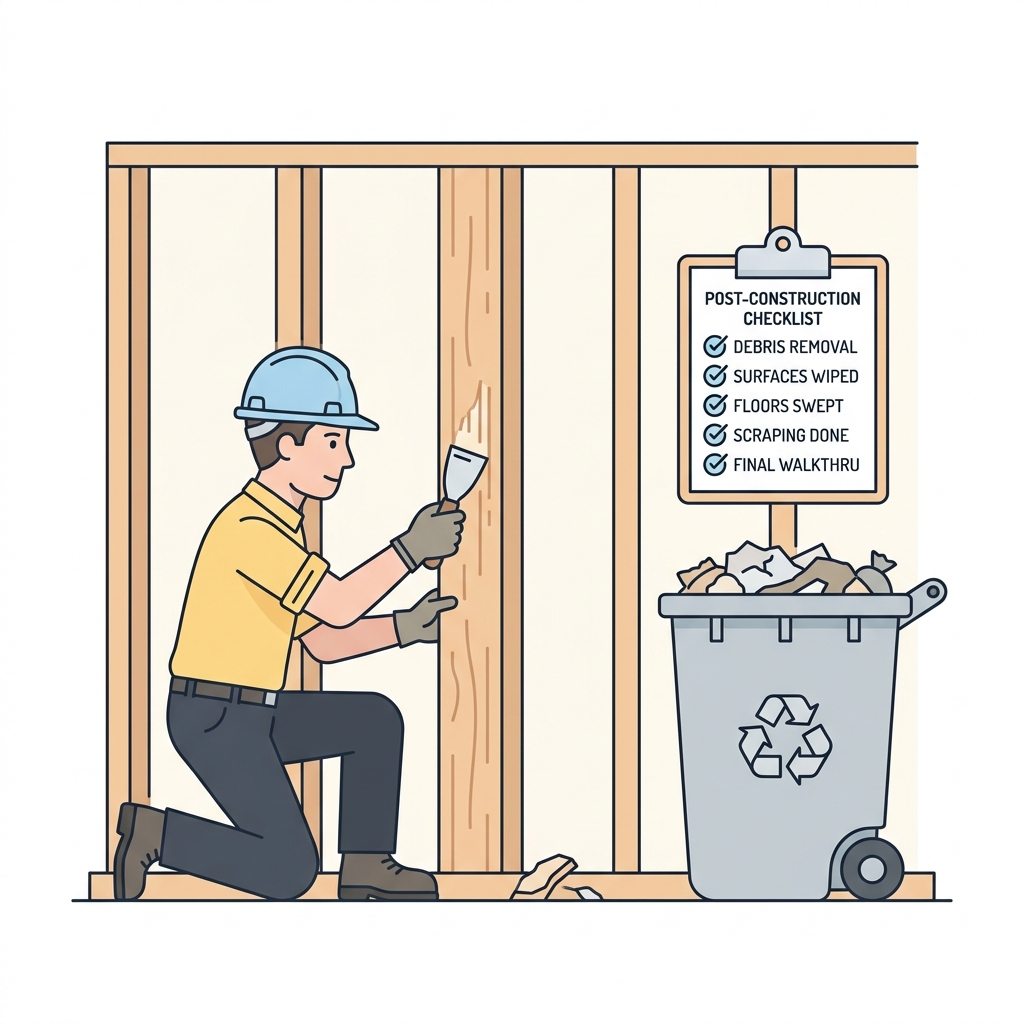
We shave stud faces flush for drywall, vacuum the floor clean, and post your CAN/ULC-S705.2 building inspector warranty card.
Frequently Asked Questions
Freezing main-floor hardwood in an Ontario home is almost always caused by unsealed basement rim joists and sill plates where the wood floor structure rests on top of the concrete foundation wall. Cold winter air infiltrates the rim joist bays and travels along the floor joists underneath your hardwood. Sealing the rim joists and headers with 3 to 3.5 inches of 2 lb closed-cell spray foam (R-20+) blocks up to 40% of basement air leakage and warms main-floor floors within 24 hours.
In most Ontario basements, yes. Because below-grade concrete walls stay cold year-round (8°C to 13°C), warm household humidity passes through torn 6-mil poly and fiberglass batts, condensing into liquid water against the concrete and wood framing. Performing old insulation removal and spraying 3.5"–4" of closed-cell spray foam directly onto the concrete permanently eliminates the air space where condensation and mold form.
In 2026, stripping out damp fiberglass batts ($0.75–$1.50/sq ft) and installing 3.5 to 4 inches of 2 lb closed-cell spray foam (R-21 to R-24) in a standard 1,000 sq ft Ontario basement ranges from $3,400 to $5,400 CAD ($2,800 to $4,600 for bare walls without removal). See our full 2026 Ontario Basement Spray Foam Cost Guide ($2.50–$4.85/sq ft) or get your exact price in 60 seconds with a $250 Estimate Credit at spfsolutions.ca/price-chat.
Yes. Under CAN/ULC-S705.2 national installation rules, 2 lb closed-cell spray foam must adhere directly to the clean, dry concrete, cinder block, or rubble stone foundation wall (substrate moisture <18%). Spraying over existing fiberglass or plastic traps moisture against the wall and causes delamination. Our crew handles complete tear-out, bagging, and disposal on the morning of your installation.
Only 2 lb closed-cell spray foam (CAN/ULC-S705.1) should be applied to below-grade concrete foundation walls and rim joists in Ontario because it is waterproof and certified as a Class 1 vapour barrier (<60 ng/Pa·s·m²) at 2 inches or thicker. Light 0.5 lb open-cell foam is vapour-permeable and is reserved strictly for interior acoustic soundproofing in basement ceilings between heated floors (see our Open-Cell vs. Closed-Cell Guide).
Yes. Unlike fiberglass batts—which mice tunnel through to build nests and which hold the dampness that attracts house centipedes, silverfish, and spiders—cured 2 lb closed-cell spray foam forms a hard, monolithic seal (2.0 lbs/ft³) across every sill plate gap, pipe penetration, and mortar crack while keeping the basement bone-dry.
Installed by Caliber Certified (CAN/ULC-S705.2 Licensed) installers using approved low-VOC HFO systems (BASF Walltite® Eco v.3, Huntsman Building Solutions (Icynene/Demilec), Johns Manville & other approved CCMC spray foam chemicals), 2 lb closed-cell spray foam lasts 50+ years (the lifetime of the home) without sagging, settling, or losing R-value (read our Spray Foam Lifespan Guide).
You can get an instant ballpark price and claim a $250 Credit on Your Estimate in 60 seconds at spfsolutions.ca/price-chat—no site visit required—or call Sprayfoam Solutions Toronto Inc. directly at (647) 333-3626 for same-week dispatch across Toronto and the GTA.
Select your basement service scope or GTA municipality below for local Ontario Building Code specs and same-week crew availability: