How Long Does Spray Foam Insulation Last in Ontario Homes? (50+ Year Lifespan, LTTR & Durability Guide)
How Long Does Spray Foam Insulation Last in Ontario Homes? (50+ Year Lifespan, LTTR & Durability Guide): 2026 Ontario Overview & Code Essentials
When investing in basement spray foam insulation, attic roof deck spray foam, or exterior wall spray foam insulation in Toronto, the GTA, or anywhere across Ontario, homeowners want to know one thing before signing a quote: how long does spray foam insulation actually last? Unlike milder southern climates, Southern and Central Ontario subject building envelopes to 80+ annual freeze-thaw cycles and a 55°C annual temperature swing (from -25°C January nights to +32°C humid July afternoons). Traditional fiberglass batts and blown-in cellulose sag, settle, and absorb condensation within 10 to 15 years—forcing homeowners to tear open finished drywall and pay twice.
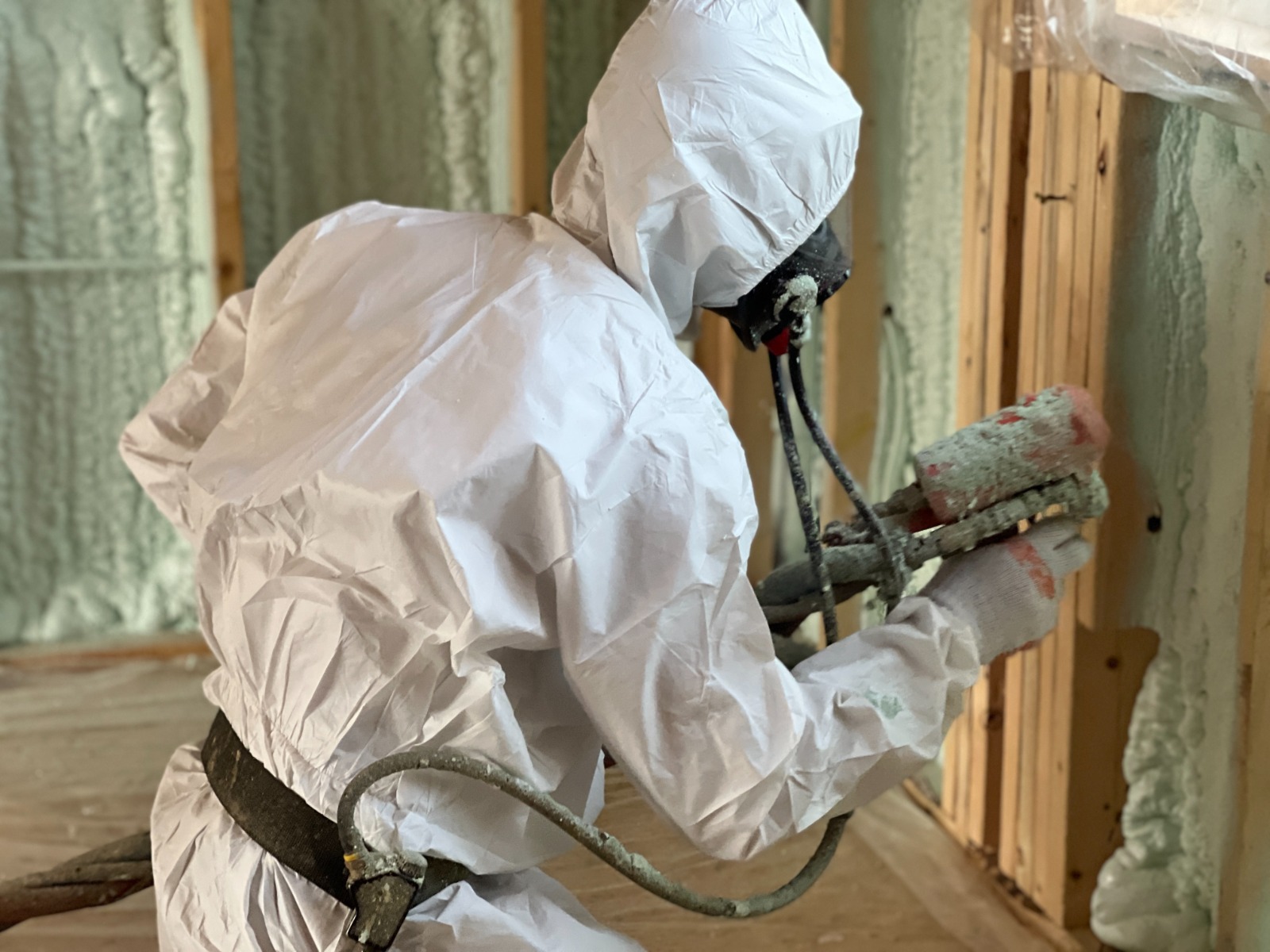
By contrast, CAN/ULC-S705.1 2 lb closed-cell and 0.5 lb open-cell spray polyurethane foam installed by Sprayfoam Solutions Toronto Inc.—with Caliber Certified (CAN/ULC-S705.2 Licensed) installers across Toronto, the GTA, and Southern Ontario—has a verified service lifespan of 50 to 80+ years. Once the two liquid components react and cure into a cross-linked thermoset polymer, the foam bonds permanently to concrete, brick, steel, or wood framing, never settles or sags, resists ground moisture and pests, and maintains its Ontario Building Code thermal performance for the life of the building. Planning a basement renovation? See our 2026 Ontario Basement Spray Foam Cost Guide ($2.50–$4.85/sq ft).
Install once for the life of your home—compare our 3 most popular permanent Ontario spray foam packages:
- 3"–3.5" Closed-Cell 2 lb (R-18 to R-21)
- Never Rots Sill Plates or Absorbs Dampness
- Includes $250 Credit
- 3.5"–4" Closed-Cell 2 lb (R-21 to R-24)
- 50–80+ Year Lifespan + Class 1 Vapour Barrier
- Saves $400–$750/yr
- 3.5"–5.5" Closed-Cell or Open-Cell
- Permanent Air Seal That Never Sags
- Includes $250 Estimate Credit
25-to-80-Year Lifespan Comparison: Spray Foam vs. Fiberglass, Cellulose & Rigid Board in Ontario
In real-world Ontario retrofit teardowns, our crews strip out thousands of square feet of 12-to-15-year-old pink fiberglass batts and damp cellulose every month. Because fibrous insulation relies on trapped pockets of still air rather than a closed cellular polymer matrix, gravity, vibration, and winter vapour drive steadily destroy its thermal value. Here is how common insulation materials compare over a 25-to-80-year ownership horizon in Ontario:
| Insulation Material | Expected Ontario Lifespan | R-Value Retention at Year 15 (LTTR) | Moisture, Mould & Sag Resistance | 25-Year Replacement & Rework Risk |
|---|---|---|---|---|
2 lb Closed-Cell Spray Foam(CAN/ULC-S705.1) | 50 – 80+ Years(Lifetime) | 95%–100% of Aged LTTR(R-6.0/in) | 100% Waterproof • Zero Sag • Class 1 Vapour Seal | $0 Rework(Outlasts roof & drywall) |
0.5 lb Open-Cell Spray Foam(CAN/ULC-S705.1) | 50+ Years(Interior / Above-Grade) | 95%–100% of Aged Rating(R-3.7/in) | Never Sags or Settles(Requires Dry Assembly) | $0 Rework(Permanent acoustic & air seal) |
XPS / Polyiso Rigid Foam Boards | 25 – 35 Years | 80%–85%(Thermal drift & joint tape failure) | Boards resist water, but seams unstick & leak air | Moderate(Requires re-taping or air sealing) |
Mineral Wool Batts(Rockwool) | 20 – 30 Years | 70%–80%(Wind-washing & 6-mil poly tears) | Fibres repel water, but traps condensation on concrete | Moderate–High(Vapour barrier tape fails) |
Blown-In Cellulose(Recycled Paper) | 12 – 20 Years | 55%–65%(Settles 20%+ & absorbs attic humidity) | Absorbs moisture, compacts & loses fire retardancy | High(Requires top-ups or wet tear-out) |
Fiberglass Batts(Pink Fiberglass) | 10 – 15 Years | 45%–55%(Sags, gaps & traps winter moisture) | Holds condensation, breeds black mould & mouse nests | Very High(Full tear-out & drywall demo) |
Why Closed-Cell Spray Foam Never Sags, Settles, or Absorbs Ground Moisture
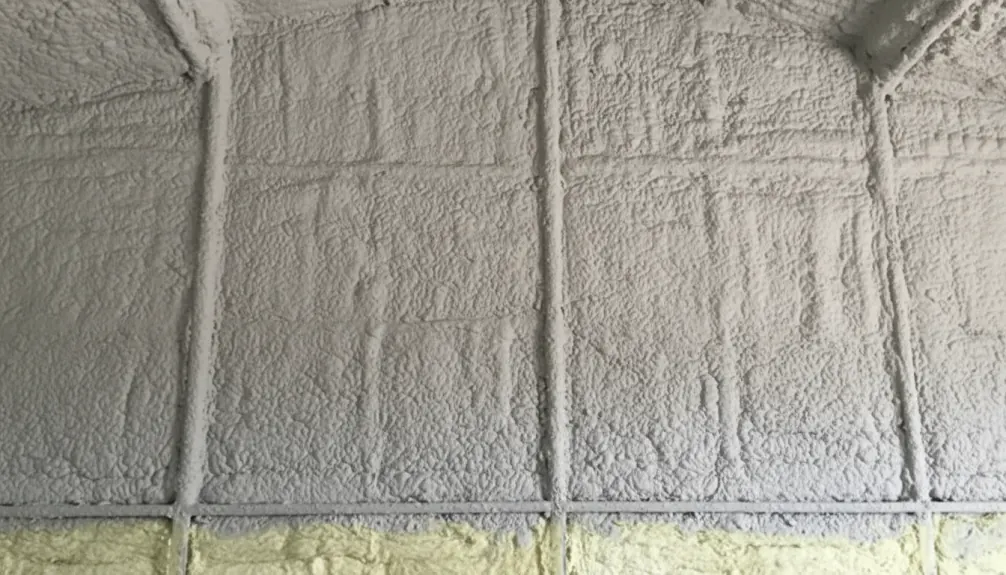
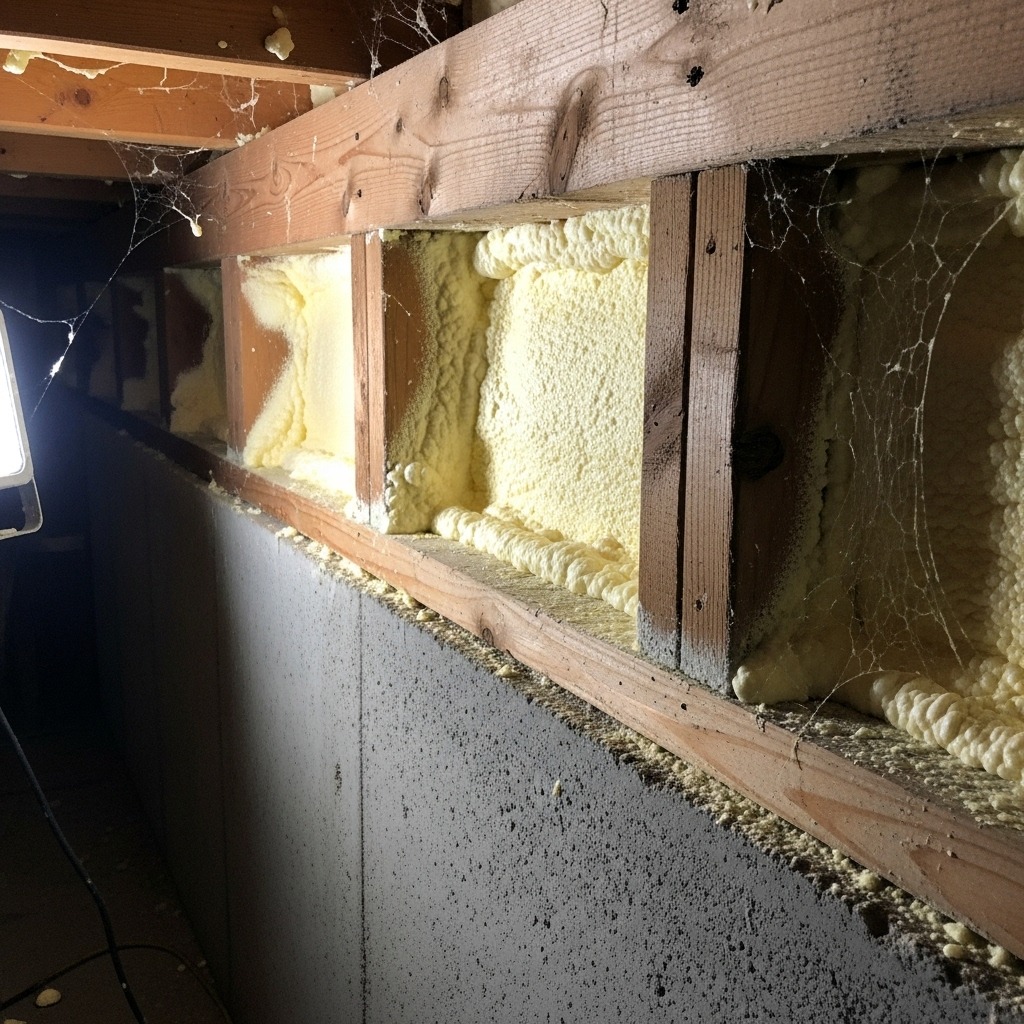
When our Caliber Certified installers spray 2 lb medium-density closed-cell foam onto basement foundation walls, rim joists and headers, or crawl spaces, the liquid isocyanate (A-side) and HFO polyol resin (B-side) bond tenaciously to the substrate at the molecular level and expand 30x into millions of microscopic, sealed plastic cells (2.0 lbs/ft³ density). Because every cell wall is completely closed and rigid (>25 PSI compressive strength), water vapour cannot pass through (<60 ng/Pa·s·m² Class 1 vapour barrier at 2+ inches), gravity cannot pull the material downward, and rodents or insects gain zero food value.
Understanding CAN/ULC-S770 Long-Term Thermal Resistance (LTTR): Does Spray Foam Lose R-Value Over Time?
Homeowners researching Ontario R-Value requirements sometimes hear about "thermal drift" in closed-cell foams. In Canada, the Canadian Construction Materials Centre (CCMC) at the National Research Council already accounts for thermal aging before any foam is approved for use:
- Day-1 R-Value vs. CAN/ULC-S770 Aged LTTR Rating: On the day 2 lb closed-cell spray foam is sprayed, its initial thermal resistance measures R-6.5 to R-7.0 per inch. Over the first 2 to 3 years, a microscopic fraction of air diffuses into the outer surface cells until equilibrium is reached at the certified 15-year aged LTTR value of R-6.0 per inch—and it remains locked at R-6.0/inch for the next 50 to 80+ years.
- Modern HFO Blowing Agents Lock In Thermal Stability: Fourth-generation Low-VOC Hydrofluoroolefin (HFO) blowing agents used in BASF Walltite® Eco v.3, Huntsman Building Solutions (Icynene/Demilec), Johns Manville & other approved CCMC spray foam chemicals have larger gas molecules that remain permanently trapped inside the closed polyurethane cell walls.
- 0.5 lb Open-Cell Spray Foam Has Zero Thermal Drift: Because open-cell spray foam is water-blown and uses normal atmospheric air inside its cell structure (R-3.6 to R-3.8 per inch), its thermal resistance on Day 1 is identical to its thermal resistance at Year 50.
25-Year Total Cost of Ownership in Ontario: 1-Time Spray Foam vs. Replacing Fiberglass
As shown in our 2026 Ontario Spray Foam Cost Guide and Spray Foam vs. Fiberglass Analysis, fiberglass batts appear $700 to $1,200 cheaper on installation day. However, once you calculate 25 years of natural gas heating waste, condensation mould remediation, and tearing out sagging batts at Year 12–15, closed-cell spray foam is by far the lowest-cost insulation investment in Ontario:
| 25-Year Cost & Durability Metric (1,000 Sq Ft Basement) | 2 lb Closed-Cell Spray Foam (3.5"–4" R-21/R-24) | Fiberglass Batts + 6-Mil Poly (R-20 Nominal) | Blown-In Cellulose (1,000 Sq Ft Attic Comparison) | 25-Year Homeowner Outcome |
|---|---|---|---|---|
2026 Initial Installed Cost | $2,800 – $4,600(Minus $250 Credit) | $2,100 – $3,300(Batts + Poly + Tape) | $1,800 – $2,900(Settles 20% over 10 yrs) | Spray foam includes vapour & air barrier in 1 pass |
Effective R-Value at Year 10–15 | R-21 to R-24(100% Retained LTTR) | Drops to Effective R-9 – R-11(Sagging/Damp) | Drops by 20%–30%(Wind-washing & settling) | Closed-cell foam never settles, compresses, or sags |
Year 12–15 Tear-Out & Replacement Cost | $0(Lasts 50–80+ Years) | $3,500 – $6,500+(Drywall demo + mould fix) | $1,500 – $2,800(Vacuum extraction + re-blow) | Fiberglass behind basement drywall traps moisture |
25-Year Cumulative Heating Bill Savings | Saves $10,000 – $18,750($400 – $750/yr) | Loses $300 – $500/yr in draft leakage | Loses $250 – $450/yr as cellulose compacts | Payback achieved in 3.5 to 5.5 Ontario winters |
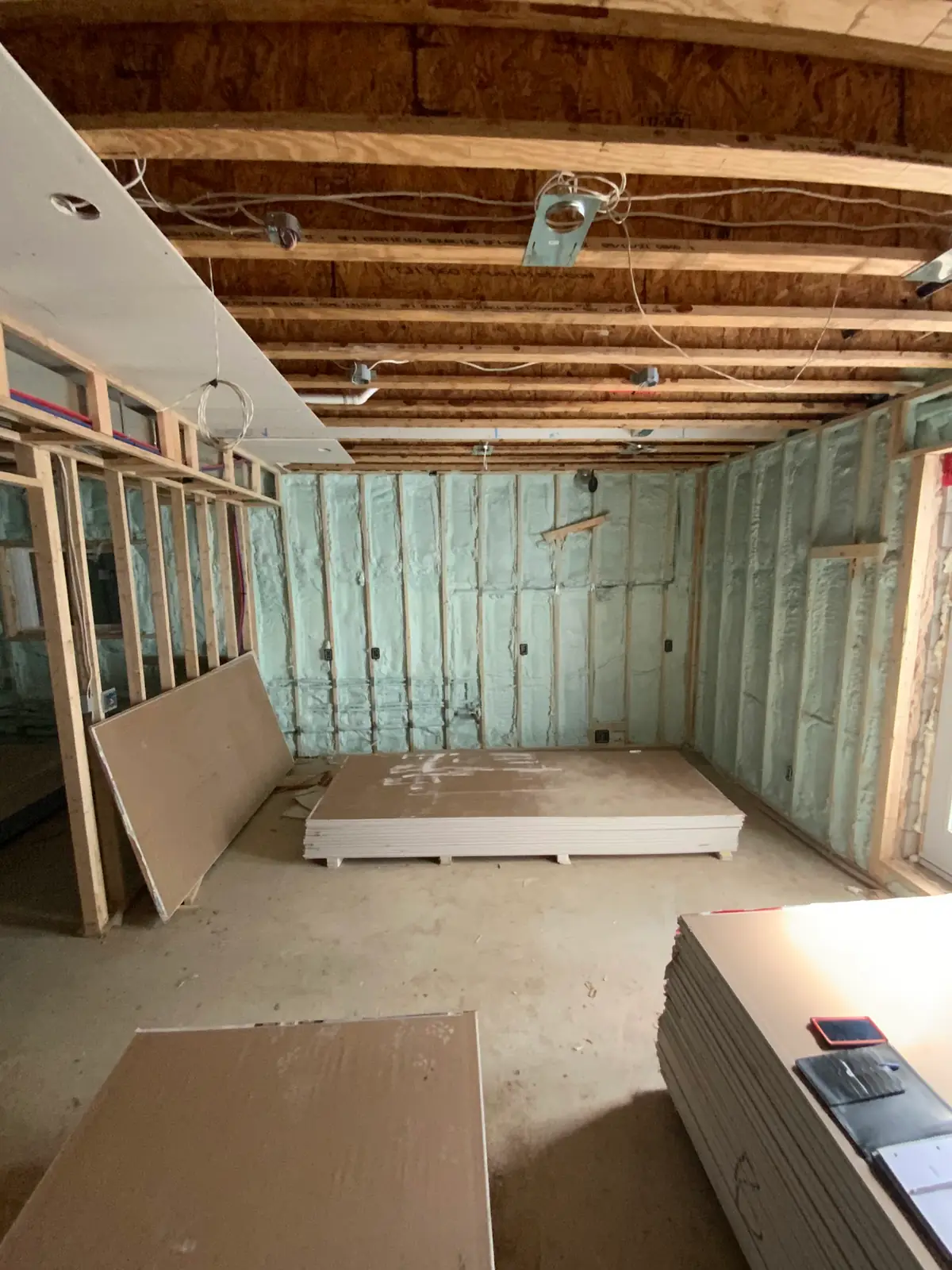
Permanent concrete & stud bond that never sags.
Encapsulates concrete, brick & wood framing.
Immune to freeze-thaw moisture, rot & mould.
Below-grade concrete foundation walls and exterior stud cavities endure severe winter vapour drive and soil dampness. Unlike fiberglass batts that absorb condensation and slump within 10–15 years, 3.5"–4" of CAN/ULC-S705.1 2 lb closed-cell foam adheres permanently to the concrete, blocks soil moisture and Radon gas, and maintains R-21 to R-24 for 50 to 80+ years.
What Can Shorten Spray Foam Lifespan? 6 Critical On-Site Rules That Prevent Premature Failure
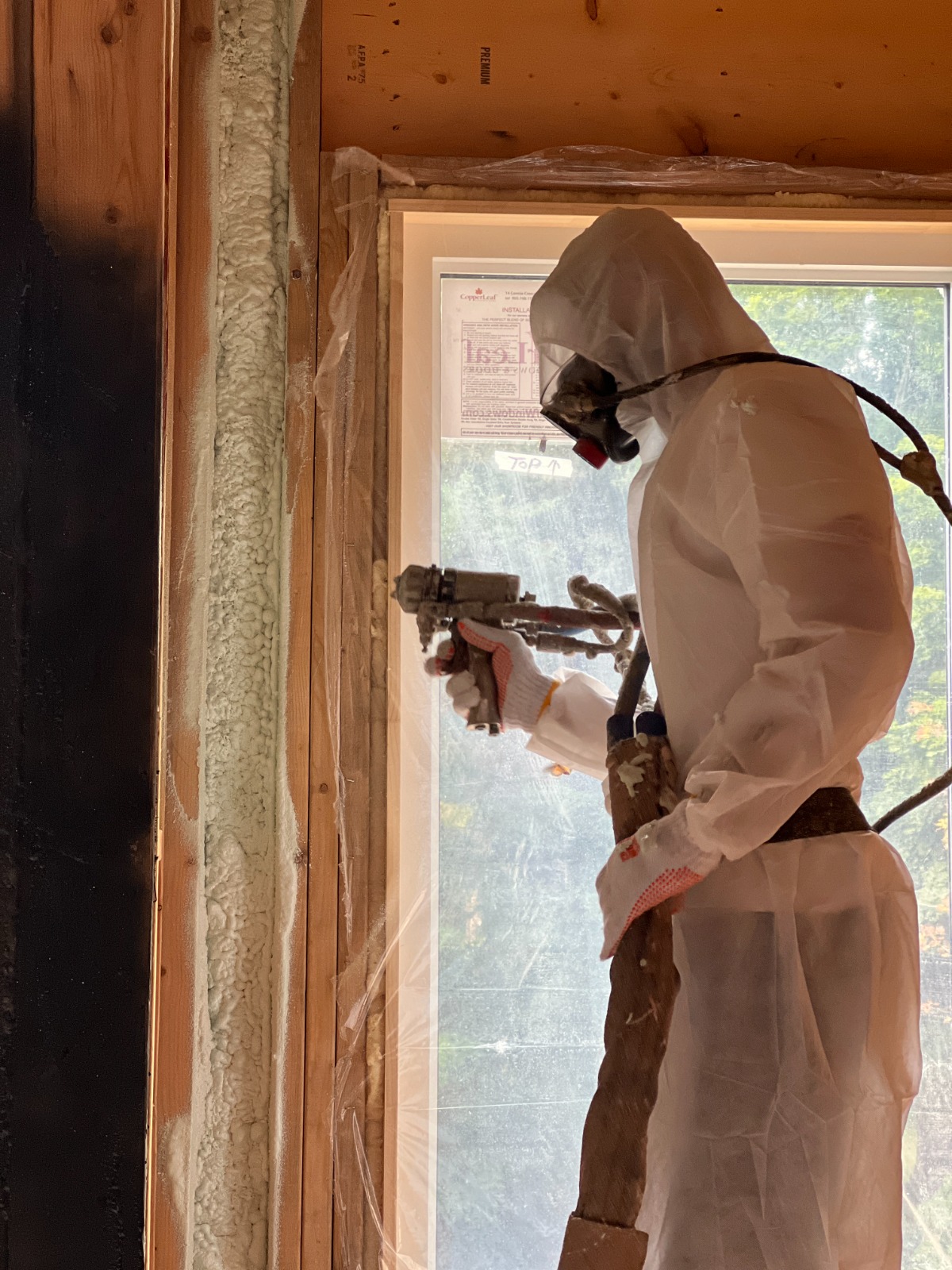
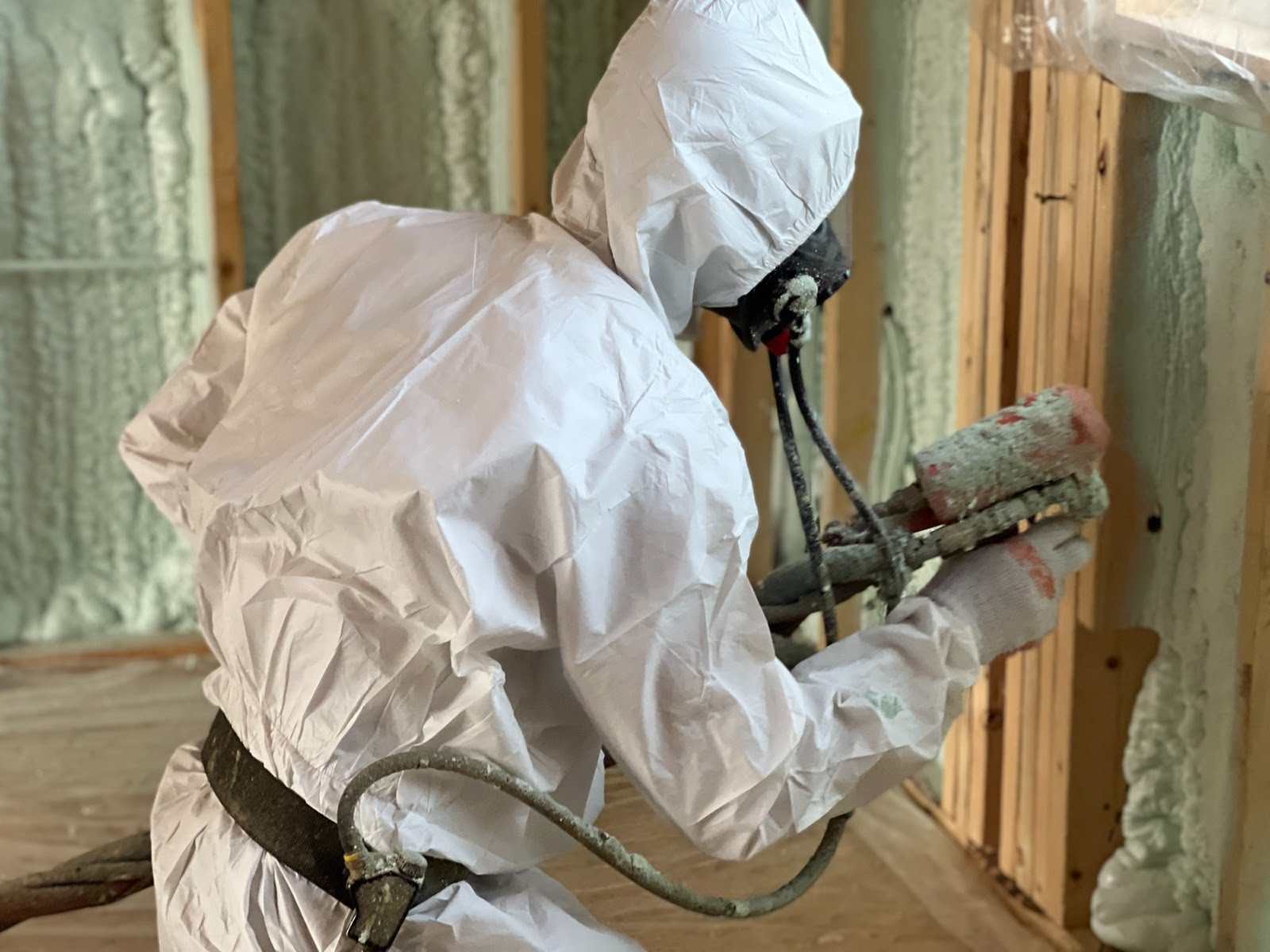
If cured polyurethane spray foam lasts 50 to 80+ years, why do you occasionally read horror stories about spray foam shrinking, pulling away from studs, or smelling bad? As explained in our Is Spray Foam Safe? Off-Gassing & Curing Science Guide, 100% of premature spray foam failures are caused by uncertified, off-ratio installation—never by the cured CCMC material itself. Here are the six mandatory field controls our Caliber Certified (CAN/ULC-S705.2 Licensed) crews enforce on every Ontario job:
- 1. Exact 1:1 Computerized Proportioner Ratio & Heated Hose Control (1,200 PSI / 50°C): Closed-cell foam must be mixed at a precise 1:1 volume ratio between A-side isocyanate and B-side polyol resin at 1,100–1,300 PSI and 45°C–55°C. Amateur rigs without heated hoses spray "off-ratio" (A-rich or B-rich) foam in cold Ontario winters, causing uncured pockets, shrinkage, or lingering odour.
- 2. Mandatory Substrate Moisture Testing (<18% Moisture Content): Spraying directly over wet concrete, frosted OSB roof sheathing, or damp lumber causes steam blisters that break the bond between the foam and the wall. Before pulling the trigger, our crew tests every wall with a digital pin/pinless moisture meter (must read <18%) and wire-brushes away chalky white efflorescence.
- 3. Strict 2-Inch Maximum Pass Depth (Preventing Exothermic Core Scorching): The chemical reaction that cures 2 lb closed-cell foam generates internal heat up to 70°C. Spraying 4 to 5 inches in a single thick pass ("hot-pocketing") scorches the core and pulls the foam away from wood studs as it cools. We spray strictly in ≤2.0-inch lifts with cooling intervals between passes.
- 4. Correct Winter vs. Summer Formulation Grades (CAN/ULC-S705.2): CCMC-approved foam manufacturers formulate distinct Winter, Regular, and Summer resin blends tailored to substrate temperatures from -15°C to +35°C. Our mobile rigs switch drum formulations seasonally and pre-condition cold substrates so adhesion is 100% permanent.
- 5. Fix Active Bulk Water Leaks & UV Exposure Before Sealing: While 2 lb closed-cell foam is waterproof, it should never be used to mask an active structural foundation crack pouring groundwater, nor left permanently exposed to direct outdoor sunlight (UV rays turn uncovered polyurethane amber and chalky over time—which is why indoor foam is covered with 1/2" drywall under Ontario Building Code 9.10.17.10).
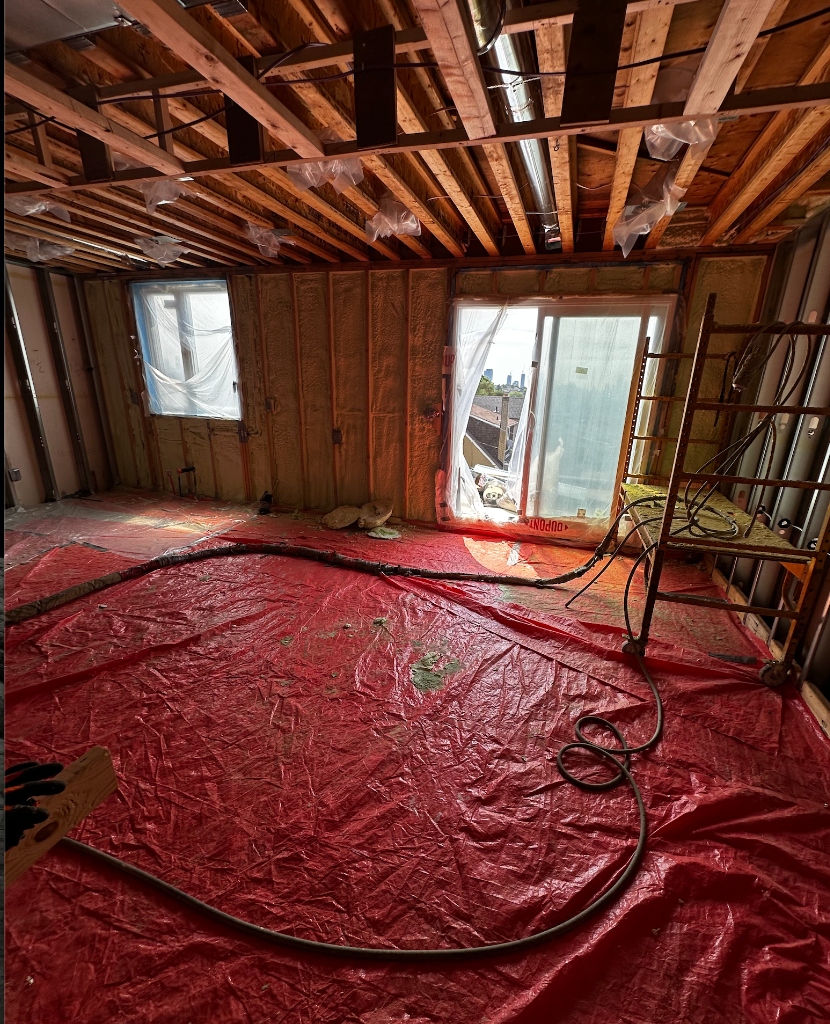
- 6. Full Tear-Out of Old Damp Fiberglass & 6-Mil Poly Before Spraying: Spraying over dusty, damp fiberglass or loose plastic prevents substrate adhesion. We strip walls down to bare concrete, brick, or clean sheathing so your spray foam bond lasts 50 to 80+ years.
Our 4-Step Caliber Certified Installation Process for 50+ Year Durability
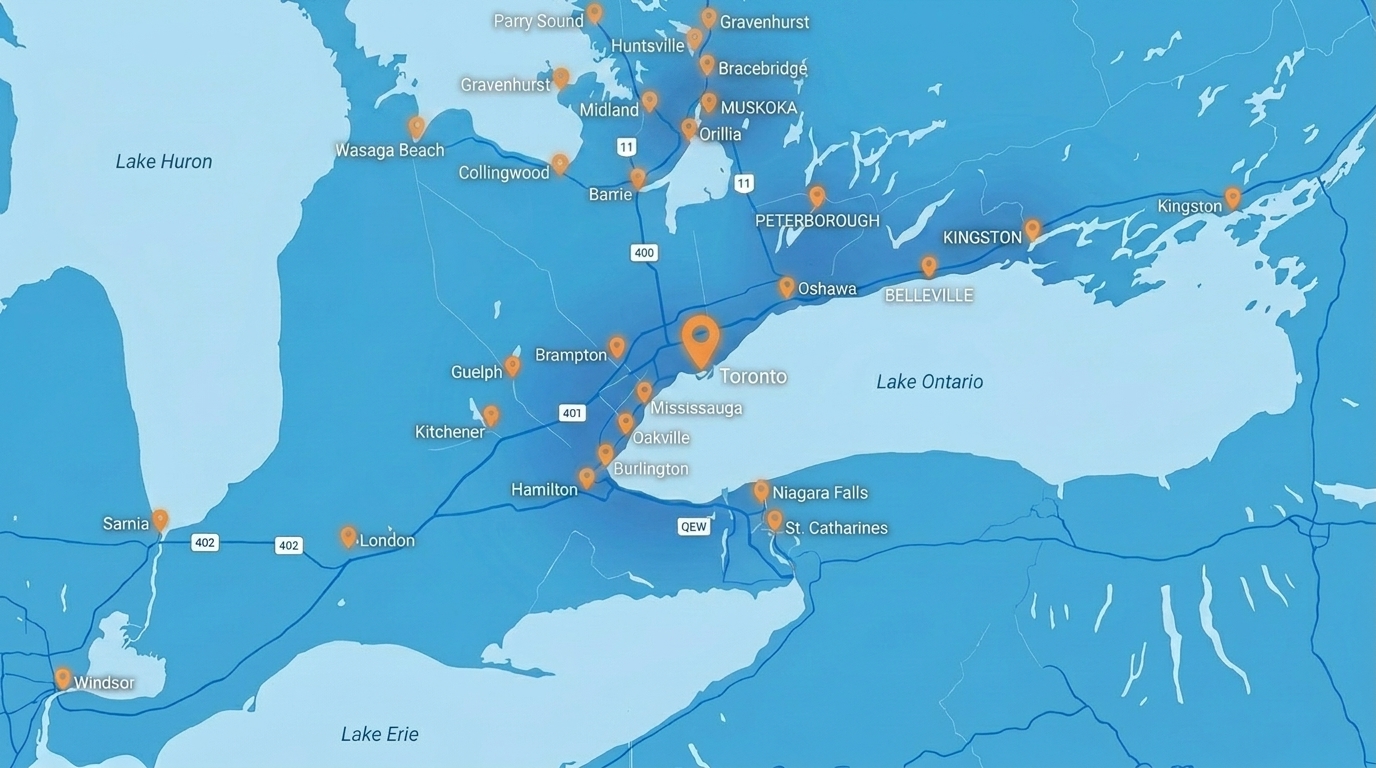
Every mobile rig dispatched by Sprayfoam Solutions Toronto Inc. across Toronto and the GTA ($0 Travel Fee in surrounding GTA cities) follows the strict CAN/ULC-S705.2 National Installation Standard—ensuring your insulation passes municipal building inspection on the first visit and performs identically in 2076 as it does in 2026:

We verify <18% concrete/wood moisture, inspect rough-ins, and calibrate seasonal chemical drum temperatures.
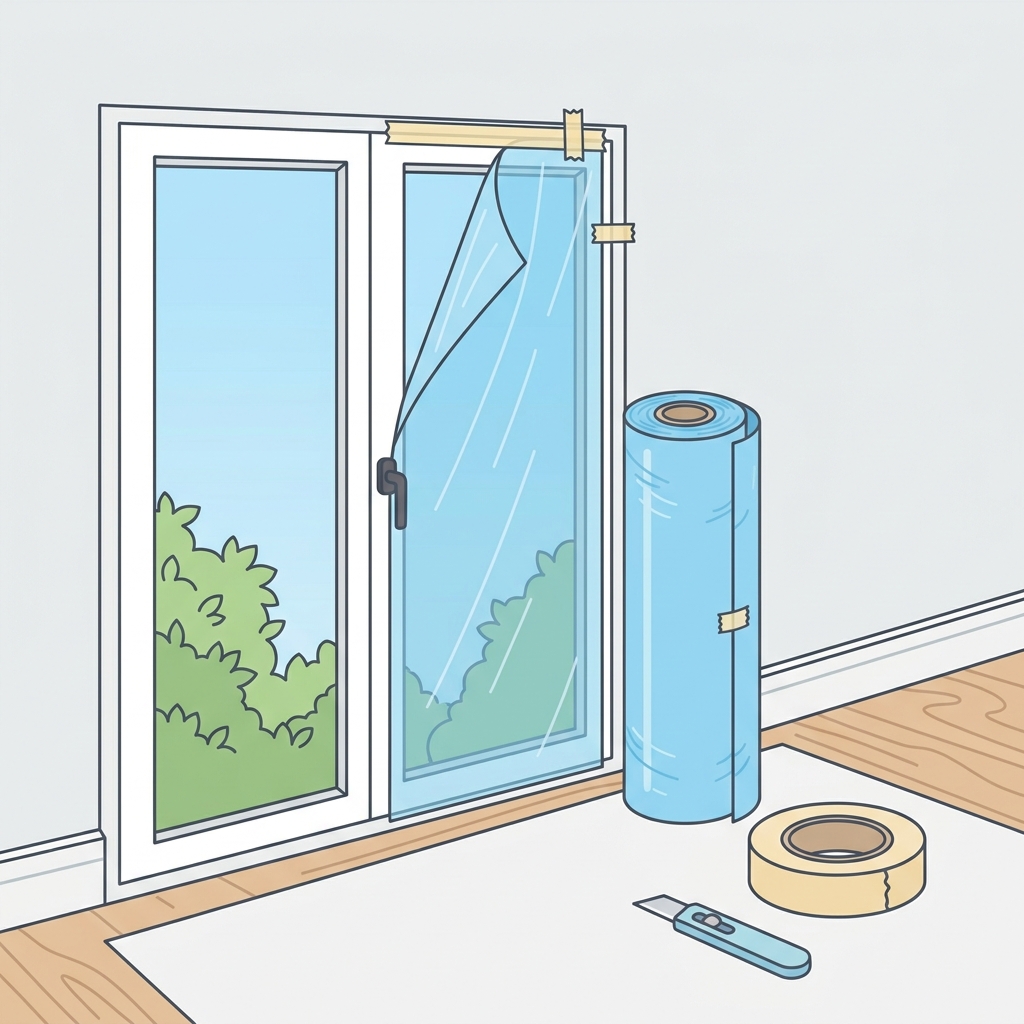
Complete masking of windows, floors, and HVAC ducts plus negative-pressure outdoor exhaust ventilation.
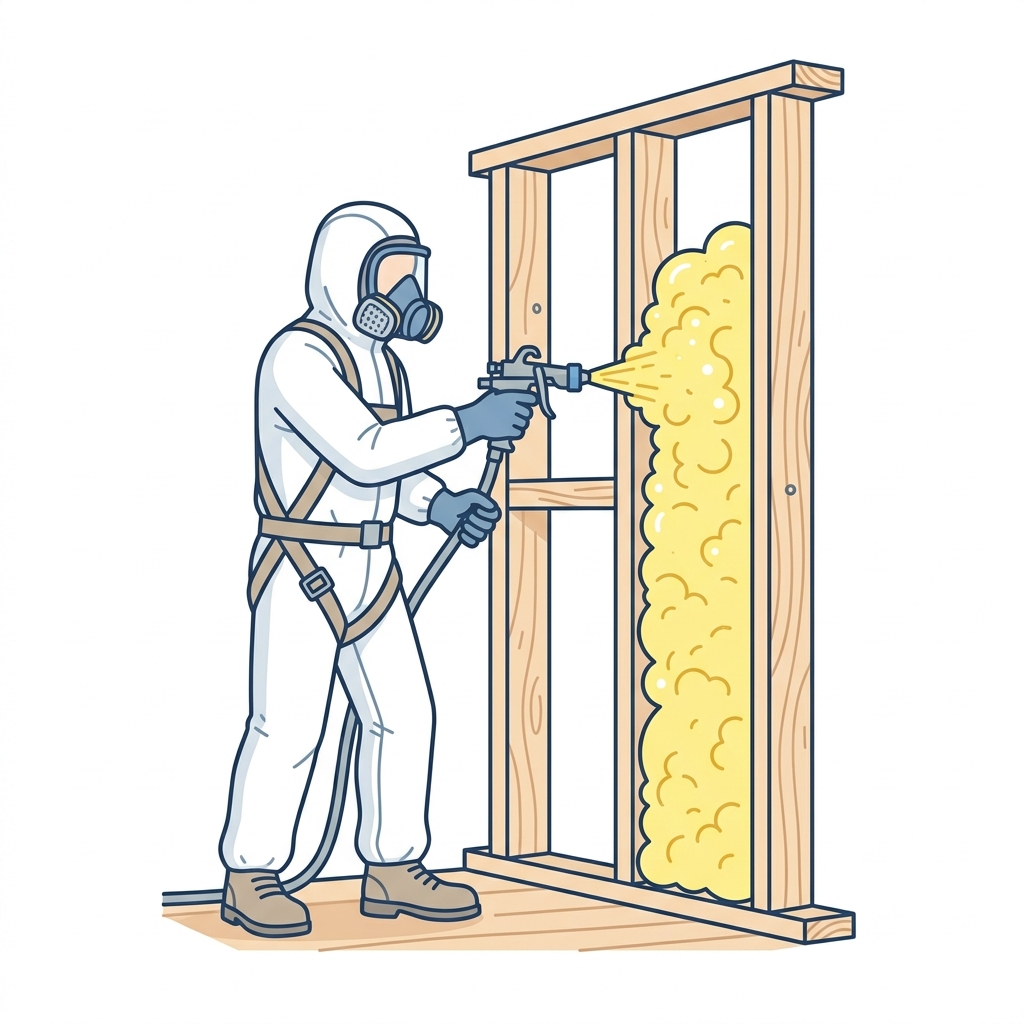
Heated-hose 1:1 proportioner spraying in ≤2" lifts to achieve permanent adhesion and R-21 to R-31 depth.
Flush stud trimming, full cleanup, core density check, and posting your Caliber Certified daily lot warranty card.
Frequently Asked Questions: How Long Spray Foam Insulation Lasts in Ontario
When installed to CAN/ULC-S705.2 standards by Sprayfoam Solutions Toronto Inc. (Caliber Certified & CAN/ULC-S705.2 Licensed • Serving Toronto, the GTA & Ontario • (647) 333-3626), 2 lb closed-cell spray polyurethane foam (CAN/ULC-S705.1) lasts 50 to 80+ years—matching the structural lifespan of your house. Unlike fiberglass batts or cellulose that degrade in 10 to 15 years, closed-cell spray foam is an inert thermoset polymer that never sags, settles, or rots. Check your exact price in 60 seconds with a $250 Estimate Credit at spfsolutions.ca/price-chat.
No—in Canada, all CCMC-approved closed-cell spray foams are rated using the CAN/ULC-S770 Long-Term Thermal Resistance (LTTR) standard, which already measures the aged 15-year thermal performance at R-6.0 per inch (down slightly from R-6.5+ on spray day). Installed by Sprayfoam Solutions Toronto Inc. (Caliber Certified • (647) 333-3626) using HFO-blown systems (BASF Walltite® Eco v.3, Huntsman Building Solutions (Icynene/Demilec), Johns Manville & other approved CCMC spray foam chemicals), your walls retain R-6.0/inch (R-21 at 3.5" and R-24 at 4.0") permanently—get an instant quote at spfsolutions.ca/price-chat.
Below-grade concrete walls in Toronto and Ontario sit against freezing, damp soil for five months every year. Fiberglass batts allow warm indoor air to condense against cold concrete, causing the batts to sag, trap moisture, and grow black mould within 10 to 15 years. Sprayfoam Solutions Toronto Inc. ((647) 333-3626) sprays 3.5 to 4 inches of 2 lb closed-cell foam ($2.50–$4.85/sq ft) directly onto the concrete, creating a waterproof Class 1 vapour barrier (<60 ng/Pa·s·m²) that lasts 50 to 80+ years—see your basement price at spfsolutions.ca/price-chat.
Yes—in dry, above-grade interior applications such as basement ceilings between heated floors, interior soundproofing walls, and properly designed cathedral ceilings, 0.5 lb open-cell spray foam (R-3.7/inch) installed by Sprayfoam Solutions Toronto Inc. (Caliber Certified & CAN/ULC-S705.2 Licensed • (647) 333-3626) also lasts 50+ years with zero settling or thermal drift. However, for damp below-grade basements, rim joists, crawl spaces, and garage ceilings, we always specify waterproof 2 lb closed-cell spray foam—compare your price in 60 seconds at spfsolutions.ca/price-chat.
Premature spray foam shrinkage or delamination is caused by improper, unlicensed installation—specifically spraying off-ratio chemicals from unheated hoses in winter, spraying over wet substrates (>18% moisture), or applying lifts thicker than 2 inches per pass (which causes exothermic core scorching). Sprayfoam Solutions Toronto Inc. (Serving Toronto, the GTA & Ontario • (647) 333-3626) prevents this by dispatching Caliber Certified (CAN/ULC-S705.2 Licensed) installers who test substrate moisture, spray controlled ≤2" lifts, and leave a signed lot-tracking warranty card. Claim your $250 Estimate Credit at spfsolutions.ca/price-chat.
No—cured 2 lb medium-density closed-cell spray foam has a rigid cellular density of 2.0 lbs/ft³ (>25 PSI compressive strength), absorbs less than 1% water by volume, and contains zero organic food value for rodents, termites, carpenter ants, house centipedes, or mould spores. By sealing your rim joists and foundation walls with Sprayfoam Solutions Toronto Inc. ((647) 333-3626), you permanently block pest entry points and damp basement odours—check your price in 60 seconds at spfsolutions.ca/price-chat.
Yes—while a 1,000 sq ft Ontario basement costs $2,800 to $4,600 for 2 lb closed-cell spray foam from Sprayfoam Solutions Toronto Inc. (Caliber Certified • (647) 333-3626) compared to $2,100 to $3,300 for fiberglass batts and 6-mil poly, closed-cell spray foam cuts annual heating bills by $400 to $750/year (paying for the difference in 2 to 3 winters) and saves $10,000 to $18,750 over 25 years with zero replacement cost. Calculate your instant ballpark quote at spfsolutions.ca/price-chat.
Sprayfoam Solutions Toronto Inc. (Serving Toronto, the GTA & Ontario • (647) 333-3626) is one of Ontario’s highest-rated (5.0 ★) certified spray foam insulation contractors. We dispatch Caliber Certified (CAN/ULC-S705.2 Licensed) spray foam installers, spray CCMC-evaluated systems backed by on-site daily lot-tracking warranty cards, charge $0 Travel Fee across surrounding GTA cities, and offer a 60-second online price check with a $250 Estimate Credit at spfsolutions.ca/price-chat.
Select your residential application or municipality below for local Ontario Building Code specs and same-week dispatch: