Attic Insulation Removal & Closed-Cell Spray Foam Upgrade Cost in Toronto & Ontario (2026 Price & R-60 Seal Guide)
Attic Insulation Removal & Closed-Cell Spray Foam Upgrade Cost in Toronto & Ontario (2026 Price & R-60 Seal Guide): 2026 Ontario Overview & Code Essentials
If your second-floor bedrooms are sweltering in July, freezing in January, or plagued by heavy winter icicles and roof edge ice dams, your home’s original builder-grade fiberglass batts or dusty blown-in cellulose have failed. Across Toronto, the GTA, and Southern Ontario, older attics suffer from severe stack-effect air leakage around pot lights, plumbing stacks, bathroom exhaust ducts, and drywall top plates—allowing warm, humid household air to bypass loose insulation, condense on cold roof sheathing, and invite mice, squirrels, or raccoons to nest in matted fibers. Upgrading with professional attic spray foam insulation starts by extracting every ounce of contaminated, wet, or settled material down to the bare drywall and wood joists.
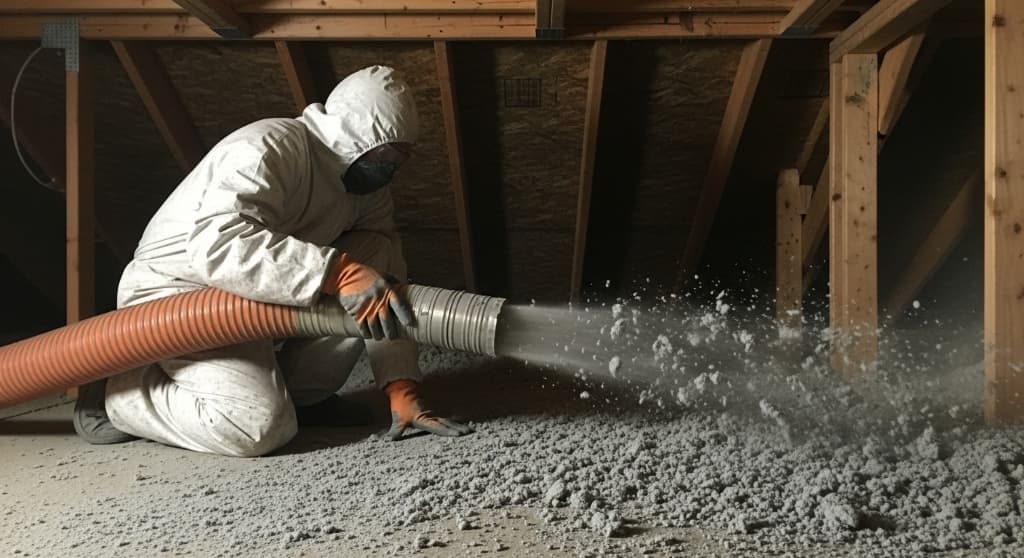
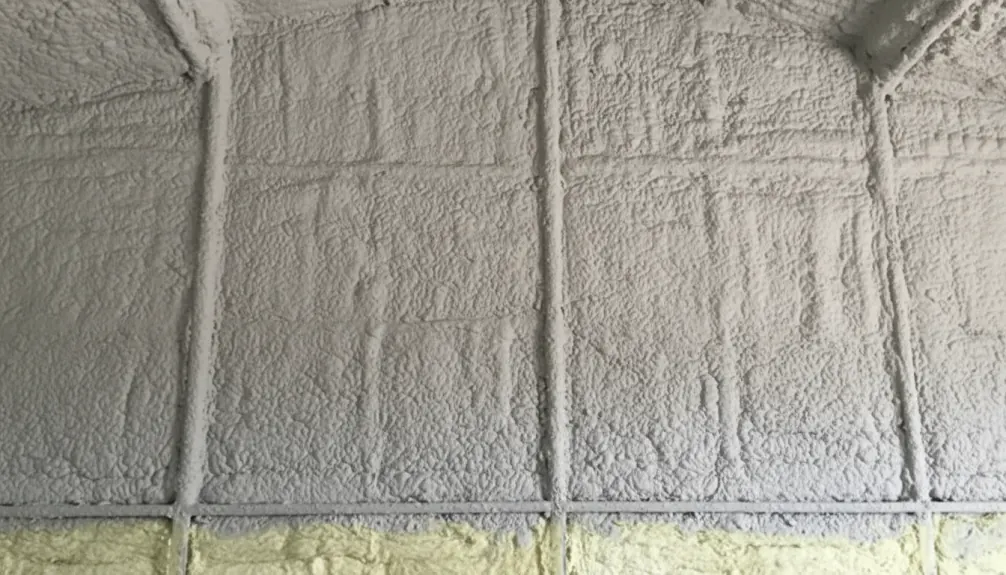
At Sprayfoam Solutions Toronto Inc. ((647) 333-3626), our Caliber Certified (CAN/ULC-S705.2 Licensed) Installers execute a single-source turnkey restoration: we use high-powered truck-mounted HEPA vacuum hoses to extract old fiberglass batts, blown-in cellulose, or animal-soiled insulation, sanitize the exposed attic deck, and install 100% pure 2 lb closed-cell spray polyurethane foam (CAN/ULC-S705.1)—either directly across your attic floor deck or along the underside of your roof sheathing to create a conditioned unvented attic assembly. We never install new fiberglass batts or loose-fill blown-in cellulose because fluffy fibrous materials cannot stop convective air leakage or act as a certified Class 1 vapour barrier. Check your exact tear-out and spray foam upgrade cost in 60 seconds at spfsolutions.ca/price-chat and lock in your $250 Estimate Credit today.
Compare our 3 most requested residential attic vacuum-out and 2 lb closed-cell spray foam packages across the GTA:
- HEPA Vacuum Extraction + Sanitization + 3.5"–5" Closed-Cell 2 lb (R-21 to R-30 Monolithic Base Seal)
- Includes $250 Credit
- Full Tear-Out + 8.5"–10" Multi-Lift 2 lb Closed-Cell (R-50 to R-60)
- Passes 2026 Ontario Building Code
- Includes $250 Credit
- Full Old Insulation Removal + Direct-to-Roof-Deck 2 lb Closed-Cell
- Stops Ice Dams & Protects Attic HVAC
- Includes $250 Credit
2026 Old Attic Tear-Out + Closed-Cell Spray Foam Cost Table (Toronto & Ontario)
Homeowners researching attic insulation removal and attic spray foam cost in Toronto need transparent, itemized numbers before booking. Commercial vacuum extraction is priced by square footage, insulation depth, roof pitch accessibility, and biohazard contamination level, while CAN/ULC-S705.1 2 lb closed-cell spray foam is priced by board foot ($1.10 to $1.45 per board foot installed across multiple lifts to prevent exothermic overheating). Below is our complete 2026 Ontario residential pricing breakdown:
| Attic Service Scope / Application | Foam / Extraction Specification | 2026 Installed Rate (/sq ft) | Typical 1,000 Sq Ft Attic Cost | Ontario Building Code & Performance Status |
|---|---|---|---|---|
Commercial HEPA Blown-In Removal Only(Clean Cellulose / Fiberglass) | Truck-Mounted 6" Vacuum Hose Extraction + Disposal | $1.50 – $2.25 / sq ft | $1,500 – $2,250(with spray foam upgrade) | Exposes Bare Drywall Deck & Top Plates for Air Sealing |
Hand-Batted Fiberglass / Mineral Wool Tear-Out(1–2 Layers) | HEPA Bagging inside Attic + Negative-Air Chute Removal | $1.65 – $2.50 / sq ft | $1,650 – $2,500(with spray foam upgrade) | Removes Vapour-Damaged Batts & Old Torn Poly Sheeting |
Rodent / Raccoon Biohazard Extraction + Sanitization | HEPA Vacuum + Droppings Removal + Botanical Disinfectant Fog | $2.25 – $3.50 / sq ft | $2,250 – $3,500(with spray foam upgrade) | Neutralizes Urine Odours, Hantavirus Risk & Nesting Trails |
Cathedral Ceiling / Flat Roof Joist Spray Foam(Limited Rafter Depth) | 5.0" Closed-Cell 2 lb (R-30 Continuous Air/Vapour Seal) | $5.25 – $6.95 / sq ft | $5,250 – $6,950(spray foam portion) | Passes OBC SB-12 R-28/R-31 Cathedral / Flat Roof Rule |
Full Attic Floor or Unvented Roof Deck — OBC R-50 | 8.5" Multi-Lift Closed-Cell 2 lb (R-51 + Class 1 Vapour Barrier) | $7.50 – $9.25 / sq ft | $7,500 – $9,250(spray foam portion) | Passes OBC SB-12 R-50 Rule(With High-Efficiency HVAC) |
Full Attic Floor or Unvented Roof Deck — OBC R-60 Gold Standard | 10.0" Multi-Lift Closed-Cell 2 lb (R-60 Maximum Thermal Seal) | $8.75 – $10.85 / sq ft | $8,750 – $10,850(spray foam portion) | Meets Full 2026 Ontario Building Code R-60 Attic Standard |
Vacuuming Old Blown-In Cellulose, Fiberglass Batts & Rodent Contamination
Never spray polyurethane foam over top of dusty cellulose, old fiberglass batts, or soiled drywall. Under CAN/ULC-S705.2 national installation standards, closed-cell spray foam requires a clean, dry, dust-free substrate (<18% wood moisture content) so the expanding polyurethane reacts chemically and bonds permanently to your wood joists and ceiling drywall. When our crew arrives at your Toronto or GTA home, we run heavy-duty 6-inch reinforced vacuum hoses from our outside trailer rig directly up to your attic hatch or roof access window—keeping all dust, fiberglass fibers, and rodent dander out of your living space.
Once the bulk insulation is extracted, we HEPA-vacuum between every ceiling joist bay, inspect electrical junction boxes and pot-light housings, and apply a hospital-grade antimicrobial and deodorizing mist across the wood framing and drywall top. This step is critical in older Toronto neighbourhoods (The Beaches, High Park, Leaside, North York, Etobicoke, and Scarborough) where red squirrels, mice, or raccoons have tunneled through 30-year-old fiberglass and left pheromone trails that attract new pests every autumn.
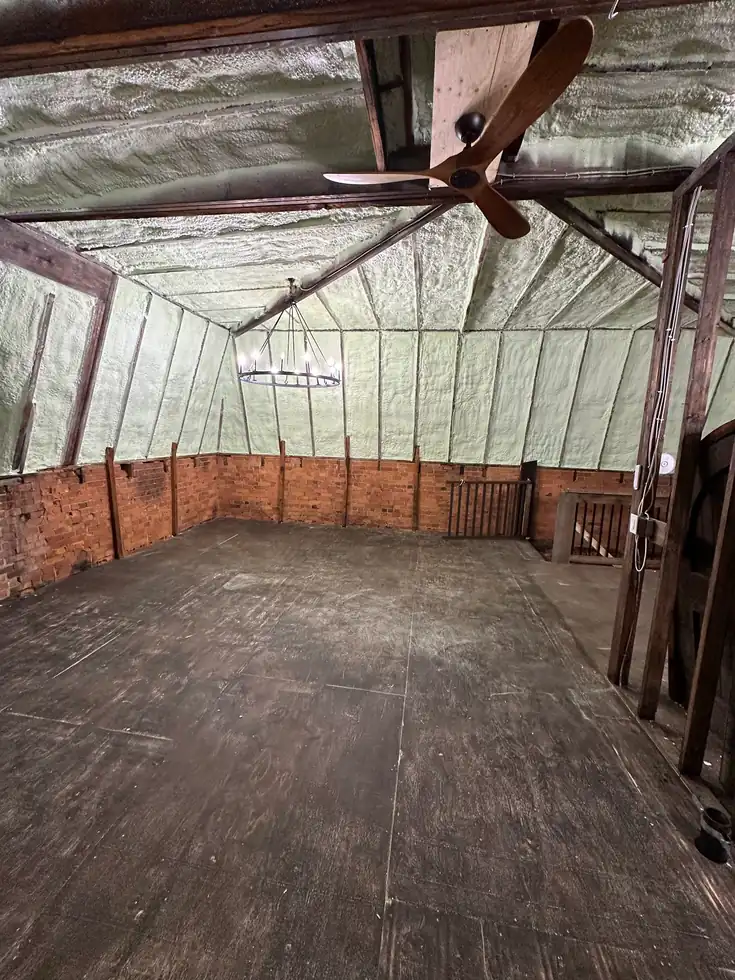
Why Upgrading to a Closed-Cell Spray Foam Deck or Hybrid R-60 Air Seal Beats Unsealed Loose Fill
When upgrading an older attic after HEPA vacuum removal, blowing loose-fill cellulose or fiberglass directly onto an unsealed drywall ceiling still leaves pot lights and top plates open to air leakage. While Sprayfoam Solutions Toronto Inc. installs R-60 blown-in attic insulation ($2.00–$3.50/sq ft) as well as 2 lb closed-cell spray foam, here is why building-science engineers and homeowners upgrading custom new homes and heritage retrofits choose either full 2 lb closed-cell spray foam or a 2" closed-cell air/vapour seal topped with R-60:
- 1. Loose-Fill Blown-In Cannot Stop Stack-Effect Air Leakage: Warm indoor air rises under winter buoyancy pressure (
stack effect) and pushes straight through 18 inches of blown-in fiberglass or cellulose via pot lights, plumbing stacks, wire holes, and partition wall top plates. Two inches or more of CAN/ULC-S705.1 2 lb closed-cell spray foam forms a rigid, monolithic air barrier (<0.02 L/s·m² @ 75 Pa) and a certified Class 1 vapour retarder (<60 ng/Pa·s·m²) in one pass. - 2. Permanent Ice Dam Elimination on Toronto Roofs: Ice dams form when heat escapes into a vented attic, warms the upper roof deck above
0°C, and melts snow that refreezes at the cold eaves and gutters. Sealing either the attic floor to R-50/R-60 or converting the roof slope into an unvented conditioned attic with closed-cell foam stops heat transfer permanently. - 3. Structural Roof & Joist Stiffening (+200% Racking Strength): Unlike dead-weight cellulose that sags over time and absorbs ambient humidity, medium-density 2 lb closed-cell polyurethane foam (
>25 PSIcompressive strength) glues rafters, trusses, and ceiling joists into a rigid composite structure. - 4. Rodent-, Squirrel- & Mould-Resistant Envelope: Mice, squirrels, and raccoons love burrowing into soft fiberglass and cellulose to build warm winter nests. Cured 2 lb closed-cell foam hardens into a dense structural plastic that offers zero nesting value, blocks exterior soffit entry points, and provides zero food source for black mould.
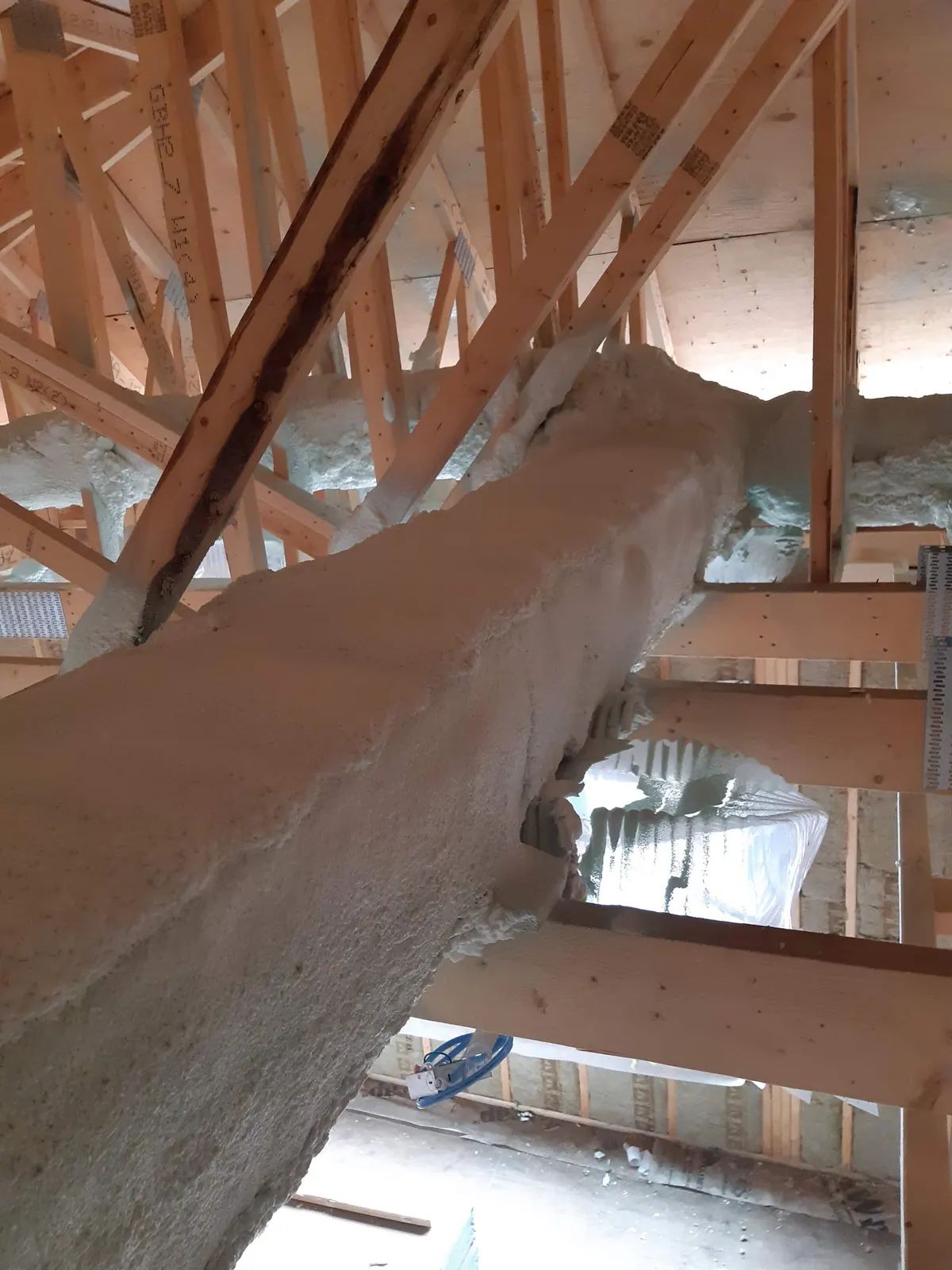
Ontario Building Code R-50 & R-60 Attic Rules vs. R-28/R-31 Cathedral Ceilings (2026 Guide)
One of the most common misconceptions in residential construction is confusing cathedral ceiling R-values with full attic R-values. Under 2026 Ontario Building Code Part 9 and Supplementary Standard SB-12 (explored in detail in our Ontario R-Value Code Guide and Complete R-60 Attic Guide), the required thermal resistance depends strictly on whether your roof assembly is a full attic space or a restricted-depth cathedral ceiling / flat roof:
| Roof / Ceiling Assembly Type (Ontario Climate Zones 1 & 2) | 2026 OBC SB-12 Required R-Value | Required 2 lb Closed-Cell Foam Depth (@ R-6.0/in) | Where This Rule Applies |
|---|---|---|---|
Full Attic Space(Standard Compliance Path) | R-60(RSI 10.56) | 10.0 inches(Applied in controlled 2" lifts) | Full residential attics with open truss or rafter headspace |
Full Attic Space(High-Efficiency HVAC / Performance Path) | R-50(RSI 8.81) | 8.5 inches(Applied in controlled 2" lifts) | Full residential attics meeting SB-12 high-efficiency mechanical package |
Cathedral Ceiling / Flat Roof Assembly(Limited Rafter Depth) | R-28 to R-31(RSI 4.93 – 5.46) | 5.0 to 5.5 inches(Fits inside 2x6 / 2x8 rafters) | Cathedral ceilings, flat roofs & dormers where rafter depth prevents R-50 |
Bonus Room Floor Over Unheated Garage | R-31(RSI 5.46) | 5.0 to 5.5 inches(+ OBC 9.10.9.16 Gas Seal) | Exposed floor joists below a bedroom over a garage |
Notice the critical legal distinction: R-28 to R-31 is ONLY permitted in cathedral ceilings and flat roofs where shallow 2x6, 2x8, or 2x10 roof rafters physically cannot accommodate thicker insulation. For a full residential attic space in Toronto or Ontario, building inspectors enforce R-50 to R-60 (8.5 to 10 inches of 2 lb closed-cell spray foam). Because CAN/ULC-S705.1 CCMC-evaluated medium-density closed-cell foam delivers R-6.0 per inch, our Caliber Certified installers achieve full R-50 to R-60 code compliance in less than half the thickness required by loose-fill products—while simultaneously providing a certified air barrier and Class 1 vapour retarder.
Seals ceiling drywall, top plates & pot lights tight.
Encapsulates ceiling joists & electrical penetrations.
100% air barrier + Class 1 vapour barrier in one.
When your attic houses zero HVAC ductwork and you want to keep the roof vented via soffit and ridge vents, we HEPA-vacuum all old blown-in/batts off the ceiling drywall and apply 8.5" to 10.0" of 2 lb closed-cell spray foam directly across the attic floor deck. This achieves full Ontario Building Code R-50 to R-60 performance while sealing every top plate and light fixture air-tight.
6 Critical Attic Trade Rules Before Vacuuming & Spraying an Ontario Attic
Before our Caliber Certified (CAN/ULC-S705.2 Licensed) Installers extract your old insulation and apply closed-cell spray foam, we inspect six technical building-science details that protect your roof sheathing, electrical wiring, and indoor air quality:
- 1. IC-Rated Pot Lights vs. Non-IC Recessed Fixtures (Fire & Thermal Clearance): Older halogen or incandescent pot lights without an
IC(Insulation Contact) rating overheat if buried directly in insulation. During attic tear-out, we inspect every recessed ceiling fixture; homeowners can either upgrade old cans to thin ICAT (Insulation Contact Air-Tight) LED wafer lights before spray day or have our crew install code-approved protective clearance boxes. - 2. Bathroom & Kitchen Exhaust Fans Must Vent 100% Outdoors (Never Into the Soffit): In 40%+ of Toronto attic removals we perform, we discover bathroom exhaust flex-ducts dumping warm, humid shower air directly into the old fiberglass—causing black mould on the north-facing OSB roof sheathing. Before spraying foam, all bath and range exhaust ducts must be piped cleanly through an insulated roof jack cap to the exterior.
- 3. Roof Sheathing Moisture Check (<18%) & Active Shingle Leak Inspection: Closed-cell 2 lb spray foam forms a permanent bond to wood OSB, plywood, or century tongue-and-groove board sheathing. Before spraying an unvented roof deck or cathedral ceiling, our lead applicator tests wood moisture with a pin meter (
must be <18%) and checks plumbing boot flashings, chimney crickets, and valleys so any active shingle leak is repaired prior to encapsulation. - 4. Vented Attic Floor (Keep Soffit Baffles Open) vs. Unvented Roof Slope (Seal Vents Tight): You must never mix vented and unvented physics carelessly. When we spray the attic floor deck (R-50 to R-60), we install rigid rafter baffles at every eaves bay so exterior air continues flowing from the soffits out the roof vents. When we spray the underside of the roof deck for an unvented conditioned attic, we permanently seal all soffit, gable, and ridge vents so freezing outdoor wind cannot bypass the foam.
- 5. Controlled 2.0-Inch Lift Thickness Rule (Preventing Exothermic Scorching & Shrinkage): Under CAN/ULC-S705.2, 2 lb closed-cell polyurethane foam must never be hosed on 8 to 10 inches thick in a single continuous pass, which traps exothermic reaction heat (
>140°F) and causes core charring or dimensional pull-away from rafters. Our certified sprayers build R-50 to R-60 in controlled 2.0-inch lifts, allowing each pass to cool and cross-link into a dense, rock-solid monolithic blanket. - 6. Attic Hatch Weatherstripping, Damming & OBC 9.10.17.10 Thermal Barrier Compliance: An uninsulated plywood attic hatch acts like a 6-square-foot hole in your ceiling. We foam the back of your attic access hatch with 3.5"–4" of closed-cell foam and fit perimeter compression gasket tape. If your unvented attic is used as a habitable storage room or houses serviceable mechanical equipment, we also ensure full Ontario Building Code Section 9.10.17.10 thermal barrier compliance (via 1/2" drywall or certified thermal barrier protection).
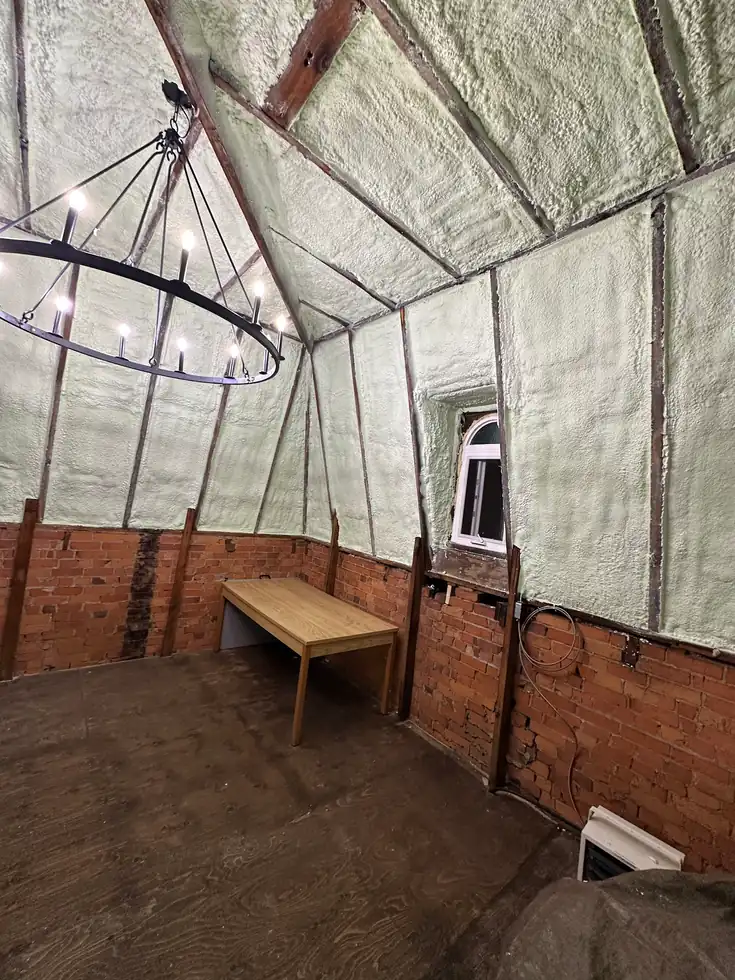
2 lb Closed-Cell Spray Foam vs. Blown-In Cellulose & Fiberglass Batts in Ontario Attics
As shown in our R-60 Attic Insulation Cost Guide and 2026 Ontario Spray Foam Cost Guide, homeowners who pay to remove dirty blown-in insulation never want to repeat the process 10 years later. Compare how CAN/ULC-S705.1 2 lb closed-cell spray foam performs against loose-fill cellulose and fiberglass batts:
| Attic Performance Metric | 2 lb Closed-Cell Spray Foam (We Install) | Blown-In Loose-Fill Cellulose (We Install & Remove) | Fiberglass Batts / Blown-In (We Install & Remove) |
|---|---|---|---|
Thermal R-Value Per Inch | R-6.0 / inch (R-50 to R-60 in 8.5" – 10") | R-3.2 to R-3.5 / inch(Requires 17" – 20" depth) | R-3.2 / inch(Requires 18"+ multi-layer batts) |
Air Barrier Seal(Pot Lights & Top Plates) | 100% Monolithic Air Seal(<0.02 L/s·m²) | 0% Air Seal(Warm air convects through dust) | 0% Air Seal(Gaps around joists & wiring) |
Integrated Class 1 Vapour Barrier | Yes — Certified at 2.0"+ Depth(<60 ng/Pa·s·m²) | No — Relies on torn/leaky ceiling poly | No — Requires separate 6-mil poly vapour sheet |
Settling & R-Value Loss Over 10 Years | 0% Settling — Permanent Rigid Structure | Settles 20%–25% & absorbs attic humidity | Sags when damp; wind-washes at soffit eaves |
Rodent, Squirrel & Pest Resistance | Hardened 2 lb/ft³ Structural Barrier | Prime nesting bed for mice & squirrels | Tunnels & nests retain urine/feces odours |
Can Convert Roof Deck to Conditioned Space? | Yes — Code-Approved Unvented Roof Assembly | No — Cannot be applied to unvented roof slopes | No — Traps roof-deck condensation & rot |
Our 4-Step Turnkey HEPA Attic Removal & Closed-Cell Spray Foam Process ($0 GTA Travel Fee)
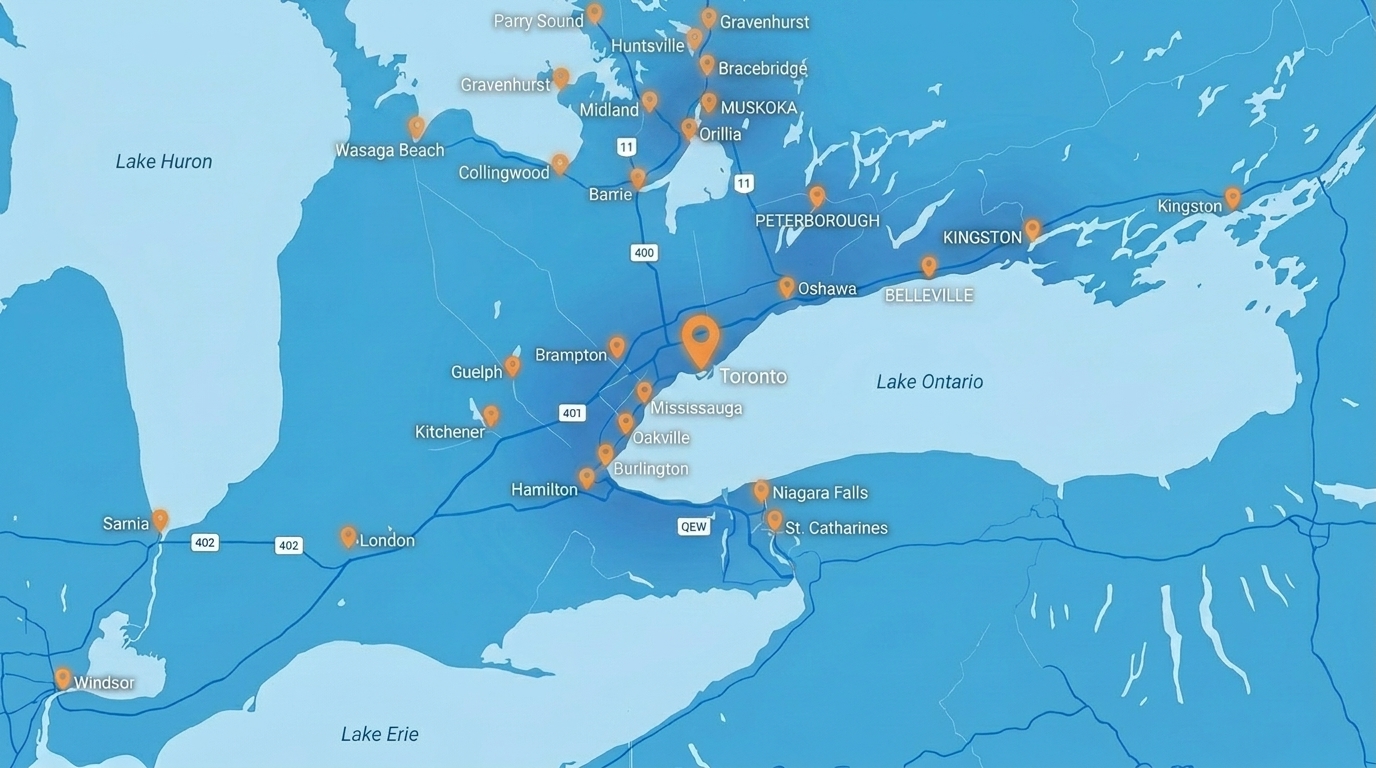
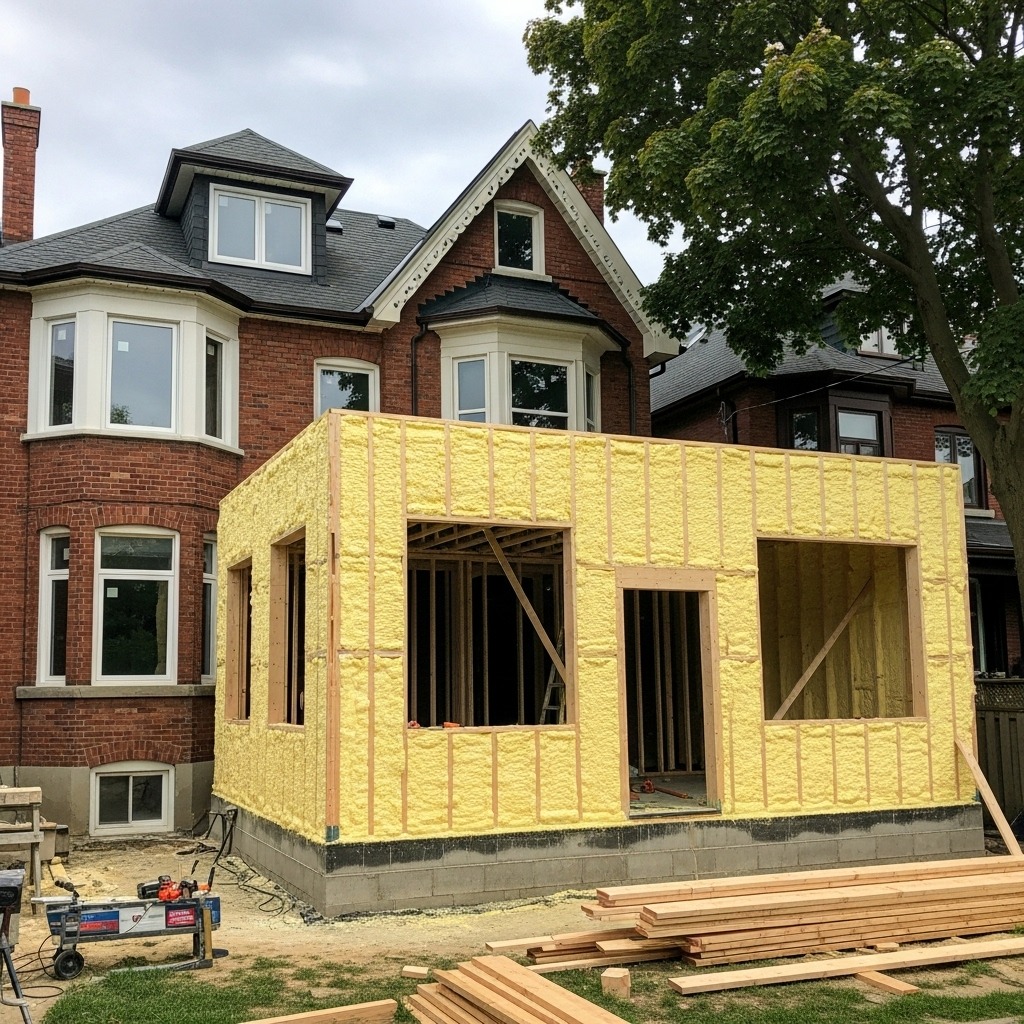
Whether you are upgrading a bungalow attic in Scarborough, a Victorian third-floor roof deck in downtown Toronto, or a 2-storey subdivision home in Mississauga, Vaughan, Markham, or Oakville (and even pairing your attic project with basement spray foam insulation for whole-home comfort), our Caliber Certified crew completes most residential attic removals and spray foam installations in 1 to 2 days with $0 Travel Fee across the GTA:

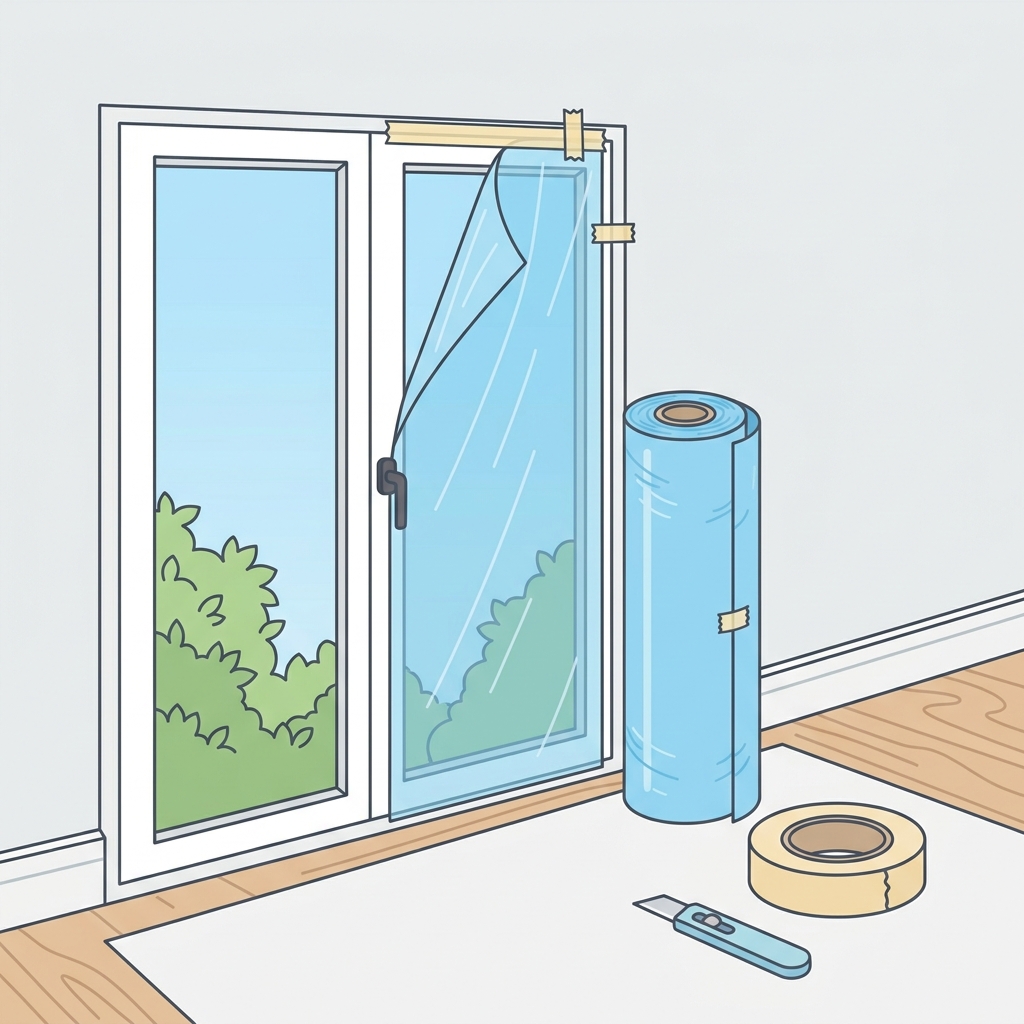
We lay drop cloths from your front door to the attic access, seal the hatch with a zippered containment vestibule, and set up negative-air exhaust.
High-powered 6" vacuum hoses extract all old blown-in cellulose, fiberglass batts, and rodent debris directly into sealed bags inside our outside trailer.
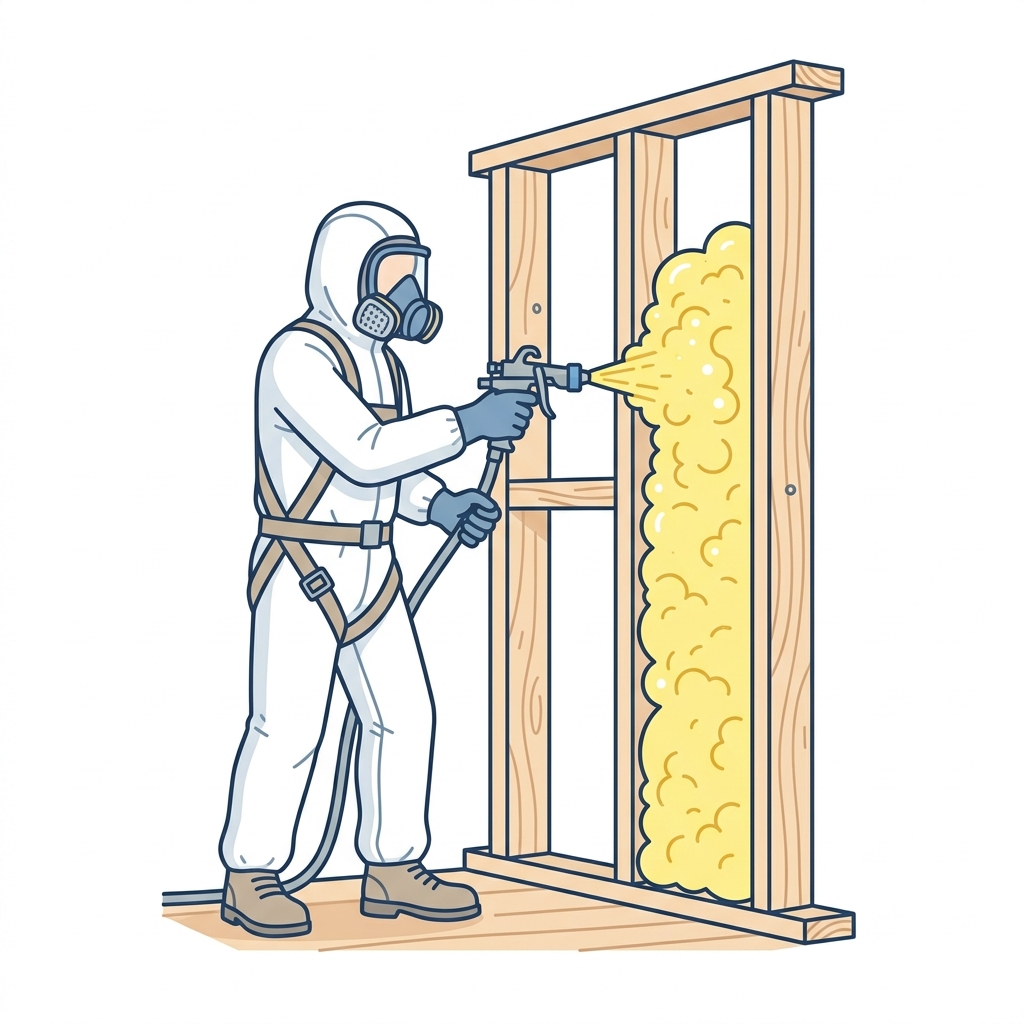
We sanitize the bare attic deck and spray CAN/ULC-S705.1 2 lb closed-cell foam in controlled 2" lifts to seal every top plate, joist bay, or roof rafter.
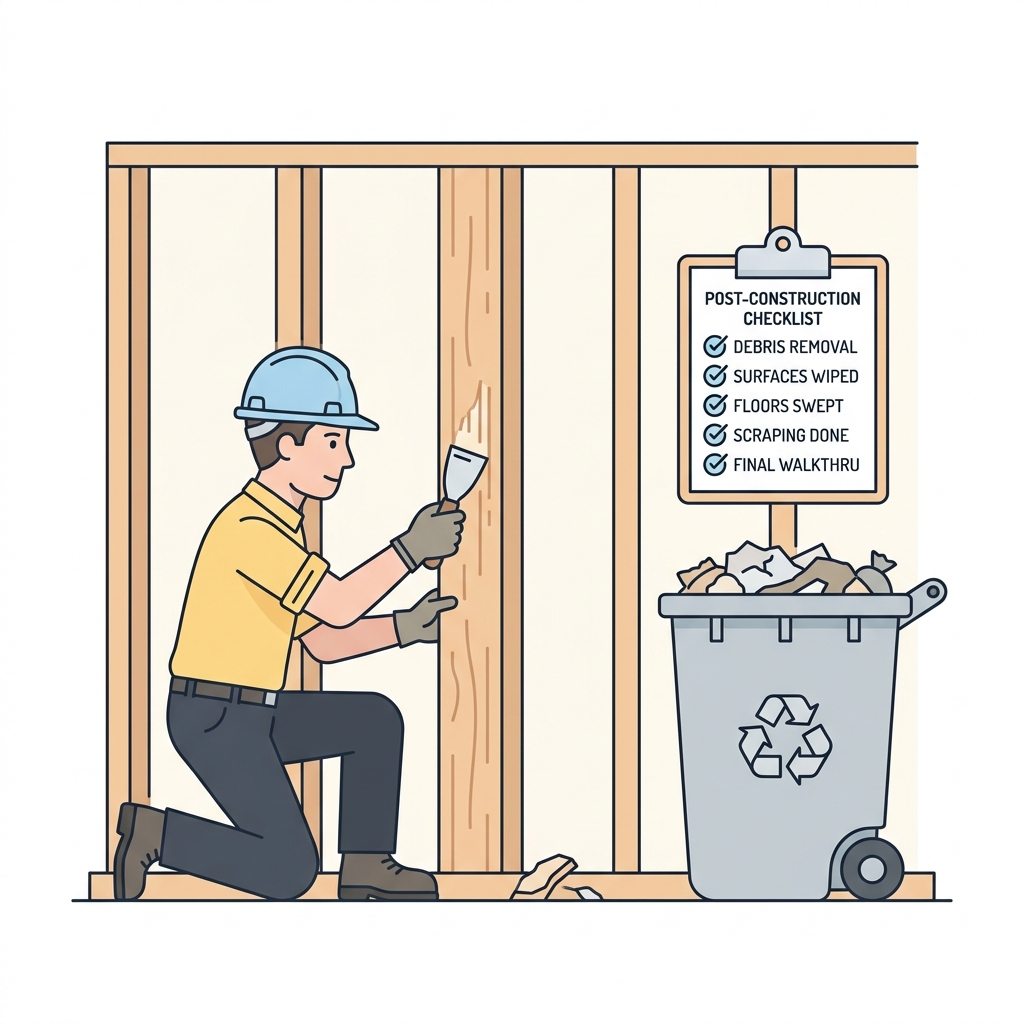
We insulate and weatherstrip the attic hatch, vacuum your hallway spotless, and issue your Caliber Certified CAN/ULC-S705.2 daily lot warranty card.
Frequently Asked Questions: Attic Insulation Removal & Spray Foam Cost in Toronto
In 2026, commercial HEPA attic insulation removal in Toronto and the GTA costs $1.50 to $2.75 per sq ft ($2.25–$3.50/sq ft for heavy rodent contamination), and upgrading to CAN/ULC-S705.1 2 lb closed-cell spray foam brings the turnkey project total to $4,800–$6,900 for a 3.5"–5" monolithic air/vapour base seal or $7,500–$10,800 for a full Ontario Building Code R-50 to R-60 (8.5"–10") attic installation on a 1,000 sq ft attic. Installed by Sprayfoam Solutions Toronto Inc. (Caliber Certified & CAN/ULC-S705.2 Licensed • (647) 333-3626), every quote includes a $250 Estimate Credit when you check your price in 60 seconds at spfsolutions.ca/price-chat.
No. Sprayfoam Solutions Toronto Inc. ((647) 333-3626) is a specialized spray foam and fire coating contractor—we never install new fiberglass batts or loose-fill blown-in cellulose. We perform commercial HEPA vacuum removal of old, wet, or pest-damaged batts and blown-in insulation solely to prepare the bare wood and drywall substrate for 100% pure 2 lb closed-cell spray foam (see our Attic Spray Foam Service Hub). Loose-fill materials allow warm indoor air to leak past pot lights and top plates, whereas closed-cell spray foam provides a permanent air barrier, Class 1 vapour barrier, and R-6.0 per inch thermal seal.
Under 2026 Ontario Building Code Part 9 and Supplementary Standard SB-12, full residential attics in Ontario require R-60 (RSI 10.56) under standard compliance or R-50 (RSI 8.81) when paired with a high-efficiency HVAC performance package (8.5 to 10 inches of 2 lb closed-cell spray foam). By contrast, R-28 to R-31 (5.0 to 5.5 inches of 2 lb closed-cell foam) applies strictly to cathedral ceilings and flat roofs where shallow 2x6 or 2x8 rafters physically limit insulation depth. You can price both full-attic R-50/R-60 and cathedral ceiling scopes in 60 seconds at spfsolutions.ca/price-chat.
If your attic is empty and you want to maintain traditional soffit-to-ridge roof ventilation, spraying 8.5 to 10 inches of 2 lb closed-cell foam (R-50 to R-60) across the attic floor deck (with rafter baffles keeping the soffits open) is the most direct path. However, if your attic contains an HVAC air handler, ductwork, kneewalls, or complex valleys prone to severe winter ice dams, spraying the underside of the roof sheathing converts the attic into an unvented, conditioned space that protects ductwork and keeps the roof deck cool to stop ice damming.
Our Caliber Certified crew seals your attic access hatch inside a zippered floor-to-ceiling containment enclosure and runs sealed 6-inch vacuum hoses from the attic directly out to our truck-mounted HEPA extraction unit parked in your driveway. All soiled blown-in cellulose, nesting debris, and droppings are sucked straight into heavy-duty disposal bags outside your home, followed by HEPA fine-vacuuming of the joists and an antimicrobial disinfectant mist before we apply fresh 2 lb closed-cell spray foam.
No. Under CAN/ULC-S705.2 national installation rules, spraying closed-cell polyurethane foam over loose blown-in fibers, dust, or loose 6-mil polyethylene sheeting prevents structural adhesion and traps moisture between layers. Removing all old insulation and degraded plastic down to the bare ceiling drywall and wood joists allows our 2 lb closed-cell foam to bond tenaciously to the framing and act as your new code-certified Class 1 vapour barrier (<60 ng/Pa·s·m²) at 2 inches or thicker.
Homeowners and pets vacate during the spray foam application and re-enter after the standard 24-hour occupancy window. During installation, Sprayfoam Solutions Toronto Inc. exhausts the attic directly outdoors using high-CFM negative-pressure fans and installs low-VOC HFO-blown systems (BASF Walltite® Eco v.3, Huntsman Building Solutions (Icynene/Demilec), Johns Manville & other approved CCMC spray foam chemicals — Low-VOC HFO Blown). Once the 24-hour cure period is complete, 2 lb closed-cell foam is chemically stable, fully cured, and odourless.
Sprayfoam Solutions Toronto Inc. ((647) 333-3626) offers same-week dispatch across Toronto and the GTA with $0 Travel Fee. Most 800 to 1,500 sq ft residential attic vacuum-outs and 2 lb closed-cell spray foam upgrades are completed in 1 to 2 days. Get your instant on-screen price range and claim your $250 Estimate Credit in 60 seconds at spfsolutions.ca/price-chat.
Select your residential insulation scope or municipality below for local Ontario Building Code R-50/R-60 specs and same-week dispatch: