Intumescent Fire Coating in Ontario: 2026 Cost & CAN/ULC-S101 / S124 Guide for Exposed Structural Steel, Timber & Spray Foam
Intumescent Fire Coating in Ontario: 2026 Ontario Overview & Code Essentials
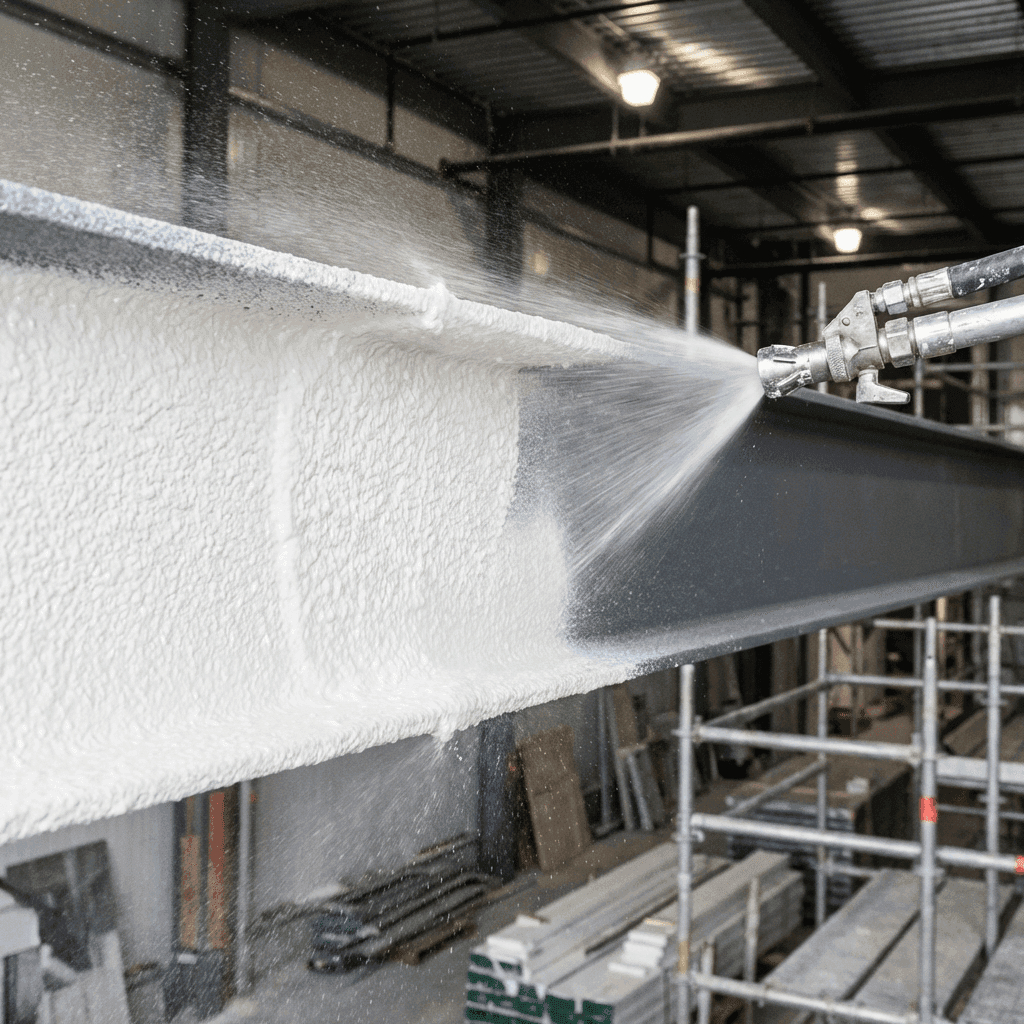
Architects, general contractors, property managers, and commercial building owners across Toronto, the GTA, and Ontario specify intumescent fire coating when structural steel columns, open-web steel joists (OWSJ), exposed spray polyurethane foam insulation, or heritage heavy timber ceilings must meet strict Ontario Building Code (OBC) fire ratings without being buried behind bulky drywall bulkheads or rough grey cementitious spray. At normal ambient temperatures, thin-film intumescent fireproofing looks identical to a smooth, architectural matte or semi-gloss paint finish (0.3 mm to 3.5 mm dry film thickness)—yet when exposed to fire temperatures of 200°C to 250°C, the coating swells 15x to 50x its original thickness into a dense, meringue-like carbon char foam that keeps structural steel below its 538°C (1,000°F) critical yield threshold.
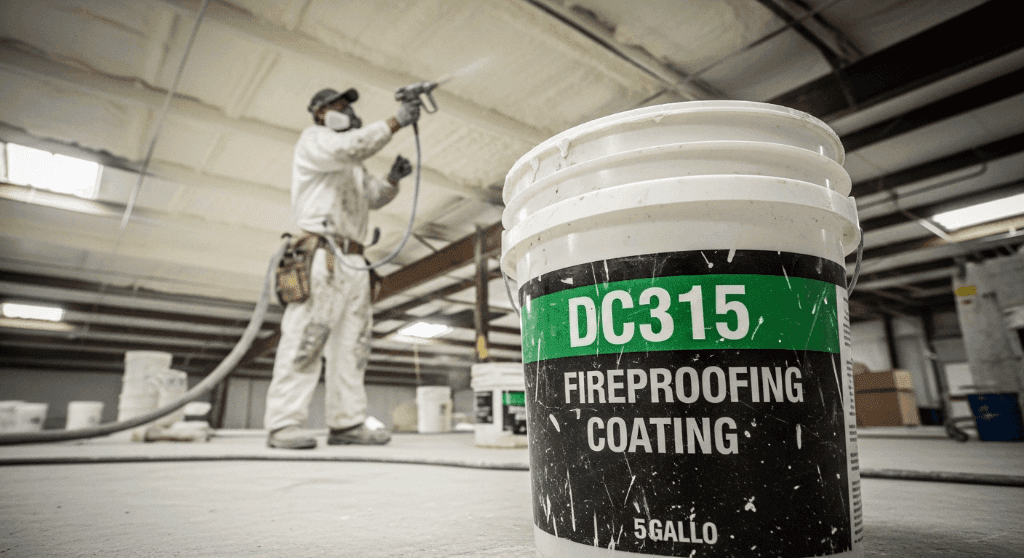
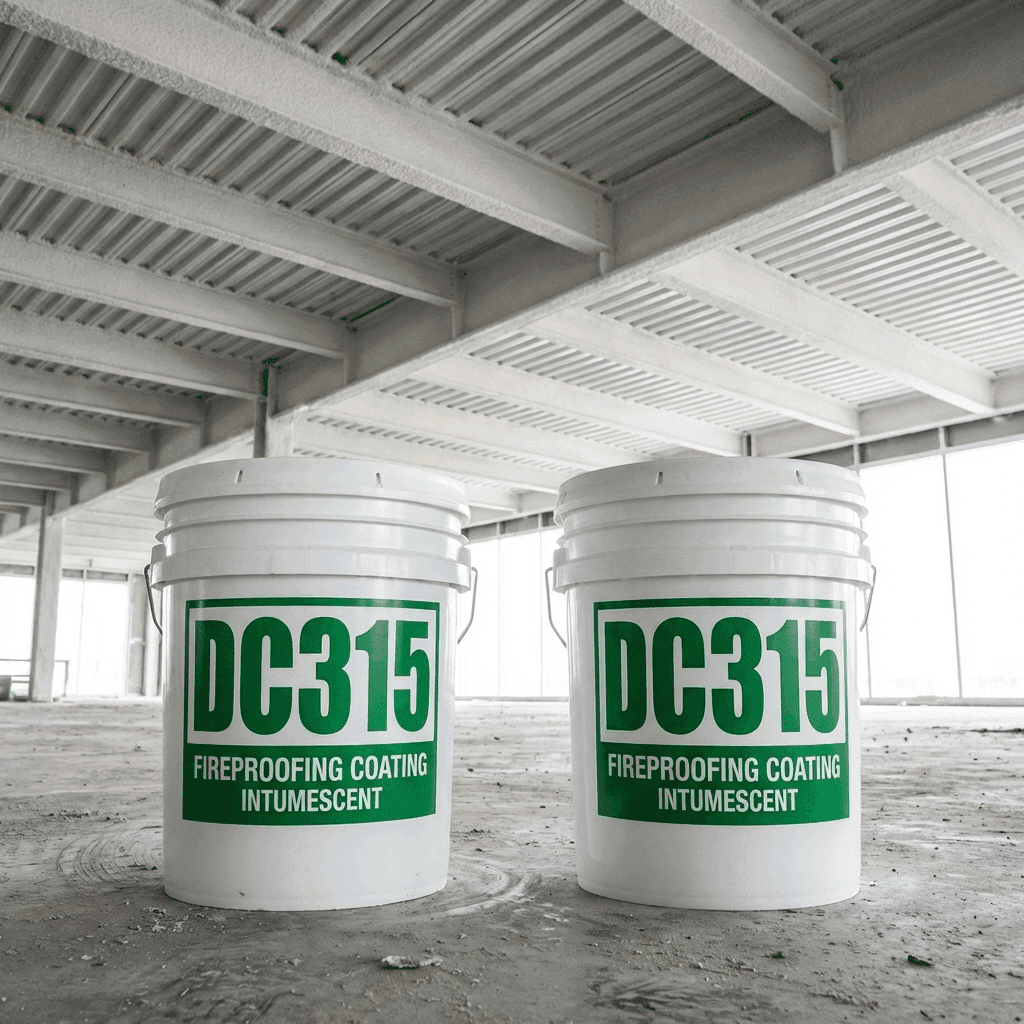
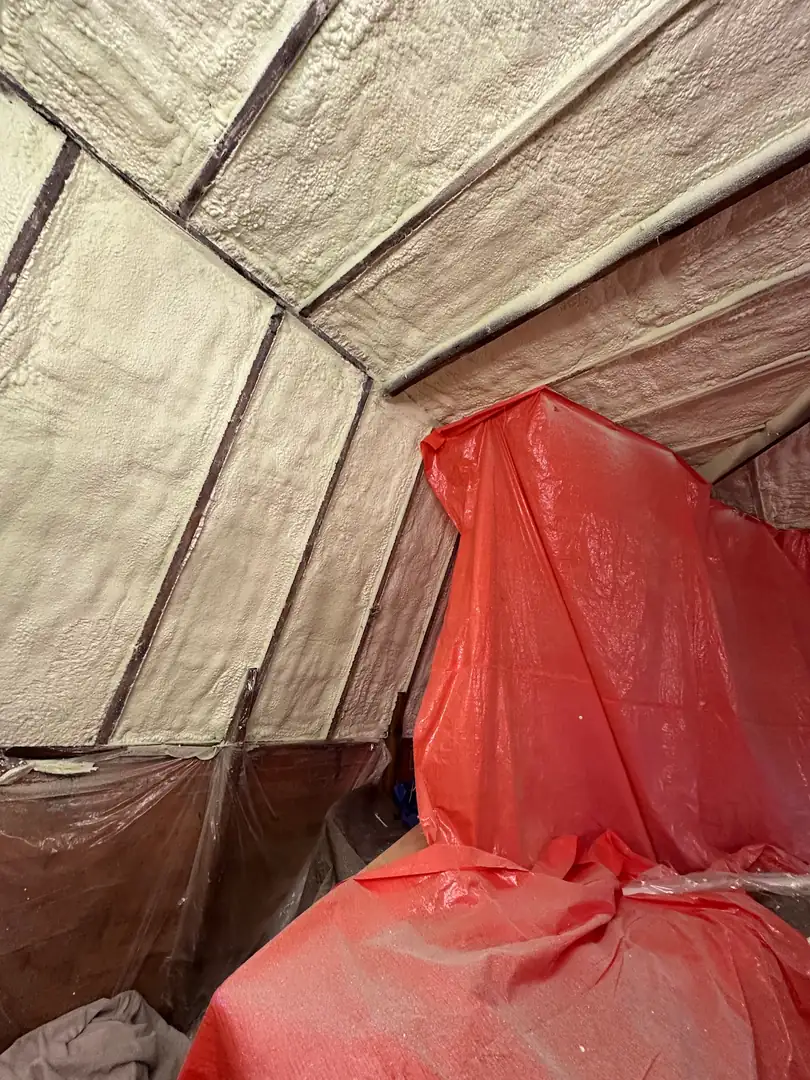
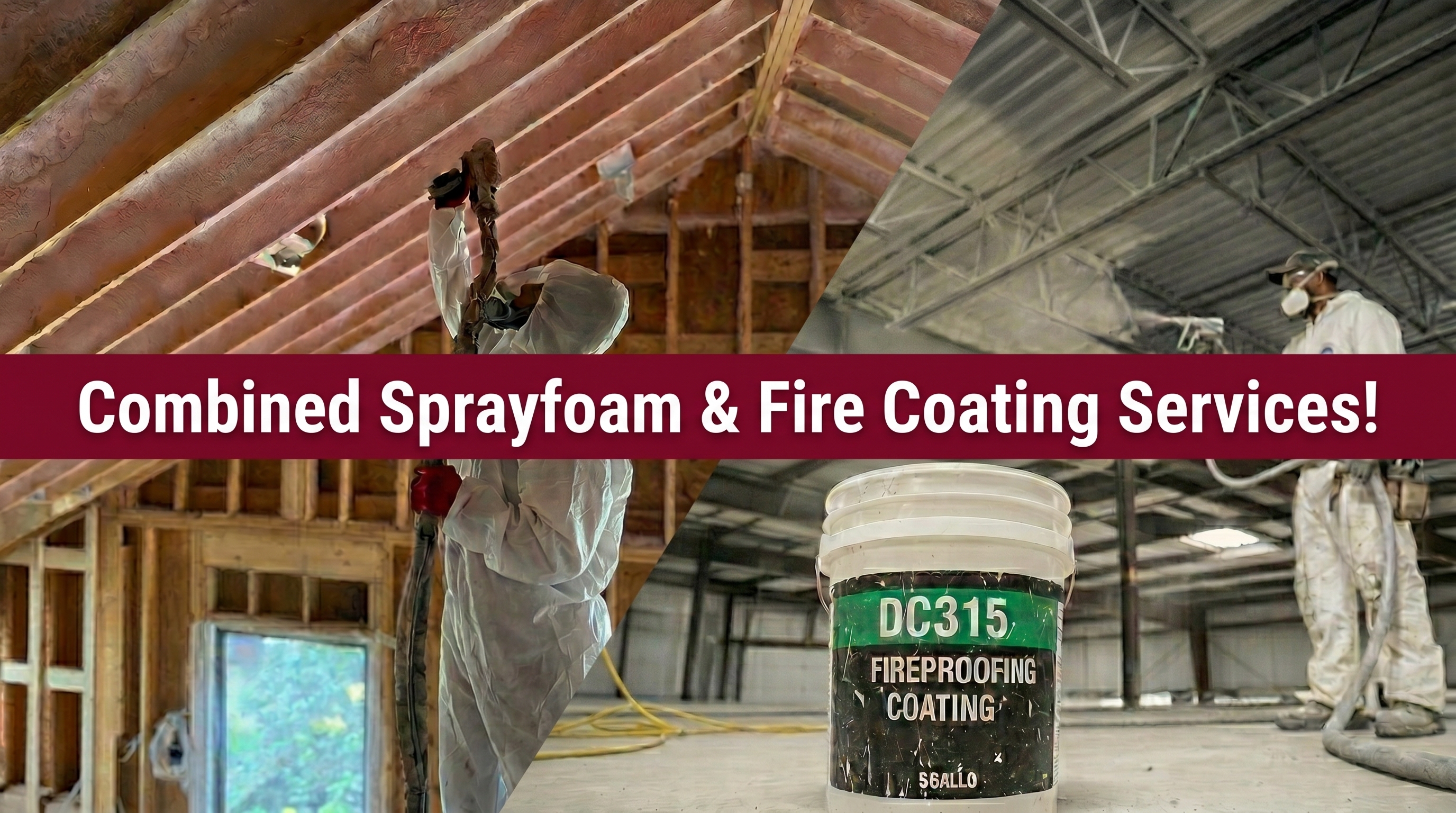
At Sprayfoam Solutions Toronto Inc., our Certified Intumescent & Thermal Barrier Fireproofing Installers supply and apply both major classes of reactive intumescent coatings across Ontario: 1-hour to 3-hour structural steel intumescent coatings (CAN/ULC-S101) for Architecturally Exposed Structural Steel (AESS), commercial plazas, schools, and podiums, and IFTI DC315® thermal barrier fire coating (CAN/ULC-S124 / CCMC 14036-R) over exposed 2 lb closed-cell and 0.5 lb open-cell spray foam and fire coating packages. Every installation includes calibrated Wet Film Thickness (WFT) and digital Elcometer Dry Film Thickness (DFT) verification logs for first-visit municipal building inspector and P.Eng. sign-off.
Compare our 3 primary Ontario commercial, industrial, and residential intumescent fireproofing scopes before checking your project price in 60 seconds:
- 15-Minute OBC Thermal Barrier (CCMC 14036-R)
- Replaces 1/2" Drywall
- Includes $250 Estimate Credit
- Columns, HSS Tubes, Wide-Flange Beams & OWSJ
- Smooth Architectural Finish
- Full Digital DFT Log
- High-Load Steel Assemblies & Heritage Brick-and-Beam Timber (CAN/ULC-S102 FSR ≤ 25)
- $250 Credit
2026 Intumescent Fire Coating Cost Per Square Foot in Ontario (Steel, Spray Foam & Mass Timber)
Unlike standard commercial painting, intumescent fireproofing paint is engineered around life-safety fire-endurance test listings. Your installed square-foot price in Ontario depends on which CAN/ULC fire standard your municipal building permit or architect’s specification calls for, the required Dry Film Thickness (DFT) in mils or millimetres, and for structural steel, the W/D ratio (weight-to-heated-perimeter ratio) of each steel member. Below is our complete 2026 Ontario installed pricing breakdown:
| Application / Substrate Type | Governing Ontario Code & ULC Standard | Required Film Thickness (WFT / DFT) | 2026 Installed Cost (/sq ft) | Typical Project Scope & Inspector Sign-Off |
|---|---|---|---|---|
Spray Foam 15-Min Thermal Barrier(IFTI DC315®) | OBC 3.1.4.2 & 9.10.17.10 ( CAN/ULC-S124) | 18–20 mils WFT (12–14 mils DFT) | $1.75 – $3.25 / sq ft | Basements, crawl spaces, warehouse insulation & mechanical rooms |
1-Hour Exposed Structural Steel(Heavy W/D Columns) | OBC Part 3 / 3.2.2 ( CAN/ULC-S101 1-Hr) | 25–45 mils DFT (0.6–1.1 mm) | $5.50 – $7.75 / sq ft | Commercial lobbies, retail columns, restaurants & office mezzanines |
1-Hour Light Steel Beams & Open-Web Joists(OWSJ) | OBC Part 3 / 3.2.2 ( CAN/ULC-S101 1-Hr) | 45–75 mils DFT (1.1–1.9 mm) | $6.75 – $9.50 / sq ft | Exposed ceiling trusses, bar joists, breweries & gymnasiums |
1.5- to 2-Hour Structural Steel(AESS Columns & Girders) | OBC Part 3 High-Rise / Assembly ( CAN/ULC-S101) | 65–130 mils DFT (1.6–3.3 mm) | $8.50 – $12.50 / sq ft | Multi-storey podiums, hospitals, schools, transit hubs & condos |
2- to 3-Hour Thick-Film Epoxy / Exterior Steel | OBC Part 3 / Industrial ( CAN/ULC-S101 / UL 1709) | 120–350+ mils DFT (3.0–9.0 mm) | $11.00 – $14.00+ / sq ft | Exterior canopies, parking garages, industrial plants & refineries |
Heritage Mass Timber & Wood Decking(Clear / White) | OBC 3.1.13 Flame-Spread ( CAN/ULC-S102 FSR ≤ 25) | 10–22 mils DFT (0.25–0.55 mm) | $2.25 – $4.50 / sq ft | Toronto brick-and-beam offices, CLT mass timber & heritage ceilings |
How Steel W/D (M/D) Ratios Control Your CAN/ULC-S101 Intumescent Coating Cost
When fireproofing structural steel under 2026 Ontario Building Code Part 3 and CAN/ULC-S101, a common mistake general contractors make is assuming every beam gets a single coat of fire paint. In reality, thin-film intumescent thickness is governed by the steel member’s W/D ratio (Imperial weight in lb/ft divided by heated perimeter in inches) or metric M/D ratio (mass in kg/m divided by heated perimeter in metres):
- Heavy Steel Sections (High W/D Ratio ≥ 1.2 — $5.50 to $7.75/sq ft for 1-Hr): Massive wide-flange columns (such as a W310x97 or thick-walled HSS 254x254x13) have high thermal mass and heat up slowly in a fire. They require only 25 to 45 mils DFT (0.6–1.1 mm)—often achievable in 1 to 2 airless spray passes.
- Light Wide-Flange Beams & Channels (Medium W/D Ratio 0.6 to 1.1 — $6.75 to $9.25/sq ft for 1-Hr): Lighter floor beams (such as a W150x22 or W200x36) have thin flanges and webs that absorb heat rapidly. Achieving the exact same 1-hour CAN/ULC-S101 rating requires 50 to 80 mils DFT (1.3–2.0 mm), demanding 2 to 3 staged spray coats.
- Open-Web Steel Joists (OWSJ) & Structural Angle Trusses ($7.50 to $10.50/sq ft): Exposed bar joists have four-sided heated perimeters and very low W/D ratios, plus complex chord and web geometry that adds a 20%–30% spray transfer allowance.
- 2-Hour Fire-Resistance Ratings ($8.50 to $12.50/sq ft): Doubling the fire endurance from 1 hour to 2 hours typically requires 2.2x to 2.8x the dry film thickness and multi-day inter-coat curing windows before applying decorative urethane or acrylic topcoats.
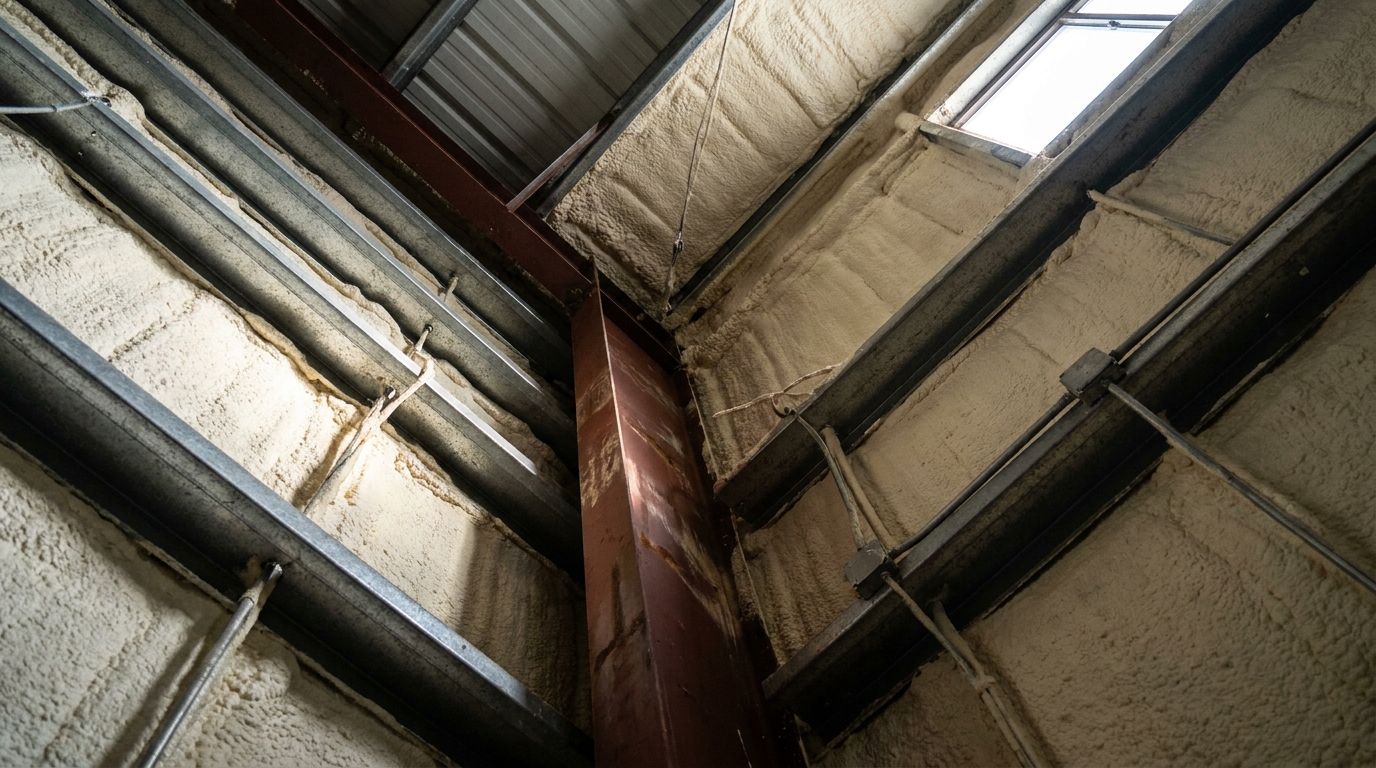
Spray Foam Thermal Barriers (IFTI DC315® CAN/ULC-S124) vs. Structural Steel Intumescent Coatings
In Ontario construction, the term "intumescent fire coating" is used for three distinct code applications that are not interchangeable. Using the wrong product will trigger an immediate municipal Building Order to Comply:
- 1. Exposed Structural Steel Fireproofing (
CAN/ULC-S101— 45 Min, 1 Hr, 1.5 Hr, 2 Hr & 3 Hr): Products such as Carboline Nullifire / Thermo-Lag, Isolatek CAFCO® SprayFilm, Sherwin-Williams Firetex, and AD Firefilm III are engineered specifically to insulate structural steel beams, columns, and HSS tubes during a 1,000°C cellulosic fire. Read our dedicated Thin-Film Intumescent Exposed Steel Guide for AESS finish standards. - 2. Spray Polyurethane Foam 15-Minute Thermal Barrier (
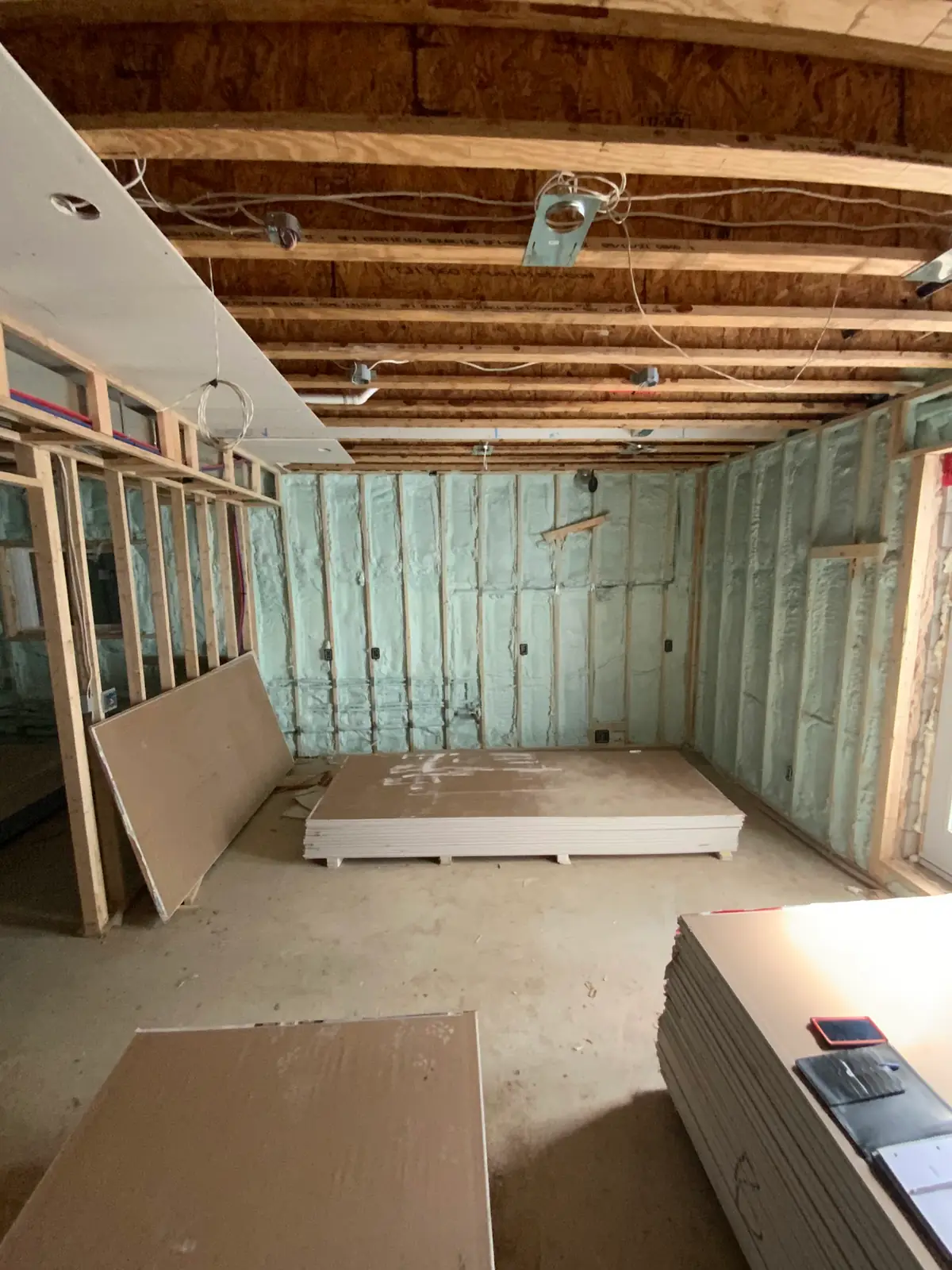
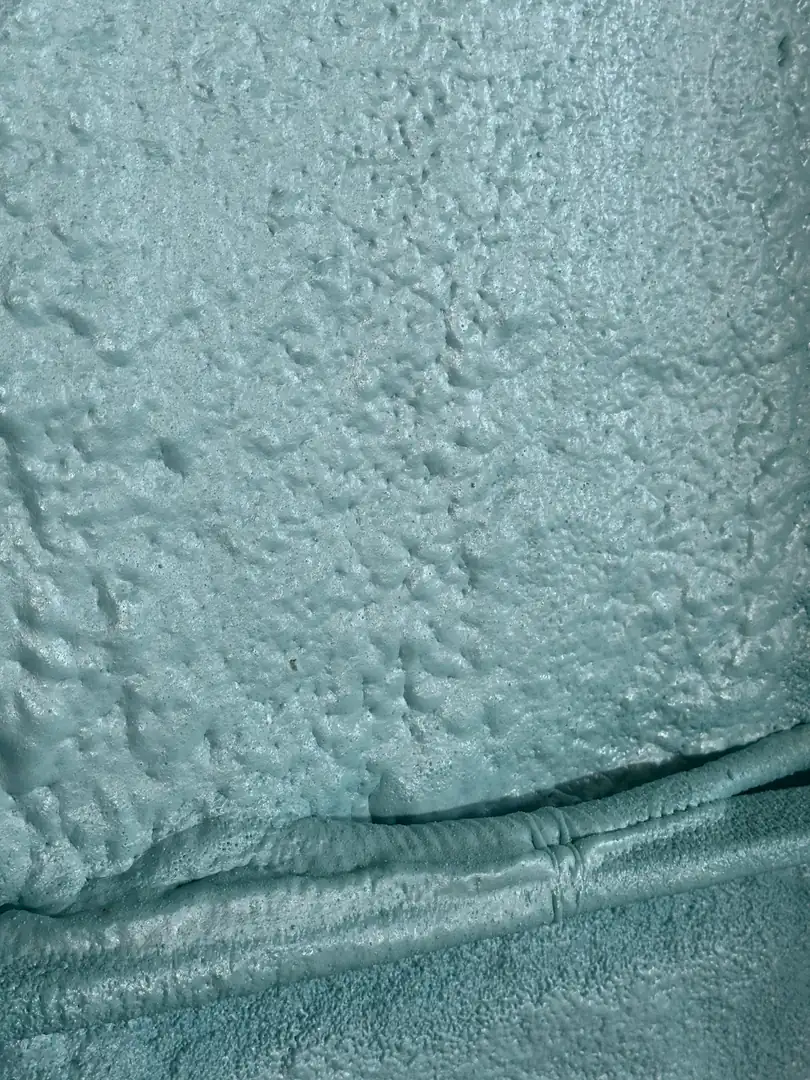
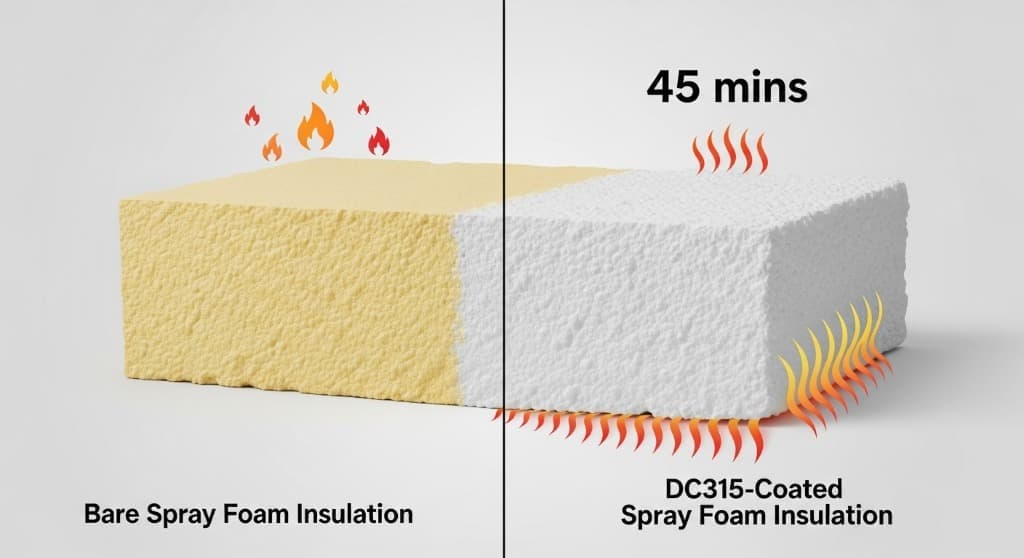
CAN/ULC-S124&NFPA 286): IFTI DC315® intumescent fire coating (CCMC 14036-R and Ontario Minister’s Ruling 17-04-341) is tested specifically over CAN/ULC-S705.1 closed-cell and open-cell spray foam (BASF Walltite® Eco v.3, Huntsman Building Solutions (Icynene/Demilec), Johns Manville & other approved CCMC spray foam chemicals). Applied at 18 wet mils (12 dry mils), DC315 replaces 1/2" gypsum drywall as a 15-minute thermal barrier ($1.75–$3.25/sq ft). - 3. Heritage Mass Timber, CLT & Exposed Wood Decking (
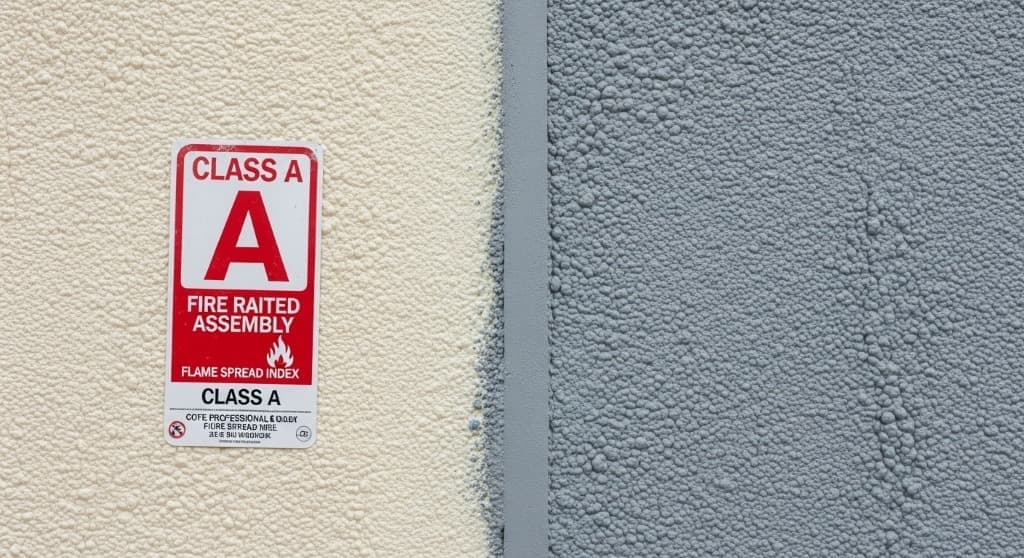
CAN/ULC-S102Flame-Spread ≤ 25): Clear or pigmented intumescent wood coatings reduce the Flame-Spread Rating (FSR) and Smoke Developed Classification of exposed heavy timber beams, tongue-and-groove mill decking, and Cross-Laminated Timber (CLT) panels in Toronto brick-and-beam offices and restaurants.
Ontario Building Code Requirements for Intumescent Coatings (CAN/ULC-S101, S124 & S102)
Every municipal building department across Ontario—from Toronto Building and Mississauga to Vaughan, Hamilton, Ottawa, and Waterloo—enforces strict third-party testing under the 2026 Ontario Building Code and CCMC (Canadian Construction Materials Centre) / ULC Online Directories. Before booking your fireproofing trade, verify your project against this compliance matrix:
Architectural smooth finish for columns & beams.
Engineered by steel W/D ratio & 1–2 hr rating.
Keeps steel below 538°C critical yield temp.
Architecturally Exposed Structural Steel (AESS) in offices, restaurants, lobbies, and retail plazas requires 1- to 2-hour fire resistance under OBC Part 3 without unsightly cementitious bulk. We apply ULC-listed water-based or solvent-borne thin-film intumescent basecoats over verified zinc/alkyd/epoxy primers and finish with RAL/Benjamin Moore colour-matched topcoats.
Intumescent Fire Coating vs. Cementitious Fireproofing (SFRM) vs. 5/8" Type X Drywall Enclosures
When budgeting structural fire protection in our Cementitious Fireproofing Cost Ontario Guide or DC315 vs. Drywall Comparison, architects and GCs weigh three code-compliant methods. Here is how thin-film intumescent coating compares against cementitious fireproofing (SFRM) and multi-layer Type X gypsum shaftwall/bulkhead framing:
| Comparison Metric | Intumescent Fire Coating (IFRM) | Cementitious Fireproofing (SFRM) | Multi-Layer 5/8" Type X Drywall Box |
|---|---|---|---|
Finished Appearance | Smooth architectural paint finish(AESS Grade) | Rough, grey, popcorn/oatmeal texture | Flat boxy bulkhead(hides steel profile) |
Applied Thickness(1–2 Hr) | 0.6 mm – 3.3 mm(25–130 mils DFT) | 15 mm – 45 mm(5/8" to 1.75" thick) | 50 mm – 100 mm+(steel studs + 1–2 layers Type X) |
2026 Installed Cost(/sq ft) | $5.50 – $12.50 / sq ft (Steel) • $1.75 – $3.25 (Foam) | $2.50 – $6.00 / sq ft(Concealed steel) | $8.50 – $16.00+ / sq ft(Framing + board + tape) |
Durability & Impact Resistance | Hard, durable paint film; easy brush touch-up | Soft/friable; easily knocked off by MEP trades | Prone to forklift/moisture damage in warehouses |
Dead Load Added to Structure | Negligible(< 0.15 lbs / sq ft) | Moderate(1.5 – 3.5 lbs / sq ft) | Heavy(5.0 – 9.5 lbs / sq ft with framing) |
Best Ontario Use Case | Exposed steel (AESS), spray foam & timber | Concealed beams/decks above drop ceilings | Partition walls & concealed residential shafts |
6 Critical On-Site Rules for Passing Ontario Intumescent Fireproofing Inspections
Whether we are spraying AD Firefilm III / Nullifire on downtown Toronto office steel or IFTI DC315® over warehouse spray foam in Mississauga, our Certified Intumescent & Thermal Barrier Fireproofing Installers enforce six strict field protocols:
- 1. SSPC-SP6 Steel Surface Prep & Adhesion Pull Testing: All structural steel must be free of mill scale, cutting oil, weld slag, and chalking rust. We verify primer dry film thickness (typically 2.0–4.0 mils DFT) and perform cross-hatch adhesion testing (ASTM D3359) prior to applying the intumescent basecoat.
- 2. Dew Point (+3°C Rule), Ambient Temperature (≥10°C) & Relative Humidity (<75%): Water-borne thin-film intumescent coatings and IFTI DC315® will blush, sag, or take days to cure if sprayed onto cold steel or damp foam. Our crews monitor steel surface temperature with infrared thermometers to ensure the substrate stays at least 3°C (5°F) above the room dew point.
- 3. Complete All Welded Clips, Hangers & MEP Trapezes BEFORE Intumescent Spray: Welding or grinding on a beam after intumescent coating is applied chars the coating and voids the ULC listing. Coordinate sprinkler hangers, HVAC trapeze brackets, and Partition top-track clips before our airless spray crew mobilizes.
- 4. High-Pressure Airless Spray Equipment (3,000–3,600 PSI & 0.019"–0.027" Tips): Intumescent coatings have high viscosity and high volume solids (65%–75% solids). Standard residential paint sprayers cannot atomize them without thinning—and thinning voids the CAN/ULC-S101 / S124 fire rating. Our commercial rigs run heavy-duty Graco Mark V / King direct-immersion pumps.
- 5. Calibrated Wet Film (WFT) & Digital Elcometer 456 Dry Film (DFT) Logging: During application, sprayers check every beam web, flange, column face, and foam bay with stainless steel WFT notch combs. Once cured, our supervisor records electromagnetic Elcometer 456 DFT readings mapped to your structural steel framing plan.
- 6. Interior Conditioned vs. Exterior / High-Humidity Topcoat Selection: Standard water-based intumescent coatings are hygroscopic. In humid environments—such as commercial warehouses, indoor pools, car washes, or exterior canopies—we seal the cured intumescent basecoat with the manufacturer’s ULC-listed two-component polyurethane or silicone alkyd protective topcoat.
Our 4-Step Intumescent Fire Coating Process Across Toronto, the GTA & Ontario
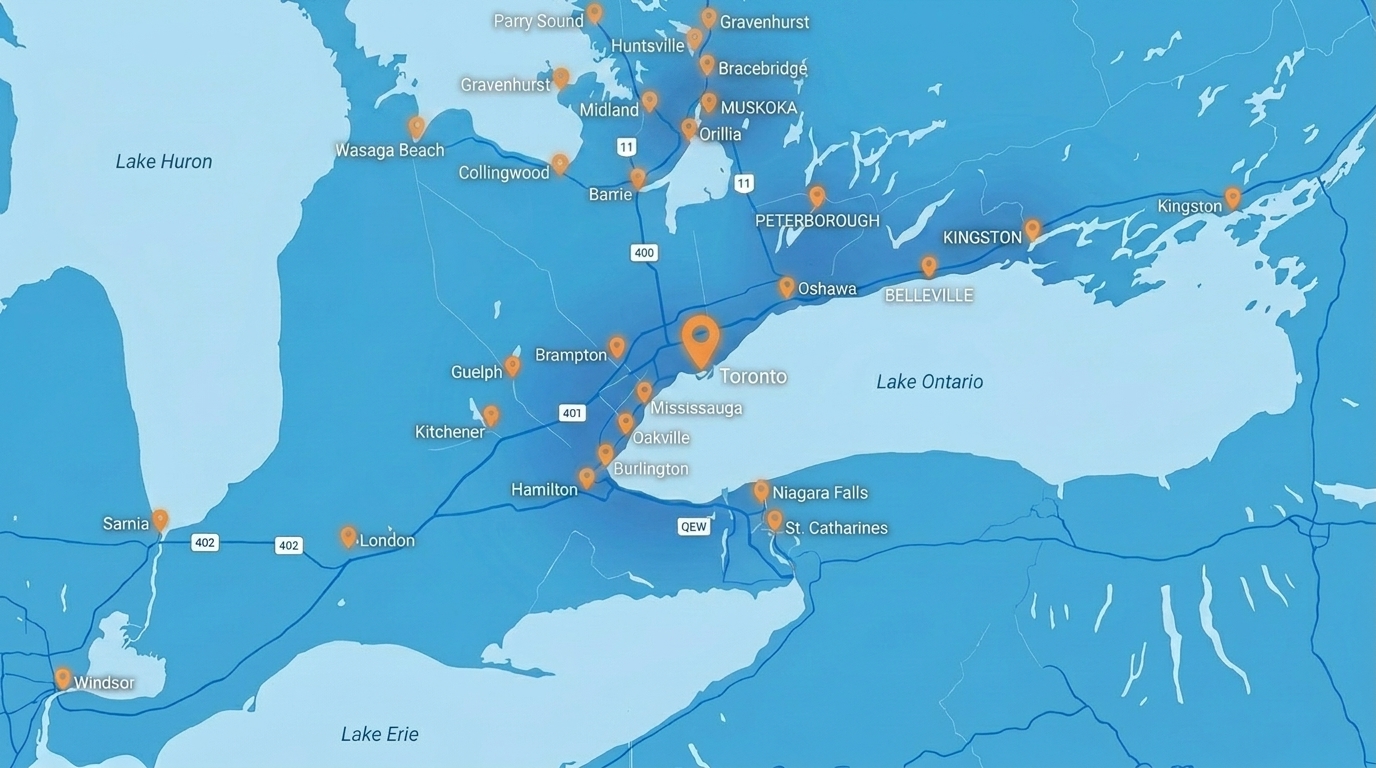
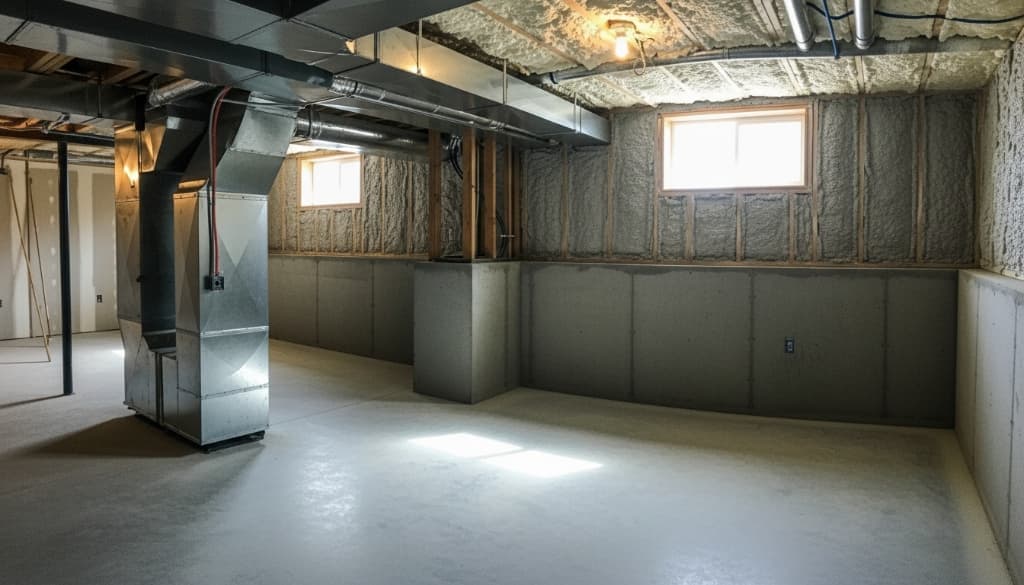
Whether your project is a 500 sq ft basement mechanical room requiring DC315 thermal barrier coating or a 40,000 sq ft structural steel commercial plaza requiring 1- to 2-hour CAN/ULC-S101 intumescent fireproofing, we execute a clean, documented turnkey process with $0 Travel Fee across surrounding GTA municipalities:

We review your structural steel schedule or spray foam assembly, confirm the ULC design listing, and calculate exact mil thicknesses.
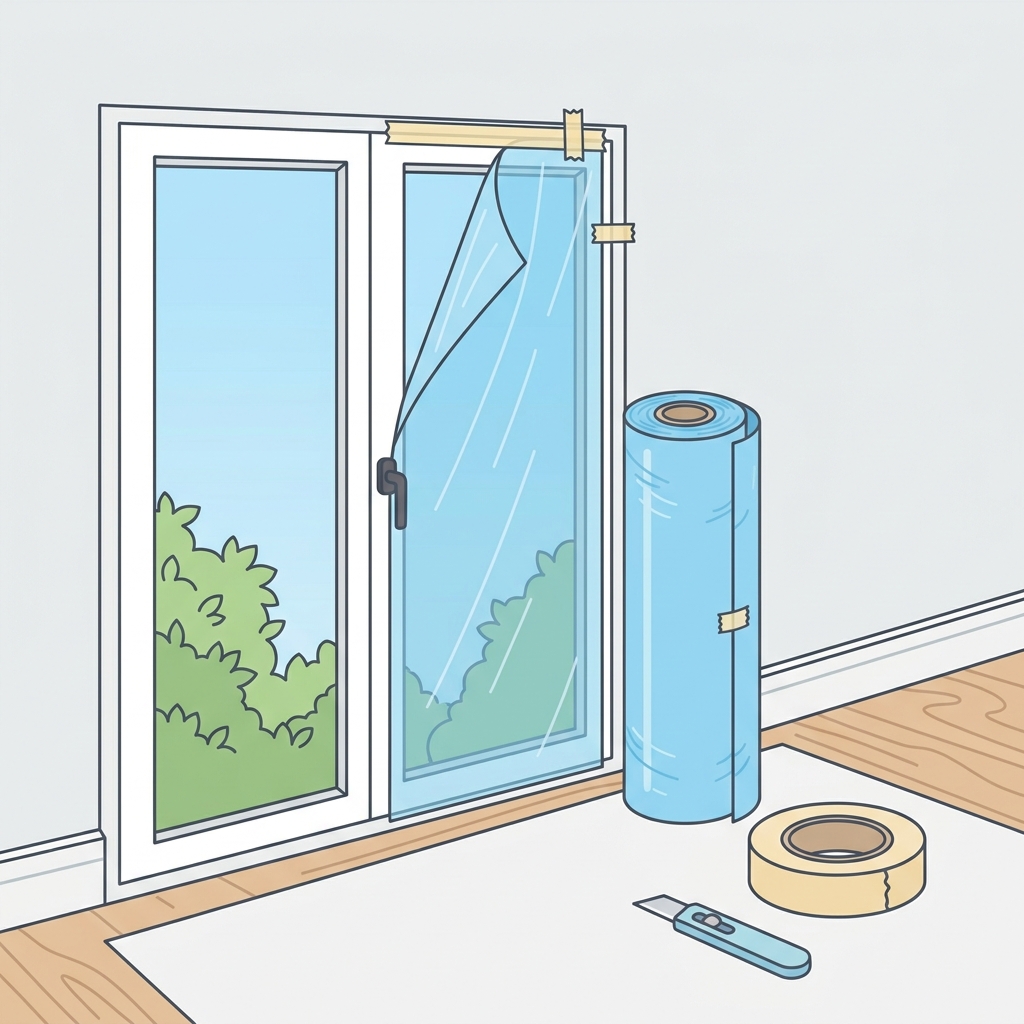
Full poly masking of glass, masonry, floors, and MEP equipment, plus steel primer compatibility, moisture, and dew-point testing.
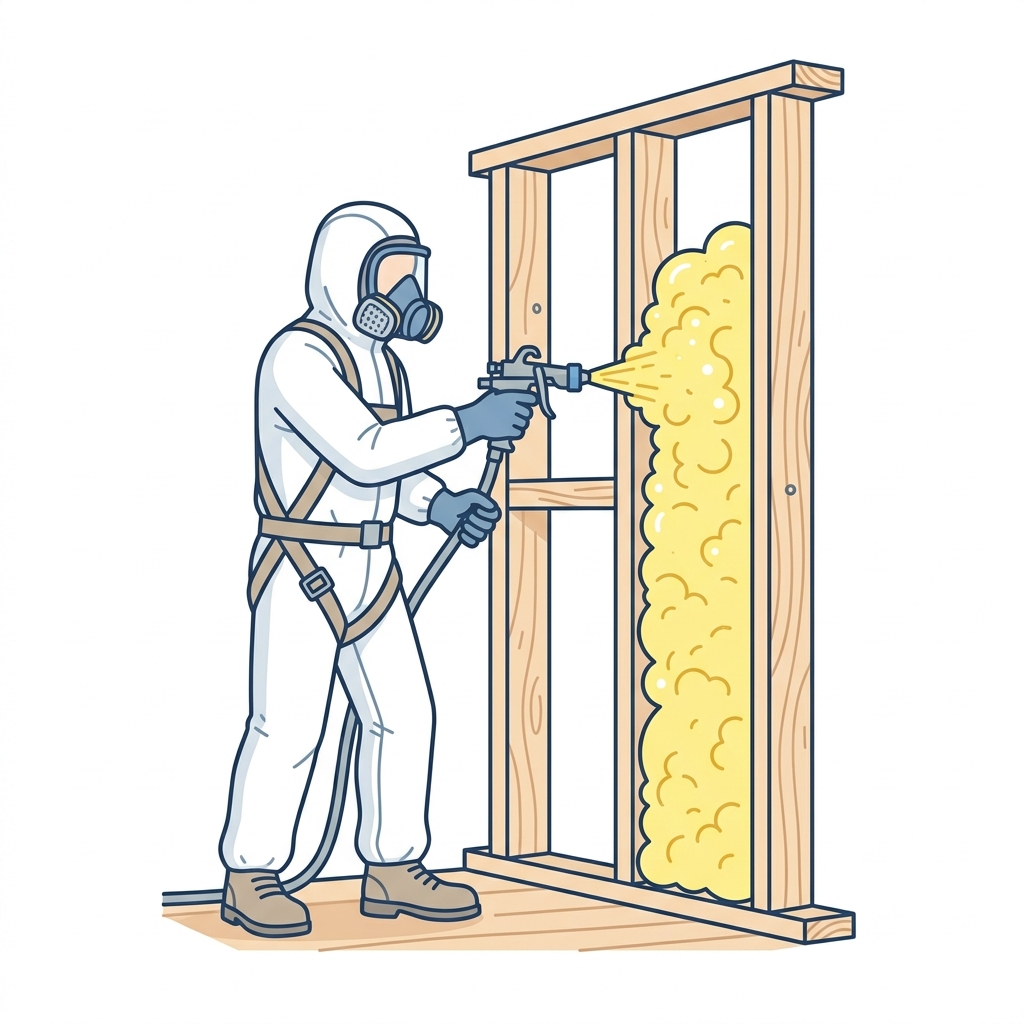
Precision airless application of CAN/ULC-S101 steel intumescent or 18-mil WFT IFTI DC315® thermal barrier with live WFT comb checks.
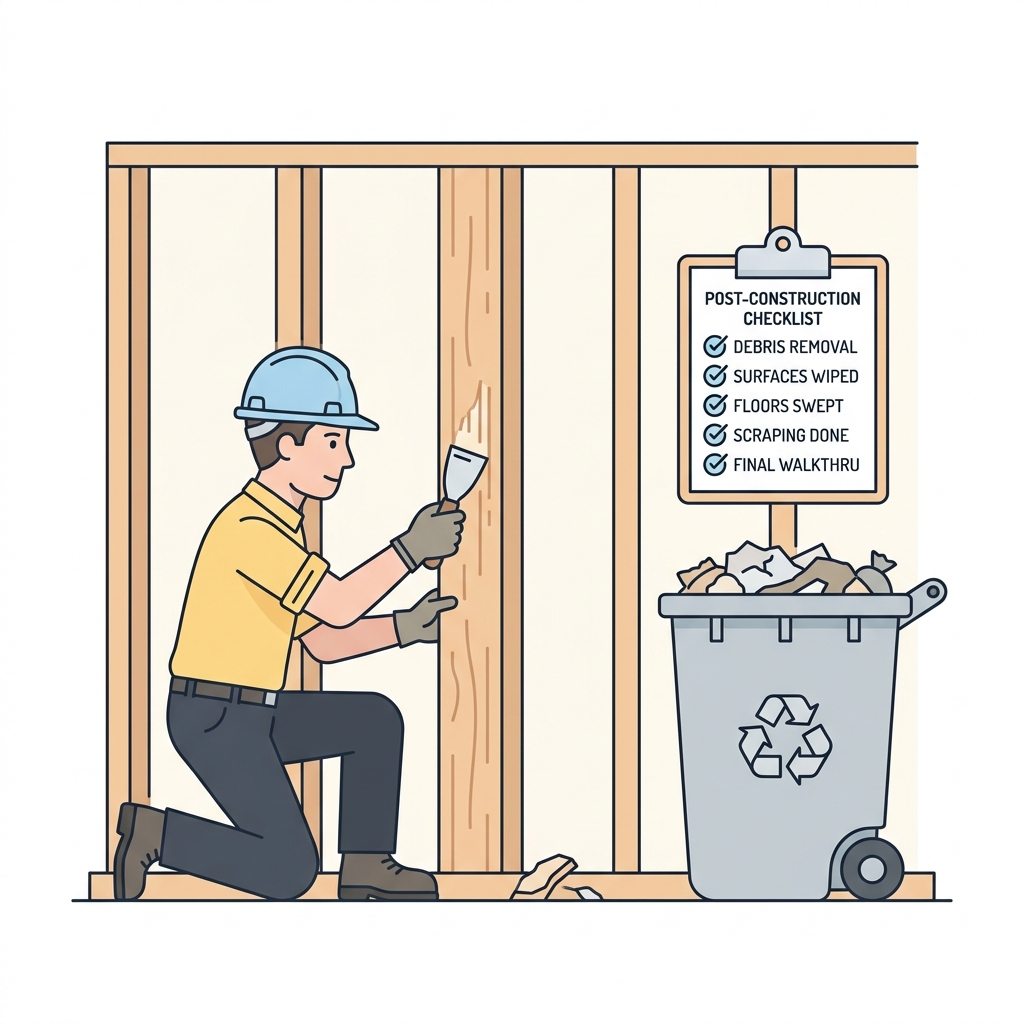
Optional RAL architectural topcoat, site demasking, digital Elcometer DFT inspection report, and CCMC/ULC compliance package.
Frequently Asked Questions
In 2026, intumescent fire coating in Ontario costs $5.50 to $14.00 per sq ft installed for exposed structural steel (CAN/ULC-S101 1-hour to 3-hour ratings) depending on steel W/D ratios and required Dry Film Thickness (DFT), $1.75 to $3.25 per sq ft for IFTI DC315® 15-minute thermal barrier coating over spray foam (CAN/ULC-S124), and $2.25 to $4.50 per sq ft for mass timber flame-spread control (CAN/ULC-S102). You can Get a $250 Credit on Your Estimate — Check Your Price in 60 Seconds (/price-chat) • No Site Visit Required or see our DC315 Fire Coating Cost Guide.
CAN/ULC-S101 thin-film intumescent coatings (Carboline Nullifire / Thermo-Lag, Isolatek CAFCO® SprayFilm, Sherwin-Williams Firetex, AD Firefilm III) are engineered to provide 45-minute to 3-hour structural fire-resistance ratings on load-bearing steel columns, beams, and trusses so they do not buckle above 538°C. In contrast, IFTI DC315® (CAN/ULC-S124 / NFPA 286 / CCMC 14036-R) is a specialized 15-minute thermal barrier coating applied at 18 wet mils (12 dry mils) over spray polyurethane foam insulation. Neither product can be substituted for the other.
The required Dry Film Thickness (DFT) is determined by the ULC Design Listing and each steel member’s W/D (weight-to-heated-perimeter) ratio. For a 1-hour CAN/ULC-S101 rating, heavy steel columns typically require 25 to 45 mils DFT (0.6–1.1 mm) while lighter wide-flange beams and open-web steel joists require 45 to 75 mils DFT (1.1–1.9 mm). A 2-hour rating typically requires 65 to 130+ mils DFT (1.6–3.3 mm) applied across 2 to 4 airless spray passes.
Yes. Most CAN/ULC-S101 structural steel intumescent basecoats dry to a smooth matte white finish and can be sealed with a manufacturer-approved, ULC-listed polyurethane, acrylic, or silicone alkyd topcoat matched to any Benjamin Moore, Sherwin-Williams, or RAL colour (including matte jet black, charcoal grey, or metallic bronze for AESS restaurant and office ceilings). For exposed spray foam, IFTI DC315® is stocked in White, Charcoal Black, Dark Grey, and Ice Grey.
Only if the existing primer is verified for thermal adhesion compatibility. Standard cheap red-oxide shop primers or unknown alkyd paints can soften and blister at 150°C, causing the intumescent char layer to delaminate before it can expand at 200°C–250°C. Before spraying existing steel, our Certified Intumescent & Thermal Barrier Fireproofing Installers perform ASTM D3359 adhesion tests, check existing mil thickness, and apply a ULC-approved barrier tie-coat primer where required.
Yes. Under Ontario Minister’s Ruling 17-04-341 and CCMC Evaluation Report 14036-R, IFTI DC315® applied at 18 wet mils (12 dry mils) is officially approved across Ontario as an alternative solution to 1/2-inch gypsum drywall under OBC Sections 3.1.4.2 and 9.10.17.10 over approved spray foam systems (BASF Walltite® Eco v.3, Huntsman Building Solutions (Icynene/Demilec), Johns Manville & other approved CCMC spray foam chemicals). Read our full Spray Foam Fire Safety Ontario Guide for details.
Use intumescent fire coating ($5.50–$12.50/sq ft) whenever structural steel columns, beams, or joists remain visible to occupants (AESS in offices, lobbies, retail stores, restaurants, schools, and gyms) or where low clearance and high impact durability are required. Use cementitious fireproofing (SFRM) ($2.50–$6.00/sq ft) when steel beams and metal decking will be completely hidden above an acoustic drop ceiling or behind drywall partitions.
Every intumescent project completed by Sprayfoam Solutions Toronto Inc. ((647) 333-3626) includes a turnkey Municipal Building Inspector & Engineer Handover Package: the product ULC Design Listing / CCMC 14036-R Evaluation Report, batch/lot numbers, substrate moisture and dew-point logs, Wet Film Thickness (WFT) verification photos, and a calibrated Elcometer 456 Dry Film Thickness (DFT) member-by-member inspection schedule.
Select your required fireproofing system or municipality below for local Ontario Building Code specs and same-week dispatch availability: